
I’m A Lime Green Pencil

lime green pencilI was lucky enough to spend two days last week helping with the Inside Out Autism conference at the University of Kent. This was a new university for me, on a verdant campus with trees and rabbits on a hillside overlooking Canterbury. The weather was beautiful, not that I saw much of it, as the main conference venues were two theatre spaces with no windows. No air-conditioning, either, so the conference was hot stuff in more ways than one.

The first day of the conference focused on autism and participatory research, the second on autism and gender. Around 50 people attended each day; some came for one day or the other, many for both. Most of those present were autistic, and the conference was wonderfully inclusive. Conference bags held fidget spinners, ear plugs, and stickers in green and red to indicate ‘I’m happy to chat but I might struggle to initiate conversation’ or ‘I probably don’t want to talk to anyone right now’, as well as more usual items such as notebooks, pens, Post-Its and copies of the conference programme. There were two seminar rooms upstairs for people who wanted time out, one designated as a quiet space and the other as a chat room. Hand dryers were turned off in the toilets and paper towels provided. People could, and did, dip in and out of sessions as they wished or needed to. There was a single stream of activity throughout, rather than multiple parallel strands, and most presentations were recorded which meant people could catch up later with anything they’d missed.

The quality of the presentations was excellent. None was longer than half an hour, and many were ten-minute ‘thunder and lightning’ sessions – either a thunderous provocation or a lightning report of relevant research. Presenters came from all levels of academia and beyond, including independent researchers and colleagues.  I won’t give a blow-by-blow account of each presentation, because that would be boring, and anyway you can read the Wakelet – several of us were tweeting – and check out the presentations for yourself online. But, truly, all of them were interesting and engaging, and I find that is rare at academic conferences.

One session I enjoyed, that wasn’t recorded, was in fact one I facilitated. There was an exhibition of around a dozen thought-provoking posters and time dedicated for everyone to look at them. After that I asked people to write down any themes they perceived, or other responses they might have, from the exhibition as a whole on Post-It notes and stick them on a wall. Then at lunchtime I took all the Post-It notes and grouped them into categories on five pieces of flip chart paper. From memory, I think the categories were:

  • autistic identity and experience
  • difficulties and challenges
  • questions remaining
  • autistic community, and
  • positive aspects of autism.

Each piece of flip chart paper was placed across a couple of chairs with a marker pen, and there was plenty of space between them to move around for an open space session of go-as-you-please discussion. There was a helper at each place to encourage people to write down their key thoughts. People were tentative at first, clustering in the doorway or sitting on one of the few seats around the edge. Someone said, ‘We’re not going to do some kind of group thing, are we?’ I reminded them that they could dip in and dip out, and slowly people began to engage with the flip charts, each other, and the whole experience. There were some really rich discussions and the helpers did a great job of encouraging people to record the important points made. At the end we had a feedback session which stimulated some more very useful discussion – and lo and behold, those of us who had chosen to be part of that stage of the process were indeed doing a group thing! I would estimate around 25 people stayed and made themselves comfortable in the space in a variety of ways: sitting or lying on the floor, sitting on chairs or standing or leaning on furniture, facing towards the centre or away.

These discussions, and indeed discussions throughout the conference, held a great deal of nuance. People who used categories such as ‘autistic’ and ‘neurotypical’ took care to acknowledge that this did not imply homogeneity within those categories. In the day on gender, while there was rather more ‘male and female’ type language than I would have ideally liked, there were also several mentions of trans and non-binary people. People talked about class, and race, and intersectionality, as well as autism and gender.

The conference wasn’t perfect. One session should have had a trigger warning, and didn’t; several people pointed this out to the lead organiser who made a thorough apology at the start of the next session. One speaker had a slide which upset some audience members, who raised their concerns in a question. The speaker gave their reasons, apologised for the upset, and asked what they should do differently another time; another audience member made a suggestion, which was accepted. And here’s one of the things I love about autistic people: they move on. They don’t seem to mess about with egos and judgement like some other kinds of people. I find it relaxing to hang out with autistic people because I know that if they have a problem with me, they’re likely to tell me, and help me figure out a solution if I can’t come up with one by myself. And then we all move on.

There was also an unexpected personal outcome. When I first introduced myself at the conference, I said “I think I’m neurotypical, although one of my autistic friends tells me that I’m neither neurotypical nor autistic, so probably I’m in a category that doesn’t yet have a label.” By the end of the first day some of my new autistic friends were questioning this assessment. One person, who I will call Chris, told me that someone else at the conference, who I will call Hardeep, has a form of synaesthesia that enables them to distinguish between neurotypical and autistic people. Apparently, for Hardeep, neurotypical people have a kind of spiky outline, perhaps with diffuse colours, whereas autistic people have definite shapes and colours. I was interested to find out how Hardeep would perceive me, so the next day Chris introduced me to them to find out. “You’re a lime green pencil,” Hardeep said, with no hesitation or uncertainty. “Yep, you’re definitely autistic.” Chris told me there was no doubt in either of their minds.

That was a bit of a shock and it took me a while to process. I’ve been content for a while now to think of myself as neurodiverse, and I wouldn’t have a problem with being autistic. But it seems that to be autistic you need a thing called a ‘diagnosis’. Right now I can’t see what purpose one of those would serve in my life. Also, given that I’ve just spent a lot of time hearing about how difficult it is for women and girls to get such a diagnosis, it doesn’t seem worth the bother to try to obtain one for myself. (Though if I find my disinclination is contributing to the misdiagnosis of other women and girls, that could change my mind.)

One of the presenters said they preferred the term ‘discovery’ to ‘diagnosis’, a viewpoint which seemed to resonate with many people present. So I’ll go with that for now. I’ve discovered I’m a lime green pencil, which makes as much sense to me as any other label I’ve ever been given. More importantly, I’ve discovered that I am welcome in a community of people I respect, and that is worth more to me than any diagnosis.

This blog is funded by my beloved patrons. It takes me around one working day per month to post here each week. At the time of writing I’m receiving funding of $34 per month. If you think a day of my time is worth more than $34 – you can help! Ongoing support would be fantastic but you can also make a one-time donation through the PayPal button on this blog if that works better for you. Support from Patrons and donors also enables me to keep this blog ad-free. If you are not able to support me financially, please consider reviewing any of my books you have read – even a single-line review on Amazon or Goodreads is a huge help – or sharing a link to my work on social media. Thank you!

Why I Adore Email

email inbox not zeroThe number of emails these days is problematic for many people, particularly professionals. Efforts are being made to reduce the volume of email – and this is a good thing, in principle. Yet some of the methods people are choosing don’t seem to me to be solving the problem.

My perception of this is particularly acute because I’m an indie. If you work for an organisation that decides everyone will use Trello for project management, or your department decides to use a WhatsApp group for internal admin, then fair enough. You know what you have to do and everyone you work with is doing the same thing. But recently five separate clients have asked me to use Slack, Trello, Basecamp, SharePoint, and a WhatsApp group, for project management or discussions or both. Also, I have missed work offered to me via Facebook Messenger, and I rather think a prospective client has fallen out with me as a result which is a very unfortunate outcome from my point of view. I’m not signed up to Messenger (never did think it was a good idea to give FB my phone number) so I don’t always get messages people send me on there. Other clients have approached me via DMs on Twitter, which are slightly more reliable but again I don’t always get the notifications so I don’t always pick up the messages. I suspect it’s only a matter of time before the same thing happens on Instagram.

There are several issues here. Let’s start with social media. Not everyone is on Facebook or WhatsApp. Even if someone appears on a platform you use, they may not use it in the same way as you. If you send someone a private message for the first time, and you don’t hear back as quickly as you expect, let them know in a public space that a message is waiting for their attention. And generally I would advise not using these systems for professional messages. These messages are not searchable, and they cannot be backed up except through a saved screenshot which is also not searchable. They are certainly not confidential; I know email, too, can be hacked, but if you use appropriate security it’s more secure than web-based messages. Also, I doubt that agreements made via social media – especially in private messages – are legally binding; or at least, to my knowledge, that hasn’t been tested.

Then there are the web-based programs and apps such as Trello, Slack, Basecamp and Sharepoint. Several of these are designed on the basis that one person = one login = one location. And the login is usually your email address. These systems are designed for organisations, not for indies. Recently I had a Basecamp account with one organisation and then needed to use my email for a different account with a different organisation – but the web-based system couldn’t provide that option. I spent best part of a day working with the second organisation’s IT department to find a way to resolve this problem. And of course, for me, that time is unpaid, which makes it even more galling.

All these systems are intended to reduce the volume of work in general and emails in particular. In my experience they don’t; they increase the volume of work and of emails. Learning a new system takes time and it’s not always easy. I now get email notifications from several of these systems, sometimes in multiples per day, clogging up my inbox. I can turn off notifications but then I have to remember to log in everywhere regularly or I miss important work messages. Logging in to several systems several times a week = more work.

However, it is true that the volume of email has become a problem. These days I get around 50-250 emails per day; I know some people get many more. A lot of these are junk or spam and swiftly deleted, but the rest take time to answer. There are various methods we can use to help manage emails, such as:

  1. Inbox zero. This is not about having no emails in your inbox, it’s about managing your emails so effectively that they don’t take up space in your head. Implementing some or all of the suggestions below can help you to achieve this.
  2. Those e-newsletters that induce only guilt because you never actually read them? Unsubscribe. The annoying spam that keeps on coming? Unsubscribe. Now that the EU has instituted GDPR, unsubscribing actually means something.
  3. Check email at specific times, say once in the morning and once in the afternoon. The rest of the time, turn off email notifications so you can concentrate on work.
  4. When you read an email, if possible deal with it straight away. If that’s not possible, tag it and make a note on your to-do list or equivalent to make sure it doesn’t get forgotten.
  5. Use folders to sort emails into ‘Read’, ‘Answer’, ‘Keep’ or suchlike categories. You can also use folders for emails related to specific projects.
  6. Delete everything you don’t need (though be sure it definitely is surplus to requirements).
  7. Don’t reply to any email unless a reply is truly necessary. If you’re cc’ed so you know what’s going on, do you really need to add to the discussion?

As this last point suggests, it helps to take care when you’re writing emails, too. Don’t write an email unless it’s really necessary, and when you do write, try to be as succinct as possible. I see, and I appreciate, a tendency to leave out the courtesies, such as ‘I hope you’re well’ (which is horribly insensitive if the person you’re emailing has a chronic health condition, as a lot of us do) and ‘best wishes/kind regards’. Email, used properly, is more like a conversation, with direct exchanges.

It seems to me that email has huge advantages over other systems. For example:

  1. You can work offline (as I often do – I’m writing this post on a train) including during power cuts, at least for as long as your battery lasts.
  2. Email is searchable. I recently had an email from someone I couldn’t remember but who evidently knew me quite well. I found the last email she’d sent me – 10 years ago! – which reminded me that we had worked together on a project, and meant I could send her a suitable response.
  3. You can tag emails with different colours for different actions.
  4. Emails can be filed by topic or project.
  5. Email is easy to back up and preserve.
  6. Agreements made by email have legal standing as contracts.

So, for all its downsides, I would like to stick to using email. But am I a dinosaur? Or am I missing something crucial? And what do you think about professional communication in 2019? Let me know in the comments.

This blog is funded by my beloved patrons. It takes me around one working day per month to post here each week. At the time of writing I’m receiving funding of $34 per month. If you think a day of my time is worth more than $34 – you can help! Ongoing support would be fantastic but you can also make a one-time donation through the PayPal button on this blog if that works better for you. Support from Patrons and donors also enables me to keep this blog ad-free. If you are not able to support me financially, please consider reviewing any of my books you have read – even a single-line review on Amazon or Goodreads is a huge help – or sharing a link to my work on social media. Thank you!


Ten Ways To Unstick Your Writing

stuckRegular readers know I have little time for the concept of writer’s block, where people allegedly find themselves unable to write for days, weeks, months, even years. However, I do understand that writers sometimes get stuck. This is a temporary affliction, but an annoying one, which can cost us valuable minutes or hours. So I thought it might be helpful to share ten strategies I have adopted and/or developed over the years to keep my writing flowing.

  1. Freewriting

This is a great technique that I always teach on doctoral writing courses. It has been around for a long time; for example, it was advocated by the American writer Dorothea Brande in the 1930s. There are several different approaches to freewriting. The method I find most useful is to formulate a prompt in the first person, e.g. ‘I want to say…’ Then set a timer for five minutes, begin with the prompt and write without stopping. Don’t edit or revise. If you falter in your writing, write the prompt again – several times, if necessary – till your flow returns. At the end of five minutes you will probably find that you can write whatever you were stuck on, and you may also find that there is a useful nugget or two within the words you produced while freewriting. Even if you only have half an hour to write, it can be helpful to spend the first five minutes freewriting.

  1. Think-walk

Go for a walk, for at least 20 minutes if you can – longer if you prefer. Don’t listen to a podcast on this walk, use the time to think about your writing and your work. This think-walk can help you problem-solve.

  1. Do something repetitive

If the weather isn’t conducive to walking, or you need to stay home for a delivery or in your office for some other reason, find something repetitive to do. This could be tidying or cleaning or filing. Again, use the time to think about your writing and your work, to help you problem-solve.

  1. Use placeholders

My early drafts are full of phrases like WRITE MORE HERE and EXPLAIN THIS, usually in capitals and highlighted so I can find them easily. These placeholders show where I’ve got stuck – and they help me get unstuck, because they mean I can move on, knowing I’ll come back later and fix whatever needs fixing. I don’t know how it happens but when I do come back, I can almost always write whatever I was stuck on before.

  1. Start somewhere else

Sometimes people think that because reading is often linear, writing must be the same. Far from it. You can start writing anywhere you like. In fact, the easiest way to write is to write the easy parts first, the parts you feel like writing. And again, I don’t know how this happens, but once you’ve written those parts, the harder parts become easier. Novice writers usually don’t know this and may not believe it but honestly, I promise, try it and you’ll see.

  1. Permission to write rubbish

Perfectionism is a major cause of writers getting stuck. The highly successful novelist Elmore Leonard said, ‘The first draft is always shit.’ (Don’t @ me, I’m quoting!) Nobody writes well when they start work on a piece, but you need the rubbish as raw material to craft into good writing as you edit and polish later on. So give yourself permission to write rubbish – and then get on with it!

  1. Read

Reading in and around your topic is a great way to get unstuck. Other people’s work will help you generate ideas of your own. You may only need to read for a short time, or you may find you want to switch back and forth between reading and writing for a while.

  1. Change your writing method

If you usually write longhand, try writing on screen, or vice versa. If you always write longhand, try using a different pen or a different type or colour of paper. If you always write on screen, change the font size or colour and/or the background colour.

  1. Change your location

Generally for writers it is helpful to have a ‘writing place’ – or perhaps two or three – a particular space at home, a favoured café, a library desk. Some people can write pretty much anywhere, but most people have a location they prefer. If you’re stuck, though, it can be helpful to go somewhere else. You may not have to go far. If you like to work at home, you may be able to try a different room or an outdoor space. If you prefer café writing, try a different café. Or you may want a bigger change, in which case find somewhere you’ve never been before: perhaps a pub, or a community centre, or a park bench.

  1. Get creative

Try writing what you want to say as a poem, or a short story, or a scene from a play or a film. You don’t have to spend hours on this – you could set a time limit if you like. And it doesn’t have to be ‘good’ (whatever that is!). Nobody else ever needs to see what you write creatively, so allow yourself to be playful and see what happens.

I hope that if you are – or become – stuck with your writing, one or more of these strategies will be helpful for you. If you have any other strategies to share, please put them in the comments.

This blog is funded by my beloved patrons. It takes me around one working day per month to post here each week. At the time of writing I’m receiving funding of $34 per month. If you think a day of my time is worth more than $34 – you can help! Ongoing support would be fantastic but you can also make a one-time donation through the PayPal button on this blog if that works better for you. Support from Patrons and donors also enables me to keep this blog ad-free. If you are not able to support me financially, please consider reviewing any of my books you have read – even a single-line review on Amazon or Goodreads is a huge help – or sharing a link to my work on social media. Thank you!

How To Host A Successful Chat On Twitter

twitterThis week’s blog post isn’t here, it’s over on the Research Whisperer blog – the link will take you there. I explain how to host a successful chat on Twitter. This post contains a couple of supplementary points.

First, I’m grateful to Tom Worthington who commented over at the Research Whisperer to ask why you might want to hold a Twitter chat – I should have thought to include that! He suggested two possible reasons:

  • To collect data for research
  • To promote the results of research already conducted

I added some others:

  • To raise your profile
  • To find international collaborators
  • To raise awareness of an issue
  • To increase the number of your Twitter followers
  • To find out about the latest thinking on a topic
  • To support activism

Kay Guccione tweeted to suggest this further point:

  • To shape work planning/prioritisation eg Tweet chats around popular post-PhD career aspirations

No doubt there are others too; if you have any to add, please contribute them in the comments there or here. And of course a Twitter chat may serve more than one issue.

Second, something else I found out this very day is that it’s really important to use initial capitals in Twitter hashtags because it makes them more accessible for people with visual impairments. So we need to take the time to write #CRMethods and #CRMethodsChat rather than #crmethods and #crmethodschat. I will be reminding people of this in every chat I host from now on.

This blog is funded by my beloved patrons. It takes me around one working day per month to post here each week. At the time of writing I’m receiving funding of $34 per month. If you think a day of my time is worth more than $34 – you can help! Ongoing support would be fantastic but you can also make a one-time donation through the PayPal button on this blog if that works better for you. Support from Patrons and donors also enables me to keep this blog ad-free. If you are not able to support me financially, please consider reviewing any of my books you have read – even a single-line review on Amazon or Goodreads is a huge help – or sharing a link to my work on social media. Thank you!


Collaborative Writing: Ten Top Tips

collaborative writingI last wrote about collaborative writing in February 2016 when I was having a crazy year of writing – much like this year. Since you ask, this year’s output is scheduled to be six books and five journal articles. Most of the books and journal articles are collaborations, and I’m also co-editing a book series. I love the variety: this year I’m collaborating with forensic scientists, education researchers, an anthropologist working in a sociology department, geographers, and comics professors. This enriches my professional life, as well as enabling me to produce far more work than I could do alone. (Though it is a bit hectic. I’m definitely planning to do less writing next year. But then I said that in 2016, too…)

I thought it might be useful to share some of the key things I’ve learned from collaborating across different disciplines and in different ways.

  1. You don’t need to be co-located to collaborate. I’m located in the UK. I’ve co-written a book with my good friend Janet Salmons who is based in the US, and the comics professors I’m working with are in Australia. Email and VOIP (Skype, Google Hangouts etc) make collaboration possible across distances and time zones.
  2. Collaborations of two are easier to manage than group collaborations – but group collaborations can result in richer outcomes.
  3. Regardless of how many people are in a collaboration, time spent figuring out how to work together is never wasted. If you don’t do this, you can end up in conflict, which is best avoided.
  4. In a group collaboration, such as to write a book or a professional document, it is sensible to agree on a format for each chapter or section before you start drafting. Different people may have very different ideas about structure. If you don’t agree on a format you risk ending up with chapters of very different lengths and structures which will leave you with a lot of work to do at the editing stage.
  5. To decide on hard deadlines such as publishing contracts, think about how long you’re likely to need then add some time for contingencies. With a collaboration there are more people in whose lives things can go wrong – and they do, and those people who are affected need time to deal with their difficulties.
  6. If you have a problem that is going to get in the way of your collaborative work, let your collaborator(s) know at the earliest opportunity.
  7. If you’re in several collaborations, find a way to keep track so you don’t inadvertently miss deadlines or otherwise fail to meet your obligations.
  8. Be willing to compromise and/or be outvoted. If you want to have everything your own way, work alone.
  9. When your collaborators give you feedback on your work, accept it gracefully even if you don’t feel at all thankful. Always respond positively, or at least politely, or at worst diplomatically. In collaborative work your relationships are more important than being right.
  10. When you’ve finished: celebrate!

Do you have any tips to add? If so, please share them in the comments.

This blog is funded by my beloved patrons. It takes me around one working day per month to post here each week. At the time of writing I’m receiving funding of $34 per month. If you think a day of my time is worth more than $34 – you can help! Ongoing support would be fantastic but you can also make a one-time donation through the PayPal button on this blog if that works better for you. Support from Patrons and donors also enables me to keep this blog ad-free. If you are not able to support me financially, please consider reviewing any of my books you have read – even a single-line review on Amazon or Goodreads is a huge help – or sharing a link to my work on social media. Thank you!

Creative Research Methods chat on Twitter

chat for twitterNewsflash! I’m announcing new Twitter hashtags for a creative research methods chat which I will be hosting on the second Tuesday of every month. Starting today! At 8 pm BST – and if that’s not a convenient time for you, don’t worry; I plan to vary the time of day across different months to help as many people as possible to join in.
But, I hear you asking, Helen, what is the new hashtag? In fact there are two: #crmethods, which we can use for general discussion on the topic in between the monthly chats, and #crmethodschat for the actual chat itself. These hashtags have not yet been used on Twitter.

There’s another new hashtag which may be of interest to some readers: #alt_dissertations which was started by @balloonleap. It’s certainly of interest to me; as regular readers will know, I’ve written some posts on creative dissertation and thesis writing, and I’m hoping the hashtag will help me write more in future.

If you’re not on Twitter, maybe sign up and give it a try? Unless you’re in a country where it’s blocked, in which case, I’m sorry but you won’t be able to join in with the chats. However, I plan to make a Wakelet of each chat, which will have a non-Twitter URL, so I hope you will at least be able to follow along. And of course this will also be useful for people who can’t make the date/time of any given chat.

So, are you going to join me in a few hours’ time? I’m excited to see who will be there! Or, if you can’t make it and want notification of the Wakelet URL, please leave your Twitter ID (or, if you don’t have one, your email address) in the comments below.

This blog, and the Twitterchat, are funded by my beloved patrons. It takes me around one working day per month to post here each week. At the time of writing I’m receiving funding of $34 per month. If you think a day of my time is worth more than $34 – you can help! Ongoing support would be fantastic but you can also make a one-time donation through the PayPal button on this blog if that works better for you. Support from Patrons and donors also enables me to keep this blog ad-free. If you are not able to support me financially, please consider reviewing any of my books you have read – even a single-line review on Amazon or Goodreads is a huge help – or sharing a link to my work on social media. Thank you!

Funding for Indie Researchers – update

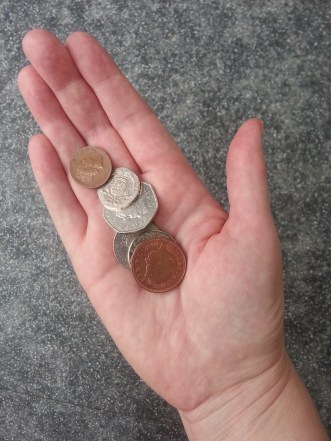
coins on handSocial media recently brought to my attention the fact that my post on this topic from January 2016 is now woefully out of date. The UK’s research councils now have an umbrella body, UK Research and Innovation, which came into operation last year. So far it doesn’t seem to have improved the funding situation for indie researchers in the UK, though I live in hope.

Anyway, the good news is that I have found a couple more funding sources that UK indie researchers can apply to. Also I have updates on those that were in my previous post, including one for European researchers. So here goes.

The British Academy offers Small Research Grants, in partnership with Leverhulme, of between £500 and £10,000 which may be spread over two years. These grants are for research expenses only, in the humanities and social sciences. Projects may be solo or collaborative. If collaborative, the lead scholar must be based in the UK, but beyond that, people from other countries may be involved in the project. The funders look for a clearly defined piece of work with an identifiable outcome.

The Wellcome Trust offers Research Fellowships for health-related researchers in the humanities and social sciences who do not hold established academic posts. These are for up to three years (or even longer, if part-time) and can be of a total value up to £275,000. You need to work at a ‘host organisation’ and the grant can cover a basic salary, personal removal expenses, and research expenses.

The Independent Social Research Foundation offers Independent Scholar Fellowships for European researchers. They are intended to buy out someone’s time for up to a year, with a maximum award of £25,000 or €28,500 depending on location, to enable them to work on a research project or an article or book.

The Leverhulme Trust offers Research Fellowships for experienced researchers in any discipline, including independent researchers, to complete a piece of original research. The fellowships may last for 3-24 months and the maximum value is £55,000. The awards provide research expenses over and above normal living costs and/or provide a contribution towards reasonable replacement costs or loss of earnings.

The Winston Churchill Memorial Trust offers Fellowships for travel in one or two continents, for 4-8 weeks, to find ‘innovative solutions to today’s most pressing problems’ from experts abroad. The grant covers all the costs of travel: transport, accommodation, food, visas, travel insurance, and so on. It does not cover loss of earning or replacement costs.

On the one hand, these are paltry amounts of money compared to the £6 billion of UKRI funding each year that indie researchers can’t access directly. But on the other hand, I could do a great deal with a small five-figure sum. This is partly where I think the larger funders are missing a trick: indie researchers don’t have big overheads so we’re very cost-effective. So far I’ve tried for Fellowships from the Leverhulme Trust and from the Winston Churchill Memorial Trust; no luck yet, but I shall keep trying.

Then of course there’s Patreon, crowdfunding and so on. This blog is funded by my beloved patrons. It takes me around one working day per month to post here each week. At the time of writing I’m receiving funding of $34 per month. If you think a day of my time is worth more than $34 – you can help! Ongoing support would be fantastic but you can also make a one-time donation through the PayPal button on this blog if that works better for you. Support from Patrons and donors also enables me to keep this blog ad-free. If you are not able to support me financially, please consider reviewing any of my books you have read – even a single-line review on Amazon or Goodreads is a huge help – or sharing a link to my work on social media. Thank you!


Don’t Get Off At Cliché Central

clicheI went to a meeting recently with some clients, lovely people doing really worthwhile work, and boy did they love a cliché. They were forever touching base, working across the piece, and moving the dial. There were any number of deep dives and light touches, and they were either sold on something or not feeling it. Learning had to be captured (poor thing) and change had to be embedded (though they never said into what).

By the end I was ready to prepare a bingo card for the next meeting. More seriously, though, I was getting a sense that these clichés had a couple of effects. One was positive and one was sinister. On the positive side, the common use of language was serving to create and build group identity. On the sinister side, clichés were so prevalent that they seemed to be reducing the space available for creative thought and discussion.

A cliché is initially a creative, original, sometimes even funny way of saying (or writing) something. It is so effective that it gets repeated a lot, and that is what turns it into a cliché. It stops being creative and original and starts being habitual, almost reflex, and can be stultifying in its effect on speech and prose.

Using clichés is lazy writing. Avoiding clichés requires more effort, more thought and care. Whatever you’re writing – job application, journal article, funding bid, doctoral thesis – aim for the specific. The initial impact of a cliché is lost through overuse, so it can seem quite vague, while particular details often seem interesting and fresh.

Take this short paragraph from a draft research proposal:

We will leave no stone unturned to ensure we get as many questionnaire responses as possible. Then it will be just a matter of time before we analyse the data and write the report. At the end of the day the research report will be fit for purpose.

Compare it with this version:

We will make every effort to maximise questionnaire responses. Our strategies will include: circulating the link by email and by social media; monitoring respondents’ locations regularly and targeting any identified geographical gaps; and offering a prize draw as an incentive. The questionnaire will be live online for one month, and it will take us another two weeks to analyse the data and write the draft report. We will write in plain English and the draft will be submitted for feedback which we will use to produce the final version.

The first version is stuffed with clichés and assertions and tells the reader nothing of substance. The second gives specific details, explaining how the researchers propose to achieve their aims.

It is really sensible to avoid clichés in your writing. Whatever you’re writing. What would you write in a condolence card? “I’m sorry for your loss”? “You are in my thoughts/prayers”? Don’t do that. Take a little time to think about the person who has died. Is there a memory you treasure that you could share in a few words? Perhaps an impact the person had on you that you could describe briefly and which will form part of their legacy? Whoever you are sending the card to will have dozens of others bearing standard clichés. Make the effort to send them something personal, real, authentic. It doesn’t have to be long, or take long, and it will mean a great deal more than platitudes.

One place you can get away with clichés is in titles, as with the title of this piece (which I could equally have called Colour Me Clichéd, or The Cliché At The End Of The Universe, or… you get the idea). But that’s about the only place you can use them in academic writing. So don’t!

This blog is funded by my beloved patrons. It takes me around one working day per month to post here each week. At the time of writing I’m receiving funding of $35 per month. If you think a day of my time is worth more than $35 – you can help! Ongoing support would be fantastic but you can also make a one-time donation through the PayPal button on this blog if that works better for you. Support from Patrons and donors also enables me to keep this blog ad-free. If you are not able to support me financially, please consider reviewing any of my books you have read – even a single-line review on Amazon or Goodreads is a huge help – or sharing a link to my work on social media. Thank you!

Achieving A Good Work-Work Balance

work workA lot is said and written about achieving a good work-life balance, as though work is only one thing (and life another). Work is in fact several things and achieving a good balance between them is also important. In fact, a good work-work balance is an essential prerequisite for a good work-life balance.

Let’s start by thinking about paid and unpaid work. If you’re doing more unpaid than paid work, you are more likely to be a woman than a man. For sure some men do more unpaid than paid work, and anyway gender isn’t binary, but nevertheless this is a feminist issue. Having said that, sometimes more unpaid than paid work is inevitable, such as if you’re an unemployed job-seeker or on maternity leave. But if you’re employed or self-employed such that paid work occupies a good chunk of each week or month, you’ll need to take care to balance that paid work with any unpaid work you take on.

Of course people can have more than one job, or a job plus self-employment, or several kinds of paid self-employment. I currently earn money from research, writing, teaching, speaking, private coaching, and occasional bits of consultancy advice. Unpaid work, too, comes in a variety of forms. Although I earn money from my writing, I don’t receive any income until after my work is done, so the actual act of writing is unpaid (except for the rare occasions where some lovely person decides to pay me to write, which I’m glad to say does happen from time to time). But I love writing so I’m going to do it anyway. My visiting fellowship at the UK National Centre for Research Methods is also unpaid, though I do receive access to academic literature and some mentoring in return for providing help with various academic tasks, none of which are overly time-consuming or onerous.

Other forms of unpaid work include:

  • Formal volunteering (I’m currently a member of the publications committee of the Academy of Social Sciences)
  • Informal volunteering such as helping out a neighbour on request, reviewing an article for an academic journal, or joining a community litter-pick
  • Caring for family members who need your care, perhaps because they are very young or very old or living with one or more disabilities, and
  • Domestic work such as cleaning, shopping, and cooking.

We all have to do domestic work, though there are shortcuts – grocery shopping can be done online, ironing is not as important as some people seem to think, and if you have spare cash you may be able to outsource cleaning/gardening/DIY etc. But you will still have to do some domestic tasks. Also, caring may not be optional. If you have children you’re generally expected to meet their needs, while caring for older relatives or those living with disabilities may be optional in theory but is likely not to feel optional in practice.

However, formal and informal volunteering are optional and when necessary you can resign from formal positions or say no to informal requests. I have posted before about why and how to say no; it’s not always easy but it is essential if you are to create a good work-work balance. We all know people who wear themselves out doing everything for everyone and forget to meet their own needs. Maybe you’re one of those people. If so, you need to look at your unpaid work and think about what you can jettison. This can be difficult: it feels good to be needed, and it can be demoralising to realise that you are not indispensable. But it’s not impossible. And if you don’t control your unpaid work, it may end up controlling you.

In the final year of my PhD, realising that push actually had come to shove and I needed to spend a lot of time writing my thesis, I gave up all of my formal volunteering. I had a few roles at the time and giving them up was the only way I could meet my thesis deadline. I also turned down various offers of unpaid work – some of which were really tempting – on the grounds that I needed to get my thesis written. My doctoral work was also unpaid, as I was self-employed, and spending lots of time writing my thesis was quite enough unpaid work for one year. This meant I had a good work-work balance. (I gave up most of my social life for that year, too, so my work-life balance was terrible, but it was temporary and a means to an end.)

These days I take on one formal volunteering role at a time plus an honorary fellowship. Alongside my unpaid writing work, and the unpaid admin that goes with running a business, this is plenty to set against my paid work. So on the whole I think I have a good work-work balance. What about you?

This blog is funded by my beloved patrons who help with my work-work balance. It takes me around one working day per month to post here each week. At the time of writing I’m receiving funding of $34 per month. If you think a day of my time is worth more than $34 – you can help! Ongoing support would be fantastic but you can also make a one-time donation through the PayPal button on this blog if that works better for you. Support from Patrons and donors also enables me to keep this blog ad-free. If you are not able to support me financially, please consider reviewing any of my books you have read – even a single-line review on Amazon or Goodreads is a huge help – or sharing a link to my work on social media. Thank you!

How To Check An Index

index checkingIn August 2012 I was eagerly awaiting publication of my first research methods book, Research and Evaluation for Busy Students and Practitioners: A Time-Saving Guide (now in its second edition). I received an email asking me to check and give feedback on the attached draft index. I had absolutely no clue how to check an index. It looked like a credible index to me so I sent an email back saying thanks, it looks great, and hoped that would pass muster.

In May 2014 I was delighted to receive another email telling me that the book had been positively reviewed in the International Journal of Social Research Methodology. Although the review was indeed predominantly positive, the reviewer – as reviewers will – offered some criticism too. For example, she stated that, in contradiction to the book’s title, evaluation had only been mentioned once in its pages. Almost two years had passed since I’d worked on the manuscript and I began to doubt myself so I turned to my copy to check. I was reassured to find evaluation mentioned on many pages. But then I wondered, how could the reviewer have made such an error? The rest of her review suggested that she had read the book quite carefully. I turned to the index – and found that there was only one page number given for ‘evaluation’.

I could argue here that the reviewer should have been more careful, or that the indexer should have been more thorough. But actually I think it’s my fault because I didn’t know how to check an index. On the plus side, this is a useful cautionary tale which demonstrates that indexes are used by many people in many ways. This is something that indexers understand, though they are not infallible and will never know a book as well as its author – which is why authors are asked to check indexes. But nobody ever explains how to check an index. So I’m going to try to do just that. I’m still no expert, but I have learned some points I can share.

There are three key points to consider: what the index does for the book, what the index does for the book’s readers, and whether the index is a good index by the standards of other indexes. These can be converted into three questions:

  1. Does the index accurately reflect the content of the book?
  2. Does it do so in a way that will make sense to your readers?
  3. Is the index, in itself, a good quality index?

To answer the first question, begin by making a list of key words from your title, chapter headings, and sub-headings. Ensure all of those words are properly and fully represented in the index. If they’re not, don’t try to fix it yourself or even make suggestions about how to fix the problem. Simply explain to the indexer which words need more prominence and why. Then let them sort it out because they will be able to do so far more quickly and effectively than you.

Once you’ve done that, read through the index with your book’s readers in mind. Is the language of the index closely aligned with the language of the book? Are the headings and sub-headings concise and useful? Is the index logically organised and easy to read? Are there double postings when necessary, e.g. ‘data: quantitative’ and ‘quantitative data’? Is the punctuation clear and consistent?

Then consider the more detailed indicators of index quality, usefully set out by the American Society for Indexing. For example:

  • Do main headings or sub-headings have more than 5-7 page numbers attached? If so, they may need to be broken down further.
  • Are there a reasonable number of sub-headings for each main heading? If there are more than a column’s worth then some may need to be combined.
  • Are sub-headings at a sensible level? If not, revision may be needed.
  • Are the page numbers accurate? Spot-check some to make sure.

If you want to know more, the ASI have also produced a book on the subject: Indexing for Editors and Authors: A Practical Guide to Understanding Indexes. I haven’t read it myself yet but it looks comprehensive and useful. (Thanks to Nicola King aka @icemaiden1964 for pointing me to these resources on Twitter.)

When my second edition index arrived and evaluation still didn’t have a high profile, I asked the indexer to make appropriate amendments. Which she did, quickly and cheerfully.

These days I feel more confident when I receive an index to check. I hope you will too.

If you have any good index-related stories to tell, please share them in the comments.

This blog is funded by my beloved patrons. It takes me around one working day per month to post here each week. At the time of writing I’m receiving funding of $34 per month. If you think a day of my time is worth more than $34 – you can help! Ongoing support would be fantastic but you can also make a one-time donation through the PayPal button on this blog if that works better for you. Support from Patrons also enables me to keep this blog ad-free. If you are not able to support me financially, please consider reviewing any of my books you have read – even a single-line review on Amazon or Goodreads is a huge help – or sharing a link to my work on social media. Thank you!