
 It has always struck me as odd that people don’t recognise writing as a research method. I doubt there is a single piece of formal research in the Euro-Western world which doesn’t involve writing. Yes, we can make all our reports with video, but those videos need scripting and that requires words. As researchers, writing is one way in which we exercise our power. You may not think of yourself or your writing as powerful, yet writing is an act of power in the world. I was reminded recently by a colleague that my words on this blog are powerful. I’d forgotten. It’s easy to forget, but we need to remember.
Writing, in Euro-Western research, is universal. It’s the one method used regularly by both quantitative and qualitative researchers. Perhaps that’s why it isn’t recognised as a method, because it unites us rather than dividing us. But it is a method, and I would argue that it is a qualitative method. We can’t do research without writing, and how we write affects the ways our work is understood and used by other people.
I’ve been interested in the terminology around the COVID-19 pandemic, which I think provides a useful example. Last week I wrote a post about self-isolation. Following a lot of travelling the previous week I’ve been voluntarily staying at home, seeing only my partner and a couple of delivery people. One friend challenged my use of the term ‘self-isolation’, saying that in their view I was doing social distancing because I wasn’t sleeping separately and staying 2m away from my partner or using separate washing facilities, and I was still taking deliveries in person. I could see their point, though I know others are using the term ‘self-isolation’ in the same way as me. My view of social distancing is that it is more about literally keeping our distance from each other in public places. But these are new terms and we’re all trying to figure this whole thing out while it’s happening.
However, neither of them are particularly lovely terms, and I have appreciated the appearance of alternatives. The first I saw was I think an FB post taken from Instagram (I can’t remember who generated either post now – my apologies; if it was you or you know who it was, please comment below and I’ll edit to credit). The post suggested that we’re not doing social distancing, we’re doing physical distancing for social solidarity. I really liked that concept. Then yesterday Leo Varadkar, Taoiseach of Ireland (and a doctor), spoke of cocooning, and I heard that Americans were talking of ‘shelter in place’.
While I have no evidence for this beyond my own reactions, I suspect that more positive terms are likely to lead to more acceptance. Asking someone to isolate themselves has connotations of loneliness, sadness, and prison (which also has associations with the term ‘lockdown’ currently in use around the world). Physical distancing sounds easier and more accurate than social distancing, and coupling it with social solidarity makes it feel stronger and more righteous. Cocooning makes me think of cosiness and warmth, plus it rhymes (or almost) with other gentle words like soothing and crooning. Asking someone to shelter in place has connotations of home, familiarity, and safety.
As researchers, we often have new information to impart and we sometimes arrive at new concepts which need to be named. There are a whole bunch of words and phrases for us to choose from in writing each new sentence. The words and phrases we use can make a great deal of difference to how our work is received. This means we need to take care in choosing our words and phrases, and in putting them together to make sentences, and in putting sentences together to make paragraphs. These tiny laborious steps are like the strokes of an artist’s brush or the stitches from a crafter’s needle: the beating heart of the writer’s art.
This blog, and the monthly #CRMethodsChat on Twitter, is funded by my beloved patrons. It takes me at least one working day per month to post here each week and run the Twitterchat. At the time of writing I’m receiving funding from Patrons of $52 per month. If you think a day of my time is worth more than $52 – you can help! Ongoing support would be fantastic but you can also make a one-time donation through the PayPal button on this blog if that works better for you. Support from Patrons and donors also enables me to keep this blog ad-free. If you are not able to support me financially, please consider reviewing any of my books you have read – even a single-line review on Amazon or Goodreads is a huge help – or sharing a link to my work on social media. Thank you!
 Yesterday afternoon I came home at the end of a week away teaching and speaking at universities in Southampton (England) and Stavanger (Norway). It was an odd week: last Sunday emails were whizzing back and forth about whether events might be cancelled; by Wednesday night the organisers in Stavanger decided to cancel the last half-day of their conference scheduled for the next morning; and on Thursday morning they got so worried by rumours in Norway that Oslo airport was about to close, that they booked me a new flight back to Heathrow that afternoon and a hotel at the airport (I’d previously booked myself onto an early flight the next day to Manchester).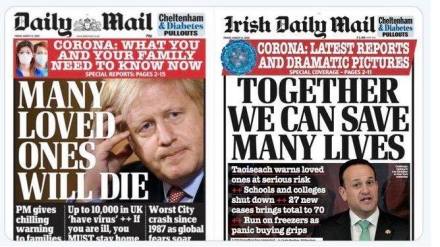
 The ‘blurb’ is the text on the back of a book’s cover which tells you what the book is about. It’s not simply a description, though; it is also a sales tool. For this reason
  I only know one person, now, who shares Facebook posts saying things like ‘share this post and your dearest wish will come true by midnight’. I haven’t seen a really horrible digital chain reaction (“share this or one of your friends will DIE”) for a long time. Most digital chains seem to have morphed into forms of niceness, particularly among women, at least in my corner of the cybersphere. But I still don’t pass them on.
 Taking to Twitter this morning as usual, I discovered that today is Random Acts of Kindness Day (aka #RandomActsOfKindnessDay). My first thought was bah, just one day? One out of 365 (or even 366 in this leap year)? That’s rubbish; let’s commit random acts of kindness EVERY day!
 Recently I’ve been writing books in collaboration with other authors. I collaborated with
 I was doing a telephone interview for a client this morning and my interviewee, let’s call them Ali, said something that made me stop and think. Ali had spent around 35 years working for local government and was talking about the devastation of public service budgets in the UK which has left some local areas with no services for those in need of support as a result of mental health problems, domestic violence, chronic illness, and so on.
 There’s lots I could write about this week. I could write a post around my new book, out this very week:
  This has been a helluva year workwise. I could focus on that: calculate how many train journeys I’ve taken, how many beds I’ve slept in – it would be a lot. That’s mainly why I’m so tired, I think. I’m not short of material for this blog; I’m short of energy. I need a break. So I’m going to have one. Beginning on Friday, when I won’t have done all the jobs I wanted to do, but I will have done all that I can. I’ll start work again on Monday 30 December, but I’m going to take a slightly longer digital break – I’ve already ducked out of Instagram, and I’ll be weaning myself off Twitter and Facebook over the next few days. I’ll be back online, in the New Year, when I’m ready. This blog, too, will be quiet now until the first full week of January. I wonder what I’ll post about then… I envy my fellow bloggers who can generate several posts in one go; I almost always write mine the same week as I publish them. It’ll be a whole new decade. I wonder if I will feel any different. I doubt it, really – except for, I hope, a little less tired.
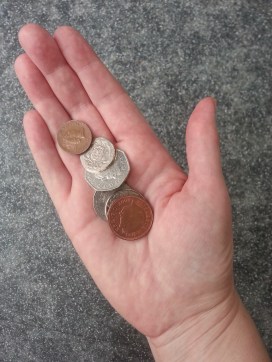 I’ve been writing steadily since 2011, and I’ve just done my accounts for 2018-19. I have published three full-length books (one in 2018) and one second edition (in 2017) for my main publisher. I’m now writing for two other publishers and have received several small advances for those books. When I say ‘small’, I mean between £125 and £500, so nice to have in the bank but not at all representative of the amount of time I spend writing the books.
 This is a crazy year of writing. A
  Helen Kara