PhD Guides As Audiobooks

I have news! The short e-books I have written in the PhD Guides series are being produced as audiobooks! They are being voiced by the excellent Leigh Forbes who is a joy to work with. As with the print books, the first one – Starting Your PhD: What You Need To Know – is free of charge, and it is available now. There are currently multiple distributors working to make the audiobook available. As each platform goes live, the links will be added below — so please check back regularly for updates.

I know many people prefer listening to reading. Some find it more accessible, and for others it is simply more convenient because they can listen as they run, drive, clean their home or do other activities that don’t require much brainpower. I have been wanting to produce audiobooks for years so I am delighted to have reached this stage.

There are various reasons I made this e-book free in both formats. Partly it’s a marketing decision: the first e-book in a series is often free because (a) people are more likely to take it up and (b) if they then enjoy listening or reading, they are more likely to buy other books in the series. And partly it’s a gift to the research community which has given me so much. It includes all the information I wish I’d had before I started my own PhD. Though one of my aims for the book is that it can help people, for whom a PhD is not the best course of action, to figure that out before making a financially, mentally, and emotionally costly commitment. I loved my PhD, but it’s not right for everyone, and finding that out before you start is infinitely preferable to finding out a year or two into the process.

I’m hoping that one day some of my other books will be produced as audiobooks, but that is beyond my control. If it does happen you can be sure I will write about it here. In the meantime, if you decide to listen to any of my audiobooks, please do let me know what you think.

Available links so far:

Kobo, Walmart
NOOK Audiobooks
Libro.FM
Google Play
Storytel
Everand
Chirp

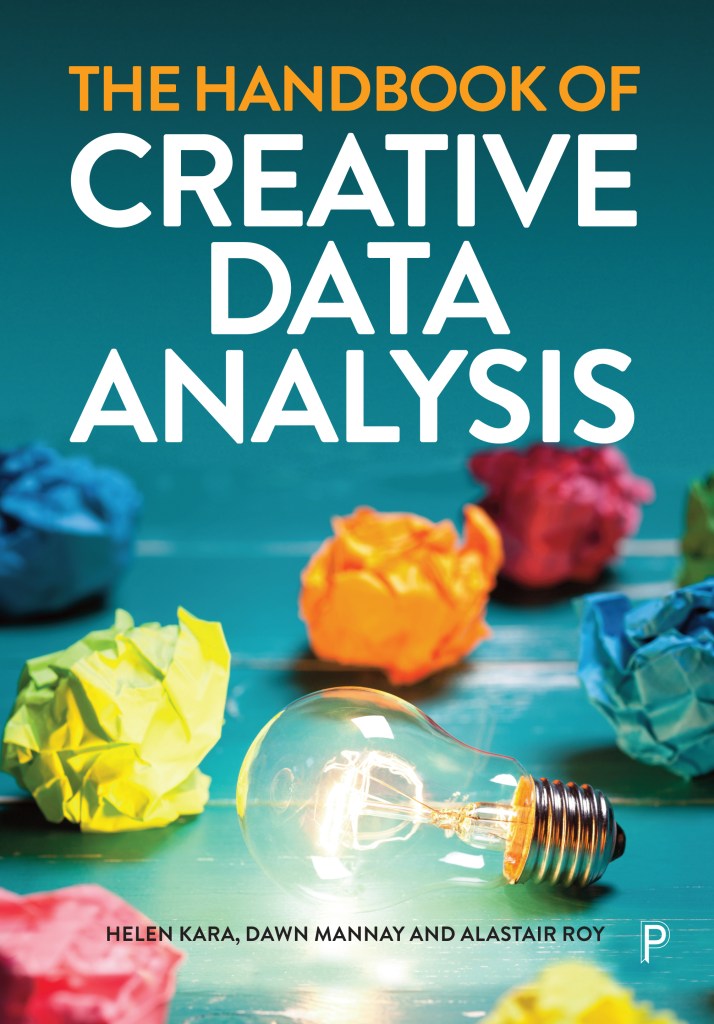
The Handbook of Creative Data Analysis

I am delighted to say that The Handbook of Creative Data Analysis was published this month. It’s a chunky tome with 29 substantive chapters, each outlining a creative method and its implications, plus introductory and concluding chapters by the editors.

Here’s how it came about. I first wanted to do this book in 2016. I knew it wasn’t a book I could write myself unless I could get some funding to research it – I applied for a grant from Leverhulme in 2017, for which independent researchers were eligible, but I was unsuccessful. I didn’t think it was a book that could be co-written, either. I thought of an edited collection, but wasn’t confident of doing that well enough on my own. And I didn’t have any good ideas about who to ask to co-edit with me.

Then in February 2021 I chaired a webinar on creativity in research for Policy Press with Dawn Mannay (Professor of Creative Research Methodologies at Cardiff) and Ali Roy (Professor of Social Research at UCLan). I already knew them both and it was a pleasure to do the webinar with them. We were surprised by the number of questions about data analysis, and after the webinar it occurred to me that they would be good co-editors for the book I had in mind. Then I considered their busy academic lives and figured they probably wouldn’t be interested. Then I thought I could just send an email to ask – nothing ventured, nothing gained… and they both said yes!

We decided Policy Press should publish the book and we put together a call for proposals. At this stage we were envisaging a standard-sized book with maybe 12 chapters. What we weren’t envisaging was around 60 proposals, most of which were really good. So we asked Policy Press if we could do a Handbook instead and they said yes. (Around this time I had also been asked to edit the Bloomsbury Handbook of Creative Research Methods. Fortunately I was able to divert a lot of the good proposals we couldn’t fit into the Policy Press Handbook to the Bloomsbury Handbook, so we didn’t have to reject too many outright.)

The process of editing this Handbook was a joy for several reasons. Dawn and Ali were great to work with – we named ourselves ‘good cop’ (me), ‘bad cop’ (Dawn), and ‘ambivalent cop’ (Ali)! I wanted to say yes to as much as possible, Dawn had a keen eye for quality standards, and Ali was great at seeing the merits of, and balancing, different arguments. And the combination of those three attributes was, in practice, greater than the sum of its parts. Then our contributors were, without exception, terrific, responsive, collegial people to work with. And Policy Press were thoroughly supportive throughout.

The part I liked best, though, was the learning. Each individual chapter held fascinating lessons and made me want to have a go at doing analysis with emojis, or reflective stitching, or word clouds. But there were some overall learning points, each made by several authors, that I found particularly interesting. The first is that any data can be analysed creatively: quant or qual, conventionally collected or creatively generated. The second is that analysis is not a discrete phase of research which falls between acquiring data and reporting results. Analytic work begins at the design stage of research and continues through dissemination and beyond. The third overall learning point is that doing analysis differently helps us to find new insights, learning, and understanding. The fourth is that analysing data often requires creativity, whether or not this is explicit.

Researchers use tacit as well as acknowledged creative practices to support their analytic work, and this is highlighted in several chapters. These tacit creative practices have always fascinated me. When I get stuck in the analytic mire, I write poems or create diagrams to help me move forward. Sometimes only half a poem or diagram, and my analytic poems never see the light of day though occasionally my diagrams do. But these techniques help my analytic thought processes. I was interested to discover other tacit creative practices, such as visual arts (doodling, drawing, collage etc), making (models, installations etc), music (to accompany and promote thought), and embodied practices such as walking, running and swimming. No doubt there are others too.

The fifth overall learning point is that analytic processes do not need to be fixed or rigid. This book demonstrates, in many ways, that analytic work can be experimental, playful, and fun.

At present the book is only available in hardback and digital versions. The digital version is much cheaper than the hardback, and you can get a 25% discount on either version by signing up to the publisher’s e-newsletter. If you are at college or university you should be able to get hold of a copy from the library. And there will be a paperback in due course. I am so happy that this book is out in the world because I think it will help a lot of people.

NCIS Guide for Independent Scholars 

NCIS stands for the National Coalition for Independent Scholars which is in fact a global institution that includes independent researchers as well as independent scholars. I have been a member for some years and was very grateful when they supported the inaugural International Creative Research Methods Conference with sponsorship plus a conference chairperson and someone to manage the online chat.  

I am grateful to them again because they have produced an open-access Guide for Independent Scholars which is free to download. It is a full-length book with 17 chapters in five sections (full disclosure: two of the chapters are by me). The Guide was edited by Amanda Haste and Linda Baines, former and current Presidents of NCIS, and they did a fine job. 

The main reason I am grateful is because I think now people will stop asking me to write a book about and for indies. Or at least, if anyone does ask me, I can say no because it’s already been done – and done very well. I think it is a much better book than I could have written, because independent research and scholarship is an incredibly wide and varied profession, and multiple voices of people from around the world give a much clearer view of this breadth and variety than I could have done alone. I think this is part of the reason why I didn’t want to write a book for indies. I have a strong instinct for which books I can write by myself, and which need a pair or team of authors or to be an edited collection. I guess maybe I could have edited a collection of chapters, but Amanda and Linda are far better placed to do that, with their extensive NCIS networks, than I would have been. 

Also, I have been glad to be able to read this book! It contains a lot of valuable stories and nuggets of information, useful even for someone like me who has been independent for 25 years, and invaluable for someone starting out or early in their independent career. I recommend this book if you are independent yourself, or you work with indies, or you know an independent researcher or scholar, or you are considering moving into independent work. I am pleased to be able to tell you that it is a good read – at least, the chapters not by me are; you will have to judge mine for yourself. 

Can You Help?

Dear Friends,

If you are not an academic and my work has had an impact on you, I would like to hear about that. Also, if you are, or were, an academic and my work had an impact on you at a time when you were not an academic, I would like to hear about that too. I am specifically interested in the impact of any of the following:

    • Open courses on Creative Research Methods and/or radical Research Ethics that I have run for NCRM in the UK, online, or in person.

    If you can help, please use my contact form (or my email address, if you have it) to send me a message about which of the above resources had an impact on you and the difference(s) made to you – whether to your thinking, work, career, life, anything at all. Your message can be as short or as long as you like. 

    Many thanks and kind regards,

    Helen

    Why Did I Edit Such an Expensive Book?

    The Bloomsbury Handbook of Creative Research Methods, published last month, is at present only available in hardback at a recommended retail price of £140, or as an ebook at £126. Regular readers will know that I have ranted on this blog before about the iniquitous prices charged by some academic publishers, and advocated working with not-for-profit university presses. So, it is reasonable to ask me, as some people have: why did I agree to edit this expensive book for Bloomsbury?

    The backstory is this: Maria Brauzzi, an editor at Bloomsbury who I did not know, emailed me in late 2021 to invite me to edit a Handbook of Creative Research Methods for them. At the time I had started work on editing a creative data analysis book for Policy Press with Dawn Mannay and Ali Roy, and chapter proposals were landing in my inbox. We received over 60 proposals, most of which were good. We had originally intended to produce a normal-sized book with around 12 chapters, but with so many good proposals to choose from, Policy Press agreed to produce a Handbook of Creative Data Analysis with around 30 chapters. (I’m delighted to say that is now in production and will be published in early September.)

    Even so, selecting the chapters to include in the Policy Press Handbook was tough. Then I had a brainwave! I hadn’t replied to Maria at Bloomsbury because I couldn’t decide whether to accept her invitation. So, I emailed back and told her I had too many good proposals to fit into the Handbook I was doing with Policy Press, and asked whether I could pivot some of them into the Handbook she wanted to commission for Bloomsbury. She said ‘yes!’ so I ended up being sole editor of one Handbook and lead editor of another at the same time. 

    I do not recommend this course of action unless you have, as I had then (and I’m glad to say, have again now), a solid, competent, and reliable support worker or other assistant. I could not have edited this Handbook without my support worker’s help. But editing it meant I was able to offer publishing opportunities to people who deserved them, including some people from marginalised groups. I’m glad I could do that, even though it meant working for a publisher who screws royalties down to the bone, lower than any of my other publishers, while earning a massive profit by selling books at prices that most people can’t afford.

    So, to redress the balance a tiny little bit, I am offering a free copy of the Handbook to one of my blog followers. If you’re not a follower yet, you should be able to see a ‘Follow Blog Via Email’ notice with space to enter your email address. Any blog follower who wants a chance of a free copy needs to comment below and check back here a week after this blog has been posted to see who has won. My support worker will put all the names in a hat and pick one at random, then add a comment stating who will receive the free copy. I will post a book to that person, wherever they are in the world. 

    Congratulations to Lucia 🎉 our winner of the prize draw for a free copy of The Bloomsbury Handbook of Creative Research Methods!

    Indigenous Research Methods: Another Reading List

    I thought it was time to share more of the books from my shelves. As with my previous post on this topic, this post is a reflection of my personal collection, built from the recommendations of students, colleagues and people on social media, as well as my own explorations. The more I have read and worked with Indigenous scholarship, the more convinced I have become of the importance of including these perspectives in my own work wherever they are relevant. I am glad to be able to use my own power, such as it is, to amplify the voices of scholars who are much more marginalised than me.

    Books on Indigenous research methods are very different from books on Euro-Western research methods. Books on Euro-Western research methods are akin to recipe books: combine these things, like this, and you will probably get that result, unless some contextual factor gets in the way. Books on Indigenous research methods don’t start with what to do and how to do it, they start with stories, and thinking, and sharing, and knowing, and learning. One key difference is that Indigenous research is designed to serve existing relationships, and if it is not likely to at least maintain and ideally strengthen those relationships, it is not deemed to be worth conducting. In the Euro-Western paradigm, we teach novice qualitative researchers to ‘create rapport’ with participants, to put them at ease – in effect, to make instrumental use of our friendship skills to obtain information from people we may not ever see again. Euro-Western researchers have begun to question how ethical this is. Indigenous researchers offer us some unmissable clues to the answer.

    I am not, and I will never be, an expert on Indigenous research. Since my book on research ethics came out – with its subtitle of ‘Euro-Western and Indigenous Perspectives’ – I have received several invitations to speak about Indigenous research and to peer-review journal articles written by Indigenous scholars. I always refuse the first, and I only accept the second if the journal editor can assure me that the other reviewers will be Indigenous scholars (which, to date, no journal editor has been able to do). As a white English person I already have too much power in this post-colonial arena. I do not plan ever to use any of it to set myself above or take advantage of the Indigenous scholars who have taught me, and are teaching me, so much through their writings.

    These books could be described as more theoretical than practical but, in the words of Kurt Lewin, the inventor of action research, ‘There is nothing as practical as a good theory.’ Lewin was a Jewish German psychologist who immigrated to the US as an adult in 1933, so he had experienced and understood oppression. He was also, perhaps as a result, much more interested in applied research which could make a positive difference to social problems than to research that might generate knowledge for its own sake. In the Indigenous research literature this distinction is not relevant, made or discussed, because knowledge is conceptualised as collectively owned, in contrast to the Euro-Western paradigm where knowledge is conceptualised as a form of individual property.

    I could say a lot more about the similarities and differences I perceive, but I need to get to the books! The first is Talkin’ Up To The White Woman: Indigenous Women and Feminism by Aileen Moreton-Robinson, Professor of Indigenous Research at RMIT in Melbourne, Australia. This was recommended by various people on social media, and I didn’t get around to buying a copy until last year, but I’m not sorry because I got the 20th anniversary edition with a new preface. It is a book of relevance to every white woman and anyone who uses feminist theory. Although it was written over 20 years ago, it is still highly, urgently topical. The author explains how white women dominate the feminist agenda; invites us to notice and interrogate our white privilege; and suggests we need to figure out how to give up some of that privilege in the interests of greater equality – which, after all, is where feminism came in.

    Syed Farid Alatas is Professor of Sociology at the National University of Singapore. His book Alternative Discourses in Asian Social Science: Responses to Eurocentrism points out how and why Euro-Western social science doesn’t fit with Asian realities. The book covers the whole of Asia and all of the social sciences, and – despite its title – argues that alternative discourses alone are not enough, particularly if they are created in the same mould as the Euro-Western social science discourses so prevalent in Asian universities. Alatas explains in forensic detail how Asian academies are still colonised by Western approaches and curricula. He calls for a ‘liberating discourse’ which will help to popularise Asian ideas and perspectives.

    Antonia Darder is a Puerto Rican and American scholar, artist, poet and activist. She has edited a collection called Decolonizing Interpretive Research: A Subaltern Methodology for Social Change. The foreword, by Linda Tuhiwai Smith, notes that ‘dominant theories … have spectacularly failed to transform the lives of subaltern communities and have instead reinforced privilege and inequalities across all developed and developing countries’ (p xii). In her introduction, Darder points out that an insistence on empirical evidence is a colonialist approach and, in close alignment with Alatas, calls for a reversal of privilege to foreground Indigenous philosophies and approaches.

    Applying Indigenous Research Methods: Storying with Peoples and Communities is edited by Indigenous American scholars Sweeney Windchief and Timothy San Pedro. The editors begin by acknowledging that there is more in the literature about what Indigenous research methods are, and why, than about how they can be applied. This book sets out to correct that imbalance – and says quite clearly on the back cover that it is designed for use and teaching across Indigenous studies and education. Any Euro-Western researcher who is looking for methodological novelty they can use in their own work will not find that here. What they will find instead are inspiring stories of how research can be when it is understood and conducted holistically in and for communities of people who share a system of values which have been developed and tested over millennia.

    Indigenous Canadian scholars Deborah McGregor, Jean-Paul Restoule and Rochelle Johnston have edited Indigenous Research: Theories, Practices, and Relationships. This also focuses on how Indigenous research is conducted in practice and includes inspiring stories to demonstrate some ways this has been done.

    Shawn Wilson, Andrea Breen and Lindsay DuPré have edited Research and Reconciliation: Unsettling Ways of Knowing through Indigenous Relationships. The editors are two Indigenous researchers and one white settler. They explain the troubled complexity of the concept of reconciliation, which means different things to different people and can be co-opted for colonialist purposes. The editors are overtly working towards twin purposes of creating intellectual discomfort in some arenas and, in others, creating and protecting spaces for researchers to work as authentically as possible. And, again, the contributions are inspiring stories – though sadly, unlike all the others, this book doesn’t have an index.

    There are more links between the last three books than their presentation of stories. These books seem to speak to each other, the stories intertwining and sometimes disagreeing, going back and forth and around again but always making progress. Like a conversation. And they are all very readable, written with dialogue and storytelling, poetry and images.

    Lastly I am going to mention again a book I covered in my previous post: Indigenous Research Methodologies by Professor Bagele Chilisa from the University of Botswana. I am mentioning this book again because the second edition is now out and well worth buying and reading, even if you already have the first edition.

    This blog, the monthly #CRMethodsChat on Twitter, and the videos on my YouTube channel, are funded by my beloved Patrons. Patrons receive exclusive content and various rewards, depending on their level of support, such as access to my special private Patreon-only blog posts, bi-monthly Q&A sessions on Zoom, free e-book downloads and signed copies of my books. Patrons can also suggest topics for my blogs and videos. If you want to support me by becoming a Patron click here. Whilst ongoing support would be fantastic you can make a one-time donation instead, through the PayPal button on this blog, if that works better for you. If you are not able to support me financially, please consider reviewing any of my books you have read – even a single-line review on Amazon or Goodreads is a huge help – or sharing a link to my work on social media. Thank you!

    Twelve top tips for co-editing a book series

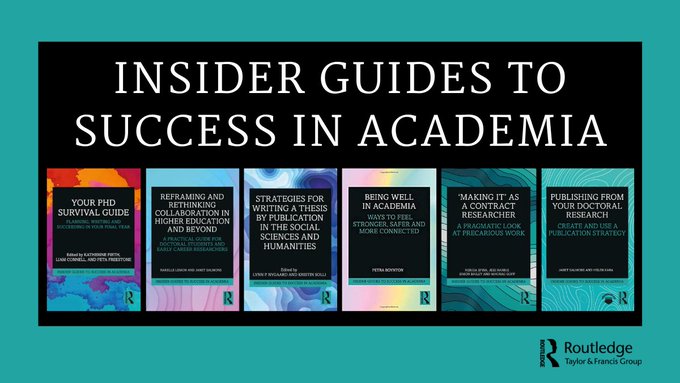
    This post is co-written and simultaneously published with Pat Thomson, to coincide with the launch of the Insider Guides to Success in Academia book series.

    Helen: It’s interesting to reflect on how we do this co-editing thing. We’ve been working together on this series since May 2017, so that’s three-and-a-half years. You and I hadn’t worked together before, though we’d talked a lot on Twitter, a bit by email, and got into a comfy habit of meeting for lunch now and again at a nice pub midway between our 
    offices. Ahhh, those were the days… anyway, now it’s mostly email with the occasional online meeting. Those are the nuts and bolts, but there’s a lot more to co-editing a series than that. I think it helps that we share quite a similar outlook on life. Was that why you asked me to 
    co-edit with you?

    Pat: I’m always prepared to take an educated punt on who might be fun to collaborate with. I saw that you were talking with doctoral and early academic career people on social media, as I was, but you had a very different background. You were an independent researcher, as opposed to me, a full time academic. However, we shared an interest in methodologies and methods. But we also knew about some different things too. As I remember it, we hadn’t actually even met face to face, but “knew” each other online. I think that you can actually get to know people through social media, just as you used to be able to through the medium of writing letters. Over time, as you see how people are on social media you get an impression of how they are and how they might be to work with. So asking you if you’d be interested in working on a series was in part about our shared interests and complementary differences, but also about the hunch that you would be good to work with. But why did you say yes?

    Helen: I was a little bit flattered by you asking, and I too thought you could be fun to collaborate with. But mostly I agreed with you about the gap in the market for short books on topics around academia that didn’t merit a full-length book and so weren’t adequately covered in the literature. It was so interesting to think about! I’ve just checked my records and when we met in April 2018, the first book in the series was being written and we had 21 other ideas of titles and/or authors to follow up. Some have come to fruition now, such as Narelle Lemon’s and Janet Salmons’ book on collaboration, and Petra Boynton’s book on being well in academia. That’s lovely to see. Some didn’t even get off the starting blocks, and we have others in the series that we didn’t consider in that meeting, such as Your PhD Survival Guide which offers doctoral students help for their final year. Many of our authors come from our networks, so clearly networking and thinking are two of the key skills for co-editing a book series. You have more experience of this than me; what would you say are the others?

    Pat: Well there’s choosing a publisher. I’d had a very initial discussion with Sarah, an editor at Routledge who I had worked a lot with before. I’d floated the idea of a series for doctoral and early career researchers that were shorter than usual, covered niche topics were affordable. She was very enthusiastic about the idea and encouraged me to pursue it. She also sent me a few small books that I could look at. At our first meeting, we discussed the style and tone of the books. We agreed on the size question, and also that our books should have a voice somewhere between a blog and an ordinary academic book. We also wanted something where the layout was half way between a text book and a monograph – so we needed a template/house style that allowed for different kinds of exercises, examples, illustrations. So afterwards, when we wrote the actual book series proposal we not only knew the competition and the market as well as the prospective authors, we also had a clear idea of what the books would be and do. And then of course there was the series cover decision!

    Helen: OMG the cover decision… that took us a while, didn’t it? But I’m happy with the results. I have copies of all the books we’ve published so far, and they look good together. That’s important for the Routledge stand at academic conferences – not that those are happening at present, but I hope they will be again in time. So promotion is another skill co-editors need, and of course social media savvy is helpful there too. I think communication skills are also important. You and I communicate well with each other and with our authors and would-be authors. And it mattered to us both from day one to be supportive to people thinking of writing, or actually writing, for our series. I don’t think all series editors do that and I’m not sure why; do you have any thoughts?

    Pat: Well, we are really committed to the series and what we think it can be, and we want it to be super good. We want to make the dream we had about it at the start a reality. I guess we run the risk of being seen as being too hands-on, but I think I’d rather that than distant and un-contactable. And I’ve certainly had the experience of working with a pretty remote series editor when I could have done with some conversation about working with a production editor and that was much harder than it needed to be. We do want our authors to feel supported, and that also means offering some constructive suggestions for improvement.  And of course it’s important that Sarah, our Routledge Editor, shares our view of what the series is and does; we do have a productive partnership with our publisher. That’s important too; we can make suggestions about the series, its direction and processes, and also about its promotion.

    So here’s our twelve top tips for series editing:

    1. Know the field, its debates and authors
    2. Choose a co-editor with complementary skills and similar interests
    3. Identify the niche in the field that the series will occupy, and the potential audience
    4. Imagine the possible series – what it could be – and its USP
    5. Identify the right publisher you can partner with
    6. Build a list of potential titles and authors
    7. Line up the first two or three titles and authors
    8. Write a short and punchy proposal for the series
    9. Work with the publisher on the series identity – size, layout, cover etc
    10. Actively recruit authors and titles
    11. Work with the authors through proposal and manuscript development stages
    12. Actively engage with the publisher and authors in promoting the series

    Why Academics Should Publish Books With University Presses

    I discovered that last Friday was publication day for a book of great interest to me: Indigenous Research Ethics: Claiming Research Sovereignty Beyond Deficit and the Colonial Legacy, an edited collection out of New Zealand and published by Emerald. In hardback. For £85. Or as an e-book, for £80.75.

    I have been cross for a while about the ridiculous pricing of some academic publications, and now I’m furious. I really want to read this book, and it’s way beyond my budget. It will be beyond the budget of most independent or precariously employed researchers. And how many Indigenous scholars can afford £85 for a book – or the e-book with a derisory £4.25 reduction?

    This pricing is calculated for academic libraries. It is closed access in book form. The publisher can claim they are supporting Indigenous researchers and scholars and, sure, those whose work is published in this book get a new line on their CV which may help them in their career. But their work is not going to be widely read, used, and cited by others. Because, guess what, academic libraries are experiencing budget cuts. I was chatting on social media with a senior academic who had asked her university library to get this book, and whose library had said no, that’s above our threshold now.

    This is of course n=1, so let’s take a wider look. I’ve been doing some research into the practices and economics of academic publishing – and it’s horrifying. Of course books and journals are inextricably linked, but I can’t cover both in one post, so I’m focusing on books today; journals in a couple of weeks’ time.

    Broadly, academic publishers can be divided into three categories:

    1. for profit and part of a bigger business;

    2. stand-alone independent for profit; and

    3. not for profit.

    In general, the scholarly publishing industry makes a 35-40% profit margin. Walmart makes 3%. Publishers that are part of bigger businesses are usually part of global corporations who divert a proportion of any profit to their shareholders. In such corporations, the academic publishing arm is often so profitable that it is propping up other parts of the business.

    A lot of scholars are completely unaware of how this works. Most scholars in the social sciences and the humanities have heard of the book publisher Routledge; most STEM scholars have heard of CRC Press. Some know that one or other is part of the academic publisher Taylor & Francis. Few understand that Taylor & Francis is part of Informa, a global corporation in the FTSE 100, huge, wealthy, growing – and making good money for its shareholders. Taylor & Francis isn’t a little bit of Informa, it is the second biggest of five divisions, and, according to the 2019 annual report, is showing ‘good levels of growth’. In 2019 Taylor & Francis’ revenue was £560m, and its adjusted operating profit was £218m. Part of this was due to ‘a steady performance in books’ – 7,300 books, in fact, that year. E-books accounted for 31% of the year’s total book sales.

    I found a vaguely equivalent book on Routledge’s website: Social Science Research Ethics for a Globalizing World: Interdisciplinary and CrossCultural Perspectives, another edited collection. The hardback price is an eye-watering £125, but at least there is a less expensive paperback (£36.99) and e-book (£33.29). They’re still outside my budget, though – my ceiling is £30. (Full disclosure – I could buy the paperback with my Routledge author discount. But we can’t all write for all of the publishers. And these prices are still very high for a 350-page book.)

    By contrast, UCL Press is a fully open access press. It is run by a working group of the UCL Library Committee, and has published 184 books since it was established in 2015. And those books are all fully open access. Which means free. Free to download, free to read.

    Not, sadly, free to write, though – at least, not for all authors. Publication is free for people working at UCL, and for their co-authors and co-editors. UCL also cover the publication costs of up to five non-UCL book projects each year. After that, it costs £5,000 to publish a book of up to £100,000 words. This would usually come from research funders, as part of the dissemination strategy for a research bid.

    So there is still a huge degree of privilege in operation here. To publish a book with UCL Press you need to be connected with UCL, or very lucky, or funded, or rich. You almost certainly won’t be from the global South. I have been worried for a long time that open access would benefit readers at the expense of writers, and this does seem to be happening. But I understand that, on the whole, this is a step on the way to social good, as it offers good quality academic literature more freely to any reader with an internet connection. Also, UCL Press are offering consultancy and training to other universities that want to set up open access publishers of their own.

    There are other OA and scholar-led presses at Goldsmiths, Westminster, Huddersfield and elsewhere. Larger university presses in the UK include Bristol University Press, Liverpool University Press, Manchester University Press and Edinburgh University Press. Then there are the oldest and largest, Cambridge University Press and Oxford University Press. And there are many others around the world. Their mission includes making research available to the public, and giving voice to under-represented groups and experiences. Any surplus income they generate goes to support their mission.

    You can see the difference, too, when you read the books. Routledge publishes some good books but their production values are not high. They are often poorly edited and with inadequate or no index, and their cover designs are basic and repetitive. Policy Press, an imprint of Bristol University Press, also publishes some good books and their production values are much higher. The editing is good, more of their books have good indexes, and their covers are carefully designed.

    So, academics, what do you want for your books? Do you want them to be well constructed and made available to as many people as possible, by an organisation with a mission to help make that happen? Or do you want them to be averagely constructed and available only through some academic libraries, by an organisation that has a mission to line the pockets of its shareholders?

    The recent Open Access Manifesto for Freedom, Integrity and Creativity in the Humanities and Interpretive Social Sciences recommends that scholars in those sectors consider the political and ethical implications of where they choose to publish, and aim for ‘outlets whose values align with your own’. I would recommend that for scholars and researchers in all sectors.

    This blog, and the monthly #CRMethodsChat on Twitter, is funded by my beloved patrons. It takes me at least one working day per month to post here each week and run the Twitterchat. At the time of writing I’m receiving funding from Patrons of $70 per month. If you think a day of my time is worth more than $70 – you can help! Ongoing support would be fantastic but you can also make a one-time donation through the PayPal button on this blog if that works better for you. Support from Patrons and donors also enables me to keep this blog ad-free. If you are not able to support me financially, please consider reviewing any of my books you have read – even a single-line review on Amazon or Goodreads is a huge help – or sharing a link to my work on social media. Thank you!
    Book Giveaway!

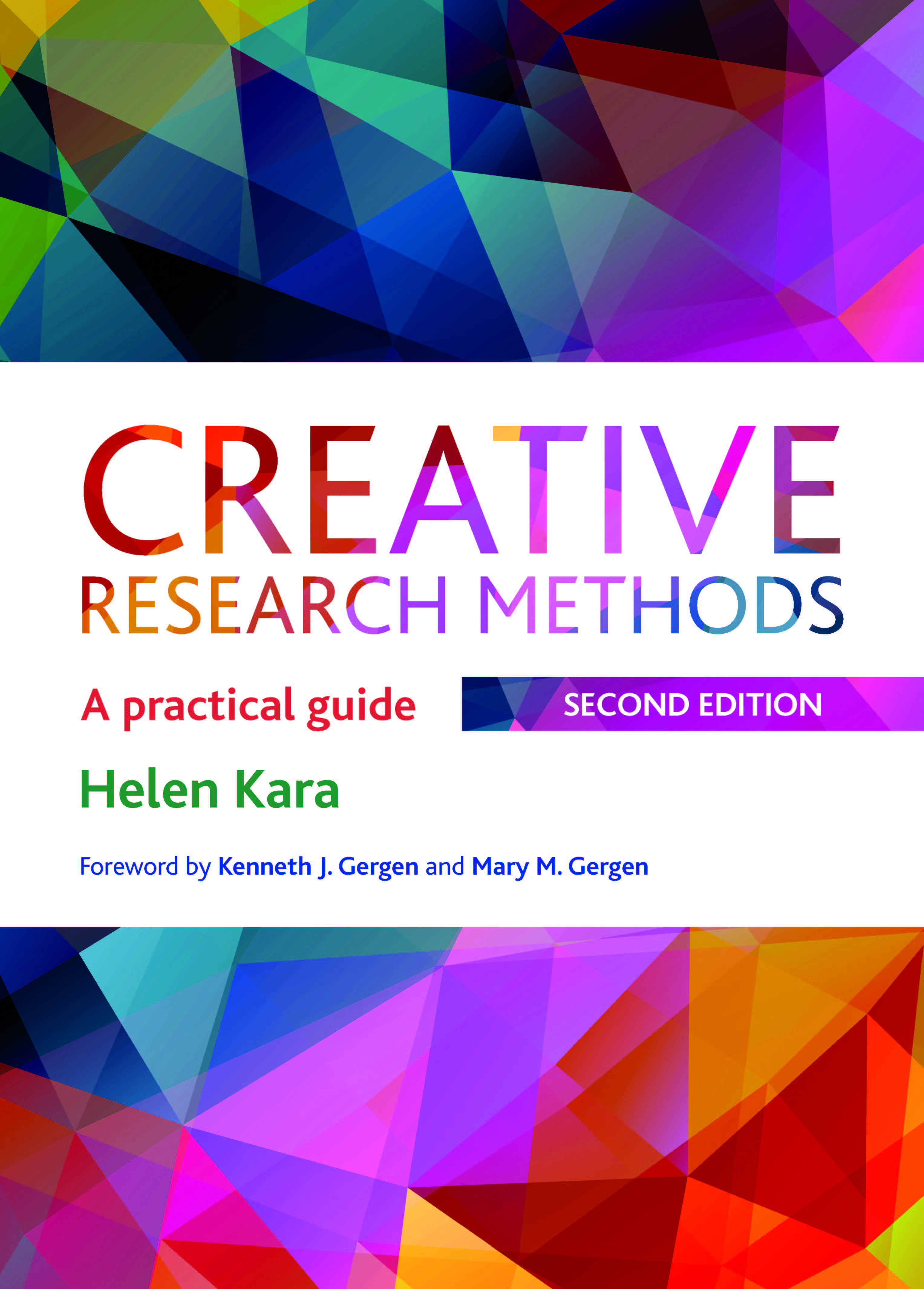
    This week I simply do not have time to write a post for you all. So I thought instead I’d run a 24-hour giveaway for my subscribers. Would you like to win a copy of one of my books? I’m offering a copy of my book on creative research methods – the new second edition – or, if you already have that (or if you prefer), the title of your choice from the Insider Guides to Success in Academia series that I’m co-editing with Pat Thomson.

    If you already subscribe to this blog, hurrah, you’re eligible! If you don’t, the first thing you need to do is find ‘Follow Blog By Email’ (probably on the right of the screen if you’re on a laptop or tablet, at the bottom if you’re on a phone), put your email address in the box and click ‘Follow’.

    (By the way, as far as I am concerned you are subscribers, not followers. I don’t mind having subscribers but I don’t like the idea of having followers because I’m not the Pied Piper or some kind of dodgy cult figurehead.)

    So, OK, now you’re a subscriber, or maybe you already were; either way, hurrah. All you need to do to enter the giveaway is leave a comment below telling me which book you would like if you win. Then in around 24 hours – that’s between 9.30 and 10 am BST on Friday 16 October 2020 – I will type out all the names in the same order as the comments, number them consecutively, and use this random number generator to select the winner. Then I will announce the winner here, they can give me their address through the contact form on this website, and I will send their book to wherever they are in the world.

    Good luck!

    This blog, and the monthly #CRMethodsChat on Twitter, is funded by my beloved patrons. It takes me at least one working day per month to post here each week and run the Twitterchat. At the time of writing I’m receiving funding from Patrons of $70 per month. If you think a day of my time is worth more than $70 – you can help! Ongoing support would be fantastic but you can also make a one-time donation through the PayPal button on this blog if that works better for you. Support from Patrons and donors also enables me to keep this blog ad-free. If you are not able to support me financially, please consider reviewing any of my books you have read – even a single-line review on Amazon or Goodreads is a huge help – or sharing a link to my work on social media. Thank you!

    Learning From Stories

    Human beings learn from stories all the time. In everyday conversation we tell and share stories to teach and entertain and strengthen social bonds: what to cook with a glut of apples, why I found my house keys in the fridge, when auntie Flossie fell off Blackpool Pier. We learn from stories in books and films, in songs and plays, and we tell each other those stories, too.

    Researchers and academics learn from journal articles and policy documents, monographs and webinars. These also contain stories, though they are often in disguise, and they tend to be briefer and with less depth than stories told or shown. A lot of us enjoy this kind of learning, or most of it, though it takes more effort than the other kind.

    I have some good news to share. We can learn useful information for our scholarly work from novels, memoirs, and poetry. For example, regular readers will know of my interests in Indigenous research and ethics, and in anti-racism work. Some of my teachers here are books I have read. As usual with my book posts, there is no system involved, I have just pulled some volumes off my shelves. Some were recommended to me, some I found in bookshops.

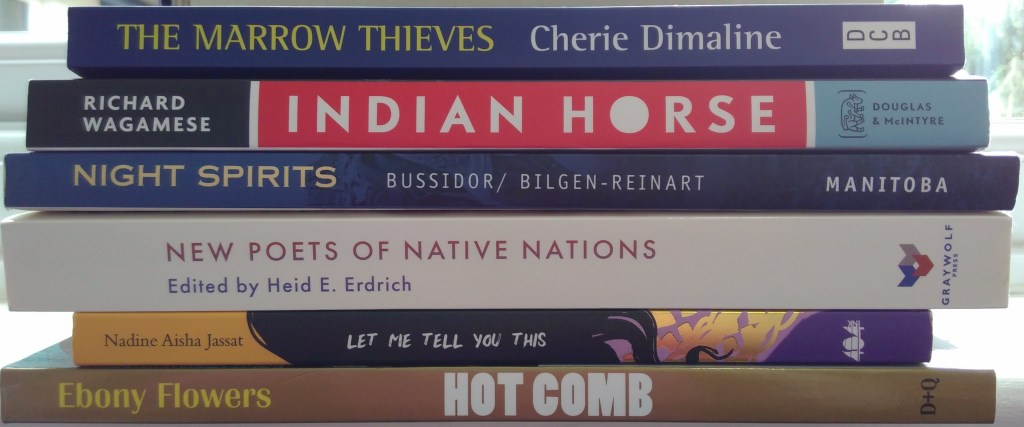
    The Marrow Thieves by Métis writer Cherie Dimaline is a post-apocalyptic tale of a northern America devastated by global warming, where Indigenous people are being hunted for their bone marrow because it has special qualities. The protagonist is a boy called Frenchie who becomes separated from his family and has to travel north to try to find them. This book is classified as Young Adult literature, presumably because the protagonist is a boy, but I wouldn’t let that put you off. If you don’t like any kind of speculation with your fiction, you probably won’t enjoy this book (although there isn’t much), but I do and I did. And I learned a lot about how it can feel to be Indigenous, because that is one of the things novels can teach us which official writing mostly can’t. The Marrow Thieves won a bunch of awards, which is not surprising as it’s a terrific book.

    Indian Horse by Ojibwe writer Richard Wagamese is another book focusing on Indigenous experience. This one is straightforward fiction, telling the life story of an Ojibwe character, Saul Indian Horse, and his trials and joys. It is beautiful, evocative and moving – and informative about the effects of individual, group, systemic, and national racism. It is very skilfully written, drawing me into unfamiliar cultural experiences such as competitive ice hockey, and enabling me to identify and empathise with people unlike any I have ever met. The characters and their experiences stayed with me long after I finished reading. This excellent book has now been made into a film, Indian Horse, which was the highest-grossing English Canadian film of 2018.

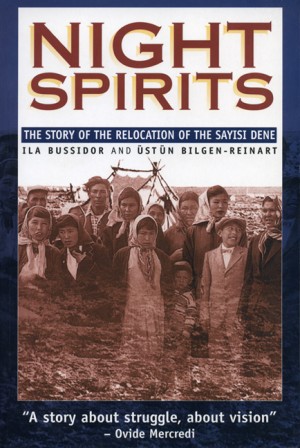
    Night Spirits, by Ila Bussidor and Üstün Bilgen-Reinart, is a true story, the story of the Sayisi Dine people who were relocated – with only a few hours’ notice – by the Canadian government in August 1956. They were moved from their ancestral homelands in remote northern Manitoba to a slum area on the outskirts of Churchill, a frontier town on the shores of Hudson Bay. The Sayisi Dene had had little contact with white people and moved from a life of self-reliant sustainability to being social outcasts. Over the next 17 years, almost one-third of the Sayisi Dene died violently or as a result of their terrible living conditions. Ila Bussidor is a former chief of the Sayisi Dene and Üstün Bilgen-Reinart is a broadcaster and journalist. They worked together to tell this ‘dark story’ and to tell it ‘in hope’. It is well written, but emotionally hard to read because it is so full of injustice and tragedy. Yet there is hope: in 1973 the remaining Sayisi Dene began to assert their independence and leave Churchill to build a new community.

    Poetry, too, tells stories. The anthology New Poets of Native Nations, edited by Ojibwe writer Heid E. Erdrich, brings together the work of 21 Indigenous poets from the 21st century. All the poets are from different parts of the lands we currently call America and Canada. The stories they tell are compelling, lyrical, raw, visual, sometimes funny. I didn’t know any of these poets’ work before I read the anthology, and I was particularly taken with Layli Long Soldier. I wanted to reproduce one of her poems here, but I thought I might fall foul of copyright, then I found it online so here’s the link to Obligations 2 which is an astonishing work, unconventional, perhaps the closest to a perfect poem that I have ever read. This anthology is delightfully multi-vocal and insightful.

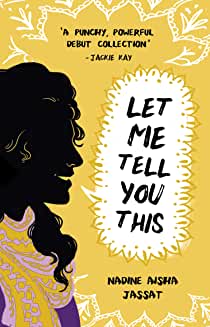
    I also want to learn from single voices and about racism closer to home. I pulled Let Me Tell You This by Nadine Aisha Jassat off the shelves in my last trip to Housmans radical bookshop, which I love to visit when I’m travelling through Kings Cross/St Pancras (I’ll be back when I can travel again, I promise – if you’re in the area with a little time to spare, do go and check it out). Jassat is a young British Asian poet whose voice loves and rages, punches and strokes with deftness and delight. She tells stories of contemporary British Asian life, with an emphasis on women’s and girls’ experiences in family and friendship. Her writing is readable, insightful, and a great teacher. This is her first collection, and it’s an impressive debut; I look forward to finding out what more she has to say in the future.

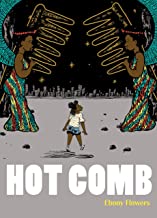
    We’re back to the US for Hot Comb, a terrific collection of graphic short stories by Ebony Flowers, which I found in Waterstones in Cork in February. Regular readers will also know that I love graphic novels and comics, and part of why I love them is for their ability to take me into places I could never go – or, at least, not without causing change by my presence. These stories take me into Black society and let me share and learn from some of the experiences there. They are well written and drawn, with memorable characters. (And I discovered, in finding her link for this post, that Ebony Flowers is also an ethnographer, who uses comics in her research work – yay!!)

    One of the best things about all of these books, and others like them, is I get to learn from people of colour without bothering them in person. And another best thing is that they are all so enjoyable to read – harrowing, too, at times, but that’s part of the point of literature for me: to move me emotionally, because that, too, helps me learn. As well as the grief and loss and pain, there is hope and growth and joy in these books, and humanity, and gentle teaching.

    If your interests are in other areas, search out books and films that deal with your favoured subjects. If you too are interested in anti-racism, then I recommend any or all of the books described above. And if you have recommendations to share, please put them in the comments.

    This blog, and the monthly #CRMethodsChat on Twitter, is funded by my beloved patrons. It takes me at least one working day per month to post here each week and run the Twitterchat. At the time of writing I’m receiving funding from Patrons of $57 per month. If you think a day of my time is worth more than $57 – you can help! Ongoing support would be fantastic but you can also make a one-time donation through the PayPal button on this blog if that works better for you. Support from Patrons and donors also enables me to keep this blog ad-free. If you are not able to support me financially, please consider reviewing any of my books you have read – even a single-line review on Amazon or Goodreads is a huge help – or sharing a link to my work on social media. Thank you!