
 I was doing a telephone interview for a client this morning and my interviewee, let’s call them Ali, said something that made me stop and think. Ali had spent around 35 years working for local government and was talking about the devastation of public service budgets in the UK which has left some local areas with no services for those in need of support as a result of mental health problems, domestic violence, chronic illness, and so on.
“People are seeing a need,” Ali told me, “and setting up projects in neighbourhoods to help each other. But they’re quite naïve. They don’t understand the need for proper health and safety procedures, DBS checks, and compliance with other statutory regulations.”
What I wanted to say to Ali, but didn’t because I was being a professional interviewer at the time, was that I don’t understand the need for those things either. This reminded me about the Casserole Club, set up by the UK coalition Government in 2011, the idea being that those who were able to cook an extra plate of food could share it with a hungry lonely person nearby. What a great idea, I thought, and went to check it out. I found that I needed to fill in a lengthy application form, pass a food hygiene test – and, yes, have a DBS check to confirm that I have no criminal record.
After my grandma died, my 88-year-old grandfather struck a deal with a nearby neighbour to bring him a plate of dinner every evening. He paid for the ingredients but she cooked the food and brought it round with love, for four years until he also died. She didn’t fill in an application form, pass an exam, or interact with bureaucracy in any way; she just did what her neighbour needed, and he contributed what he could.
I didn’t join in with the Casserole Club. I was put off by the bureaucracy. I was also a little bit ashamed of myself for being deterred by having to fill in a few forms and take a test – but nevertheless that was the case. The Club appears to have fizzled out at a national level and many local levels too – the most recent posts on the national Facebook page and on the page from my locality are dated 2015 – and I wonder how much of a role bureaucracy played in that failure.
I think bureaucracy is often counter-productive. Yesterday I was teaching ‘Ethical Thinking and Decision-Making In Practice’ to doctoral students at the University of Manchester. Several students spoke of their concerns about the system of ethical approval at UK universities. As they talked, I could see that they viewed ethics as a barrier to get around, a hurdle to jump, a bureaucratic obstruction to their research. I feel sad that our ethical governance systems have moved so far from helping researchers to work more ethically. They seem all about compliance and policing, and not at all about raising ethical standards or improving ethical practice.
I’m not advocating total anarchy; researchers certainly need to operate within the laws of the country or countries where we work, and I believe we should act as ethically as we can. But it seems to me that for researchers to be more ethical, we need less regulation and more education.
This blog, and the monthly #CRMethodsChat on Twitter, is funded by my beloved patrons. It takes me at least one working day per month to post here each week and run the Twitterchat. At the time of writing I’m receiving funding from Patrons of $47 per month. If you think a day of my time is worth more than $47 – you can help! Ongoing support would be fantastic but you can also make a one-time donation through the PayPal button on this blog if that works better for you. Support from Patrons and donors also enables me to keep this blog ad-free. If you are not able to support me financially, please consider reviewing any of my books you have read – even a single-line review on Amazon or Goodreads is a huge help – or sharing a link to my work on social media. Thank you!
 A year ago I launched
  I guess we all know by now that
  Academia is a community with conventions, customs, and no-go areas. These vary, to some extent, between disciplines. For example, in most STEM subjects it is taboo for research authors to refer to themselves in writing in the first person. This leads to some astonishing linguistic contortions. Conversely, in arts disciplines, and increasingly in the humanities and social sciences, it is permissible to use more natural language.
![Research ethics in the real world [FC]](https://helenkara.com/wp-content/uploads/2018/05/research-ethics-in-the-real-world-fc.jpg?w=185&h=278) For the last three-and-a-quarter years I have been writing
For the last three-and-a-quarter years I have been writing  Those outside the UK probably won’t be aware of
  Last week I wrote about
  Given that evidence is such a slippery, contentious topic, how can researchers begin to address its ethical aspects? A working definition might help: evidence is ‘information or data that people select to help them answer questions’ (
 I inadvertently caused a minor Twitterstorm last week, and am considering what I can learn from this.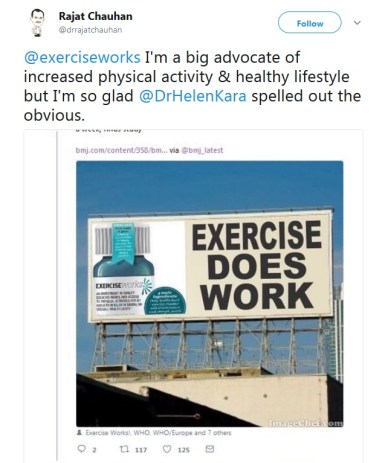

 Helen Kara