Finishing Your PhD: What You Need To Know

fyphd_teal2_flags2_multi_lc_rgbAs you know from my last post, the fifth e-book in my PhD Knowledge series is out. And so is the sixth! Phew!! I’m done!!!

I know, right? You wait ages for another e-book launch, then two come along at once! The sixth e-book is Finishing Your PhD: What You Need To Know. The final phase of doctoral study can be one of the most challenging phases, even though you’re almost there. This e-book has been vetted by expert beta readers, themselves in the final stages of the doctoral process.

While doctoral study doesn’t start (or finish) in line with the academic year, I find it satisfying that I managed to write and publish all the e-books in my PhD Knowledge series in time for the new semester. I’m also really happy that the first in the series, Starting Your PhD: What You Need To Know, is – and always will be – free to download. (Pretty happy about the reviews, too.) One of the things that book is designed to do is to help people figure out whether or not doctoral study is the right thing for them to do. I loved my PhD years, but it’s a massive commitment, and it’s not right for everyone. I know people who have worked towards a doctorate for years before they realised it wasn’t what they should have been doing. If I can help just one person to avoid that kind of frustrating and painful experience, the book will have been worth writing.

That series was last year’s new venture, now I can turn my attention to this year’s new venture: supporting late-stage and post-doctoral students with their writing. More information about that in my next post!

Research Ethics For Your PhD

REFYPhD_purple_compasses_LC_RGB.jpgWhile I’ve been away on holiday (yes, lovely, thank you!) a lot has been happening on the writing front. To begin with, the fifth e-book in my PhD Knowledge series is out. For my new followers (hello, new followers!) this is a series of six short e-books, each around 10,000 words, for potential and actual doctoral students in the social sciences, arts, and humanities. Although the titles mention PhDs, the books are also relevant for those doing professional doctorates such as EdDs, DBAs and so on. These e-books are designed to be readable by anyone with internet access – you don’t need a separate e-reader, you can download free software such as the Kindle App for your laptop, tablet, or phone. The first e-book in the series, Starting Your PhD: What You Need To Know, is free to download, and the others are each around the same price as a take-away coffee. They are: Gathering Data For Your PhD, Analysing Data For Your PhD, and Writing Your PhD. I have produced them separately to keep them affordable, and so that doctoral students can have the information and advice they need, when they need it, rather than having to buy a whole big expensive book all at once.

The fifth in the series is Research Ethics For Your PhD: An Introduction. Whether or not you have to go through a formal process of ethical review, your examiners are likely to want to see evidence that you have at least considered ethical issues during your doctoral research. Research ethics is a large and complex topic. This e-book offers a straightforward introduction that will help you decide how far you want and need to engage with ethics during your doctoral study.

Some people think ethics is a dry, boring subject. I find it endlessly fascinating because, for me, it’s about people and the choices they make. I’m working on a full-length book about ethics and I’m determined that it won’t be dull and turgid; I want it to be lively and readable, even – if I can manage it – compelling. I lead on ethics for the UK and Ireland Social Research Association and, due to my interest in ethics, Dr Katy Vigurs asked me to collaborate on a journal article. Which has just been published in the International Journal of Social Research Methodology! It’s called Participants’ productive disruption of a community photo-elicitation project: improvised methodologies in practice; there are some free downloads available and you might get one if you’re quick.

I have other writing news, as well, but that will have to wait for the next post. I hope you, too, have had a pleasant and productive summer, and I wish you all the best for the new academic year.

My Viva – Ten Years Ago Today

OUMy viva was on 20 July 2006, in a massive heatwave. Railways were buckling, roads were melting – it was much like today. I like heat. As far as I could tell, my examiners didn’t. My main examiner mopped his bald and sweaty head while I made a joke about being the one in the hot seat. It was his colleague’s first viva as an examiner and I think she was more nervous than I was.

I was nervous, though. Nervous enough not to want to drive myself the 100 miles from my home to the Open University campus in Milton Keynes, even though it was a route I knew well, because I wasn’t confident that I could keep my mind on the road. My lovely partner kindly drove me there and tolerated my disjointed gibbering along the way. Although I am comfortable in hot weather, I was also glad of the air conditioning in our car, which meant I arrived looking cool rather than a bedraggled dripping mess.

I arrived two hours early, as planned. I had a half-hour chat with my supervisors and was then delivered into the care of a kind member of the department who was assigned to look after me until the appointed hour of 2 pm. She was astonished when I demanded lunch. ‘People can’t usually eat before their viva,’ she said. ‘I’m not likely to perform well if my blood sugar is low, am I?’ I replied, quite logically I thought, and proceeded to demolish a baked potato with tuna mayo (fish! brain food!) and salad. Then we sat on the grass under a tree and chatted until it was viva time.

My examiners greeted me warmly and my main examiner told me straight away that I would be awarded a PhD, but that they wanted to discuss my thesis and some possible amendments. I didn’t know that could happen and from my point of view it was a great opener. I’d had several mock vivas and was well prepared for most of the questions, but one threw me. ‘What surprised you in your data?’ he asked. I did soundless goldfish mouth. He leaned over and tapped my copy of my thesis. ‘Pages 225 and 231,’ he said kindly, and gave me time to review what I’d written before discussing it in more detail.

Both examiners really engaged with my thesis, which was a great experience for me. They made some helpful suggestions about things I could add. After a few of these, I could see they were getting a bit over-enthusiastic, and (although I didn’t mention this at the time) I didn’t want to do more extra work than was absolutely necessary. So I gently pointed out that I was up to the maximum word count already, and while I could see the point of all their suggestions, I would also need some guidance from them about what I could take out to make space for the extra work they were recommending. They were surprised by this and checked with my supervisors, who were sitting behind me and confirmed what I had said. We discussed some options for removing text but I hadn’t waffled or included extraneous material so they rejected all of those and backpedalled on the number of amendments they wanted me to make.

My examiners each asked some of the questions, and after every question the examiner who had asked it checked with the other examiner about whether there was anything they wanted to add. Each time the other examiner said a hot and weary ‘no, that’s fine’. I truly don’t think I’d have got off so lightly if the weather had been cooler.

After just 45 minutes we were done. I had to do the statutory wait in the corridor, but only for about 10 minutes, and then it was back in for congratulations, hand-shakes, and off to the department for champagne in plastic cups. Then my partner drove me home while I rang and texted everyone. Two of my friends had kindly made a party for me while I was out; they’d questioned the wisdom of this, given that the result was not a foregone conclusion, but I felt fairly confident, and reasoned that if my confidence was misplaced I’d need distraction, sympathy, and a chance to drown my sorrows, so a party would work either way. As things turned out, it was a celebration, and for the first and only time in my life I drank champagne all evening as people kept turning up with bottles of the stuff and insisting it was for me.

Then two days later I went to Canada for a three-week holiday. Guess what I’m doing the day after tomorrow, for the first time in ten years? Yep, holiday on the horizon! So this blog will be quiet for a while. In the meantime, if you want to know more about my viva experience – and the viva experiences of others – I recommend Nathan Ryder’s Viva Survivors podcasts. I hope you all have a wonderful few weeks, and I’ll see you, refreshed and rejuvenated, in mid-August.

Getting Creative With Your Thesis Or Dissertation

draft thesis picMost doctoral theses and dissertations are produced as a block of printed paper, with the final version bound into a book. Those studying arts subjects may present a shorter written work that forms the theoretical framework for one or more artworks presented alongside the written work as part of the thesis or dissertation. These artworks could be, for example, a collection of poems, a piece of prose fiction, a short play or screenplay, a performance piece such as a dramatic monologue or interpretive dance, an art exhibition or installation, a musical arrangement or composition, or experimental work crossing artistic boundaries.

In recent years some doctoral students in non-arts disciplines have begun to take a creative approach to their theses or dissertations. For example, Anne Harris from Australia, an education researcher, was awarded her doctorate in 2010. She presented seven video films as part of her thesis on the educational experiences of Sudanese refugee women in Australia. Each film accompanies and complements one chapter of her written thesis.

Nick Sousanis, another education researcher, studied the importance of visual thinking in teaching and learning at Columbia University in New York. He was awarded his doctorate in 2014, and chose to present his doctoral dissertation as a 132-page graphic novel called Unflattening, which was published in 2015 by Harvard University Press. Benjamin Dix, a British visual ethnographer, also used the graphic novel format for presenting his thesis on complex human rights testimonies. He was awarded his PhD in 2016 and has received Arts Council funding to convert his thesis into a graphic novel.

From Canada, Patrick Stewart, a First Nation architect, wrote a doctoral dissertation called Indigenous Architecture through Indigenous Knowledge with almost no capital letters or punctuation, as a form of resistance to the unthinking acceptance of English language conventions. He received his doctorate in 2015.

Even some hard scientists are taking a creative approach to writing their dissertations or theses. For example, Piper Harron, a doctoral mathematician at Princeton University in the US, was awarded her PhD in 2016. She named her dissertation The Liberated Mathematician, and included in each chapter a section for ‘the layperson’, another for ‘the initiated’, and a third for ‘the mathematician’ – and a whole lot of jokes.

(I didn’t know all this till I asked on social media. From Facebook, thanks to Research Companion members Rebecca Ashley for information about the work of Benjamin Dix, and Melissa Terras for pointing me to Piper Harron’s dissertation. From Twitter, thanks to @librarykris for reminding me about Nick Sousanis, @ndarney for highlighting Patrick Stewart’s work, and @meganjmcpherson for directing me to the work of Anne Harris. Which just goes to show that social media is awesome.)

If you’re going to take some kind of creative approach to the presentation of your thesis or dissertation, it’s best to plan ahead if possible. However, some doctoral students may not realise until late in the process that they both want to, and can, do something a little different from the norm. If this applies to you, depending on what the difference is that you have in mind, it may still be possible. Producing a whole graphic novel at a late stage might be too big an ask – though if you are a talented artist and writer, maybe not. However, options such as weaving data excerpts in with your writing, or using a particular kind of format or structure for your dissertation or thesis, could be implemented in the last months of doctoral study.

Also, if you want to be just a little bit creative, it may be possible to take an experimental approach to a single chapter or section of your thesis or dissertation. I did this with my thesis: I wrote a chapter, on reflexivity, as a fictional story. That was an interesting challenge for me, and my examiners appreciated the change of pace. Alternatively, you could use a metaphor to draw your argument together. For example, Australian education researcher Deborah Netolicky, who was awarded her PhD in 2016, used themes and characters Alice in Wonderland as an extended metaphor to help structure her thesis. Or, again, you could do this in a smaller way, in a single chapter or section.

I would have liked to use a fictional style for my whole thesis, but my supervisors deemed it too risky. This was over 10 years ago, before I could ask social media – and even if I had been able to ask, I doubt many examples would have been available. Maybe not any. So I have drawn together the examples in this blog post in case any doctoral student feels creative but needs some evidence of precedent to comfort a nervous supervisor. If you know of other relevant examples, please share details in the comments.

Ten Top Tips For Becoming An Indie Researcher

independence.jpgPeople often ask me how to become an independent researcher. Then they ask me how I became an independent researcher, which is a different question. The answer to the latter is no help to anyone as I became an independent researcher by accident. Here’s the short version of that story. In January 1999 I was asked to do a piece of research as a one-off. I agreed, did a reasonably good job, people got to hear about it and I was asked to do more. I realised I enjoyed the work, signed up for an MSc in Social Research Methods in September 1999, got my PhD in 2006, and never looked back.

For the first 10 years or so, almost all my clients were local and national governments, charities, and public sector partnerships. Then we had the change of government in 2010, swiftly followed by a recession, in which most of the people in my networks took early retirement or redundancy or were demoted back from management to direct service delivery roles. My company’s financial year runs from August to July, and 2011-12 was the worst; the company’s turnover was less than £11,000. I had to get a part-time job for two years from September 2011, but – with a huge amount of support from my partner – managed to keep my business afloat.

Over the last five years I have reinvented myself as someone who works with academia. I still work with clients from other sectors, but these days the bulk of my work comes from universities. This reinvention has involved a lot of writing – two books, several journal articles, a bunch of e-books, this blog, tens of thousands of tweets, more of all those in the pipeline – and a lot of networking. Luckily I’m good at, and enjoy, both networking and writing.

So that’s my story, but it’s mostly made up of accidents, and so is not a route anyone else can follow. However, I do have ten top tips for people who want to adopt the indie lifestyle.

  1. Be able and willing to live on less money than your employed contemporaries. The day rates can be high but you won’t get paid work for every day, and some weeks or months you will have no paid work at all. There are none of the benefits of employment such as holiday pay or sickness pay, so you need to earn enough to cover those. Some years you will make more money than others, but the surplus from any good years needs to be put away to cushion you in the bad years, or you risk needing to give up being independent altogether. So if you crave luxury – perhaps even if you want, or have, children – the indie lifestyle is not for you.
  1. Be highly motivated. Some days you’ll have meetings, but much of the time there’s nothing to make you get out of bed but your own free will. Some people think that’s all there is to independent work: highly paid jobs for clients and a lot of time off. Thw6 is far from the case. You have to run your own business, which means doing your accounts (or earning enough to pay an accountant to do them for you, which still requires you to prepare a considerable amount of paperwork), marketing your services to help you gain further work, sorting out your own continuing professional development, and so on.
  1. Be very well organised. Sometimes you will have several client projects running at the same time, and you’ll need to keep on top of each of those, plus the needs of your own business. Even when you’re really busy with paid work, you should spend at least 10% of your time working on your business, making sure you keep up with your administration and marketing as a minimum.
  1. Networking is essential. You won’t have colleagues down the corridor who you can wander along to see for a chat when there’s something on your mind. At times you’ll need help and without a network you may have nobody to ask. Also, networking should be part of your marketing strategy, as it will help to bring you work. Network online as well as offline. Twitter is currently a very useful networking tool for researchers. I’ve had work from several sources that has come directly through Twitter, from people who have never met me in person.
  1. Keep up to date with developments in your field. When you’re employed this happens almost imperceptibly: you hear about new initiatives and legislation in meetings, relevant newsletters arrive in your inbox, organisational briefings ensure that nothing vital is missed. As an indie, you have to sign up for as much relevant free information as you can, decide what of the rest is worth paying for, and make time to read it all.
  1. Use your time productively. When work is thin on the ground it’s easy to fritter away hours, even days, surfing the internet or doing housework. When you’re busy it’s tempting to spend long hours at your computer, but it makes more sense to ‘work smart, not hard’. I have learned from experience that I can get more done working six to eight focused hours in a day than putting in 10-12 hour days. The workload is lumpy, though, and there are times when there is nothing for it but to work long hours. Try to keep those times to a minimum, and when necessary, organise your tasks so that you can do the easier, more routine work when you’re tired.
  1. Look after your health. This is a huge priority for those of us with no sick pay. Eat sensibly, get enough rest, take exercise. Make yourself have regular short breaks away from your desk even when you’re really busy. And be prepared to drag yourself out to work in physical, and emotional, states that would have an employed person reaching for the self-certification form. I have gone out to work for clients with sweat running down my back from a fever, immediately after hearing news of a bereavement, with a badly injured foot.
  1. Take proper breaks. I have at least one holiday a year, though the nature of those holidays depends on my finances: in the lean years, I might simply stay in the house of a family member or friend, while they’re away on holiday themselves, for a change of scene.
  1. Think at least twice before accepting unpaid work. Sometimes there are good reasons for volunteering. It might be a way of gaining valuable experience, or something you can give in exchange for something you want such as a conference place, or it may offer excellent networking opportunities. But when you are an indie researcher, time is your most valuable asset. People will ask you to do all sorts of things for free – even governments will – and you need to be sure that whatever you do will also benefit you in some way, and won’t take up too much of your precious time.
  1. Write for publication, even if you don’t plan to work with academia. Published writing looks great on your CV and is a marketing asset. What you write, and for whom, and where you publish your work, is for you to decide. But make it professionally relevant and write it well. Once you’ve got a piece in a newspaper, or produced a zine, or had an academic journal article accepted, shout about it all over social media and anywhere else that might help to increase your audience and networks.

If you’ve read all that and the prospect of becoming an indie researcher still excites you, then go for it, and good luck!

Why Should We Be Collegial?

loom_weaving3I was interested in this post from the Research Whisperer yesterday, written by Tseen Khoo and inspired by a researcher who chooses to do nothing unless it will benefit their career. I recently wrote a post about why it’s important to learn to say ‘no’. Yet I believe, very strongly, that it’s also important to be collegial, to look out for others, to offer support and help where it’s needed and where you can give it freely. Tseen’s post got me thinking about why I believe that. What is so important about being collegial? Would it be so awful if we all just looked out for ourselves – and, if so, why?

For me, the key point about learning to say ‘no’ is that it enables us to conserve enough resources to look after ourselves and other people. Yes, ourselves first, though I see that as at the level of health and happiness, rather than at the level of career management like the researcher mentioned in Tseen’s post. Each of us is best placed to know what we can and can’t cope with and how much energy we have; once we reach adulthood we cannot, and should not, expect others to manage this for us (though of course they sometimes help along the way). So when we’re asked to do something that will take us beyond our coping ability or use up too much of our energy, we need to be able to say ‘no’ – unless it’s an emergency, of course. Then it’s time to pull out all the stops and recoup later on.

Sometimes it’s worth saying ‘no’ to things we do have the ability and energy for, but which don’t bring us joy. I say ‘no’ to a lot of things by choosing to be an indie researcher. For example, I say a resounding ‘no’ to organisational bureaucracy, meetings about meetings, and ironing. I could manage all those things, and more of their ilk, and have done so at times. But I am much, much happier without them in my life.

Once we’ve done all the saying ‘no’ we want and need to do, we should have created the capacity to say some ‘yes’. We have choices there, too. We can act like the researcher in Tseen’s blog post and choose only to say ‘yes’ to things that will benefit our own career. Or we can use a different strategy for decision-making.

Tseen helps because she can. My own strategy is similar, along the lines of ‘if someone needs help, and I can help, I’ll help’. The ‘help’ in that sentence could be passing the butter or giving a troubled friend space to live in my house for a year while they sort themselves out. In professional terms, it could be downloading a pdf for someone who asks on Twitter, or providing years of support for a colleague doing a doctorate. But for me, that’s what I do, not why – and I think there’s more self-interest in why I help, though not the kind of self-interest shown by the researcher who so enraged Tseen. Helping others benefits me, not in the sense of stacking up brownie points to redeem in an afterlife, but because every time I help someone I learn something new. And desire to learn is the main reason why I do scholarly work in the first place.

That doesn’t mean I do some kind of cost-benefit analysis. I doubt it would be possible, even if I wanted to, because I couldn’t figure out in advance what I would learn from helping someone. Sometimes I learn a small thing from a big help, or vice versa. I don’t try to calculate return on investment, either. Offering help and support is part of the fabric of my life and it’s not about expecting some kind of payback. In fact, often I’m paying it forward, such as by helping people with postgraduate research. When I was doing my own MSc and PhD, I received an enormous amount of help from people who were further along in the process, and I never could pay that back – but I certainly can pay it forward, and encourage others to do the same.

The lovely thing, though, is that sometimes helping others has an unexpected payback, if someone you helped finds they are able to help you. A friend and colleague who I helped with her PhD, years ago, recently did me a big favour by hooking me up with the Head of her institution’s Graduate School who wants to commission the kind of courses I offer. My friend claims her main motivation was self-interest, because having identified someone who can help where it’s needed will reflect well on her. Perhaps it will, though I’d dispute the self-interest being her main motivation, because I know her to be a generous person with an eye to the ways she can help others. In fact, she’s thoroughly collegial.

I think I’ve worked out at least two of the reasons why it would be worse if we all just looked out for ourselves. We would deny ourselves regular opportunities to learn from helping others, and occasional opportunities for unexpected benefits further down the road. Those opportunities seem to me to be two good reasons for being collegial, and they constitute two shining threads in the fabric of our lives and work.

I’m sure there are other reasons too. If you have any in mind, please leave a comment; I’d be interested.

Why And How To Say No

noPeople in our line of work, whether academic or altac, are often at serious risk of over-commitment. This can happen for a number of reasons, including disorganisation, pressure from other people, and the inability to say ‘no’.

Disorganisation is often made up of the best intentions, lack of foresight or planning, unrealistic expectations, and inability to understand how long different jobs actually take. It can be truly difficult to figure out how long it will take to do a given piece of work, but a useful strategy is to make your best guess then add fifty per cent. So if you think you could definitely get an article written in six weeks, tell anyone who needs to know that it will take you nine weeks. One way to keep your expectations realistic is to take care to factor in all your existing commitments – which, don’t forget, include your social life and holidays as well as work. Also, remember that the empty spaces in your calendar in the months to come will fill up as the dates come closer. People often say to me things like, ‘I’m really busy this month and next, but I’ll have lots more time after that.’ I think, ‘No you won’t, you poor deluded fool, because by the time you get there “the month after next” will be “this month” and you’ll be just as busy as ever.’

People often over-commit from the best intentions. They want to help, or they are being offered interesting projects, and they think they’ll find a way to get it done. Often they do find a way, but that can be at the expense of their happiness, their relationships, and their health. I know, personally, two senior academics who have been reduced to taking sizeable portions of sick leave due to over-commitment in the last year alone. Part of this is because of the structure of academia and the ever-increasing demands placed on its staff. The only real solution to that is collective action. Yet, without wanting to sound all neoliberal, there is also scope – and, I would argue, responsibility – for individual action in the interests of protecting our own well-being.

Some people seem completely unable to see what is around the corner. One fairly senior academic I know moved from a research job to a teaching job, and was then astonished to discover that time-consuming preparation and marking were required. Another, a parent of two young children, seems continually surprised by the need to provide care for them. Perhaps over-commitment breeds over-commitment because, when you’re currently over-committed, it’s hard to find the time to give proper thought to potential future commitments and their likely implications. But finding that time is the only way to escape the over-commitment trap. And the only way to find that time is to learn to say ‘no’.

Saying ‘no’ can be really difficult, particularly if the person asking is, for example, senior to you, or someone to whom you owe a favour. So, to begin with, try learning not to say ‘yes’ immediately. Say something like, ‘That’s a really interesting proposition. Can I think about it and get back to you? I need to check my other commitments before I can give you a firm answer.’ Then if you decide you don’t want to say ‘yes’, you can say, for example, ‘I’d love to help but right now I don’t have the time to do the work well, and I don’t want to do a bad job for you.’

When you owe a favour, even this can feel very difficult. It can help simply to acknowledge the fact that you owe a favour. ‘I know you did X for me, and I am still very grateful. I do want to return the favour but I’m afraid it’s a really difficult time for me right now, as I am already fully committed for the next few months. Is there some other way I can pay you back?’ Being up front like this can feel scary for some people, but it is a great way to diffuse the anxiety that unspoken worries can create, and therefore it is worth the effort.

The wider pressure to ‘be collegial’ is another difficulty faced by those working in academia, whether from inside or outside institutions. For example, I recognise that I can’t expect people to peer-review my articles without offering to peer-review the articles of others. However, I can decide how many articles I am able and willing to review, per month or semester or year. Given that there is a need to review articles which are not and never will be fit for publication, as well as those that are or could be publishable, I might decide to review two articles for every article I submit. Or I might decide I can manage one per month, or two per semester, regardless of how many I write myself. The number you can manage will, of course, depend on your other commitments, but the basic principle is the same. You need to think the whole thing through, make a decision, then stick to that decision – and explain it to people where necessary. The same could apply with other regular one-off tasks such as examining theses, reviewing book proposals or typescripts, writing forewords, and so on. You have the right to set a limit on any such task you’re being asked to do more often than you can comfortably manage – and to enforce that limit.

There is an ethical point to this, too. We forget to notice that if we don’t look after ourselves properly, we can’t do our jobs or look after other people. I love Deborah Netolicky’s memorable description of ethics as the ‘unsexy undergarments’ of academia. I think we should pay attention to ethics all the time, just as we remember, every day, to wear our undergarments. People who over-commit are a danger to themselves, risking their health and happiness, and that can damage their families and friends as well. They are also a danger to their colleagues: I know from experience, as someone who is quite good at managing time and workload, that a collaborator who misses deadlines can cause great stress in my life. So for our own benefit, and for the benefit of our colleagues, families, and friends, we have an obligation not to over-commit, and that means learning to say ‘no’.
Things Are Really Happening!

juggling.pngDuring this academic year I’ve been involved in various enterprises on top of my commissioned research work, teaching, and writing commitments: solo self-publishing, collaborative self-publishing, and course development. And they’re all starting to come to fruition!
The course I’ve been involved in developing with Dr Janet Salmons is Path To Publishing, aimed at people who have a completed doctoral thesis or dissertation and want to publish from it to support their career goals, whether academic or otherwise. We opened for registration a few days ago and, even though the course doesn’t begin until October, people are already signing up! Universities are recognising that the course we are offering is excellent value for money and will benefit their early career researchers, and individuals are welcoming the opportunity to receive expert help with a complex process. The course is limited to just 20 participants, to ensure that we can give everyone good quality personalised feedback.

The collaborative self-publishing is a short e-book, co-written with Dr Nathan Ryder, called Self-Publishing For Academics. And it’s available for pre-order! The link is for Kindle books but it is also available via iBooks, Kobo and Nook, with Oyster and Scribd to come. Nathan and I have combined our experience of self-publishing various texts in a range of formats, and written the e-book we wish we’d had when we started out. The formal launch is next Wednesday 18 May, so prepare for whooping and hollering.

The solo self-publishing is my series of short e-books for doctoral students. The first, Starting Your PhD: What You Need To Know, is now permanently free to download. The fifth, Research Ethics for your PhD: An Introduction, is with my editor and should be out next month. I just have the sixth and last one to write, on Finishing Your PhD: What You Need To Know, and I’ll be done!

It’s an exciting time towards the end of a really busy year. I’m still kidding myself next year will be easier, but actually I think it’ll just be different. I’ll be working on my next full-length book, on research ethics (I’m in the middle of preparing for that right now), running Path To Publishing with Janet, and managing my commissioned research work and teaching too. It’s just as well I like my work!


New Book Launch: Writing Your PhD

WYPhD_blue_keyboard_LC_RGB.jpgToday I’m launching the fourth in the PhD Knowledge series. For new readers, this is a series of short e-books designed to help doctoral students with different aspects of the process. Although they’re called ‘PhD Knowledge’, they’re written with all doctoral students in mind, whether they’re studying for a scholarly PhD or a professional doctorate. And they’re also very affordable at £2.49/US$3.99/equivalents in other currencies.

The fourth book is called Writing Your PhD: An Introduction. It is full of tips and advice to help doctoral students get going, and keep going, with their writing. Writing is such an integral part of the doctoral process that it is impossible to ignore or avoid – and trying to do either of those things can lead to stress at best, failure at worst. But the good news is thSYPhD_green_SQmarks_noblend_LC2_RGBat academic writing can be taught and can be learned. In fact, I’m asked to teach writing skills in universities far more than I’m asked to teach anything else. And I know my courses help students because they tell me so on their feedback forms and, later, on Twitter.
I hope you, or someone you know, will find this book useful. Though if you (or they) haven’t started on a PhD yet, you might be interested to know that the first book in the PhD Knowledge series, Starting Your PhD: What You Need To Know, is now FREE to download from all platforms. So what are you waiting for?

Ten Top Tips for Successful Book Authoring

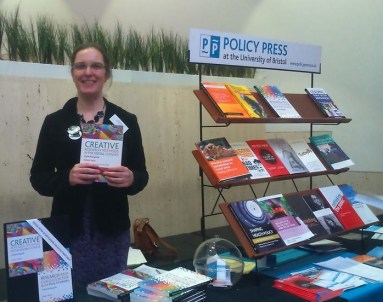
me at book launch croppedI feel qualified to write this post for a number of reasons. First, I am a successful author. Second, I have worked in publishing, as have several close relatives and friends. I’m assuming that you’re interested in writing for traditional publication; I intend to cover self-publishing in a different post. So here are my ten top tips for successful book authoring.

  1. Remember that publishers need you more than you need them. You can write and publish, online and in hard copy, without ever going anywhere near a publishing company. Conversely, publishers can’t function without authors.
  1. Find a book that needs to be written: ideally one you’ve looked for because you want to read or recommend it, and definitely one that doesn’t exist yet.
  1. Learn how the publishing business works. The more you understand about the process, the better you’ll be able to work with your publisher. This will also help to reduce the likelihood of potentially stressful surprises.
  1. Research different publishing companies and choose one that you think will suit you and your book. Don’t hesitate to ring one or more commissioning editors for your subject area to discuss your idea; their phone numbers should be on the publishers’ websites. It’s worth asking whether they already have something similar in the pipeline. If they do, finding out at an early stage will save you work; if they don’t, you can have more confidence in your idea. Also, a phone chat gives you a chance to suss them out and get a feel for whether you will be able to work together well.
  1. Negotiate a contract with deadlines you will be able to meet. You can ask for changes before you sign the contract; once it’s signed, there is no going back.
  1. If you’re in the UK, as soon as you have a draft contract, join the Society of Authors and ask them to vet the contract for you before you sign. (You can’t join the Society before you have a draft contract, unless you have already published a book or equivalent.) If you’re not in the UK, find out whether there’s a comparable organisation in your country – or, if you can afford it, get your draft contract checked by a suitably qualified and experienced lawyer.
  1. Calculate the number of words you need to write each week to meet your deadlines while leaving some time in hand for contingencies. Write that number of words each week.
  1. Be kind and courteous to the publisher’s staff, even at times when you may not feel particularly well-disposed towards them. Respond to their emails and phone messages in a timely fashion, and deal gracefully with feedback. Remember, they’re busy professionals too; just because publishers need authors doesn’t give you license to behave like a prima donna.
  1. Meet those deadlines.
  1. Be prepared to help publicise your book. The publisher’s marketing department should help, particularly around the time of publication, but they have new books to work on every month so they won’t be able to keep the focus on your book. But you can. Promotion doesn’t need to take up a huge amount of your time and effort, but it’s crazy not to do some basic tasks. Such as: add a link to the book to your email signature; get flyers from the publisher that you can hand out at conferences and other events; put the cover image on any slides or handouts you create. If you can use social media, so much the better, but anything you can do will help.

Of course there’s a lot more to becoming an author than that – but if you follow these top tips, the rest should fall into place. Good luck!