 I am happy to host this guest post by Dan Cleather, a lecturer at St Mary’s University in London.
Public perception of the nature of science and scientists is neatly encapsulated in the portrayal of scientists on the big and small screens. It is a well worn trope – the scientist is a highly intelligent but eccentric character who struggles to understand human problems and to fit into society. Some of film and television’s most popular fictional characters are cast in this mould: Leonard Nimoy’s Spock in Star Trek, Dr Emmet Brown in Back to the Future, the Ghostbusters, Sheldon and the gang in the Big Bang Theory, Jeff Goldblum in almost all his films…
These characters suggest that scientists live in ivory towers where they seek to solve abstract problems without ever considering the human condition. Science is a complex game with little relevance to real life. As a scientifically literate, but admittedly weird, kid, I experienced the effect of these prejudices first hand. “Yes Dan, you’re very clever, but you have no common sense…”
Scientists often reinforce aspects of these stereotypes. Many scientists believe that science is objective – that they are engaged in a pursuit of universal truth and are unaffected by bias. Most scientists would consider this objectivity to be a hugely important, positive characteristic of science. In particular, they think that their objectivity and ability to impartially weigh the evidence should lend authority to their opinions on key issues of public debate like climate change or vaccine hesitancy.
Unfortunately, in today’s “post-truth” world, the expert opinion of scientists is increasingly marginalised. A key factor in this is a lack of public trust in scientists. In 2019, the Wellcome Trust published a survey of global attitudes to science and health which was based on responses from more than 140,000 people in over 140 countries. They reported that globally, only 18% of people had a high level of trust in scientists and 54% a medium level of trust. Only 40% of people believed that science benefits most people in their society.
The public’s perception of scientists is clearly a key factor in whether they will trust them or not. The problem here is that we would trust Sheldon Cooper to fix a mobile phone, but we wouldn’t let him look after our children. If people see science as clinical and soulless, they don’t believe that it will properly capture and reflect the human considerations that are important to them.

Both scientists and their opponents revel in the supposed difference between science and common sense. Scientists like it because it suggests that they have rarefied skills that aren’t available to the common person. For science deniers, a perceived lack of common sense serves as a useful cudgel with which to attack scientists’ positions.
The myth of scientific objectivity defines these debates in a similar way. Scientists consider that they have truth on their side, and thus have little patience for debate. Science deniers are suspicious of scientists’ claims to objectivity and believe that the stance serves to disguise some type of hidden agenda.
But is science objective? Of course not! We all have conscious and unconscious biases that affect the way we think. One key strength of science, however, is that we study our biases. The naive scientist believes that this process allows them to eliminate bias. Better scientists try, instead, to understand how their biases affect their thinking.
The apparent dichotomy between science and common sense is false. Both forms of thought are based on reason, and on using evidence to understand the real world. Scientific training is simply based on refining these skills and understanding how bias can mislead us.
The solution to vaccine hesitancy or climate change scepticism does not lie in disenfranchising science deniers because we believe they have an inability to listen to reason. For instance, public health messaging is more effective when a sustained effort is made to listen and respond to public concerns. Scientists need to demonstrate how they use evidence to arrive at their positions. They need to show how the human factors that preoccupy science deniers are also captured within scientific debate, and that scientific consensus does account for their concerns.
It is disingenuous to claim that science is objective, and the public can see through this claim. Rather, scientists need to be honest as to the strengths and limitations of science, and be open to alternate points of view. Who knows, if we listen to the concerns of science deniers we might learn something that can help us.
As Spock himself put it, “”Logic is the beginning of wisdom … not the end”.
Dan is an affiliated researcher with the Institute for Globally Distributed Open Research and Education. His new book, “Subvert! A philosophical guide for the 21st century scientist” (geni.us/Subvert), is out on 14th May 2020.
![Creative research methods (Second edition) [FC]](https://helenkara.com/wp-content/uploads/2020/04/creative-research-methods-second-edition-fc.jpg?w=304&h=424) My
My  The ‘blurb’ is the text on the back of a book’s cover which tells you what the book is about. It’s not simply a description, though; it is also a sales tool. For this reason
  Taking to Twitter this morning as usual, I discovered that today is Random Acts of Kindness Day (aka #RandomActsOfKindnessDay). My first thought was bah, just one day? One out of 365 (or even 366 in this leap year)? That’s rubbish; let’s commit random acts of kindness EVERY day!
 Recently I’ve been writing books in collaboration with other authors. I collaborated with
 There’s lots I could write about this week. I could write a post around my new book, out this very week:
  This has been a helluva year workwise. I could focus on that: calculate how many train journeys I’ve taken, how many beds I’ve slept in – it would be a lot. That’s mainly why I’m so tired, I think. I’m not short of material for this blog; I’m short of energy. I need a break. So I’m going to have one. Beginning on Friday, when I won’t have done all the jobs I wanted to do, but I will have done all that I can. I’ll start work again on Monday 30 December, but I’m going to take a slightly longer digital break – I’ve already ducked out of Instagram, and I’ll be weaning myself off Twitter and Facebook over the next few days. I’ll be back online, in the New Year, when I’m ready. This blog, too, will be quiet now until the first full week of January. I wonder what I’ll post about then… I envy my fellow bloggers who can generate several posts in one go; I almost always write mine the same week as I publish them. It’ll be a whole new decade. I wonder if I will feel any different. I doubt it, really – except for, I hope, a little less tired.
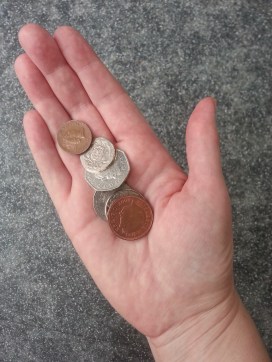 I’ve been writing steadily since 2011, and I’ve just done my accounts for 2018-19. I have published three full-length books (one in 2018) and one second edition (in 2017) for my main publisher. I’m now writing for two other publishers and have received several small advances for those books. When I say ‘small’, I mean between £125 and £500, so nice to have in the bank but not at all representative of the amount of time I spend writing the books.
 A year ago I launched
  New book klaxon! Publishing From Your Doctoral Research: Create And Use A Publication Strategy is now available for pre-order.
 This blog has been in existence for five years. Since October 2014 I have published a weekly post, on average, in 43 weeks of each year. Some posts,
  Helen Kara