Research Ethics For Your PhD

REFYPhD_purple_compasses_LC_RGB.jpgWhile I’ve been away on holiday (yes, lovely, thank you!) a lot has been happening on the writing front. To begin with, the fifth e-book in my PhD Knowledge series is out. For my new followers (hello, new followers!) this is a series of six short e-books, each around 10,000 words, for potential and actual doctoral students in the social sciences, arts, and humanities. Although the titles mention PhDs, the books are also relevant for those doing professional doctorates such as EdDs, DBAs and so on. These e-books are designed to be readable by anyone with internet access – you don’t need a separate e-reader, you can download free software such as the Kindle App for your laptop, tablet, or phone. The first e-book in the series, Starting Your PhD: What You Need To Know, is free to download, and the others are each around the same price as a take-away coffee. They are: Gathering Data For Your PhD, Analysing Data For Your PhD, and Writing Your PhD. I have produced them separately to keep them affordable, and so that doctoral students can have the information and advice they need, when they need it, rather than having to buy a whole big expensive book all at once.

The fifth in the series is Research Ethics For Your PhD: An Introduction. Whether or not you have to go through a formal process of ethical review, your examiners are likely to want to see evidence that you have at least considered ethical issues during your doctoral research. Research ethics is a large and complex topic. This e-book offers a straightforward introduction that will help you decide how far you want and need to engage with ethics during your doctoral study.

Some people think ethics is a dry, boring subject. I find it endlessly fascinating because, for me, it’s about people and the choices they make. I’m working on a full-length book about ethics and I’m determined that it won’t be dull and turgid; I want it to be lively and readable, even – if I can manage it – compelling. I lead on ethics for the UK and Ireland Social Research Association and, due to my interest in ethics, Dr Katy Vigurs asked me to collaborate on a journal article. Which has just been published in the International Journal of Social Research Methodology! It’s called Participants’ productive disruption of a community photo-elicitation project: improvised methodologies in practice; there are some free downloads available and you might get one if you’re quick.

I have other writing news, as well, but that will have to wait for the next post. I hope you, too, have had a pleasant and productive summer, and I wish you all the best for the new academic year.

Getting Creative With Your Thesis Or Dissertation

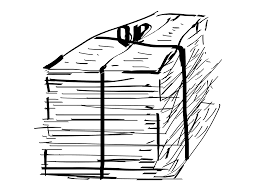
draft thesis picMost doctoral theses and dissertations are produced as a block of printed paper, with the final version bound into a book. Those studying arts subjects may present a shorter written work that forms the theoretical framework for one or more artworks presented alongside the written work as part of the thesis or dissertation. These artworks could be, for example, a collection of poems, a piece of prose fiction, a short play or screenplay, a performance piece such as a dramatic monologue or interpretive dance, an art exhibition or installation, a musical arrangement or composition, or experimental work crossing artistic boundaries.

In recent years some doctoral students in non-arts disciplines have begun to take a creative approach to their theses or dissertations. For example, Anne Harris from Australia, an education researcher, was awarded her doctorate in 2010. She presented seven video films as part of her thesis on the educational experiences of Sudanese refugee women in Australia. Each film accompanies and complements one chapter of her written thesis.

Nick Sousanis, another education researcher, studied the importance of visual thinking in teaching and learning at Columbia University in New York. He was awarded his doctorate in 2014, and chose to present his doctoral dissertation as a 132-page graphic novel called Unflattening, which was published in 2015 by Harvard University Press. Benjamin Dix, a British visual ethnographer, also used the graphic novel format for presenting his thesis on complex human rights testimonies. He was awarded his PhD in 2016 and has received Arts Council funding to convert his thesis into a graphic novel.

From Canada, Patrick Stewart, a First Nation architect, wrote a doctoral dissertation called Indigenous Architecture through Indigenous Knowledge with almost no capital letters or punctuation, as a form of resistance to the unthinking acceptance of English language conventions. He received his doctorate in 2015.

Even some hard scientists are taking a creative approach to writing their dissertations or theses. For example, Piper Harron, a doctoral mathematician at Princeton University in the US, was awarded her PhD in 2016. She named her dissertation The Liberated Mathematician, and included in each chapter a section for ‘the layperson’, another for ‘the initiated’, and a third for ‘the mathematician’ – and a whole lot of jokes.

(I didn’t know all this till I asked on social media. From Facebook, thanks to Research Companion members Rebecca Ashley for information about the work of Benjamin Dix, and Melissa Terras for pointing me to Piper Harron’s dissertation. From Twitter, thanks to @librarykris for reminding me about Nick Sousanis, @ndarney for highlighting Patrick Stewart’s work, and @meganjmcpherson for directing me to the work of Anne Harris. Which just goes to show that social media is awesome.)

If you’re going to take some kind of creative approach to the presentation of your thesis or dissertation, it’s best to plan ahead if possible. However, some doctoral students may not realise until late in the process that they both want to, and can, do something a little different from the norm. If this applies to you, depending on what the difference is that you have in mind, it may still be possible. Producing a whole graphic novel at a late stage might be too big an ask – though if you are a talented artist and writer, maybe not. However, options such as weaving data excerpts in with your writing, or using a particular kind of format or structure for your dissertation or thesis, could be implemented in the last months of doctoral study.

Also, if you want to be just a little bit creative, it may be possible to take an experimental approach to a single chapter or section of your thesis or dissertation. I did this with my thesis: I wrote a chapter, on reflexivity, as a fictional story. That was an interesting challenge for me, and my examiners appreciated the change of pace. Alternatively, you could use a metaphor to draw your argument together. For example, Australian education researcher Deborah Netolicky, who was awarded her PhD in 2016, used themes and characters Alice in Wonderland as an extended metaphor to help structure her thesis. Or, again, you could do this in a smaller way, in a single chapter or section.

I would have liked to use a fictional style for my whole thesis, but my supervisors deemed it too risky. This was over 10 years ago, before I could ask social media – and even if I had been able to ask, I doubt many examples would have been available. Maybe not any. So I have drawn together the examples in this blog post in case any doctoral student feels creative but needs some evidence of precedent to comfort a nervous supervisor. If you know of other relevant examples, please share details in the comments.

Self-Publishing For Academics

Self-Publishing For Academics - High Resolution.jpgToday Dr Nathan Ryder and I are launching our co-authored e-book Self-Publishing For Academics. Self-publishing offers a huge opportunity for many academics, and they’re beginning to take it up. Nathan and I have self-published several e-books between us, and have self-published in other forms too such as blogs and zines. We wrote the book we wished we’d had when we set out on our self-publishing journeys.

Working together turned out to be a dream collaboration and we’ve written about that this week on the Research Whisperer blog. For this blog, we thought we’d interview each other; this gave us a chance to ask some questions we hadn’t got around to before. Here are the results.

Helen: What surprised you about our work together?

Nathan: How easy it felt. Writing a book is hard, and I’ve always thought that collaboration is quite tricky too, despite how necessary it is. We started from a concept, expanded out, divided the areas up and got to work. I know we’re both busy, but we made this a priority, and I think because of that it’s got done in a far more timely manner than I thought.

Given your own experiences in publishing and self-publishing, why did you want to co-author this one?

Helen: There are so many different options for self-publishing and marketing that I suspected you and I had taken different routes, even though we have both self-published for the same audience, i.e. doctoral students (up to now, anyway!). When we began talking I found we did indeed have different, but complementary, experience and knowledge. I think the combination of our approaches has made for a much better, richer book than I could write by myself.

Where do you think self-publishing will be most useful for academics?

Nathan: A big problem for many people is that they wait a long time to be “picked”. Someone waits for someone to pick them for a job, or a project or to write a book, say. The need to be chosen is a really tough need to overcome, but it’s barrier that can be hurdled. Academics don’t have to wait for a publisher to say yes to their monograph: it’s perfectly possible to do it yourself. A consequence of this could be that they could do the work that they think matters and will connect rather than what someone else thinks they can sell. There can often be shortened turnaround times for publication too.

What have you learned about self-publishing by doing this project?

Helen: I learned a lot about covers. I guess I vaguely knew it was possible to design your own but, not being a very visual person, I didn’t think it was something I would be able to do. Now, though, I might just have a go! It’s also useful to know where good bespoke covers can be obtained more cheaply than by commissioning a professional designer. Also, I learned a lot about self-publishing for free. I haven’t spent a huge amount on my e-books, but I certainly haven’t done them for free, and it’s really useful to know about the options there.

Which makes me wonder, what have you learned about self-publishing from our project?

Nathan: The value of beta-readers and an editor. For both of my previous books I had relied on myself and asked my wife to look through the drafts, but we don’t have the experience to know everything to look for when it comes to editing. And for this book, the beta-readers really helped us to spot gaps in our writing or logic – and even corrected us on some of the terms we used!

Do you have a routine or process when it comes to writing?

Helen: For the first draft of a book, I calculate how many words I need to write per day or (more often) week to get the draft done by the deadline. Then I add that to my weekly to-do list, and ensure I get those words written – even if that does, on occasion, mean spending Sunday at my computer. Also, I am quite focused about using my writing time for writing, so I’ll produce several hundred words in an hour rather than spending my ‘writing time’ fossicking about on social media or surfing the internet. I don’t need a particular place to write, I just need my laptop – I write on trains, in airports, on friends’ sofas, and in bed. However, unlike many writers, I’m not keen on writing in cafes because I find the people-watching and eavesdropping opportunities too distracting!

What do you plan to self-publish next?

Nathan: I’m going to finish a project I started some time ago, and get my first book available for print-on-demand. Fail Your Viva came out in January 2013, and within weeks I was exploring how to get it in print. At the time and for a long time since I’ve convinced myself that I can’t manage a print run, but as we were working on our book – and through doing a little hobby self-publishing – I’ve gained the confidence to finally make it happen. That, and digging some older writing out and seeing if I like it again.

I know you’ve got your series that you’re past the halfway mark on. Have you got any plans beyond them?

Helen: Lots and lots of plans! I want to narrate the audio-books for all the e-books I’ve self-published for doctoral students. I also want to start making videos for YouTube. That’s something I’ve tried several ways but haven’t yet got the hang of, but I feel as if I’ve learned quite a bit in the process and if I keep trying I’ll get there eventually. Also, I’m doing preparatory reading, thinking, and interviewing for my next full-length trad-published book, on research ethics, and I expect to start writing that in earnest in the autumn.

So if you could sum up in a sentence the main piece of advice you’d give someone who was thinking of self-publishing… well obviously that would be ‘read our book’! But apart from that, what would you say?

Nathan: Start now! There are a hundred-and-one things that can get in the way of finishing any writing project, but the only thing that’s really in the way of starting is the writer. Start today. (then read our book)

Last question from me: what are you going to do to celebrate Self-Publishing for Academics being finished and out there?

Helen: Have a cuppa with you on Skype! After that: take your advice, and start writing the next e-book. That’ll be the last in my series for doctoral students, and the last one I write for a while, so when I get that one finished I’m really going to celebrate.
A New Venture: Path To Publishing

pathlogo-purplegreen.jpgTaran-taran-taraaaaa! Drum roll! I have an announcement to make!

I have been plotting with my co-conspirator Dr Janet Salmons of Boulder, Colorado (who I met, like many of my collaborators, on Twitter). We have designed a new online course, Path To Publishing, for people who have been awarded their PhD or equivalent (EdD, DBA etc) and who want to publish from their thesis or dissertation. And not just publish whatever they can, but publish effectively, in a way that will support their career aspirations. (NB: edit as a result of a query from Oxford Dphile in the comments below: if you’ve completed your thesis or dissertation, but haven’t yet had it examined, that’s fine too.)

Path to Publishing will run for six weeks in the first semester of the next academic year, from October 10 to November 18. It is limited to 20 participants to ensure that we can give everyone good quality individual feedback. We are offering a discounted rate for the first course in recognition of the possibility of teething troubles (though we are working hard to try to ensure there won’t be any). The fees will be US$400/£280 payable through PayPal – after this first course, the fees will rise to approx US$500/£375 (exact amounts may change slightly due to currency fluctuations). We will be asking for detailed feedback in exchange for the discount, to help us perfect the course for future participants. Another reason we’re offering a discount to the first cohort is that, along with the course, we will be setting up an online support group for course members and alumni – but the first time around there won’t be any alumni to give advice and support to new members. Nevertheless, there is value in peer support, and we expect the online support group to be well used.

The course will include two live webinars at times as convenient as possible for the class, bearing in mind everyone’s different time zones (and these webinars will be recorded for those who, for whatever reason, can’t attend). Janet and I will provide good quality course materials, weekly lessons, and exercises in planning and writing for publication, plus individual feedback on each exercise. We plan to show you how to assess the publication potential of your thesis or dissertation in the light of your career goals. We will cover all kinds of publishing, including traditional academic publishing (journal articles, book chapters, books), self-publishing, social and mainstream media. By the end of the course, you will have a personal publication strategy for the next 1-2 years which aligns with your own career goals. All you need is a completed thesis or dissertation and a good standard of written English.

Janet and I have extensive experience of academic writing, publishing, and teaching. We have both written full-length books, book chapters, and academic journal articles, and have taught on several continents. Janet has co-edited books, and I have self-published books. Both of us are experienced users of social media and also have some experience of mainstream media. We have enjoyed the process of combining our expertise to create Path To Publishing.

We’ll be starting to publicise the course in earnest soon, but I wanted my blog readers to hear about it at an early stage. As the number of students is limited, if you are interested, put your name on the preliminary class list here for first access to registration. Janet and I are excited about this course and we very much look forward to working with our students.

New Book Launch: Writing Your PhD

WYPhD_blue_keyboard_LC_RGB.jpgToday I’m launching the fourth in the PhD Knowledge series. For new readers, this is a series of short e-books designed to help doctoral students with different aspects of the process. Although they’re called ‘PhD Knowledge’, they’re written with all doctoral students in mind, whether they’re studying for a scholarly PhD or a professional doctorate. And they’re also very affordable at £2.49/US$3.99/equivalents in other currencies.

The fourth book is called Writing Your PhD: An Introduction. It is full of tips and advice to help doctoral students get going, and keep going, with their writing. Writing is such an integral part of the doctoral process that it is impossible to ignore or avoid – and trying to do either of those things can lead to stress at best, failure at worst. But the good news is thSYPhD_green_SQmarks_noblend_LC2_RGBat academic writing can be taught and can be learned. In fact, I’m asked to teach writing skills in universities far more than I’m asked to teach anything else. And I know my courses help students because they tell me so on their feedback forms and, later, on Twitter.
I hope you, or someone you know, will find this book useful. Though if you (or they) haven’t started on a PhD yet, you might be interested to know that the first book in the PhD Knowledge series, Starting Your PhD: What You Need To Know, is now FREE to download from all platforms. So what are you waiting for?

Ten Top Tips for Successful Book Authoring

me at book launch croppedI feel qualified to write this post for a number of reasons. First, I am a successful author. Second, I have worked in publishing, as have several close relatives and friends. I’m assuming that you’re interested in writing for traditional publication; I intend to cover self-publishing in a different post. So here are my ten top tips for successful book authoring.

  1. Remember that publishers need you more than you need them. You can write and publish, online and in hard copy, without ever going anywhere near a publishing company. Conversely, publishers can’t function without authors.
  1. Find a book that needs to be written: ideally one you’ve looked for because you want to read or recommend it, and definitely one that doesn’t exist yet.
  1. Learn how the publishing business works. The more you understand about the process, the better you’ll be able to work with your publisher. This will also help to reduce the likelihood of potentially stressful surprises.
  1. Research different publishing companies and choose one that you think will suit you and your book. Don’t hesitate to ring one or more commissioning editors for your subject area to discuss your idea; their phone numbers should be on the publishers’ websites. It’s worth asking whether they already have something similar in the pipeline. If they do, finding out at an early stage will save you work; if they don’t, you can have more confidence in your idea. Also, a phone chat gives you a chance to suss them out and get a feel for whether you will be able to work together well.
  1. Negotiate a contract with deadlines you will be able to meet. You can ask for changes before you sign the contract; once it’s signed, there is no going back.
  1. If you’re in the UK, as soon as you have a draft contract, join the Society of Authors and ask them to vet the contract for you before you sign. (You can’t join the Society before you have a draft contract, unless you have already published a book or equivalent.) If you’re not in the UK, find out whether there’s a comparable organisation in your country – or, if you can afford it, get your draft contract checked by a suitably qualified and experienced lawyer.
  1. Calculate the number of words you need to write each week to meet your deadlines while leaving some time in hand for contingencies. Write that number of words each week.
  1. Be kind and courteous to the publisher’s staff, even at times when you may not feel particularly well-disposed towards them. Respond to their emails and phone messages in a timely fashion, and deal gracefully with feedback. Remember, they’re busy professionals too; just because publishers need authors doesn’t give you license to behave like a prima donna.
  1. Meet those deadlines.
  1. Be prepared to help publicise your book. The publisher’s marketing department should help, particularly around the time of publication, but they have new books to work on every month so they won’t be able to keep the focus on your book. But you can. Promotion doesn’t need to take up a huge amount of your time and effort, but it’s crazy not to do some basic tasks. Such as: add a link to the book to your email signature; get flyers from the publisher that you can hand out at conferences and other events; put the cover image on any slides or handouts you create. If you can use social media, so much the better, but anything you can do will help.

Of course there’s a lot more to becoming an author than that – but if you follow these top tips, the rest should fall into place. Good luck!

Ethics of Academic Publishing

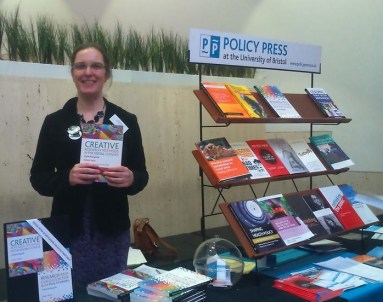
publishers need youLast week I posted about ten ways to get hold of academic literature from outside the academy. I also questioned the ethics of some of the methods I suggested. This week I’m talking about that in more detail.

Publishing is, on the whole, a money-making enterprise. Most academic publishers, or their parent companies, are very wealthy organisations. Writers see very little of this wealth. For every JK Rowling, there are thousands of writers earning tiny amounts from their writing. The median income of writers dropped by over 50% between 2000 and 2013, and was reported in that year as £4,000. I aspire to reach those dizzy heights. Last year I grossed almost £1,000 from writing. I spent nearly that much, too, buying reference books and funding my new self-publishing business. I’m hoping 2016 may be the first year when I earn more from writing than I spend on my writing.

As a writer who needs to earn money, I felt uncomfortable, last week, about advising you to look online for cheap second-hand copies of books. However, as a frequently rather skint person, I know how useful cheap second-hand books can be. I buy new books when I can afford to, though I always check the book price comparison site bookbutler first (and before you tell me I should buy from bookshops, I do when I can, but the nearest one is 15 miles away and doesn’t stock any academic books). Bookbutler is available in other countries too, and seems to index just about everywhere except eBay which is also worth checking. Some bookselling sites are independent, such as Wordery or Alibris, so I try to use those rather than the mammoth monopolies. And if I buy a book second-hand, I aim to do something else for the author, such as write a review online, promote their work on social media, or download an affordable e-book they wrote.

I don’t feel so worried about ethics where journal articles are concerned, because academic publishers generally make a load of money out of university library journal subscriptions (have you seen how much they cost? It’s eye-watering!). I know that the academic publishing business is getting more competitive, like everything else, with the recession requiring all expenditure to be thoroughly justified. But even so, I’m on the editorial board of a journal (unpaid) and I write articles for journals (unpaid) so I figure the least the journal world can do is let me have some pdfs now and again.

But I am very worried about the move to open access. Yes, it’s great from the reader’s point of view. But what about the writers? There are now many journals in which I can’t afford to publish. This doesn’t only affect indie researchers; university publishing budgets are limited, so junior academics may struggle. And it applies to books as well as journals. Recently De Gruyter Open, a reputable academic publisher (not the desperate kind I’ve written about before), emailed to ask whether I’d like to publish a book with them at a cost of only 10,000 euros (approx £7,000 or $14,000). I don’t have that kind of money lying around – and if I did, I could think of lots of things I’d rather do with it than pay to publish a book which the publisher will then charge people to buy.

I don’t know how we got to this point because publishers need writers to survive. Not the other way round – especially not in these days of self-publishing entrepreneurship. Maybe it’s because some people think publishers are doing them a favour by publishing their work. If you’re one of them, undelude yourself immediately!

Another arena where I think (some) publishers are shafting authors is in royalties on e-books. This is an area where publishers could give authors a really good deal without damaging their own profit margins. Royalties on hard copy books are usually in the range of 10-15% – i.e. authors earn just 10-15% of the sale price of books, depending on whether they’re hardback or paperback, and on how many copies have sold (for example, some deals are e.g. 12.5% on the first 2,000 paperbacks, 15% thereafter). This is because publishers have to bear significant costs associated with hard copy books, such as printing, warehousing, shipping, and pulping. These costs don’t apply to e-books, which only require a day or two for a distribution professional to format and upload. Therefore publishers could easily give authors royalties of 50%. But on the whole, they don’t, unless you negotiate hard (negotiate, people, negotiate! Remember, publishers need you!).

I chose my own publisher for their ethical stance. Policy Press is a non-profit-making organisation with a commitment to social justice. They have treated me fairly and I would recommend them to anyone wanting to publish in the fields they cover. I also have a lot of time for the Committee on Publication Ethics (CoPE) which raises awareness of, and works to support, the ethical publication of academic journals. But all its work is directed to internal ethics: ethical peer review, challenging suppression of results, handling fraud, and so on. This is important and I’m glad they are doing it. But there is a real need for more awareness of, and some challenges to, the unethical aspects of academic publishing on the macro level.

Starting Your PhD – New Book Launch!

SYPhD_green_SQmarks_noblend_LC2_RGBI’m launching my Top Secret Project today. It is a short e-book (11,000 words) called Starting Your PhD: What You Need To Know. I published this e-book myself, under the Know More Publishing imprint (see what I did there?!), which I set up for the purpose. The book is available via Kindle, Kobo, Nook, iBooks, Scribd, and Inktera. So as well as being an indie researcher and writer, I’m now an indie publisher too!

I wrote three drafts of the e-book, each of which received feedback from a small group of different beta readers, including people who might do a PhD one day, current doctoral students, and experienced supervisors. The final version was professionally edited. I am very grateful to my beta readers and to my editor, each of whom provided input which improved the book’s quality. And you can buy the fruits of all this labour and experience for the price of a coffee: approx £1.99/$2.99/E3.29 or equivalent (actual prices may vary slightly due to circumstances beyond my control).

So why did I take up indie publishing, you may ask? There are times I’ve been wondering that myself over the last year or so, as it’s been a massive learning curve. I think if I’d known how much work was involved, I probably wouldn’t have started the process. But now that the curve is beginning to flatten out, I’m very glad I did. There are a number of reasons I decided to publish independently. In no particular order, the main ones are:

  • I spotted a gap in the market that a short e-book would fill
  • I’m intrigued by indie publishing; it seems to fit with being an indie researcher and writer
  • Short e-books are increasing in popularity
  • I wanted to offer good quality and affordable help for doctoral students

I expect you’re wondering whether I’ve done all this work just to produce one short e-book. No, I haven’t. ‘Starting Your PhD’ is the first in the ‘PhD Knowledge’ series, with other volumes of similar length to include:

  • Gathering Data for your PhD: An Introduction
  • Analysing Data for your PhD: An Introduction
  • Writing Your PhD: An Introduction
  • Research Ethics for your PhD: An Introduction
  • Finishing Your PhD: What You Need To Know

The second volume is scheduled for publication in November, and I aim to publish the others in the course of 2016.

ALLiEthicalAuthor_BadgeThis is an exciting new venture for me. I’ve had loads of help already: from friends, colleagues, people I’ve met online, and the Alliance of Independent Authors. I’m proud to be a member, and would recommend them to anyone; their closed Facebook group is an invaluable source of support. Also, I’m particularly pleased that they have a code of ethics for indie authors, with the guiding principle of putting the reader first – a principle that guides all my writing.

With that in mind, I need your help too, because there are some things you can do for potential readers that I can’t: tell them about the book, and write honest reviews to help people decide whether the book would be useful for them. Of course I can tell some people, but with my traditionally published books, I’ve had access to an established publishing firm which employed a range of professionals to help spread the word. As an indie publisher I am my own marketing, distribution, and sales departments. So it would be enormously helpful if you could talk about this e-book to people who might find it useful: people considering doctoral study, people embarking on doctoral study, or people supporting someone else through their doctoral study. When I say ‘talk’ I mean the virtual kind too, i.e. tweeting, blogging, Facebook etc. And I absolutely can’t, and wouldn’t, review the book I’ve written; that would be most unethical, so I’m completely reliant on others to give their honest opinion in a way that will help prospective readers decide whether it’s worth investing a few of their hard-earned coins.

Doing a PhD – or a professional doctorate; the e-book is applicable to either – is an enormous undertaking. It can be really difficult even to start on this long, complex process, much of which is incomprehensible at the start. I began mine, back in the early 2000s, with a complete false start which cost me a year and a lot of wasted time and effort; I ended up at a different university with a completely different topic, supervisor, and discipline than I’d originally planned. I guess that is another reason I wrote the e-book: to help others make a more sure-footed start, and to save them timchampagne launche and effort.

If this works for you, please do let me know, either in the comments or on Twitter where I always love to hear from my readers. But for now: I declare my indie publishing career in general, and the Starting a PhD e-book in particular, open!