 By far the most popular post on the blog in 2016 was Ten Ways To Get Hold Of Academic Literature. In fact, thanks to @elfriesen making a great contribution in the comments, it should now be called Fifteen Ways To Get Hold Of Academic Literature. I’m glad this post has proved to be such a useful resource – though it may partly be the most popular because it was posted very early in the year: January 6th, to be precise.
Oddly enough, the second most popular post with readers in 2016 was in fact published in March 2015. It’s the post on Creative Research Methods, which outlines the structure and content of my book Creative Research Methods in the Social Sciences: A Practical Guide. I’m surprised and delighted that this post is still so widely read.
The third most popular is my post on Getting Creative With Your Thesis Or Dissertation, published in July 2016. I’m not so surprised about this one, because I’ve had really good feedback about it, on Twitter, by email, and from people in my workshops. It gives examples of several doctoral dissertations and theses which have been put together in more creative ways than the traditional brick of paper full of dense academic writing. I’m continuing to collect such examples and will write on the topic again when I have enough to merit another post.
The fourth most popular is Ten Top Tips For Becoming An Indie Researcher, published in June. Again, I had a lot of positive feedback about this post. I aimed to provide realistic encouragement, i.e. to make the drawbacks of this lifestyle clear as well as the pleasures. Reading back over the post, I think I succeeded. A lot of people I’ve spoken to this year have been very interested in how I manage to survive and thrive as an indie. For me, and for others who I know, it’s a great way to live. But it has a lot of challenges, and it is definitely not right for everyone.
The fifth of the top five is a post from October, Devising Your Own Research Method. This post explains when, and how, you can create a new method. It’s primarily aimed at doctoral students, who tend to have more time to think about their methods than jobbing researchers do, though it may also be useful for early career and other researchers.
My own top five, in professional terms, don’t have an order of priority, so I’m going to put them in chronological order. The first was the Research Methods Festival at Bath in July, which was a terrific event. I met some great people and learned a lot.
The second was my recent trip to Melbourne, Australia, where I delivered a keynote speech and three workshops on creative research methods, and met some wonderful people in real life who I’d been talking to on Twitter for years. I’d never been to Australia before and it was an amazing experience.
The third was being commissioned to teach a 60-credit module on creative research methods for EdD students at Staffordshire University in the first half of 2017. I’m in the process of planning the module, I’m thoroughly enjoying myself and my intention is that my students will do too. If others want to follow our progress, you can find us on Twitter through the hashtag #StaffsEdD.
The fourth highlight of 2016 was working on the second edition of my book Research and Evaluation for Busy Students and Practitioners: A Time-Saving Guide. This is a heavily revised and updated edition, with a whole new chapter on methodologies, due for publication in April 2017.
The fifth highlight was being asked to facilitate a Summer School on Creative Research Methods for doctoral students in July 2017. This is being run by the Community Animation and Social Innovation Centre (CASIC) at Keele University, and will be held at the New Vic Theatre in Newcastle-under-Lyme and at the Keele campus. We’re in the process of putting the programme together now, and it looks terrific. We’ll be covering arts-based methods, research using technology, mixed methods, transformative research frameworks, and writing creatively for academia. There will be a range of presenters and lots of hands-on and interactive work. Booking opens in January, with a discounted early bird rate; follow me on Twitter @DrHelenKara if you want to find out more.
I’m going to rest this blog, now, till the New Year. I wish you all a happy holiday.
 I mentioned before that I’ve been working on the second edition of my first full-length research methods book. And I’ve just finished! It’s been quite a chunk of work. I’m sure some people turn out second editions that just have a few new paragraphs, some updated references and a different cover. Not this one. This second edition has a whole new chapter, several new sections, lots of updated references, and all the work that goes with shuffling the old bits to make the text cohere and the narrative flow smoothly around the new bits. We’ve even updated the cover – isn’t it lovely?
 I’m working on the second edition of
 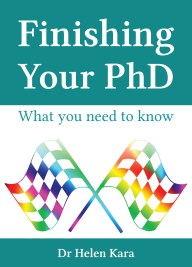 As you know from my last post, the fifth e-book in
  While I’ve been away on holiday (yes, lovely, thank you!) a lot has been happening on the writing front. To begin with, the fifth e-book in
 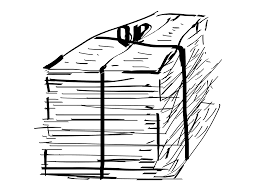 Most doctoral theses and dissertations are produced as a block of printed paper, with the final version bound into a book. Those studying arts subjects may present a shorter written work that forms the theoretical framework for one or more artworks presented alongside the written work as part of the thesis or dissertation. These artworks could be, for example, a collection of poems, a piece of prose fiction, a short play or screenplay, a performance piece such as a dramatic monologue or interpretive dance, an art exhibition or installation, a musical arrangement or composition, or experimental work crossing artistic boundaries.
 During this academic year I’ve been involved in various enterprises on top of my commissioned research work, teaching, and writing commitments:
  Dear Internet
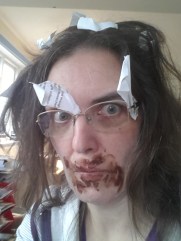 Us writers do the whole ‘grass is greener’ thing just like everybody else. When I was writing my last book, I was longing to get to the journal articles and other projects that were piling up on my to-do list. Now I’m drowning in shorter projects and it’s driving me crazy. Look! Pictorial evidence! I can’t wait to be working on one big long book again, when I will undoubtedly become sane and well organised (cough).
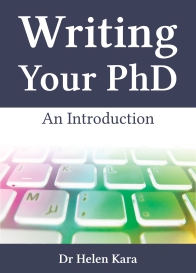 Today I’m launching the fourth in
  at academic writing can be taught and can be learned. In fact, I’m asked to teach writing skills in universities far more than I’m asked to teach anything else. And I know my courses help students because they tell me so on their feedback forms and, later, on Twitter.
 Helen Kara