
Too Tired To Blog

PFYDR coverThere’s lots I could write about this week. I could write a post around my new book, out this very week: Publishing From Your Doctoral Research, co-written with Janet Salmons, the first book in the series I’m co-editing with Pat Thomson. I’m proud of this book and happy to see it in print – and it’s currently on special offer through the above link for only £14.39 (paperback). But mid-December is a rubbish time to publish a book because everyone is preoccupied with the holidays.

I could write about the winter lurgy I’ve been suffering from this week, and the importance of rest and recuperation, though that would be a real case of ‘do as I say not as I do’. I could write something creative about the forthcoming festivals – winter solstice, Hanukah, Christmas, Hogmanay, and so on.

tiredThis has been a helluva year workwise. I could focus on that: calculate how many train journeys I’ve taken, how many beds I’ve slept in – it would be a lot. That’s mainly why I’m so tired, I think. I’m not short of material for this blog; I’m short of energy. I need a break. So I’m going to have one. Beginning on Friday, when I won’t have done all the jobs I wanted to do, but I will have done all that I can. I’ll start work again on Monday 30 December, but I’m going to take a slightly longer digital break – I’ve already ducked out of Instagram, and I’ll be weaning myself off Twitter and Facebook over the next few days. I’ll be back online, in the New Year, when I’m ready. This blog, too, will be quiet now until the first full week of January. I wonder what I’ll post about then… I envy my fellow bloggers who can generate several posts in one go; I almost always write mine the same week as I publish them. It’ll be a whole new decade. I wonder if I will feel any different. I doubt it, really – except for, I hope, a little less tired.

Wishing you, too, an enjoyable and restful break. Especially if you’re one of my beloved Patrons.

This blog, and the monthly #CRMethodsChat on Twitter, is funded by my beloved patrons. It takes me at least one working day per month to post here each week and run the Twitterchat. At the time of writing I’m receiving funding from Patrons of $45 per month. If you think a day of my time is worth more than $45 – you can help! Ongoing support would be fantastic but you can also make a one-time donation through the PayPal button on this blog if that works better for you. Support from Patrons and donors also enables me to keep this blog ad-free. If you are not able to support me financially, please consider reviewing any of my books you have read – even a single-line review on Amazon or Goodreads is a huge help – or sharing a link to my work on social media. Thank you!
Making Money From Writing Books

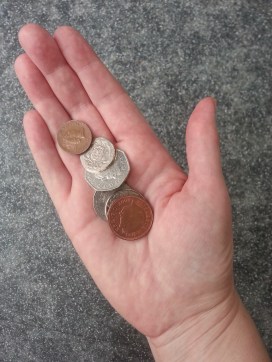
coins on handI’ve been writing steadily since 2011, and I’ve just done my accounts for 2018-19. I have published three full-length books (one in 2018) and one second edition (in 2017) for my main publisher. I’m now writing for two other publishers and have received several small advances for those books. When I say ‘small’, I mean between £125 and £500, so nice to have in the bank but not at all representative of the amount of time I spend writing the books.

Publishers can be a bit funny about authors telling people about royalty rates and amounts of advances, so I need to be a bit circumspect in this post. (Bit annoying really – this kind of secrecy benefits corporations not individuals, but still, that’s where we are right now.) My royalties took a dip this year which surprised me. In the previous year I’d made it into four figures; in 2018-19 I was back into three figures (though I’m happy to say I’m back in four figures again for 2019-20).

I have also self-published six solo-authored short books for doctoral students and one co-written book on self-publishing for academics. These would sell more if I did more to promote them; in 2018-19 global profits totalled £175.65.

I got money, too, from the Public Lending Right – every time one of my books is borrowed from a UK library, I am entitled to a payment of a few pence.  The payout is made once a year and this year was my biggest ever: £8.61.

Also the completely wonderful Author’s Licensing and Collecting Society pays out twice a year to UK authors whose work has been photocopied anywhere in the world. They also collect PLR payments from outside the UK. This year, that added up to £414.60 in total which was very nice to receive.

With all of this, my total gross income directly from writing in 2018-19 was £3,671.32. There were some outgoings too: mostly books, and my Society of Authors’ annual subscription, which brought it down to around £3,000 of net income.

While still not a life-changing amount, it is a game-changing sum of money. It means that, after eight years of steady writing, I can now spend several weeks of each year on writing alone, paid for by the income from my writing. This is a lovely position to be in. It’s better than spending several weeks of each year on writing mostly subsidised by my paid work, which is what I have been doing up to now. Also, I expect it to improve year on year: this time next year I should be receiving royalties from three publishers rather than one (assuming I can earn out my little advances quickly enough).

It has taken me the full eight years to get here. My total earnings from writing for the last eight years have been around £7,500. Most of those have been in the last three years: £1,500 in 2016-17 and £1,600 in 2017-18, plus the £3,000 this year. The first five years, 2011-2016, I earned around £1,400 in total. That was partly because I invested in my self-published books, paying an editor to work on the text and paying for cover design. Speaking purely financially, that was a bad move, but I’m not sorry because I know those books have helped people.

I love writing books; I don’t think I could write them otherwise. Also, my books make me money in other ways: I get asked to run workshops in universities, and to work on projects, solely on the strength of my writing. But I think it is worth reflecting on how poorly academic writing pays writers. We’re still dealing with a system which is based on the principle that anyone doing academic writing has a secure and sizeable salary. That is outdated but it’s taking a long time to change.

Since my very first book, I have negotiated as hard as I reasonably could for a good deal, with the support of the excellent contract advisers who help out members of the Society of Authors. If I hadn’t argued my case, my earnings from writing would have been even lower. I’m sure some people think being a published writer means I’m rich. They look at the kind of income achieved by writers like JK Rowling or Jodi Picoult and think the same applies across the board. I’m sure others think knocking out a book or two will make an appreciable difference to their income and/or pension. Not if it’s an academic book it won’t.

Based on my experience, I reckon you could make a decent living as an academic writer if you write lots of books of interest to people across a range of disciplines, and work with several publishers – for about 20 years. If you write single-discipline books your earnings are likely to be very small. I think it’s important to share what we can of this kind of information, depressing as it is, so that people go into the writing business with realistic expectations.

This blog, and the monthly #CRMethodsChat on Twitter, is funded by my beloved patrons. It takes me at least one working day per month to post here each week and run the Twitterchat. At the time of writing I’m receiving funding from Patrons of $45 per month. If you think a day of my time is worth more than $45 – you can help! Ongoing support would be fantastic but you can also make a one-time donation through the PayPal button on this blog if that works better for you. Support from Patrons and donors also enables me to keep this blog ad-free. If you are not able to support me financially, please consider reviewing any of my books you have read – even a single-line review on Amazon or Goodreads is a huge help – or sharing a link to my work on social media. Thank you!

Juggling Multiple Writing Projects: Three Top Tips

jugglingThis is a crazy year of writing. A co-written book is about to be published and I’m working on three others (one solo, two co-written) and preparing a fifth, also co-written, for self-publication next spring. I have two co-written journal articles in production, one on submission, two more under construction (one co-written, one solo) and I’ve just agreed to collaborate on another next year. Then there are research reports and, for one client, a book chapter. Not to mention writing a post for this blog most weeks.

I didn’t plan it this way. Of the three books I’m working on, one came as a dream paid project that I couldn’t turn down, and another took two years to come to fruition which it did, from my point of view, at exactly the wrong time. But there are four of us working on it so at least I only have to write three chapters for that one.

So I’m doing a lot of juggling. Part of the key to this is careful timetabling. Here’s my book writing timetable for the next few months:

Dec: work on book 2 manuscript (MS) and book 3 MS

Jan: work on book 2 MS and book 3 MS; book 2 MS to publishers by end Jan; reviews of book 1 MS back to me by end Jan

Feb: work on book 1 final draft (FD) and book 3 MS

Mar: work on book 1 FD and book 3 MS; book 1 FD to publishers by mid-March; book 3 MS to publishers by end March; reviews of book 2 MS back to me by end March

Apr: work on book 2 FD

May: work on book 2 FD; end May reviews of book 3 MS back to me

Jun: work on book 2 FD and book 3 FD; book 2 FD to publishers by end June

Jul: work on book 3 FD; book 3 FD to publishers by end July

Then there are the journal articles, other outputs for clients, teaching and speaking commitments, self-publishing, promotion for existing books and articles, research and evaluation project work for clients… oh and the holidays. I’ve set some time aside for breaks, and some time when I will be working from my home office and not travelling. Otherwise I end up travelling ALL the time – in the first three months of next year I’m already due to work in Brussels (twice), Dublin, Cork, Belfast, Glasgow, Southampton, Sheffield, Birmingham and Manchester.

Careful timetabling is only part of the key: the other part is meeting self-imposed deadlines. At the moment I need to write 1,000 words six days a week on book 3. Each 1,000 words takes 2-4 hours, and is often done in the evening and at weekends. If I don’t stick to that schedule I’ll fall behind – if not with book 3 then with one of the others.

On the plus side, there are advantages to working on several books at once. Recently I got some feedback on parts of book 2 from my co-author. Most of it was useful constructive criticism, with occasional suggested deletions where he really didn’t like something. On the whole I accept his amendments – he’s a good writer and I value his input – but there was one paragraph that he’d suggested deleting which I rather liked. I was considering whether to argue for keeping it in, when I realised it would work rather well in book 3. So, ta-da! Co-author happy, me pleased, all well.

I enjoy writing collaboratively. I always learn from co-authors, and the resulting work is usually better than anything I could produce alone. I’m not sure, though, that it takes less time than solo writing. Yes, I don’t have to create as much raw material, but there’s a lot more discussion and negotiation required.

What I do find galling is academics with permanent posts who complain that they don’t get enough sabbaticals or study leave, i.e. paid time off, to write. I don’t begrudge academics these opportunities, but I do think that some awareness of the conditions under which other people do scholarly work – including precariously employed academics as well as independent researchers and others – can go a long way.

I hope I can make it through the next few months unscathed. My aim from then on is to work on one book at a time. I wonder how that will pan out…!!

So my three top tips for juggling multiple writing projects are:

  1. Timetable carefully
  2. Meet your intended deadlines
  3. Practise self-care

If you have any others to suggest, please put them in the comments.

This blog, and the monthly #CRMethodsChat on Twitter, is funded by my beloved patrons. It takes me at least one working day per month to post here each week and run the Twitterchat. At the time of writing I’m receiving funding from Patrons of $44 per month. If you think a day of my time is worth more than $44 – you can help! Ongoing support would be fantastic but you can also make a one-time donation through the PayPal button on this blog if that works better for you. Support from Patrons and donors also enables me to keep this blog ad-free. If you are not able to support me financially, please consider reviewing any of my books you have read – even a single-line review on Amazon or Goodreads is a huge help – or sharing a link to my work on social media. Thank you!