History, Truth, Research and Choices

I didn’t get on too well with history at school. It was all about kings and queens and battles, people and events I couldn’t identify with. I enjoyed historical novels if they were about times that had relevance for me, e.g. the first world war (in which my maternal grandfather fought) or the second world war (in which my paternal grandfather fought). But in general I preferred the contemporary world I knew, and books and films set there.

In the late 1980s I discovered revisionist history. I loved The Women’s History of the World by Rosalind Miles (later rebranded as Who Cooked the Last Supper?), which was an eye-opening book, clever, funny, and a welcome counterpoint to all the male-dominated history I’d read. I was fascinated by Peter Fryer’s books Black People in the British Empire, which demonstrated that the British empire was based on exploitation and oppression, and Staying Power: The History of Black People in Britain, which showed how Black people had been present and influential in British society for two thousand years. (The link is to a recent edition of this book with a new foreword by Gary Younge – if you haven’t come across it and you’re interested, I would recommend a read.)

More recently I have read Inglorious Empire: What the British did to India by Shashi Tharoor (2017), An Indigenous Peoples’ History of the United States by Roxanne Dunbar-Ortiz (2014), and The Inconvenient Indian by Thomas King (2013). I would recommend each of these books for their perspective, dignified approach, and eloquent writing.

At the start of lockdown, some kind neighbours along my street set up a book exchange for our community outside their house. A few weeks ago I found a copy of The American Future by Simon Schama, a high-profile and respected British academic historian, award-winning writer and broadcaster. This book has four sections:

  1. American War (civil war, World War Two, Vietnam)
  2. American Fervour (religion – mostly Judeo-Christian)
  3. What is an American? (immigration, primarily of Germans, other Europeans, Mexicans and Chinese people)
  4. American Plenty (shift in mindset from infinite to finite availability of land and resources)

With my new awareness of the position of Indigenous peoples in the US, thanks to the work of Roxanne Dunbar-Ortiz and Thomas King, I wondered what Schama said on the subject. The subtitle of his book is A History From The Founding Fathers to Barack Obama, which didn’t fill me with optimism. And sure enough, Indigenous people barely feature in sections 1-3. There is a brief acknowledgement in the prologue on page 14 that ‘Native American tribes’ in Iowa might have had a different viewpoint from ‘Canadian troopers’ on whether Iowa had ever experienced war. There is a brief mention on page 114 that in the late nineteenth century, the army was involved in ‘finishing off Native Americans’. And other such mentions in passing – until section 4, pages 316-330, a subsection called ‘White Path 1801-1823’, which tells the story of the Cherokee people in Tennessee. Schama evidently attempts to use a reasonably even-handed approach: he acknowledges the Cherokee perspective and recognises at least some of the injustice done to them through broken promises, land grabs and forced relocations. He describes president-to-be Andrew Jackson as ‘unexpectedly brutal’ and says that ‘extinction’ [of Indigenous peoples] ‘was an actual policy determined by actual men’ (322). Schama also describes Jackson as ‘the ethnic cleanser of the first democratic age’ (326).

The story of American history from the late 18th century to the present day is told very differently by Dunbar-Ortiz. She acknowledges Jackson as ‘the implementer of the final solution for the Indigenous peoples east of the Mississippi’ (96). She points out that ‘In the 1990s, the term “ethnic cleansing” became a useful descriptive term for genocide.’ (9) And she identifies ‘four distinct periods’ where documented policies of genocide were created by US administrations. The first is the ‘Jacksonian era of forced removal’, and then ‘the California gold rush in Northern California; the post-Civil War era of the so-called Indian wars in the Great Plains; and the 1950s termination period’ (9).

Having already read Dunbar-Ortiz and King, the way Schama tells the story seemed to me to involve a lot of erasure of Indigenous peoples. And sometimes, due to his narrative choices, his writing seems quite tone deaf. ‘The dream of American plenty for the ordinary man was born from Andrew Jackson’s determination to evict tens of thousands of Indians – Chickasaw, Choctaw, Seminole and Creek as well as Cherokee – from the only homelands they had ever known, because they happened to be in the way.’ (323) Recognition of Andrew Jackson’s atrocities doesn’t hide the division Schama draws between ‘the ordinary man’ and ‘Indians’. That raises a whole bunch of ugly questions. He doesn’t engage with any of them.

Dunbar-Ortiz writes about the impact of history itself as its scholars work to protect ‘the origin myth’ of the Founding Fathers and independence. That origin myth ‘embraces genocide’ (2) which is ‘often accompanied by an assumption of disappearance’ (xiii). I see this in Schama’s engaging, entertaining, readable writing: the overall message is that some Indigenous people were badly treated, a long time ago, in a sub-plot to the major storyline of independence and democracy in a nation of immigrants. A Spectator review on the back of the book reinforces this point by claiming that Schama is ‘weaving the immediate present with [America’s] earliest history’. That ‘earliest history’ is somewhere around 1775. Dunbar-Ortiz, meticulously and forensically, establishes the existence of sophisticated societies and cultures in America thousands of years ago.

Schama’s book was first published in 2008, Dunbar-Ortiz’ in 2014 – but most of her sources are pre-2008, so they would also have been available to him. It is both fascinating and nauseating to read these two very different accounts of what is ostensibly the same history. The authors have completely different perspectives and narratives. And this, for me, is the key learning point. When we conduct research or scholarly work, we bring a perspective and we choose a narrative. Dunbar-Ortiz is open about this, talking about starting a dozen times before she settled on a narrative, and outlining where she sits within relevant debates around Native American scholarship (xii-xiii). Schama simply launches in to an authoritative tale.

The narratives selected by researchers and scholars both reveal and conceal. It is not possible to tell everything that could be told. With this comes huge responsibility. We need to tell the most important, most necessary stories – but that in itself raises new questions. Most important and necessary to whom, for what, and why? Which other stories could we tell? How do we know those stories are not every bit as important and necessary? With the story we choose to tell, how can we acknowledge what we are leaving out as well as what we are focusing on?

This is a complex business and there are no easy answers because each case will be different. What is essential is to be aware of the issues and to use our authorial power as wisely as we can.

This blog, and the monthly #CRMethodsChat on Twitter, is funded by my beloved patrons. It takes me at least one working day per month to post here each week and run the Twitterchat. At the time of writing I’m receiving funding from Patrons of $57 per month. If you think a day of my time is worth more than $57 – you can help! Ongoing support would be fantastic but you can also make a one-time donation through the PayPal button on this blog if that works better for you. Support from Patrons and donors also enables me to keep this blog ad-free. If you are not able to support me financially, please consider reviewing any of my books you have read – even a single-line review on Amazon or Goodreads is a huge help – or sharing a link to my work on social media. Thank you!
Learning From Stories

Human beings learn from stories all the time. In everyday conversation we tell and share stories to teach and entertain and strengthen social bonds: what to cook with a glut of apples, why I found my house keys in the fridge, when auntie Flossie fell off Blackpool Pier. We learn from stories in books and films, in songs and plays, and we tell each other those stories, too.

Researchers and academics learn from journal articles and policy documents, monographs and webinars. These also contain stories, though they are often in disguise, and they tend to be briefer and with less depth than stories told or shown. A lot of us enjoy this kind of learning, or most of it, though it takes more effort than the other kind.

I have some good news to share. We can learn useful information for our scholarly work from novels, memoirs, and poetry. For example, regular readers will know of my interests in Indigenous research and ethics, and in anti-racism work. Some of my teachers here are books I have read. As usual with my book posts, there is no system involved, I have just pulled some volumes off my shelves. Some were recommended to me, some I found in bookshops.

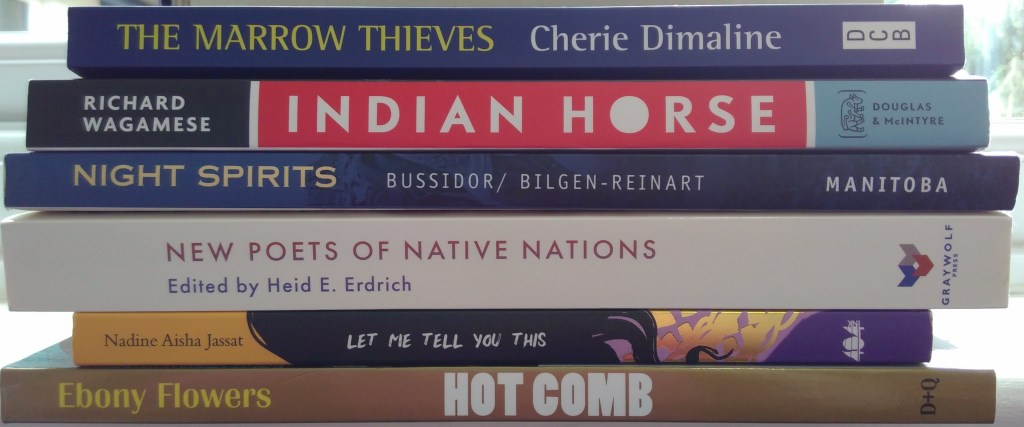
The Marrow Thieves by Métis writer Cherie Dimaline is a post-apocalyptic tale of a northern America devastated by global warming, where Indigenous people are being hunted for their bone marrow because it has special qualities. The protagonist is a boy called Frenchie who becomes separated from his family and has to travel north to try to find them. This book is classified as Young Adult literature, presumably because the protagonist is a boy, but I wouldn’t let that put you off. If you don’t like any kind of speculation with your fiction, you probably won’t enjoy this book (although there isn’t much), but I do and I did. And I learned a lot about how it can feel to be Indigenous, because that is one of the things novels can teach us which official writing mostly can’t. The Marrow Thieves won a bunch of awards, which is not surprising as it’s a terrific book.

Indian Horse by Ojibwe writer Richard Wagamese is another book focusing on Indigenous experience. This one is straightforward fiction, telling the life story of an Ojibwe character, Saul Indian Horse, and his trials and joys. It is beautiful, evocative and moving – and informative about the effects of individual, group, systemic, and national racism. It is very skilfully written, drawing me into unfamiliar cultural experiences such as competitive ice hockey, and enabling me to identify and empathise with people unlike any I have ever met. The characters and their experiences stayed with me long after I finished reading. This excellent book has now been made into a film, Indian Horse, which was the highest-grossing English Canadian film of 2018.

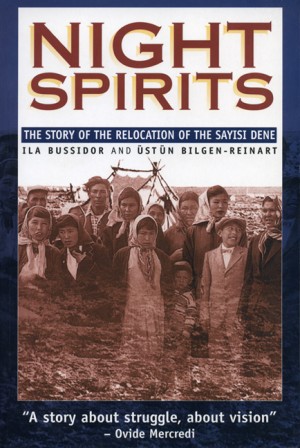
Night Spirits, by Ila Bussidor and Üstün Bilgen-Reinart, is a true story, the story of the Sayisi Dine people who were relocated – with only a few hours’ notice – by the Canadian government in August 1956. They were moved from their ancestral homelands in remote northern Manitoba to a slum area on the outskirts of Churchill, a frontier town on the shores of Hudson Bay. The Sayisi Dene had had little contact with white people and moved from a life of self-reliant sustainability to being social outcasts. Over the next 17 years, almost one-third of the Sayisi Dene died violently or as a result of their terrible living conditions. Ila Bussidor is a former chief of the Sayisi Dene and Üstün Bilgen-Reinart is a broadcaster and journalist. They worked together to tell this ‘dark story’ and to tell it ‘in hope’. It is well written, but emotionally hard to read because it is so full of injustice and tragedy. Yet there is hope: in 1973 the remaining Sayisi Dene began to assert their independence and leave Churchill to build a new community.

Poetry, too, tells stories. The anthology New Poets of Native Nations, edited by Ojibwe writer Heid E. Erdrich, brings together the work of 21 Indigenous poets from the 21st century. All the poets are from different parts of the lands we currently call America and Canada. The stories they tell are compelling, lyrical, raw, visual, sometimes funny. I didn’t know any of these poets’ work before I read the anthology, and I was particularly taken with Layli Long Soldier. I wanted to reproduce one of her poems here, but I thought I might fall foul of copyright, then I found it online so here’s the link to Obligations 2 which is an astonishing work, unconventional, perhaps the closest to a perfect poem that I have ever read. This anthology is delightfully multi-vocal and insightful.

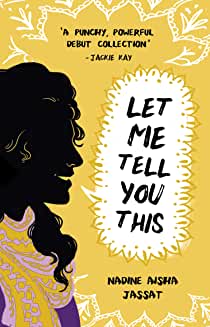
I also want to learn from single voices and about racism closer to home. I pulled Let Me Tell You This by Nadine Aisha Jassat off the shelves in my last trip to Housmans radical bookshop, which I love to visit when I’m travelling through Kings Cross/St Pancras (I’ll be back when I can travel again, I promise – if you’re in the area with a little time to spare, do go and check it out). Jassat is a young British Asian poet whose voice loves and rages, punches and strokes with deftness and delight. She tells stories of contemporary British Asian life, with an emphasis on women’s and girls’ experiences in family and friendship. Her writing is readable, insightful, and a great teacher. This is her first collection, and it’s an impressive debut; I look forward to finding out what more she has to say in the future.

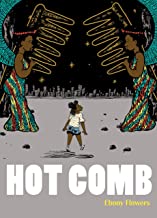
We’re back to the US for Hot Comb, a terrific collection of graphic short stories by Ebony Flowers, which I found in Waterstones in Cork in February. Regular readers will also know that I love graphic novels and comics, and part of why I love them is for their ability to take me into places I could never go – or, at least, not without causing change by my presence. These stories take me into Black society and let me share and learn from some of the experiences there. They are well written and drawn, with memorable characters. (And I discovered, in finding her link for this post, that Ebony Flowers is also an ethnographer, who uses comics in her research work – yay!!)

One of the best things about all of these books, and others like them, is I get to learn from people of colour without bothering them in person. And another best thing is that they are all so enjoyable to read – harrowing, too, at times, but that’s part of the point of literature for me: to move me emotionally, because that, too, helps me learn. As well as the grief and loss and pain, there is hope and growth and joy in these books, and humanity, and gentle teaching.

If your interests are in other areas, search out books and films that deal with your favoured subjects. If you too are interested in anti-racism, then I recommend any or all of the books described above. And if you have recommendations to share, please put them in the comments.

This blog, and the monthly #CRMethodsChat on Twitter, is funded by my beloved patrons. It takes me at least one working day per month to post here each week and run the Twitterchat. At the time of writing I’m receiving funding from Patrons of $57 per month. If you think a day of my time is worth more than $57 – you can help! Ongoing support would be fantastic but you can also make a one-time donation through the PayPal button on this blog if that works better for you. Support from Patrons and donors also enables me to keep this blog ad-free. If you are not able to support me financially, please consider reviewing any of my books you have read – even a single-line review on Amazon or Goodreads is a huge help – or sharing a link to my work on social media. Thank you!

I’m on YouTube!

I have a YouTube channel! It’s a new baby one and I intend to grow it into a useful adult channel.

No, not that kind of adult channel…

I thought creating a YouTube channel would be a straightforward process. In fact it has taken me around four years of difficulty after difficulty. First I had to figure out what I wanted to say. Then there was the technical side, working out what equipment to use for recording video and audio. I got organised in my spare bedroom and had a go – and discovered that when I am on my own in a room talking to a machine, I turn into a muppet. Feedback from friends was along the lines of “Why are you doing it like that?” and “Ewww, it’s terrible.” (I have some delightfully candid friends.) So I figured I needed someone to help, but professional video people are eye-wateringly expensive.

Eventually I recruited a student friend. We had a fun time filming, but then she found out there was something wrong with the sound and got discouraged. Last autumn I was having dinner with a colleague and found she was having the same problem, so we agreed to help each other in the spring. And then the pandemic hit. But the good news is, because I can’t get help from anyone else, my partner, who is a sound engineer and a techie, agreed to help me out. Hurrah! So I have uploaded five new videos, and created playlists which also include some other videos of me from the last few years.

Do please visit my channel; I’d love to know what you think. Also, if there are any topics you would like me to cover in a video or blog post, please let me know in the comments.

This blog, and the monthly #CRMethodsChat on Twitter, are funded by my beloved patrons. It takes me at least one working day per month to post here each week and run the Twitterchat. At the time of writing I’m receiving funding from Patrons of $57 per month. If you think a day of my time is worth more than $57 – you can help! Ongoing support would be fantastic but you can also make a one-time donation through the PayPal button on this blog if that works better for you. Support from Patrons and donors also enables me to keep this blog ad-free. If you are not able to support me financially, please consider reviewing any of my books you have read – even a single-line review on Amazon or Goodreads is a huge help – or sharing a link to my work on social media. Thank you!
In Praise Of Not Knowing

This image has an empty alt attribute; its file name is dont-know-1.jpg

Perhaps we learned to dread saying ‘I don’t know’ at school, where it didn’t impress our teachers. Or maybe it’s the human desire for certainty and predictability which makes an ‘I don’t know’ so unwelcome. Anyway, we are supposed to know things, us researchers and scholars. There have been times when, involved in a conversation and someone uses an acronym or references a person or organisation I haven’t heard of, I nodded wisely while making frantic mental notes to look it up later. Indeed there is a small industry making money out of this tendency by publishing Bluffer’s Guides to a variety of topics such as social media, wine, cycling and Brexit. These Guides are apparently designed to amuse, inform, and enable the reader to hold her own in any conversation on the subject. By their very existence they discourage the use of ‘I don’t know’.

But think about it: do you know someone who always has an answer for everything? I have met several people like that in my life. Aren’t they annoying?

I think an honest ‘I don’t know’ has a lot going for it. For a start, I think it is useful to acknowledge to ourselves when we don’t know something. Then we can find out, either consciously or sub-consciously. I had an email recently from someone I care about, asking for my help in solving a personal problem. As I read the email, I saw that their problem was quite complicated, and realised I didn’t have a ready answer. I finished reading and turned to a different task. Half an hour later I read the email again – and this time I was able to formulate a response. The part I think of as my ‘back brain’ had been working on the problem while I was otherwise occupied, and had come up with a solution. I love it when this happens. It’s where we get the phrase ‘sleep on it’ – if you fall asleep at night thinking of a problem you need to solve, you may well wake up in the morning with a solution in your mind.

I also think it is useful to acknowledge to other people when there is something we don’t know. In the conversations where someone talks about something I haven’t come across, these days I ask them what the acronym means or who the person or organisation is and why they’re relevant to our conversation. This enables better quality communication and discussion. I also own up to not knowing when I’m teaching. I often teach doctoral students who are, by definition, clever and knowledgeable people. This means they sometimes ask me questions to which I don’t know the answer, and for which there is no Bluffer’s Guide – and anyway, trying a bluff on a room full of doctoral students would not be a good idea. So I say, ‘I don’t know,’ and add, ‘but maybe someone else here does?’ And, very often, they do.

I wonder whether part of the problem with ‘I don’t know’ is that acknowledging it, to ourselves or to others, takes some confidence. Confidence that we can find out; confidence that others won’t think badly of us… Actually, it seems to me that many people respect you more if you are honest about what you don’t know, because then can have more faith in what you claim you do know.

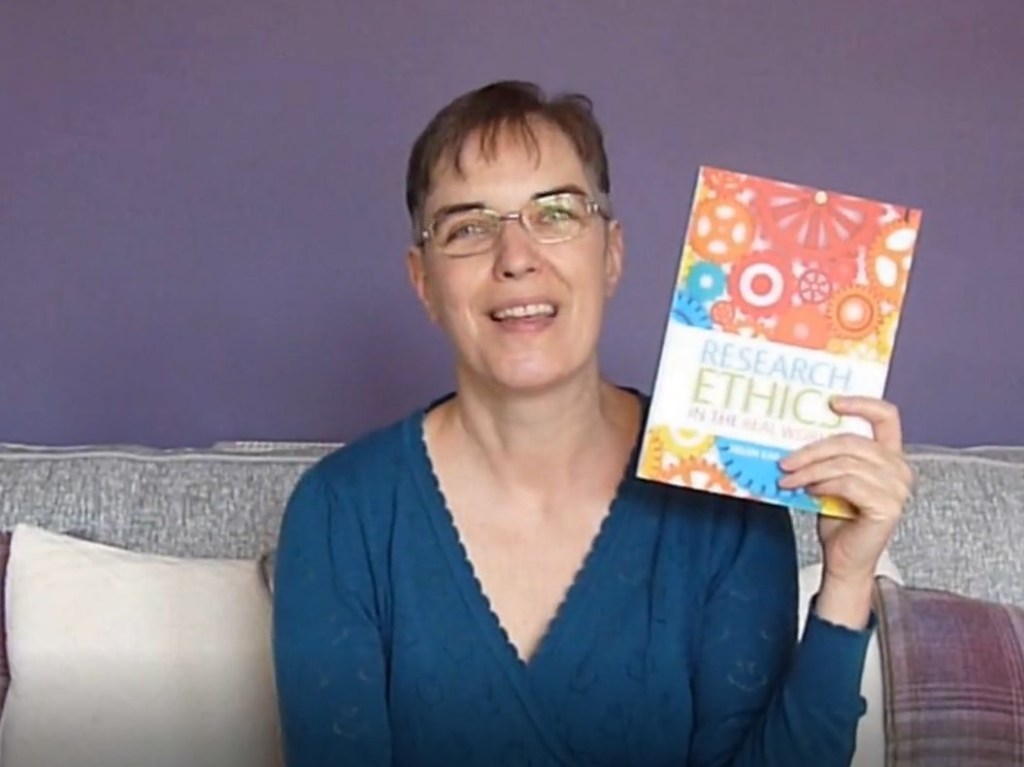
Having said that, it is also important to be flexible about what you know, to allow for the possibility of change. I knew some things when I wrote the first edition of my book on creative research methods in 2015. Then I learned more, including some things that contradicted parts of what I knew before, so in my second edition I acknowledged and explained these changes of mind. I don’t think this invalidates my work. Nobody can know everything, and what we know changes with time as we learn more, just as we learned that the earth is round not flat, and that fatal diseases can be eradicated with vaccines. ‘I didn’t know that’ is part of the ‘I don’t know’ family, and just as valuable.

Not knowing something is the foundation for research, because we do research to find out new knowledge. Students sometimes say to me, ‘I don’t know if I’m doing my research right.’ I say, ‘If that’s how you feel, you probably are doing it right.’ Then they look at me like Luke Skywalker looks at Yoda when he has just said something particularly cryptic, so I tell them all research is built on uncertainty; if they already knew whatever it is they want to find out, there would be no point in doing their research in the first place.

Perhaps the hardest part is the way all of our lives are currently built on uncertainty. When and how will this pandemic end? Who will be alive when it does? What will the world be like? Of course knowing the future was always an illusion, but our plans were often enacted which made it seem real. Now it may feel pointless even to make a plan. More and more people are talking about our current predicament as “the new normal”, and I recognise in this an understandable reaching for certainty. But not much is normal about the way we are currently living, and we may find we can deal with that better if we embrace the uncertainty and face up to what we don’t know.

This blog, and the monthly #CRMethodsChat on Twitter, is funded by my beloved patrons. It takes me at least one working day per month to post here each week and run the Twitterchat. At the time of writing I’m receiving funding from Patrons of $55 per month. If you think a day of my time is worth more than $55 – you can help! Ongoing support would be fantastic but you can also make a one-time donation through the PayPal button on this blog if that works better for you. Support from Patrons and donors also enables me to keep this blog ad-free. If you are not able to support me financially, please consider reviewing any of my books you have read – even a single-line review on Amazon or Goodreads is a huge help – or sharing a link to my work on social media. Thank you!