
Write Your Doctoral Research Differently

When I wrote my doctoral thesis, nearly 20 years ago now, I wanted to write it creatively. I was already a professional writer and I could see the potential for creative approaches to help me communicate the points I needed to make. Also, I gathered data in the form of stories, so to me it made sense that my thesis should be made up of stories too. But my supervisors were resistant. After some discussions, they allowed me to write one chapter creatively, as long as I wrote the rest of my thesis in a conventional style.

The difference between then and now is that back in the mid-2000s, the literature on writing creatively in academia was very limited. Laurel Richardson’s seminal Fields of Play was available, but it was on its own at that time; there was no body of literature from which to build a rationale for using creative techniques in academic writing. And of course that was exactly what I needed to do to reassure my supervisors about the merits of my intended approach.

But now there is such a body of literature! In this post I share four particularly useful books, all published in the last couple of years. Also, they are all well referenced, so you can use them to find other literature, if you wish. Then you can create a cogent, evidence-based argument for using creative techniques in writing your doctoral dissertation or thesis.
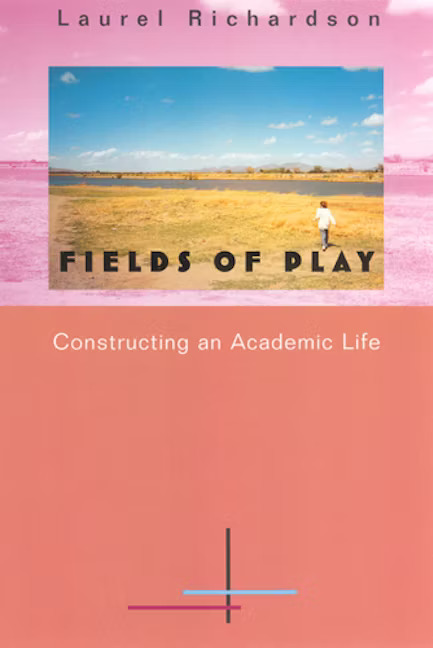
I also want to recommend Fields of Play. Although it was written late in the last century, it is still highly relevant today. Laurel Richardson dismantles the rationale for the norms of conventional academic writing such as passive voice and authorial authority. Then she creates a new rationale for using fiction techniques, poetry, drama and other creative approaches in academic writing. And she practises what she preaches within the text, to excellent effect.
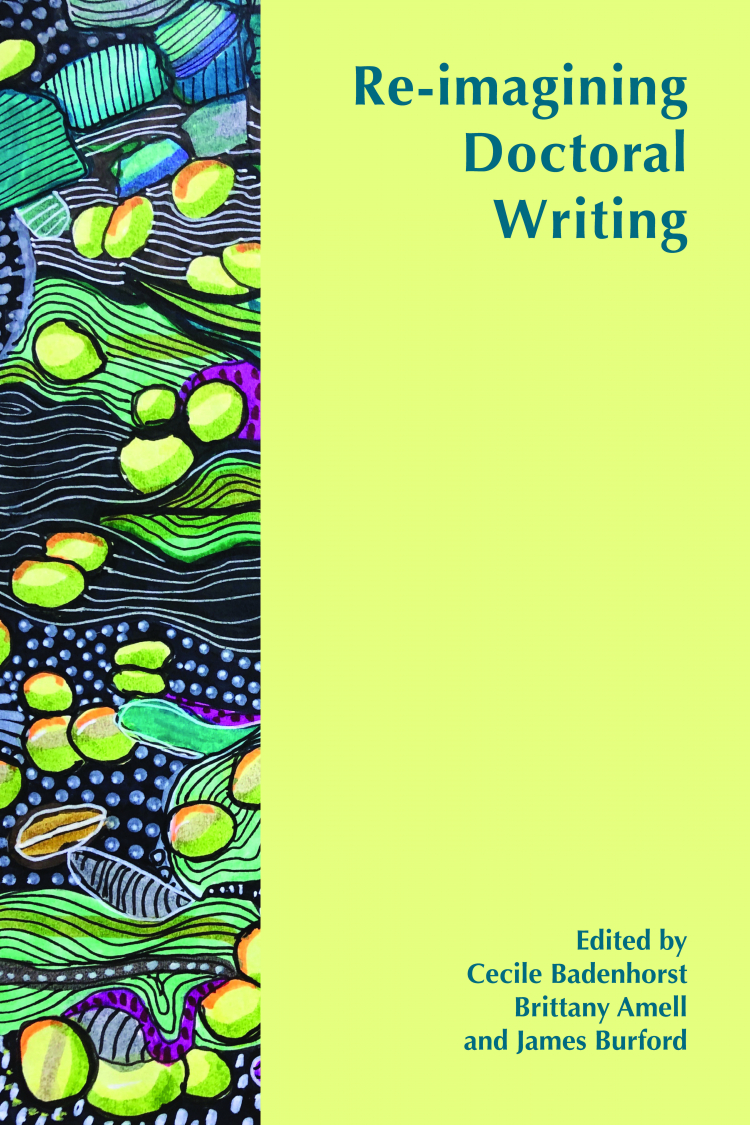
Reimagining Doctoral Writing (University of Colorado Press, April 2022) is edited by Cecile Badenhorst, Brittany Amell and James Burford. This edited collection is all about doctoral writing. Authors come from around the world, and they investigate doctoral writing from a range of perspectives and in a range of contexts. They also consider some potential futures of doctoral writing. This book is available as an open access ebook through the WAC Clearing House.

Doing Rebellious Research: In and Beyond the Academy (Brill, May 2022) is edited by Pam Burnard, Elizabeth Mackinlay, David Rousell and Tatjana Dragovic. This edited collection has four parts. The second part is called ‘Rebellious Writings Written Differently: A Manifesto’. It contains seven chapters and a set of reflective questions, and overall is designed to encourage and inspire a radical approach to academic communication.
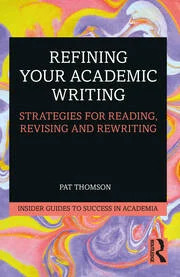
Refining Your Academic Writing (Routledge, December 2022) is by Pat Thomson. This short book treats revision as not a boring mechanical process but a creative, imaginative craft. It is part of the Insider Guides to Success in Academia series which, in the interests of full disclosure, I should point out is co-edited by Pat and me. But I am recommending this book here, not simply because it’s in our series, but because it is as useful and radical as the others in this post.

Creative Writing for Social Research (Policy Press, January 2021) is by Richard Phillips and me, with 14 tremendous contributors who put the principles set out in the book into practice. We have received excellent feedback on this book, such as: ‘The text is well written and engaging… I would recommend this book to all qualitative researchers.’ Thank you Ruthi Margulis for your heartwarming review in Research Matters (Dec 2021, p 13), the quarterly magazine for researchers published by the Social Research Association.

These books are in general a pleasure to read. They are well written and full of ideas, encouragement, and inspiration. And it’s not only the books – if you want more personalised support with your thesis writing, you can always come on one of my writing retreats (if there are still places available). Whatever resources you draw on, I wish you joy of your doctoral writing.

This blog and the videos on my YouTube channel are funded by my beloved Patrons. Patrons receive exclusive content and various rewards, depending on their level of support, such as access to my special private Patreon-only blog posts, bi-monthly Q&A sessions on Zoom, free e-book downloads and signed copies of my books. Patrons can also suggest topics for my blogs and videos. If you want to support me by becoming a Patron click here. Whilst ongoing support would be fantastic you can make a one-time donation instead, through the PayPal button on this blog, if that works better for you. If you are not able to support me financially, please consider reviewing any of my books you have read – even a single-line review on Amazon or Goodreads is a huge help – or sharing a link to my work on social media. Thank you!
Eight Misconceptions About Creative Research Methods

There are still a lot of people who don’t really understand what creative research methods are, or what they are for, or when you might use them. These people are usually labouring under one misconception or another. So I thought it might be helpful to run through these misconceptions and explain why they are wrong.

1. Creative research methods are a new fad.

In fact research has always been a creative endeavour. The first clinical trial was conducted in the mid-18th century. The questionnaire was invented in 1838, interviews were first used by researchers in the early 20th century, and focus groups were devised in the 1940s. So the questionnaire was created less than 200 years ago, and the focus group was created within living memory. And no doubt ingenious humans were devising a whole bunch of other ways to try to find out new information since long before the clinical trial was born.

2. Creative is the same as innovative.

This is more arguable; there is certainly a lot of overlap between creation and innovation. However, there is also scope for creativity in the use of conventional methods. A questionnaire may include appealing visual elements and be creatively laid out on the page or screen. It is still a questionnaire, but a more creative one than the usual online or paper form.

3. Creative research methods are only useful for qualitative research.

Actually a lot of quantitative and multi-modal researchers do very creative work. Much of this is at the further reaches of disciplines such as physics and electronics, but some is more accessible. Piper Harron wrote her pure maths doctoral dissertation in a very creative way. Daina Taimina solved a centuries-old problem in hyperbolic geometry using crochet. And field biologist Colleen Campbell uses artistic techniques alongside her scientific work with bears and coyotes.

4. Creative research is the same as arts-based research.

Arts-based research is a big sub-set of creative research methods, but not the whole story. There is some very creative work being done with digital methods, embodied methods, and methods in multi-modal research.

5. Arts-based research is all about visual methods.

This is perhaps understandable because we are such a visual species, but it is incorrect. Arts-based methods do include visual methods, for sure, but also writing, music, drama, dance, textile arts – the lot.

6. Creative methods do not involve rigour.

This is closely aligned to the misperception that states creative research methods are antithetical to good research practice. This is absolutely not the case. The key principles of good research practice – designing carefully, working systematically, disseminating widely etc – apply whether you are using creative or conventional methods, or a mix of the two.

7. Only creative people can use creative research methods.

This implies that some people are not creative; a viewpoint I do not embrace. I believe everyone is creative. We all co-create our relationships with other people, for a start. Making and maintaining relationships is a creative process because no two relationships are the same, and the different relationships we have with different people demand different responses from us. Also, you do not need any formal qualifications or recognised skills to be creative: you don’t need an arts degree to use arts-based methods effectively, or great technical acumen to use digital methods well.

8. Creative research methods are only useful for gathering data.

I think this misconception arises because of the general conflation of research with data gathering. It is the visible part of research; the part we are all, regularly, asked to participate in; the part that research ethics committees focus on. But it is far from the only stage of research where creative methods can be useful. In fact, creative methods can be used effectively at all stages of the research process.

Creative Research Methods in Practice

I have an exciting new venture to share with you. For the last couple of years I have been working with Policy Press on a new series of short affordable books on creative research methods in practice. And we have just gone public! The first book is on its way: Photovoice, Reimagined by Nicole Brown. And there are several more books in the pipeline. Two are being written right now – one on fiction in research, and one on phenomenography – and four other book proposals are under review.

I wanted to edit this series because there are no such books available to help researchers learn in detail about why, when, and how to use a new research method. There are several books giving an overview of creative research methods, within or across academic disciplines; some sole-authored, some edited collections. These are useful texts but they do not generally offer enough depth of information to enable readers to try out the methods for themselves with confidence. The main rationale for this new series is to do just that.

One of the hardest things to sort out was the design for the covers and webpage. That took months and a lot of emails, discussions, and meetings (most of which I didn’t need to attend, thank goodness). We almost agreed on some covers and then the sales and marketing people at Policy Press said the designs weren’t good enough. They were absolutely right. So we went back to the actual drawing board and started again. I am so pleased with the final result. I think hot air balloons are a delightful combination of science and art, innovation and exploration and adventure – just like creative research methods. (Let’s not focus too closely on the ‘hot air’ part, OK?!) Also Policy Press likes to have a Bristol element to their designs, and Bristol holds an annual International Balloon Fiesta – Europe’s largest event of its kind – so the design works from that viewpoint too.

I am so happy to be able to tell you about this new book series. And if you would like to propose a book for the series, do get in touch!

This blog and the videos on my YouTube channel are funded by my beloved Patrons. Patrons receive exclusive content and various rewards, depending on their level of support, such as access to my special private Patreon-only blog posts, bi-monthly Q&A sessions on Zoom, free e-book downloads and signed copies of my books. Patrons can also suggest topics for my blogs and videos. If you want to support me by becoming a Patron click here. Whilst ongoing support would be fantastic you can make a one-time donation instead, through the PayPal button on this blog, if that works better for you. If you are not able to support me financially, please consider reviewing any of my books you have read – even a single-line review on Amazon or Goodreads is a huge help – or sharing a link to my work on social media. Thank you!