
 I was doing a telephone interview for a client this morning and my interviewee, let’s call them Ali, said something that made me stop and think. Ali had spent around 35 years working for local government and was talking about the devastation of public service budgets in the UK which has left some local areas with no services for those in need of support as a result of mental health problems, domestic violence, chronic illness, and so on.
“People are seeing a need,” Ali told me, “and setting up projects in neighbourhoods to help each other. But they’re quite naïve. They don’t understand the need for proper health and safety procedures, DBS checks, and compliance with other statutory regulations.”
What I wanted to say to Ali, but didn’t because I was being a professional interviewer at the time, was that I don’t understand the need for those things either. This reminded me about the Casserole Club, set up by the UK coalition Government in 2011, the idea being that those who were able to cook an extra plate of food could share it with a hungry lonely person nearby. What a great idea, I thought, and went to check it out. I found that I needed to fill in a lengthy application form, pass a food hygiene test – and, yes, have a DBS check to confirm that I have no criminal record.
After my grandma died, my 88-year-old grandfather struck a deal with a nearby neighbour to bring him a plate of dinner every evening. He paid for the ingredients but she cooked the food and brought it round with love, for four years until he also died. She didn’t fill in an application form, pass an exam, or interact with bureaucracy in any way; she just did what her neighbour needed, and he contributed what he could.
I didn’t join in with the Casserole Club. I was put off by the bureaucracy. I was also a little bit ashamed of myself for being deterred by having to fill in a few forms and take a test – but nevertheless that was the case. The Club appears to have fizzled out at a national level and many local levels too – the most recent posts on the national Facebook page and on the page from my locality are dated 2015 – and I wonder how much of a role bureaucracy played in that failure.
I think bureaucracy is often counter-productive. Yesterday I was teaching ‘Ethical Thinking and Decision-Making In Practice’ to doctoral students at the University of Manchester. Several students spoke of their concerns about the system of ethical approval at UK universities. As they talked, I could see that they viewed ethics as a barrier to get around, a hurdle to jump, a bureaucratic obstruction to their research. I feel sad that our ethical governance systems have moved so far from helping researchers to work more ethically. They seem all about compliance and policing, and not at all about raising ethical standards or improving ethical practice.
I’m not advocating total anarchy; researchers certainly need to operate within the laws of the country or countries where we work, and I believe we should act as ethically as we can. But it seems to me that for researchers to be more ethical, we need less regulation and more education.
This blog, and the monthly #CRMethodsChat on Twitter, is funded by my beloved patrons. It takes me at least one working day per month to post here each week and run the Twitterchat. At the time of writing I’m receiving funding from Patrons of $47 per month. If you think a day of my time is worth more than $47 – you can help! Ongoing support would be fantastic but you can also make a one-time donation through the PayPal button on this blog if that works better for you. Support from Patrons and donors also enables me to keep this blog ad-free. If you are not able to support me financially, please consider reviewing any of my books you have read – even a single-line review on Amazon or Goodreads is a huge help – or sharing a link to my work on social media. Thank you!
 There’s lots I could write about this week. I could write a post around my new book, out this very week:
  This has been a helluva year workwise. I could focus on that: calculate how many train journeys I’ve taken, how many beds I’ve slept in – it would be a lot. That’s mainly why I’m so tired, I think. I’m not short of material for this blog; I’m short of energy. I need a break. So I’m going to have one. Beginning on Friday, when I won’t have done all the jobs I wanted to do, but I will have done all that I can. I’ll start work again on Monday 30 December, but I’m going to take a slightly longer digital break – I’ve already ducked out of Instagram, and I’ll be weaning myself off Twitter and Facebook over the next few days. I’ll be back online, in the New Year, when I’m ready. This blog, too, will be quiet now until the first full week of January. I wonder what I’ll post about then… I envy my fellow bloggers who can generate several posts in one go; I almost always write mine the same week as I publish them. It’ll be a whole new decade. I wonder if I will feel any different. I doubt it, really – except for, I hope, a little less tired.
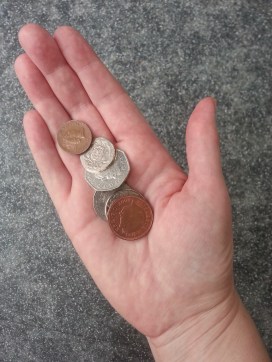 I’ve been writing steadily since 2011, and I’ve just done my accounts for 2018-19. I have published three full-length books (one in 2018) and one second edition (in 2017) for my main publisher. I’m now writing for two other publishers and have received several small advances for those books. When I say ‘small’, I mean between £125 and £500, so nice to have in the bank but not at all representative of the amount of time I spend writing the books.
 This is a crazy year of writing. A
  I am all in favour of people asking for what they want and need. It’s useful for each of us to figure out what we really want, what we need, how much of that we can sort out for ourselves, and what we need to ask from others. However, as my work has become more widely known, I have begun to receive more and more requests for help from people I have never met offline or interacted with online. I want to help where help is needed, but some of the requests I get are quite unreasonable. For example, I got an email from a stranger asking me to write their doctoral thesis for them, because they were unwell, and because God would reward me in heaven for my good deed. There is so much wrong with this request. To begin with, I would never write someone else’s doctoral thesis for them, or even part of one, because that would be highly unethical. I do take writing assignments on a professional basis – which means I get paid in actual money (or I don’t take the work). Also, assuming someone shares the same beliefs as you is not sensible and, I would argue, not ethical.
 I’ve written
  A year ago I launched
  In the course of my work I read a lot of academic articles, chapters, and books. This means I sometimes make surprising discoveries. For example, last weekend I was reading an article by, I’ll call the author McGonagall, who, in the course of developing her argument, claimed that topic X had not been identified as relevant to the development of field Y. I had another article already open on screen by, let’s say Trelawney, published four years before McGonagall’s article, which explicitly identified topic X as relevant to the development of field Y.
 New book klaxon! Publishing From Your Doctoral Research: Create And Use A Publication Strategy is now available for pre-order.
 I have written three full-length sole-authored books, each of which was my very own idea. I had the idea for the first book in 2011, for the second in 2013 and for the third in 2015. Two weeks ago I had an idea for a fourth full-length sole-authored book. I think it’s a good idea, as do some people I’ve tested it on, though whether it will get written or not remains to be seen. I won’t have time to do anything about it until the middle of 2020 because I’m much too busy.
 Helen Kara