
 This is the third of three posts inspired by an exchange on Twitter with @leenie48 and @DrNomyn. The first two posts were (1) about why I hadn’t included theory in a previous post about how to choose a research method, and (2) about the relationship between methodology, method, and theory.
To recap briefly, @leenie48’s view is that we should not discuss research questions and methods without also considering theory. In an ideal world, I would agree with her. However, my view is that the time and skills required to work with theory are not always available to every researcher. For example, some people studying for pre-doctoral degrees, or conducting commissioned research, may not be able to include a theoretical component in their work.
The post I wrote about how to choose a research method was aimed at Masters’ students and novice practitioner-researchers. When I began explaining this to @leenie48, she said, ‘Perhaps it might be useful to point out advice is for specific readers. Bit sick of having to explain to new phd students that this kind of advice is not for them!’
This was a really useful piece of feedback for me. In my experience, people don’t often give this kind of feedback online. There seems to be a kind of convention among scholars that if you read something you don’t like/understand/agree with, you simply click on to something else. This feedback told me two really useful things. First, if @leenie48 is a bit sick of having to make such explanations, then other people will be too. Second, and more importantly, I have broken a very important writer’s rule.
When I’m teaching writing to doctoral students and early career academics, I tell them over and over again to think of their readers. Figure out who your audience is, I say, and make life easy for them. That gives great value to your work. Whether you’re writing for supervisors and examiners, or journal editors and reviewers, or commissioners and service users, or commissioning editors and the general public, the same rule applies. The easier you can make your readers’ lives, the more they will value and use your work.
I have broken this rule in my own blog. I’ve done so by writing posts for people at different levels without making that clear in any way. I haven’t used appropriate tags or spelled out my intended readership in my introductions to posts.
I responded to @leenie48 saying ‘You’re right, and I am sorry for causing you so much inconvenience. I’ll re-tag all my blog posts, though that will take a while as there’s a sizeable archive.’
I wish I could tell you I’ve done that already, but I haven’t yet had time. Writing and posting on this blog every week is always a scramble, and just now I am drowning in deadlines. But it is on my to-do list, and I’ll also tag all posts from now on as either: doctoral, masters, early career, or general.
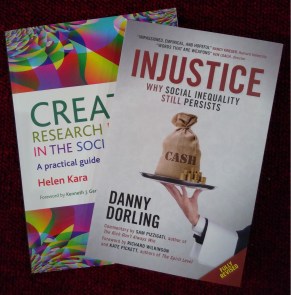
Of course there are overlaps between the categories. My first research methods book, Research and Evaluation for Busy Students and Practitioners: A Time-Saving Guide, is primarily written for masters’ level and practitioner researchers. However, I have had positive feedback from third-year undergraduate students and early-stage doctoral students, particularly those who are unfamiliar with research methods. My second book, Creative Research Methods in the Social Sciences: A Practical Guide, is intended for doctoral students and early career researchers. Again, though, I’ve had good feedback from masters’ level students and even some Professors on this book. So ultimately you need to decide for yourself whether to read only the posts with one tag, or also investigate other posts.
Nevertheless, this does not absolve me from the responsibility of giving you that choice. So I will get on to the re-tagging as soon as I have time, and I thank @leenie48 for a much-needed kick up the bum. Also, if you’re writing anything, don’t do as I do, do as I say! Think of your readers and work to meet their needs.
 Like
Like  Last week I wrote a post about
  Because you do things in a sensible order, you have your research question, right? Good. It’s very important to have that first. The method (or methods) you choose should be the one (or ones) most likely to help you answer your question. You can’t figure out which methods are most likely to help if you don’t yet know what your question is. So if you’re actually not sure of your question, stop reading this RIGHT NOW and go settle your question, then come back and carry on reading.
 You may be asked to chair an event such as a meeting, conference presentations, panel seminar, or even a whole conference. If you haven’t done this before, the prospect may fill you with dread. You’ve seen other people who have made it look easy. But nobody has ever told you how to chair an event; it’s as though you’re supposed to have learned it psychically or by osmosis or magic.
 Are you grappling with research ethics? If so, fear not, for there are numerous free resources online to help you. Here are some examples.
 The gender pay gap is much in the news at present. The BBC is under scrutiny following
  My last post on this topic
 Helen Kara