
 Today Dr Nathan Ryder and I are launching our co-authored e-book Self-Publishing For Academics. Self-publishing offers a huge opportunity for many academics, and they’re beginning to take it up. Nathan and I have self-published several e-books between us, and have self-published in other forms too such as blogs and zines. We wrote the book we wished we’d had when we set out on our self-publishing journeys.
Working together turned out to be a dream collaboration and we’ve written about that this week on the Research Whisperer blog. For this blog, we thought we’d interview each other; this gave us a chance to ask some questions we hadn’t got around to before. Here are the results.
Helen: What surprised you about our work together?
Nathan: How easy it felt. Writing a book is hard, and I’ve always thought that collaboration is quite tricky too, despite how necessary it is. We started from a concept, expanded out, divided the areas up and got to work. I know we’re both busy, but we made this a priority, and I think because of that it’s got done in a far more timely manner than I thought.
Given your own experiences in publishing and self-publishing, why did you want to co-author this one?
Helen: There are so many different options for self-publishing and marketing that I suspected you and I had taken different routes, even though we have both self-published for the same audience, i.e. doctoral students (up to now, anyway!). When we began talking I found we did indeed have different, but complementary, experience and knowledge. I think the combination of our approaches has made for a much better, richer book than I could write by myself.
Where do you think self-publishing will be most useful for academics?
Nathan: A big problem for many people is that they wait a long time to be “picked”. Someone waits for someone to pick them for a job, or a project or to write a book, say. The need to be chosen is a really tough need to overcome, but it’s barrier that can be hurdled. Academics don’t have to wait for a publisher to say yes to their monograph: it’s perfectly possible to do it yourself. A consequence of this could be that they could do the work that they think matters and will connect rather than what someone else thinks they can sell. There can often be shortened turnaround times for publication too.
What have you learned about self-publishing by doing this project?
Helen: I learned a lot about covers. I guess I vaguely knew it was possible to design your own but, not being a very visual person, I didn’t think it was something I would be able to do. Now, though, I might just have a go! It’s also useful to know where good bespoke covers can be obtained more cheaply than by commissioning a professional designer. Also, I learned a lot about self-publishing for free. I haven’t spent a huge amount on my e-books, but I certainly haven’t done them for free, and it’s really useful to know about the options there.
Which makes me wonder, what have you learned about self-publishing from our project?
Nathan: The value of beta-readers and an editor. For both of my previous books I had relied on myself and asked my wife to look through the drafts, but we don’t have the experience to know everything to look for when it comes to editing. And for this book, the beta-readers really helped us to spot gaps in our writing or logic – and even corrected us on some of the terms we used!
Do you have a routine or process when it comes to writing?
Helen: For the first draft of a book, I calculate how many words I need to write per day or (more often) week to get the draft done by the deadline. Then I add that to my weekly to-do list, and ensure I get those words written – even if that does, on occasion, mean spending Sunday at my computer. Also, I am quite focused about using my writing time for writing, so I’ll produce several hundred words in an hour rather than spending my ‘writing time’ fossicking about on social media or surfing the internet. I don’t need a particular place to write, I just need my laptop – I write on trains, in airports, on friends’ sofas, and in bed. However, unlike many writers, I’m not keen on writing in cafes because I find the people-watching and eavesdropping opportunities too distracting!
What do you plan to self-publish next?
Nathan: I’m going to finish a project I started some time ago, and get my first book available for print-on-demand. Fail Your Viva came out in January 2013, and within weeks I was exploring how to get it in print. At the time and for a long time since I’ve convinced myself that I can’t manage a print run, but as we were working on our book – and through doing a little hobby self-publishing – I’ve gained the confidence to finally make it happen. That, and digging some older writing out and seeing if I like it again.
I know you’ve got your series that you’re past the halfway mark on. Have you got any plans beyond them?
Helen: Lots and lots of plans! I want to narrate the audio-books for all the e-books I’ve self-published for doctoral students. I also want to start making videos for YouTube. That’s something I’ve tried several ways but haven’t yet got the hang of, but I feel as if I’ve learned quite a bit in the process and if I keep trying I’ll get there eventually. Also, I’m doing preparatory reading, thinking, and interviewing for my next full-length trad-published book, on research ethics, and I expect to start writing that in earnest in the autumn.
So if you could sum up in a sentence the main piece of advice you’d give someone who was thinking of self-publishing… well obviously that would be ‘read our book’! But apart from that, what would you say?
Nathan: Start now! There are a hundred-and-one things that can get in the way of finishing any writing project, but the only thing that’s really in the way of starting is the writer. Start today. (then read our book)
Last question from me: what are you going to do to celebrate Self-Publishing for Academics being finished and out there?
Helen: Have a cuppa with you on Skype! After that: take your advice, and start writing the next e-book. That’ll be the last in my series for doctoral students, and the last one I write for a while, so when I get that one finished I’m really going to celebrate.
 During this academic year I’ve been involved in various enterprises on top of my commissioned research work, teaching, and writing commitments:
  Dear Internet
 I’m putting the finishing touches to the report of a research project that’s been running for the last 18 months. And then it’ll be over. Which is a bit sad, for a number of reasons.
 I’ve written before about the indie researcher rollercoaster. I’ve been riding it again recently. The last few months have been quite tough. I’ve had one contract rolling along, and some bits and bobs of teaching work. I’ve also had:
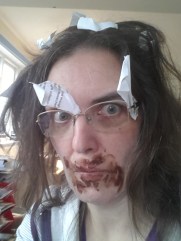 Us writers do the whole ‘grass is greener’ thing just like everybody else. When I was writing my last book, I was longing to get to the journal articles and other projects that were piling up on my to-do list. Now I’m drowning in shorter projects and it’s driving me crazy. Look! Pictorial evidence! I can’t wait to be working on one big long book again, when I will undoubtedly become sane and well organised (cough).
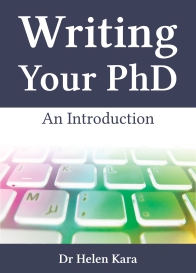 Today I’m launching the fourth in
  at academic writing can be taught and can be learned. In fact, I’m asked to teach writing skills in universities far more than I’m asked to teach anything else. And I know my courses help students because they tell me so on their feedback forms and, later, on Twitter.
 I feel qualified to write this post for a number of reasons. First, I am a successful author. Second, I have worked in publishing, as have several close relatives and friends. I’m assuming that you’re interested in writing for traditional publication; I intend to cover self-publishing in a different post. So here are my ten top tips for successful book authoring.
