The Power Of A New Idea

new ideaI have written three full-length sole-authored books, each of which was my very own idea. I had the idea for the first book in 2011, for the second in 2013 and for the third in 2015. Two weeks ago I had an idea for a fourth full-length sole-authored book. I think it’s a good idea, as do some people I’ve tested it on, though whether it will get written or not remains to be seen. I won’t have time to do anything about it until the middle of 2020 because I’m much too busy.

Trouble is, the new idea won’t shut up. It keeps badgering my brain, resulting in an internal dialogue which goes something like this:

New Idea: I’m much more interesting than that client work you’re doing.

Sensible Me: Be quiet, I need to earn a living.

New Idea: I could make you megabucks.

Sensible Me: I’ve written enough books to know how incredibly unlikely that is.

New Idea: You really want to write me, though, don’t you?

Sensible Me: I do… but all in good time.

New Idea: You dooo, you real-lyyy doooo, trusssssst in meeeeee

Sensible Me: Stop trying to hypnotise me, it’s not going to work.

New Idea [singing]: I’m fun and I’m exciting, attractive and inviting…

Sensible Me: Seduction won’t work either, you need a body for that.

New Idea: Nonsense, most seduction happens in the brain.

Sensible Me: Will you please shut up so I can get some work done?

New Idea: You’ll be sorry if you forget me. Why not jot down a few thoughts at least?

Sensible Me: Maybe that’s not a completely stupid suggestion.

New Idea: Go on! Go on! You know you want to!

Sensible Me: But I haven’t got time right now, I’m chasing a deadline.

New Idea: [singing again] You’ll regret it, you’ll regre-et i-it –

Sensible Me: la la la la, I’m not listening.

And so on. It’s really annoying! Yes I’d love to drop everything and dive into a shiny new project. But I’m already working on three books (and yes, that is two too many) and two journal articles, and I need to get those done, or a lot closer to done, before I start on any new writing projects.

Some of my friends are novelists and I know they have a similar problem. I see their posts on Facebook: ‘I had a new idea for a story this morning, and it won’t leave me alone, but I’ve got another 50,000 words to write on the current book and my deadline is in three months.’ One of the things I’ve been writing about is how similar non-fiction and fiction writing can be. I’ve written a fair amount of fiction myself, even been paid for some of it, so I feel reasonably well qualified to make this argument, especially as there’s supporting literature. But none of the literature that I have read – and I’ve read a lot of it – points out this particular similarity. So there you are, an informative and amusing blog post which also, I believe, fills a gap in the literature.

This blog, and the monthly #CRMethodsChat on Twitter, is funded by my beloved patrons. It takes me at least one working day per month to post here each week and run the Twitterchat. At the time of writing I’m receiving funding from Patrons of $43 per month. If you think a day of my time is worth more than $43 – you can help! Ongoing support would be fantastic but you can also make a one-time donation through the PayPal button on this blog if that works better for you. Support from Patrons and donors also enables me to keep this blog ad-free. If you are not able to support me financially, please consider reviewing any of my books you have read – even a single-line review on Amazon or Goodreads is a huge help – or sharing a link to my work on social media. Thank you!



Five Years Of Blogging – Help Me Celebrate!

celebrateThis blog has been in existence for five years. Since October 2014 I have published a weekly post, on average, in 43 weeks of each year. Some posts, like the first one, have been posts of the moment, or places for me to put things I wanted to find again, or topical posts that are now out of date. Others have wider appeal and more longevity, and are regularly shared on social media and, no doubt, elsewhere too.

My blog has 530 followers and, if you’re one of them, thank you, you intelligent, discerning, marvellous person. However, that figure is not entirely representative. Over the last five years my blog has had 27,900 visitors. The majority have come from the UK and the US (around 11,000 from each); significant numbers have come from Australia, Canada and India (1,000-3,000 from each). In all, people from over 100 countries have visited my blog. And the numbers have increased steadily over time: I had over 1,000 visitors last week alone.

My most popular post of all time is Why and How to Negotiate with Academic Publishers, with over 3,000 views to date. My most popular download is my short comic on qualitative interviewing, Conversation With A Purpose drawn by Sophie Jackson, with over 800 downloads. I don’t keep an eye on my stats (too busy!) so these figures were a pleasant surprise.

It’s good to know that people appreciate and use my work. However, it would be great if this translated into more followers, donors, and patrons. I currently have 13 patrons contributing $25 per month, which I hugely appreciate. The PayPal donate button on my blog has been used once. Again, I really appreciated that, but with more I could do more. So, in celebration of my five-year anniversary of blogging, how about doing one of these five things: either

  1. Click the button on the right to follow my blog (one post a week, at most, in your inbox); or
  2. Become a patron for as little as $1 per month; or
  3. Make a one-off or monthly donation – amount of your choice – via the PayPal button on the right; or
  4. Write a short review of any of my books that you’ve read and publish it online; or
  5. Share one of my posts on social media.

Thank you for helping me celebrate!

To Cite Or Not To Cite Your Friends

One of the things I love about my scholarly activity is reading the work of people I know and like. I tweeted about this a while ago:

And that was indeed how I felt. The people I tagged in that tweet are all people I have shared social as well as professional space with, and I would count them, more or less, as friends. But I’ve been thinking about this recently, and wondering… is it a good thing to cite your friends’ work? Or is it a form of cronyism?

Cronyism is a dirty word, hurled at politicians and others who are seen to be giving jobs to friends or relatives. Yet in the small businesses I see around me, it seems absolutely natural to give jobs to people you know and have faith in, and those are friends or family. Why would you trust a stranger with your livelihood? In normal human terms it doesn’t make sense.

Yet we’re supposed to treat people and their work equally and on merit. Even the law says so, here in the UK at least, and in many other countries too. But I’m sure plenty of my readers, like me, have tales from inside and outside academia of times when this hasn’t happened. For example, I know an IT expert, I’ll call her Jade, who was asked by a local charity to help them recruit an IT professional. The charity had about 60 staff and really needed in-house IT support. Jade worked with them to prepare a job description, person specification, and advertisement, then she helped with shortlisting and interviewing. I saw her soon after the interviews and she was fuming. ‘I don’t know why they even asked me,’ she said. ‘They took no notice of what I said, they just appointed the person they already knew. Who was not the best person for the job.’

In theory scholars should treat academic literature equally and on merit, though there are debates about what ‘equal’ means here. I regularly see – and support – calls for positive discrimination, to ensure that women, people of colour, and others who struggle to get their voices heard are cited by those with more privilege. And I try to do this. But when I am writing myself, I feel a real pull to cite work by my friends. I like spending time in their company, whether across a café table or as a reader of their work. I want to share their ideas which are often kin to my own. I feel encouraged by them; they inspire me to do my best, whether through their physical presence or their written words.

I know that I should find and read and cite writing which contradicts my own, which I disagree with. This is necessary intellectual work. I tell students how important it is, and when I do it myself I feel clever and a bit smug. But when I cite my friends I feel loving and loved, which are much nicer feelings. And I hate when I read something by a friend which I can’t cite, not because it’s poor quality (my friends don’t write bad stuff!) but because it doesn’t fit with the work I’m doing.

We can’t separate our emotion from our intellect, whether we’re interviewing people for a job, or reading scholarly writing with a view to citing it ourselves, or simply taking a walk. So maybe we should stop pretending we can make that separation, or even that it’s somehow desirable. Perhaps it’s time to give feelings and thoughts equal billing in our decision-making, and to acknowledge this in our writing and other work. Those who practise reflexivity advocate this, but I don’t remember anyone I’ve read writing about the ethical and emotional aspects of citing (or not citing) work by your friends. I had a look online and there’s very little written about this. I did find one interesting recent open access article from the field of economics, by fellow independent Steven Payson. He points out that if you cite your friends in academic journal articles, the editors are more likely to pick them as reviewers, which can work in your favour. His article also states that close friends may ‘cross an ethical line’ and game the metrics system by citing each other as much as possible for mutual gain.

These are interesting perspectives on academia, but as an independent researcher they’re not relevant for me. Also I’m working on a book, not a journal article. So I guess what I need to do is get my emotion and my intellect working in tandem. They already do, to some extent; however much I love a friend, if they write rubbish I’m not going to cite their work. Also it’s not as if I only cite my friends. But I do recognise that the pull to spend time with the written work of people I like is strong, as is the wish to cite their work. This may be skewing me away from other potentially useful sources. So I need to aim for a balance: cite my friends’ work where relevant, be sure to seek out opposing views, and cite the work of lots of people I don’t know. Especially women and people of colour. That’s what I think I’ll do. As always, though, alternative views and counter-arguments are welcome in the comments.

This blog, and the monthly #CRMethodsChat on Twitter, is funded by my beloved patrons. It takes me at least one working day per month to post here each week and run the Twitterchat. At the time of writing I’m receiving funding from Patrons of $23 per month. If you think a day of my time is worth more than $23 – you can help! Ongoing support would be fantastic but you can also make a one-time donation through the PayPal button on this blog if that works better for you. Support from Patrons and donors also enables me to keep this blog ad-free. If you are not able to support me financially, please consider reviewing any of my books you have read – even a single-line review on Amazon or Goodreads is a huge help – or sharing a link to my work on social media. Thank you!

The Power Of Naming

wordsWhen I first learned about research, as a student of Social Psychology at the London School of Economics in the early 1980s, the people we collected data from were called ‘subjects’. They were subject to our research, and subjects of our research; we were (told we were) the objective neutral researchers with the power to collect and analyse data. That power came from knowing how to do those things: special, arcane knowledge available only to insiders, i.e. those with enough educational capital.

By the time I got back into research, around the turn of the century, researchers had begun to acknowledge that positivism might not be the only game in town. The terminology had moved on and ‘subjects’ were becoming more widely known as ‘participants’. We felt good about this: instead of subjecting people to our whims, we would let them join in with our research (up to a point, mostly defined by us). How kind.

I’m beginning to think it’s time for another shift. I’m enjoying the way some researchers are being creative here, such as Alistair Roy with his ‘tour guides’. However, while that term works well for Roy who conducts walking interviews with marginalised young men in cities, it’s not universally applicable. So I’m wondering about… contributors?

I also think it might be time to rethink ‘data’. The word is drawn from the Latin meaning ‘something given’. Yet more often data is something researchers take and keep. The ability to classify things as ‘data’ has enabled serious abuses, some of which are still ongoing today. For example, in her magisterial book An Indigenous People’s History of the United States, Roxanne Dunbar-Ortiz demonstrates that Euro-Western researchers retain the human remains and burial offerings of millions of Indigenous people by classifying them as ‘data’. For Indigenous peoples, these remains and offerings are sacred, yet Euro-Western researchers continue to ignore their requests for the return of their sacred objects, using ‘science’ as the reason. On this basis it might make sense to reword ‘data’ as ‘loot’ or ‘swag’.

Another option would be to refer to people who provide information for research as ‘people’ and to the information they provide as ‘information’. I’m in favour of this because it has a levelling quality, especially if we researchers also refer to ourselves as ‘people’. It saves us from the irregular verb effect: I am a researcher, you are a participant, they are users of research.

All this is still researcher-led, though, so potentially paternalistic (or, in my case, perhaps maternalistic?!). A further option could be to let people who contribute to research decide how to define both their roles and what they offer to the process.

Some readers may regard all this as quibbling over semantics. However, given the strength of the relationship between language and thought, it seems to me important to consider these issues. Names have power: power to identify and classify. When we name individuals, roles, groups, artefacts, we are saying something about how we see the world. As always we need to use this power with care.

This blog, and the monthly #CRMethodsChat on Twitter, is funded by my beloved patrons. It takes me at least one working day per month to post here each week and run the Twitterchat. At the time of writing I’m receiving funding from Patrons of $23 per month. If you think a day of my time is worth more than $23 – you can help! Ongoing support would be fantastic but you can also make a one-time donation through the PayPal button on this blog if that works better for you. Support from Patrons and donors also enables me to keep this blog ad-free. If you are not able to support me financially, please consider reviewing any of my books you have read – even a single-line review on Amazon or Goodreads is a huge help – or sharing a link to my work on social media. Thank you!

Travelling For Work – The Reality

travelI travel quite a lot these days. It’s rare for a fortnight to go past without me having to pack my case at least once for a domestic or international trip. This week I’ve been in Strasbourg for meetings about the EU research ethics project I’m working on. How lovely, people say; lucky you. And indeed I am lucky, though not in the way you might think.

There is a whole lot of detail to attend to before leaving home. Arranging travel and accommodation can take so much time. I’d never been to Strasbourg before; I didn’t really know where it was, except that it’s in France, but France is a big country. I learned that it does have an airport, but the airport is a long way from the city, and there are no direct flights from any of my local airports. So on Monday I made an epic train journey via London St Pancras and then Eurostar to Paris, then on to Strasbourg from there.

Paris, you say, surely that’s glamorous? It is, though the ten-minute walk between Gare du Nord and Gare de l’Est takes you through a very unglamorous part of the city. I had 68 minutes in Paris which wasn’t long enough to go anywhere or do or see anything I might have liked to go to, do or see. If I’d had a couple of hours and no luggage, I might have gone somewhere on the metro, but instead I had a bottle of cold citronnade in the station and did some people-watching which was fun.

I’m pretty good at packing these days. I travel light and it doesn’t take me long to get my things together. I have a little stash of Euros – but there’s always something – and this time I forgot to pack an adaptor. Luckily I had time to buy one at St Pancras, which I can add to my large and growing collection of international adaptors. (My favourite is a lightweight one my Dad bought for me when I made a big trip in 2016 which covers every country in the world. If I could only remember to pack it when I need to, I’d be golden. My last few overseas trips have been to Dublin and Belfast which is probably why I’m out of practice here.)

Then there are all the logistics. Where are the meetings? Where is the station? How far is it from one to the other? Should I find accommodation close to the station or close to the meetings? Which maps do I need to print out? (Yes, dear reader, I like maps on paper. They’re big enough to read, they don’t rotate of their own volition, and the batteries don’t run out.) What will the weather be like? What shall I wear?

I try really hard to get all the travel details right but I do slip up. For example, when I flew to Belfast earlier this month, I flew with Flybe but I booked through a third party and Flybe wasn’t mentioned till halfway down their email. When I was packing, I got mixed up and thought I’d booked with Aer Lingus, so I took my slightly larger case (which I didn’t even need to do as it wasn’t full) and ended up having to pay £35 at the airport to put it in the hold because it wouldn’t quite fit in their specified dimensions measurement box. Book it in online for the return trip, said the check-in clerk, it’ll be cheaper. So I did. Saved me a whole £6. A man next to me in the queue told me he works for Flybe and said all the budget airlines are taking tips from RyanAir about how to rip off passengers.

Then when I went online to book my train ticket for last Monday’s journey to St Pancras, I saw that first-class tickets were the same price as second-class for the train I needed to travel on. Happy days! I took a screenshot to show my client that I wasn’t wasting their money – and then when I picked up my ticket from the machine at the station, it was second-class. I fumed all the way home, planning my email of complaint to the train company, pulled up the screenshot full of righteous anger – and saw that I’d booked a second-class ticket after all. Probably force of habit.

I don’t get paid for travelling time, so I’ve become very skilled at working on trains and planes. Yet the night before I travel, I always sleep badly. I can understand myself worrying about oversleeping when I have to get up very early. I find it much less understandable when I don’t even have to leave the house till midday, like when I went to work in Belfast earlier this month. The night before I had the most ridiculous string of anxiety dreams – cancelled plane, incomprehensible message from airline, driver refusing to take me to the airport – I woke up feeling as though I hadn’t slept at all.

So there are many frustrations. But there are also joys. I arrived in Strasbourg at 5.40 pm on Monday, checked into my hotel, and went out for a walk around the beautiful mediaeval centre. There were some entertaining sights, an ‘artisanal creperie’ provided a tasty dinner, and I found a little supermarket for some treats to take home. That was a bit like having one evening of holiday, but the rest of the stay was full-on work from breakfast to bedtime. It’s often the way with these trips because the cost and effort of bringing people together means everyone feels we need to make the most of the time we have.

People often think this kind of travelling is glamorous and fun. Occasionally it is, but mostly it’s hard work and tiring. I’m glad I can do it, though; I learn a lot and that’s always a plus for me, even if I’m learning about European train timetables or hotels in Cardiff.

This blog, and the monthly #CRMethodsChat on Twitter, is funded by my beloved patrons. It takes me at least one working day per month to post here each week and run the Twitterchat. At the time of writing I’m receiving funding from Patrons of $25 per month. If you think a day of my time is worth more than $25 – you can help! Ongoing support would be fantastic but you can also make a one-time donation through the PayPal button on this blog if that works better for you. Support from Patrons and donors also enables me to keep this blog ad-free. If you are not able to support me financially, please consider reviewing any of my books you have read – even a single-line review on Amazon or Goodreads is a huge help – or sharing a link to my work on social media. Thank you!

The Ethics of Working with Literature

literatureAn earlier version of this article was originally published in ‘Research Matters’, the quarterly newsletter for members of the UK and Ireland Social Research Association (SRA). The SRA now has a blog with topical peer-reviewed articles by and for researchers. They are also interested in contributions from readers so, if you fancy writing a guest post, you could give them a try. They even have a ‘secret researcher’ option for posting anonymously if you have something really controversial to say.

Researchers often use existing literature to set their research in context. ‘Literature’ is the academic term, referring to peer-reviewed scholarly work such as journal articles. Practice-based researchers may also contextualise their research, though more often with policy and project documents, in part because they are openly available. However, these distinctions are not so hard-and-fast these days. Academics increasingly recognise the value of ‘grey literature’, as they call relevant information that has not been through the peer review process. Practice-based researchers can read more and more academic literature, with the growth of open access, and through schemes such as the SRA’s member benefit of access to around 6,000 social science journals through EBSCO. Also, the definition of ‘literature’ has grown to include written phenomena and artefacts such as ephemera (leaflets, zines, etc), creative writing (novels, poems, and so on), and online writings such as blog posts and tweets.

When I ask people about the ethical issues of working with literature, they tend to look blank. So here are some pointers. First, define what you are using as literature, or background documents, and explain why you have chosen those types of material. This is important now that there is such a range of available literature: as with all decisions about research, you should be making well-informed choices for good reasons. Then make sure you know how well you can search that body of literature. For example, if you are searching online – as many people do these days – you need to understand the scope and limitations of the electronic tools you use. Google Scholar is many people’s go-to website for academic literature, but it doesn’t index everything, and its search function is far from neutral. The Directory of Open Access Journals indexes work from developing countries that does not find its way into Google Scholar. Even more work from developing countries can be found through the Journals Online project run by international research development charity INASP, which currently covers work from Africa, Latin America, the Philippines, Vietnam, Bangladesh, Mongolia, Nepal and Sri Lanka. Even if your work focuses on a single country or locality, you may find relevant literature from far afield. You are not obliged to search everything; you simply need a clear rationale for your search.

You should record your search strategy – where you searched, terms you used to search on, dates of searches – so your readers can assess the effectiveness of your approach. Sadly, these days you will also need to check whether material you plan to cite is bona fide, as directories and repositories may still index and hold literature that has been retracted, or is a spoof that may not be instantly recognisable as such. This means researchers need to be on their guard, and make use of services such as Retraction Watch where possible.

Many search strategies will yield far more literature than any researcher, or team, can read. There are ethical dimensions to choosing what to focus on. Bias can creep in here: it is important to read literature representing a good spread of views and opinions, not only those you agree with. Then, when you have chosen what to read, it is ethically necessary to read that work carefully. Take the time to understand the arguments being presented and what they are based on. If you skim-read or cherry-pick, you risk misunderstanding the author’s argument, because you won’t understand their reasoning. Also, superficial reading doesn’t enable you to assess the quality of someone else’s work, so you won’t know how much weight to give it within your own research.

Then of course you need to cite others’ work correctly and not plagiarise or self-plagiarise. Having said that, self-plagiarism isn’t so much of a problem if you plan to self-publish, whether as an online pdf, e-book, or zine. However, if you plan to publish formally, self-plagiarism is unethical as publishers expect to publish original material.

Taking this kind of an ethical approach to working with literature shows respect to authors of the work on which our own work is based. Also, this approach helps to avoid the replication of errors, which in turn helps to raise standards in research.

This blog, and the monthly #CRMethodsChat on Twitter, is funded by my beloved patrons. It takes me at least one working day per month to post here each week and run the Twitterchat. At the time of writing I’m receiving funding from Patrons of $25 per month. If you think a day of my time is worth more than $25 – you can help! Ongoing support would be fantastic but you can also make a one-time donation through the PayPal button on this blog if that works better for you. Support from Patrons and donors also enables me to keep this blog ad-free. If you are not able to support me financially, please consider reviewing any of my books you have read – even a single-line review on Amazon or Goodreads is a huge help – or sharing a link to my work on social media. Thank you!

The Mothership Project

mship-cover-2I don’t say much on this blog about my client work because most of it is confidential. But I’m delighted to have permission from one of my lovely clients to tell you about a project I’ve been helping them with over the last couple of years.

The Mothership Project is based in the Republic of Ireland and is a network of parenting artists run by four awesome artist mothers: Leah Hilliard, Michelle Browne, Seoidín O’Sullivan and Tara Kennedy. It was founded in 2013 as a result of Seoidín O’Sullivan’s frustration at struggling to retain her arts practice after becoming a mother. She fired off an email to a few friends who shared her concerns and set up a working group of volunteers. They organised workshops and discussions, show-and-tell events and reading groups, focusing on issues facing parenting artists such as visibility, time, money and precarity. Despite the name it is not gender-specific or even parent-specific but welcomes all artists who are primary carers of children.

In 2017 the Mothership Project made a successful application to the Irish Arts Council for funding to build on this work with a research project to find out what would help parents most, a pilot programme of artists’ residencies tailored for parent artists, and a publication of their findings.

The first I heard of any of this was a message from Leah Hilliard which came via this website in December 2017, asking if I could help advise them about the research. We spoke on Skype and I agreed to help. The Mothership team had drafted a questionnaire and wanted some feedback. We spoke again in January and, as luck would have it, I was doing some speaking and teaching in Dublin in March so I was able to meet three of the team in person – Leah, Michelle, and Tara, plus Tara’s six-week-old daughter Kim!

They piloted the questionnaire before it was finalised, put onto SurveyMonkey, and circulated the link as widely as they could. The questionnaire was quite detailed, asking questions about respondents’ art practice, their parenting experience, workspaces, childcare, financial situation, experience of artists’ residencies, and a final ‘is there anything else you would like to tell us?’ question. By the end of July 2018 there were 145 responses. I analysed those in August, using descriptive statistics for numeric answers and basic qualitative analytic techniques for text answers. This involved separating out the answers to each question and grouping similar ones together into categories, then writing about the categories and the number of responses in each category. Some of the responses to the final question were really positive about the questionnaire itself and the work of the Mothership Project.

My lovely clients were pleased with the analysis I sent them. They held their pilot residencies in the autumn for 15 parent-artists, and conducted an exit questionnaire which I was also able to help them analyse. The responses were overwhelmingly positive. Then they set to work to prepare their publication. They brought me over to Ireland to spend a day with them working on this. I learned that artists take a very different approach from writers to making a book. When I want to create a book, I sit down at my computer and write words onto a screen. When these women want to create a book, they start by figuring out how many pages it will be. Then they put a page of A4 for each page of the book up on a studio wall, and write and draw on Post-Its and on the pages of A4 while talking together to work out how to make the book they want.

pic for blog

The team were keen that the publication should be accessible, visually engaging and would act as an advocacy tool in the future. They wanted to have a two-page centre spread setting out the findings and recommendations which would be easy for the reader to find and reproduce. This focus on making the research visible and visual, and easy to use by other people, was paramount in the planning stage.

And a very fine book it is too, fulfilling all those aims. It was launched on 16 May in Dublin – I was working in Dublin again at the time, but unfortunately couldn’t make it to the launch as I was in an all-day workshop with another client at Dublin City University. So frustrating!

As an independent researcher, I don’t often hear about what happens as a result of research I’ve worked on, so I was delighted when Michelle got back in touch last week to update me. The research was covered in the Irish Times and is being taken seriously by policy-makers in Ireland, which is great news. Only last Friday she presented the methodology and findings at a conference called Measuring Equality in the Arts Sector at University College Cork. This was run by an organisation of the same name, known as MEAS, which was set up last year, with support from the Irish Research Council to monitor and report on representational inequalities in the arts in Ireland. It’s great to know that this kind of work is going on, and that my experience and skills have been able to make a tiny contribution.

Creative people frequently amaze me by what they achieve in the world, and the Mothership Project team are a great example. It was a real pleasure to work with them.

This blog, and the monthly #CRMethodsChat on Twitter, are funded by my beloved patrons. It takes me at least one working day per month to post here each week and run the Twitterchat. At the time of writing I’m receiving funding from Patrons of $25 per month. If you think a day of my time is worth more than $25 – you can help! Ongoing support would be fantastic but you can also make a one-time donation through the PayPal button on this blog if that works better for you. Support from Patrons and donors also enables me to keep this blog ad-free. If you are not able to support me financially, please consider reviewing any of my books you have read – even a single-line review on Amazon or Goodreads is a huge help – or sharing a link to my work on social media. Thank you!

Research Ethics Podcast

osu-logoHello lovely blog readers, I’m back from my summer break (short holiday, long stretch in writing cave) and will be blogging regularly again through till mid-December. Though this week’s blog post is in fact a podcast! The estimable Katie Linder interviewed me for her Research in Action podcast at Oregon State University in the US.

Here’s the link to RIA # 169: Dr. Helen Kara on Research Ethics. Which also tells you that if you like podcasts and you’re interested in research, there are another 168 episodes for you to check out with some stellar speakers. I’m proud to be in their company.

If you listen, please let me know what you think. I don’t have much experience of doing podcasts so I’d welcome constructive feedback.

This blog – and my podcast work – is funded by my beloved patrons. It takes me around one working day per month to post here each week. At the time of writing I’m receiving funding of $23 per month. If you think a day of my time is worth more than $23 – you can help! Ongoing support would be fantastic but you can also make a one-time donation through the PayPal button on this blog if that works better for you. Support from Patrons and donors also enables me to keep this blog ad-free. If you are not able to support me financially, please consider reviewing any of my books you have read – even a single-line review on Amazon or Goodreads is a huge help – or sharing a link to my work on social media. Thank you!

More Little Quick Fixes for Research

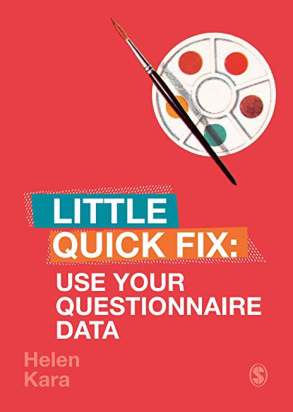
Little Quick Fix logoRegular readers may remember that I’ve been writing short research methods books for SAGE’s Little Quick Fix series. The first two, Write A Questionnaire and Do Your Interviews, came out in January. I’m delighted to announce that their sequels, Use Your Questionnaire Data and Use Your Interview Data, will be out any day now. Like their prequels they have gorgeous colourful covers – look!

UYQD coverUYID cover

You may be thinking, Helen, how can you write so many books? For a start, these ones are short –  only 7,000 words each, though that brings its own challenges. Also, I love writing, and am happy to do lots of it, as evidenced by this blog among other things.

The sad thing is that nobody much is likely to be interested at this time of year. It’s the summer holidays in the northern hemisphere and the winter holidays in the southern hemisphere. Talking of holidays, this blog is going to take a break until September. I’m not – I have more books to write!

This blog is funded by my beloved patrons. It takes me around one working day per month to post here each week. At the time of writing I’m receiving funding of $34 per month. If you think a day of my time is worth more than $34 – you can help! Ongoing support would be fantastic but you can also make a one-time donation through the PayPal button on this blog if that works better for you. Support from Patrons and donors also enables me to keep this blog ad-free. If you are not able to support me financially, please consider reviewing any of my books you have read – even a single-line review on Amazon or Goodreads is a huge help – or sharing a link to my work on social media. Thank you!

Knowing When To Stop

stopSometimes it’s hard to know when to stop. That could be when you’re still having fun and you don’t want to stop even though it’s after midnight and you’ve got to be in work at 9. In my early 20s I could get away with that. In my mid-50s? No chance. The dark sides of not knowing when to stop are dependency and addiction. Then there are the mental ‘ought’s and ‘should’s. I ought to finish reading this book, that I’m not enjoying at all, because the author took so much trouble in its writing. I should keep working on this collaborative piece even though my collaborator hasn’t answered my emails in months.

There’s an art to knowing when to stop. My mother, who is prone to outbreaks of wisdom, explained to me the point of stopping while you’re still having fun. Because what’s the alternative? Keep going till you’re not having fun any more? If you do that, you’re unlikely to want to do whatever-it-was again. Whereas if you stop while you’re still having fun, you keep the magic.

The ‘ought’s and ‘should’s can bog off. There are so many books (and journal articles, and – ahem – blog posts, and so on) that if you’re not enjoying one, why take the time to read it to the end? You won’t have time in your whole life to read all the books (journal articles, blog posts etc) that you do enjoy. So blow it out. Read the last page/paragraph if you need to satisfy your curiosity, then toss it and find something that suits you better.

And as for collaborations that have gone belly-up… that can be hard, when you’ve put in a lot of work and you’re not far from the finish line. But recognising when you need to quit is an important survival skill because it protects you from throwing good time after bad.

There’s another way this can work, too, which is not so much knowing when to stop as recognising that you have stopped. This has happened to me with my New Year’s resolution (I know! July! Not bad, eh?). My resolution was to review a book a week; i.e. an academic book, and to publicise this and encourage others to join in. I said from the start that it didn’t actually have to be a book a week, and I followed my own guidance; I reviewed 14 books between 1 January and 7 June, 12 on Wordery/Amazon and two for the LSE blogs. I haven’t reviewed an academic book in the last couple of months, though I’ve read quite a few. I will continue to review academic and other books but I’m not going to plug it as a ‘thing’ any more.

This is partly because hardly anyone joined in. A few people said it was a great idea, and one or two did write reviews, but it was evidently an idea whose time has not come, or has passed, or will never exist. Conversely, the monthly creative methods chat that I started in June has taken off rather well. And of course the point of all these things is not only to be the thing in itself, but also to raise my profile. Sounds cynical, in a way – yet I’m running a business and I have books and skills to sell. That doesn’t mean I’m trying to sell them to everyone all the time; that would clearly be unrealistic. I aim to create initiatives which will be of value to people in themselves, because I think that’s the best way to do marketing. Not to shout GIVE ME WORK AND BUY MY BOOKS AND BE MY PATRON but to generate resources and opportunities for people, which may lead to some of those people choosing to put some work or money my way. Or not – there’s no obligation and I like it that way. But the return on investment for these initiatives is low. For example, there have been over 5,000 downloads of Starting Your PhD: What You Need To Know and around 25 reviews worldwide, or one review for every 200 downloads. So evidently it’s sensible to invest time in the initiatives that increase my visibility rather than those that don’t, no matter how close they may be to my heart.

So bye bye, review a book a week. It was nice knowing you. And hello, #CRMethodsChat. You’re ace, and you happen on the second Tuesday of every month. Long may that continue.

This blog is funded by my beloved patrons. It takes me around one working day per month to post here each week. At the time of writing I’m receiving funding of $34 per month. If you think a day of my time is worth more than $34 – you can help! Ongoing support would be fantastic but you can also make a one-time donation through the PayPal button on this blog if that works better for you. Support from Patrons and donors also enables me to keep this blog ad-free. If you are not able to support me financially, please consider reviewing any of my books you have read – even a single-line review on Amazon or Goodreads is a huge help – or sharing a link to my work on social media. Thank you!