How to get into conferences for free

burglarI picked up a blog post from Twitter yesterday that left me very cross. I decided not to retweet it, mainly because I couldn’t fit all my crossness into a one-word comment on the original tweet, and partly because I didn’t want anyone to think I was condoning the views expressed by the blogger.

The post was published anonymously by someone calling themselves ‘Weasely’, who complains about the cost of a recent four-day conference priced at £120 for early birds or £150 for late bookers (£100/£130 for postgraduates), plus a year’s membership of the British International Studies Association (BISA) if you’re not already a member (£30). Weasely thinks that if you can’t afford to go to a conference, you should simply gatecrash – he or she suggests that forging a badge would be helpful – and take everything you can while you’re there, including food and drink for later. Carry tupperware and flasks for this purpose, advises Weasely, and help yourself to a bottle of wine from the wine reception. Get your tenured friends, or those with permanent posts, to help you gain illicit entry. The blog post is titled ‘Steal This Conference’.

The conference Weasely complains about was run by BISA which, like the Social Research Association (SRA) on whose Board I sit, is a learned society and a registered charity. The Boards of these organisations are made up of volunteers who work hard in their own time, alongside a small number of paid staff to put on events like these – who, because they are very dedicated people, also work in their own time as well as their paid time. BISA has one full-time member of staff, the SRA has the equivalent of approx 1.5 full-time staff, and these people are not highly paid. Also, learned societies, being registered charities, are not for profit. If we’re lucky, we do make a surplus from our events, which is used to support our other activities for public benefit, and to build up reserves against the times when we’re not so lucky and we make a loss.

Attending a conference without paying either reduces the surplus or increases the loss. This practice would push up costs. Even Weasely’s suggestions are likely to have that effect, as learned societies will now have to consider buying more expensive badges, perhaps with bar codes or holograms and the equipment to read them.  They will also have to consider paying people to monitor entry to individual sessions as well as to the conference as a whole.

I don’t know why Weasely thinks it’s OK to steal a conference place, food and drink etc. His or her commenters are more measured. One uses shoplifting as an analogy, which seems quite reasonable in the circumstances, and Weasely responds rudely with the view that ‘shoplifting can be essential for survival, so screw you’. I don’t agree with the tone or the content of that comment. Debate is vital; rudeness is neither necessary nor collegial. Conference attendance is not essential for survival, even in career terms. Asking for help can be essential for survival; shoplifting is stealing. Stealing is rarely defensible, and stealing from volunteer-led charities is despicable.

I think BISA did really well to keep the price of their conference so low. Postgraduate members were being charged £25 per day, which has to be a loss leader as that wouldn’t cover the cost of venue hire, food and drink, let alone the delegate pack, admin support, and all the other costs. I suspect there was a great deal of work behind the scenes, e.g. to attract support from sponsors, persuade suppliers to offer discounts, and find funding for speakers. But I do realise that even such low costs are out of reach for some people – because I am one of those people. As an indie researcher, I would have to pay at least £150 (early bird booking fee plus a year’s membership) plus travel and accommodation, which hikes the cost dramatically, and be prepared to spend four days not earning any money. That is often the clincher.

But sometimes there are conferences I really want to go to. So I’ve found out how to go to conferences for nothing, and do so ethically: offer to volunteer. Conference organisers often need people to do all sorts of things: staff reception desks, babysit important speakers, run around at plenary sessions with roving microphones. If you have the skills, you can convene or chair a panel or two. And, as with festivals, helping for some of the time gets you free entry the rest of the time, often with travel and accommodation thrown in. Plus you get to meet the organisers who are often influential people. So all I have to contribute is my unpaid time, and that feels like a fair exchange to me.

This isn’t widely advertised, and may not be available at all conferences, but it isn’t hard to ask. For me, asking would be easier than stealing. So if you want to go to a conference, but the cost is more than you can afford, give the organisers a call or drop them an email. Explain your predicament, tell them about your skills and abilities, and ask whether you can offer your services in exchange for a conference place (and, if necessary, travel/accommodation). Do this as far in advance as you can – though it’s always worth a try, even if you only find out about a particular conference at the last minute. I’d be very surprised if you didn’t receive a sympathetic hearing at the very least, and you might well find yourself with a good deal and some new friends into the bargain.

Shut Up And Read

readingI loved my writing retreat over the last two weeks, but it’s left me feeling a bit unbalanced. No, not like that! Let me explain. All writing and no reading has left me feeling as if I need to follow up my writing retreat with a reading retreat. I love reading as much as I love writing. I’ve been reading intensively about creative research methods for the last couple of years, and now there’s lots of other research-related reading I want to do. But why can it be so hard to find the time?

I think it’s partly because reading isn’t seen as ‘doing something’, particularly by managers. Practitioners who I interviewed for my first research methods book gave varying reports of this. Some said their managers did value reading and would recommend journal articles they thought would be helpful for staff. Others said their managers did not value reading, particularly where staff had a busy caseload. Yet how can practice be evidence-based if staff and managers don’t have time to read the evidence?

Never having been an academic, I naively thought that this would be different in academia: that all academics would understand the importance of reading, and the act of reading would be valued as an essential part of an academic’s work. Sadly, I now know that this is not the case – or, at least, not everywhere.

I had an interesting discussion on Twitter last week with Inger Mewburn (aka @thesiswhisperer) and Annika Coughlin about why reading isn’t regarded as work in the same way as writing. (Inger pointed out there was a blog post in that, so here it is – part one, at least; she has promised to write a follow-up.) Maybe one reason is that reading is something you can do anywhere: on a sun lounger, during your commute, in the bath, on a plane. It’s portable, a time-filler, and that makes it seem like a leisure activity rather than work.

I think perhaps another reason is that reading is hard to quantify. You can say ‘I’ve read this article today’, but have you read every word? Did you understand it all? How much can you remember? I’m sure we’re all familiar with the phenomenon of reading something and retaining nothing, even straight after we’ve finished. The number of books or articles you’ve read is irrelevant if you didn’t understand or retain much of their contents. On the other hand, writing is very quantifiable, even if none of the 500 words you’ve just written will make it into your final draft.

Like writing, though, reading helps us think, and learn, and understand the world around us. Writing, thinking, and reading are the three pillars of the researcher’s working life – or they should be. As a researcher and a writer myself, I want people to read and use research and articles and books, because otherwise what’s the point of all my hard work? Some organisational cultures are much better at producing research than using it, which seems to me like a crazy waste of resources. We should use research first, and only produce more research when that’s really needed. But to use research, we have to… guess what? Wait for it… yep, we have to read.

TBR books Jun 15We all have to read. Including me. Here’s my current TBR pile – and it’s going to grow bigger, as I’ve just finished an online shopping spree to help me catch up on some topics of interest. I’ve made a commitment to reading at least one chapter a day, six days a week. And I’m not the only person who has been thinking along these lines; yesterday @tseenster of the Research Whisperer posted in a similar vein about her commitment to read at least two journal articles a day.

I’ve been wondering for a while why people are so keen on ‘shut up and write’ sessions, yet nobody runs ‘shut up and read’ sessions. And why do we have an #acwri hashtag on Twitter, but not an #acread hashtag? If we, as researchers and writers, can’t make reading a priority, then we can’t expect other people to read our work either. And that would be a sorry state of affairs. So maybe it’s time for us all to start talking about reading, sharing what we read, and generally telling the world that reading is both important and enjoyable.

Writing, Fast and Slow

fast and slowOn Monday of last week, Pat Thomson published a very interesting post about writing fast. I don’t use the exact approach she describes (though I might, one day, now I know about it) but I do often write fast, so the post resonated with me. I was writing fast that very day, and the day after as well; Pat’s post kept flitting through my mind.

Then last Wednesday, the fourth full day of my writing retreat, I ground to a halt. I did some good thinking, and a little actual writing, but not much. I told myself I was tired – and I was: a big storm had disturbed my sleep on the Monday night, and a recurrent car alarm on the Tuesday. So I did bits and bobs at my desk, in between going out for a walk, and making food, and having a nap. But I knew, really, that the slow-down was part of my process.

I’m good at writing, and part of being good at writing is getting the words down on the screen (or the page, if you’re that way inclined). But now and again there is a day, or part of a day, when the words won’t come. This isn’t me waiting for the muse, or procrastinating, or suffering from writer’s block. Though I much prefer being productive, I know that sometimes I need to do a kind of active waiting. It’s not taking time off, it’s like what musicians do during the rests in a piece, attending closely to the pauses between notes which are as much a part of the music as any of the sounds.

Last Wednesday evening arrived, which was a relief because I could declare myself off duty, fairly sure that the words would be flowing again by next morning. I spoke to my partner on the phone, ate a cheese salad washed down with a glass of wine, and read some more of the terrific Amanda Palmer and Neil Gaiman-edited issue of the New Statesman. Then I retired to the sofa with a novel and a cup of cocoa, enhanced with a dash of spiced rum, and some salted caramel chocolate. All this with a gorgeous sea view. Bliss! So relaxing.

Around 9.45 pm I got up to head for bed, looked out of the window, and saw a low red moon rising from the Channel between England and France. I have no idea why ideas began to flow just then, but they did, and generated so much energy that before I knew it I was pulling on a jacket and trainers and heading out of the door, over the road, and down the steps onto the beach. The waves thundered onto the shore in rhythm with the insights thundering into my mind. I stomped towards Dungeness, then back towards Dover, shingle crunching underfoot like an army eating popcorn in synch. The moon path followed me, patient and attentive, a French lighthouse winking to its right as if to remind me not to take myself too seriously. I walked until all the ideas had settled, and felt as relieved as if I’d just had a good [insert bodily emission of your choice]. And of course the next morning I was back to working at full speed.

In his great book Thinking, Fast and Slow (which the observant reader will notice inspired the title of this post), Nobel prizewinner Daniel Kahneman explains the difference between our fast, intuitive thinking, and slow, rational thinking. He says, ‘The mental work that produces impressions, intuitions, and many decisions goes on in silence in our mind.’ (2011:4) His central thesis is that human reasoning is flawed, and I’m sure he’s right. But I wonder whether creative thinking is rather different from rational thinking. From learning about my own writing process through several decades, I am certain that now and again I need to make time for slow, intuitive thinking. Perhaps particularly in our world of information overload, I need to make space for the silence in my mind so that the mental work can happen. Sometimes I can do this consciously, such as by booking a writing retreat, or by thinking of a writing problem as I fall asleep and trusting my silent mind to solve it overnight – which it usually does. But sometimes, like last Wednesday, my process tells me it’s time for some slow writing. In practice, that means a few hours or a day with little or no increase in the actual word count. I know from experience that if I ignore this, and try to struggle on, I just get more stuck and cross and frustrated. I’m much better off going for a walk or pottering around the house, actively waiting while the mental work happens, silently, in my mind, which I can’t hear but I can choose to trust. So, although they don’t always come at times that I would deem convenient, I’ve learned the value of my slow writing days.

Cross-Cultural Research Ethics

cross-culturalLast week I presented at a seminar at the University of Nottingham hosted by BAICE, aka the British Association for International and Comparative Education. Like the UK and Ireland Social Research Association (SRA), on whose Board I sit, BAICE is a learned society and an organisational member of the UK’s Academy of Social Sciences (AcSS). I was presenting, in my SRA role, on behalf of the AcSS. This always makes me slightly uncomfortable as I’m not a Fellow of the AcSS and don’t really feel qualified to speak for the Academy. Luckily another of my SRA colleagues, who is a Fellow, was at the seminar and was able to help me out.
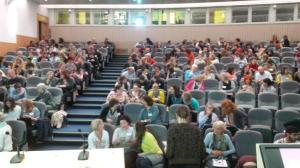
The seminar was on ‘cross-cultural research ethics in international and comparative education’. Presenting for the AcSS on this topic was an interesting exercise, as the Academy is not a very cross-cultural organisation: the Fellows are 93% professors, 69% male, and my contacts with them suggest that the white middle classes are in a massive majority. My presentation focused on the five generic ethical principles the AcSS has developed for its member societies to use. I’ve been working on a redraft of the SRA’s ethical guidelines based around these principles, and had already registered that they are focused around concepts which are not culturally neutral, such as democracy and inclusivity. There are cultures that despise democracy, seeing it as a discredited belief system, and others that either do not practise inclusivity or practise a very different version from that which the UK educational and social research culture espouses.

Perhaps because BAICE is focused on international matters, ‘culture’ was in danger of being conflated with ‘nationality’, so I argued that it is a much wider issue. The previous day I had been in a workshop for a piece of evaluation research that had included service users, volunteers, staff, partners, and evaluators. That’s five different cultures, right there. Then of course those professionally defined cultures intersect with people’s race, gender, religion, sexual orientation, etc, to create a whole world of cultural complexity.

The other presentations covered a wide range of related questions. How should we manage cultural conflicts within and beyond academic departments? How ethical is it to use RCTs in educational or social research when you know that members of control groups will be disadvantaged? How can we be inclusive as researchers in situations where including marginalised people, or those living in difficult circumstances, may put them at risk? How can we support researchers and teachers who are operating in a global environment, whether physical or virtual, to work in ethical ways?

Then we were asked to discuss whether we thought it would be possible to formulate generic ethical principles for cross-cultural research. We didn’t reach firm conclusions, but we did agree that if such principles were to be devised, the fundamental value should be respect, and the key process would be dialogue. Any generic principles would need to be broad, neither prescriptive nor vacuous, and should be tested in a variety of locations. Generic principles will always be open to interpretation, and may in some contexts conflict with each other, so they would need to be constantly negotiated. But generic principles could be useful in overturning the current myth of cultural neutrality in some academic mechanisms such as anonymous peer review.

We also agreed that ethical research is not, and should not be, only or predominantly about data collection; it is relevant to all stages of the research process. And we agreed that it is not only students, researchers, and teachers who need educating in ethics, but also funders and members of ethical review committees.

As researchers and educators, we have an ethical duty to keep educating ourselves, because ethical approaches to research change as the world changes. It is essential to take a reflexive approach to this, including locating ourselves culturally. It helps to realise that the same ethical issues arise in lots of different types of work in different disciplines and locations, so if you look beyond your professional and geographic boundaries, you can often learn from others rather than re-inventing the ethical wheel.

We concluded that, from an ethical perspective, the quality of human interactions should be fundamental to the quality of research and teaching. This is especially the case in cross-cultural work, where people may be operating with very different assumptions. However, this is not considered relevant by the current arbitrators of quality in research or teaching. Our view, though, is that it would be more ethical all round to shift the focus away from regulations and bureaucracy and towards human well-being.

While I am, generally speaking, irrepressibly optimistic, I do wonder whether that will happen in my lifetime.

Creative Research Methods conference – 8 May 2015

This SRA conference, where my latest book was formally launched, was a wonderful gathering of diverse researchers. We had academic researchers, government researchers, researchers working in research companies and charities and other organisations, and independent researchers. There were researchers from North and South America, Canada, and other European countries as well as the UK. And we had researchers from across the arts, humanities, and social sciences: from media, design, law, sociology, psychology, and geography, among others. This diversity made for an incredibly stimulating environment. A delegate commented to me that the conference could easily have run over three days, not one, and I think they were right.

Some of the delegates during the pipe-cleaner exercise (photo by David Gauntlett)

Some of the delegates during the pipe-cleaner exercise (photo by David Gauntlett)

The keynote speaker was Professor David Gauntlett. He spoke about the ethical imperative of reciprocity and dialogue in research, and how making and discussing metaphorical artefacts could provide a positive experience for participants. David often uses Lego, but on this occasion he used the pipe cleaners in delegates’ packs to involve us in a participatory demonstration, asking us to build a metaphor of our feelings on our journey that morning to the British Library conference centre. This short exercise was entertaining and instructive, and David built on that to show how making things and talking about them could yield richer data for researchers than simply asking questions. His presentation was dynamic and set the tone for the day.

The morning and afternoon workshop presentations made up a wonderful patchwork with 24 vibrant blocks of colour. They were in four concurrent streams, which regular readers of this blog will recognise: arts-based research, research using technology, mixed methods research, and transformative research frameworks. Presentations included:

This is only a small selection, chosen because they had further information online that I could link to for anyone who wanted more than just a headline. Details of all the workshop presentations can be found in the conference storify which was ably created by our official live-tweeter, Annika Coughlin. The presentations I went to (in the transformative research frameworks stream) were excellent, and I gather from those in other workshop streams that the quality was consistent throughout.

One of the most exciting moments for me came just before lunch, when I discovered the conference hashtag #CRM15 was trending on Twitter! After lunch Jude England, Head of Research Engagement at the British Library, gave a talk on ‘The Pleasures and Perils of Digital’. She encouraged researchers to find, use, and reference secondary data, and gave some good tips on how to do this, as well as explaining how the Library works and how it can help researchers.

At the end of the conference, I gave a short speech to launch my book, Creative Research Methods in the Social Sciences: A Practical Guide. This was immediately followed by a celebratory wine reception, kindly sponsored by my publisher Policy Press. Overall it was a wonderful and inspiring day. I can hardly imagine a better conference, or a more enjoyable book launch.

The Importance Of Networking

networkingI began work as an indie researcher in 1999. Over the next seven years I completed dozens of research contracts, an MSc, and a PhD. I also built up a good professional network, mostly in the English Midlands where I live. The people in my network ran local government departments and charities. They liked me and I liked them: we would meet for coffee, or lunch, and talk shop. After I was awarded my PhD in 2006, I rarely had to apply for work; mostly I was simply offered small contracts that I could complete alone, or slightly larger ones where I might sub-contract some of the work to a colleague. And on the rare occasions when I did write a tender for a local organisation, sometimes I was the only applicant, or the commissioner would have two or three to choose from.

Then in 2010 we had a change of government, the cuts began, and my network imploded. Every single person either took redundancy, or early retirement, or accepted a demotion to a non-managerial post. I was left as high and dry as a spine on a cactus in the desert. Lots of people who had lost or given up their jobs declared themselves to be available for independent work, while a number of my peers who had been indie researchers for some time found, like me, that the work dried up. At one point I did a tender for one piece of work, for an existing client, a national organisation, and I didn’t win. When I asked for feedback, I learned that they had had 26 applications. That is nothing compared to some of the employment recruitment numbers I’ve heard of in the last few years, but it’s a lot more than the half-dozen tenders they might have received in the noughties.

The silver lining was that I had time, which I used to write my first book and to start building new networks. In particular, I began to network with academics, and to network more actively online. In 2011 I applied to the Third Sector Research Centre at the University of Birmingham for an Associate Research Fellowship, and in 2012 they took me on. Twitter is an environment I enjoy and it’s a great place to network with academics, worldwide, who also enjoy the exchanges there. I also like offering help with research methods to people who are struggling; it’s amazing how much pertinent advice you can fit into 140 characters (or 280, or 420, or…!) And I also kept my personal friends informed about my work – at least, until they started to glaze over – because, well, you never know.

Remember those three gigs I landed in one day, two weeks ago? They all came through networking, even the one where we wrote a tender. For that one, I was recommended to the lead organisation by my mentor at the Third Sector Research Centre. The gig in Calgary came through a woman I met online, a fellow fiction writer. I met her in real life once, in England, shortly before she emigrated to Canada. We’ve kept in touch via Facebook, and at times I’ve been able to give her advice and support with her postgraduate studies. She wrote a very kind review of my first research methods book, and has been delightfully encouraging about my second. But I was gobsmacked when she announced that she wanted to pay me to go and do some work with her in Calgary.

And the Swansea gig came through an even more modern route. A woman in Canada, who I have only ever spoken to on Twitter, recommended me to an American woman in Swansea, who had never heard of me nor I of her. But she evidently trusted the woman in Canada, because she emailed an enquiry, then we spoke on the phone, and I taught a very enjoyable session there last week, helping her postgraduate students to formulate their research questions.

So, if you want to be an indie researcher, you need to be comfortable with networking, both in person and online. And you need to carry on doing it even when you don’t know where it may lead. I had no idea, when I started building new networks in 2010, that they would lead to Swansea or Calgary. And I have no idea where else they may lead. But that’s the indie researcher’s life: exciting, unpredictable, and forever uncertain.

Creative Research Methods and Gender

gender not binaryLet me begin by saying that I know gender is not binary. In fact, it is probably not reducible to any system of categorisation or classification. I am well aware that some people are physically male but mentally and emotionally female, or vice versa, and that some of these people find this problematic and would choose a hormonal and surgical remedy. Other people, sometimes known as ‘cisgender’, are emotionally and mentally in accord with their physical gender. (I’m fine with this concept, I just wish it didn’t have such an ugly word for its label.) Some are androgynous, physically, or mentally and emotionally, or both. Others are ‘genderqueer’, ‘genderfluid’, ‘third-gender’, and so on. Some societies are more accepting of these diversities than others, but it is becoming increasingly difficult to deny their existence altogether.

Nevertheless, most people, in most social situations, talk happily about men and women. And I am going to do that in this post, though with an acknowledgement that ‘men’ or ‘women’ includes those deemed by society to be ‘men’ or ‘women’, who as individuals may be more or less happy or unhappy with the definition they are given.

I am a woman, physically, mentally, emotionally, and sometimes quite crossly when I think about how women are treated as second-class citizens in many ways in many parts of the world. We’ve come a long way, for sure, but we’re not there yet. Such as in academia where, for example, only 20% of professors are women, and 70% of fellows of the UK’s Academy of Social Sciences (AcSS) are men (yes, I counted all 1005 of them, just for you). Professors and AcSS fellows are also predominantly white.

I am a feminist, always have been, probably always will be. So I was delighted to be asked, last month, to speak on Woman’s Hour on BBC Radio 4. This programme is an institution. It is sometimes criticised as ‘tokenistic’ (why should women only get an hour?) or ‘discriminatory’ (why isn’t there a programme called Men’s Hour?’). But it has a large audience, of whom a big percentage is male, and it deals intelligently with topics of interest to many women – and evidently to many men too.

The subject of discussion on the programme, female sterilisation, is irrelevant here. What is relevant is that, even though it was a completely unrelated subject, the debate started me thinking about my latest book from a different angle. When I got home, I checked the 109 boxed examples – and found that 80% were generated by women researchers. This felt exciting. Was there, could there be, an area of research where women were at the forefront?

Then, being an ethical and reflexive researcher, I began to wonder whether I’d introduced a bias. After all, I had selected these examples from the many more I’d read. I thought I had selected them on merit, but had I really? My thoughts turned to the 94 abstracts received by the Social Research Association for presentations at the forthcoming conference on creative research methods. How many of those were led by women researchers? I counted up, and guess what? Eighty per cent. Just like the examples in my book. And non-white researchers have a sizeable presence too, both men and women.

Taimina crochetWomen are not just doing fluffy girly qualitative research, either. Have you heard of Daina Taimina? She succeeded, where men had failed for centuries, in modelling hyperbolic geometry. In case you haven’t heard of that either, it’s the geometry of frilly things, like kale or sea kelp or oak leaf lettuce. And it’s evidently really difficult to model, or someone would have worked it out before Taimina realised crochet was the perfect vehicle. I recommend her TED talk on the subject, it’s fascinating even if you know little or nothing about geometry. And women aren’t only using arts-based methods: both the book and the conference abstracts show that they’re also using technology in research, mixing methods to good effect, and working within transformative research frameworks.

So I think, in creative research methods, we have a field of enquiry where women are leading the way. And it’s not before time!

Desperate Soliciting from Academic Journals

begging and pleadingWhen you’ve published an academic journal article or two, you start getting emails which, at first sight, seem very flattering. They praise your previous work, or your expertise, or both, then invite you to write an article for their journal, or to edit a special issue, or produce an e-book. But when you look more closely, these emails start to look a bit odd. Some ask me to write for journals in medicine, life sciences, or STEM disciplines, all areas in which I have little knowledge and no expertise. Others want me to take on onerous editing responsibilities, sourcing articles from prestigious scholars in return for one whole free electronic journal issue or e-book. And some are verging on the surreal. Here is an example I did not make up:

“Dear Dr. H Helen,

Tranquil greets from [name of] Journal… We would be truly fortunate if you could assist us to successfully release the issues by your active and enthusiastic submission of manuscript which will be processed & published under [name of] Journal for upcoming glorious year…. It would be grateful if you would submit your manuscript by [date in three weeks’ time]… It would be our honor to be associated with such an intent, expeditious personality like you for future endeavours.”

Maybe it’s my intent and expeditious personality that causes me to be somewhat suspicious of these emails – particularly as they always seem to want me to produce an article in three weeks or thereabouts. Now I’m a fairly swift reader, thinker, and writer, but producing a journal article in three weeks from a standing start is a request I would find virtually impossible to grant. So it’s just as well I have more sense than to try.

Interestingly, these are not predatory journals. None of them ask me to pay for publication, and they don’t appear on Beall’s List. They seem to be desperate journals. One emailed me on 17 February, giving me a most generous deadline of 15 March, and finishing, ‘If it is not feasible for you to submit paper in the month of February, then kindly let us know your feasible time of contribution. Anticipating your quick response.’ They didn’t get any response, let alone a quick one. So the cheeky blighters emailed again on 16 March, giving me a revised deadline of 31 March.

When I check out the journals online, they appear to be for real. So why are they so desperate? “I wonder if you could submit Research article, Mini review, Case reports, short commentary, letter to the editor, book review for publication in our upcoming issue, to spread the essence of your eminent efforts throughout the world.” Despite the strange language they use, many are based in the US – or at least that’s what their websites say.

And who responds to these poorly targeted requests? I write on research methods in the social sciences, and there is some overlap with health services. So, at a stretch, you could excuse journals focusing on medicine from thinking I might like to write for them, particularly as I’ve published articles in journals such as the Journal of Public Mental Health and Perspectives in Public Health. But life sciences? STEM disciplines? No chance.

I’m on the editorial board of the International Journal of Social Research Methodology which has never been short of submissions. If we weren’t getting enough submissions, I’d suggest we should stop publishing the journal – and I’m sure the publisher would be there before me. Or we could try soliciting submissions, if we thought it was a temporary blip, but I’d want to be targeting people much more carefully than these almost random emails.

I once responded to a request to submit a journal article. I was at the inaugural meeting of the Arts and Sciences Research Forum, at CRASSH, University of Cambridge. In a plenary session, for reasons I can’t remember, I was banging on about the need to do participatory research properly if you’re going to do it at all (must blog about that one of these days). At the break, a man came up and introduced himself to me as Woody Caan. He said he edited a journal, and was very interested in what I’d been saying about involving service users in research, and would I like to consider maybe writing something about this for his journal? He thought it would interest his readers, and perhaps I could think about it and we could discuss it more by email in the coming days and weeks.

When I checked out Woody Caan online, this self-effacing and charming man turned out to be an eminent Professor. We did discuss options by email and I ended up writing the article. He was completely relaxed about the fact that it took me several months.

That, in my view, is a good way to solicit an article for an academic journal. But mostly I decide what I want to write, for which journal. Then they can decide whether they want to publish it. That works for me.

Creative Research Methods

Creative research methods in the social sciences [FC]I have always been interested in creative research methods: not at the expense of traditional methods, but to augment them. I have used a variety of creative methods, when appropriate, such as storytelling and photo-elicitation for gathering data, fictionalisation and photo-essays for writing research, and drama for presenting findings. I have also combined methods where necessary, used technology in research, and worked within a participatory framework where possible.

A couple of years ago, for reasons I can’t now remember, I went looking for a book on creative research methods. I searched all the usual online booksellers but couldn’t find anything that fitted the bill. So I decided to write one.

In the process of writing this book, I read hundreds of journal articles, book chapters, sometimes whole books. I didn’t read everything there is to read – that wouldn’t be possible – but I learned a lot. And it slowly dawned on me that the field of creative research methods could be conceptualised as having four broad categories:

  1. Arts-based research – e.g. visual arts, performance arts, textile arts
  2. Research using technology – e.g. social media, apps, computer/video games
  3. Mixed methods research – traditionally qual+quant, but also quant+quant and qual+qual
  4. Transformative research frameworks – e.g. participatory research, feminist research, decolonising methodologies, activist research

Clearly I am not suggesting that these categories are mutually exclusive. In fact I did find some examples of research employing tools from all four categories. But they do provide a useful way of thinking about the subject for now (I say ‘for now’ as the field is developing fast, so may need a new conceptualisation in time).

I found many fabulous, inspiring, examples of research across all of these categories and from all over the world. There are over 100 boxed examples in my book, with others scattered throughout the text, and I still didn’t have room to include everything I would have liked to cover. I also realised that ‘creative methods’ doesn’t always mean ‘innovative methods’ (though it often does). It may mean being creative with traditional methods, such as by combining those methods in an unusual way or taking a new look at an existing method. For example, in recent years researchers using focus groups realised that they could get more out of the data by analysing the interactions between people in each group, as well as the content of the text yielded by the transcripts.

I’m delighted to say that even though the book isn’t out yet, it has received a good reception from academics around the world. It has been described, among other things, as an ‘inspiration’, a ‘treasure trove’, and ‘ground-breaking’. And most wonderful of all, especially as my first degree was in psychology, my creative research heroes Kenneth Gergen and Mary Gergen have very kindly written a foreword.

So publication day is 10 April in the UK, May 15 in the US. Here’s a very short book trailer I made for you.

If you would like a copy, you can buy direct from the publisher, Policy Press, at a 35% discount, by signing up to their monthly e-newsletter. This applies wherever you are in the world, and the discount is on all their books, not just mine. They publish some excellent work so I’d recommend checking this out.

If you want to know more about creative research methods, I hosted a twitterchat on 26 March, on the #ecrchat hashtag, and the storify is here.

The book will be formally launched at a one-day conference at the British Library Conference Centre on 8 May. The conference has four workshop streams and I’ll bet you can guess what they’re on… yep: arts-based research, research using technology, mixed methods research, and transformative research frameworks. There seems to be a real appetite for this topic, as we had an unprecedented number of abstracts – four for each presentation – so we have a terrific selection of workshops. Over half of the places are already booked. So if you’d like to come to the conference, please don’t leave it till the last minute, as it is likely to sell out. I hope to see you there!

Teaching Writing to Doctoral Students

just me teachingI spent last weekend teaching writing to doctoral students at Staffordshire University, and enjoyed it enormously. It was an experiential course that I had devised with input from Dr Katy Vigurs, who hosted the course. We included creative exercises on drafting and redrafting, getting unstuck, the relationship between writing and thinking, and how to find your voice. There was also a short talk from me and several discussion/Q&A sessions. In between these were a dozen half-hour ‘shut up and write’ sessions for students to work on their own writing.

This course demonstrated to the students, very thoroughly, that they can achieve a meaningful amount of writing in just half an hour. And we taught them how to do that, through discussion, example, practice, and review. They had seen the course programme beforehand and planned what they would work on. The half-hour discipline was difficult for them at first; they found it hard to ‘get in’ and ‘get out’, but by the Sunday they were switching between ‘work’ and ‘break’ modes like doctoral ninjas. Several students commented on their evaluation forms that they had achieved more than they had planned.

Before the course, I asked students to complete a form telling me which aspects of academic writing they were good at, and which they wanted to work on. I also asked for a 500-word sample of academic writing from each student. This was partly so I could give individual feedback, and partly so I could get a sense of the individual and overall standard. Generally, the standard was good, particularly as I was seeing excerpts from work in draft. But the students evidently thought they were not good at writing.

This made for a very satisfying moment for me. It went like this:

Me: “I’d like to know who, in this room, thinks they struggle with academic writing because they’re not very good at it. Put your hands up please.”

[Most hands went up, most faces looked miserable]

Me: “I’ve seen examples of your writing, so I can tell you, with some authority, that you’re wrong. You are good at it. The reason you struggle with academic writing is because it’s hard.”

Then I stood in front of the class for a quiet moment, enjoying the war of expressions on people’s faces, as the message began to sink in. It was such a delight to see incredulous smiles break through.

It was also a delight, as always when teaching, to witness students having ‘light bulb’ moments. One woman said to me, with an expression of pure joy, ‘I’ve got it! I just have to write! That’s all I have to do! And if I keep writing, I’ll get my thesis done!’ It’s the kind of statement that can seem obvious after the fact, but it was a huge learning point for her, and I was thrilled to see her happiness.

Of course the true test will come when the students are back in their everyday lives. I think and hope we did enough to embed the practice and motivate the students, and the evaluation forms certainly suggest that we did. But I’ve been involved in training and teaching for far too long to take that for granted. We encouraged the students to form peer networks for support, and suggested that they might set up their own ‘shut up and write’ sessions, whether virtually or in real life. Early signs are that mutual support is growing within the group, and that can only help.

Talking of the virtual dimension, some students from Staffordshire University who couldn’t make the whole weekend, and some from other universities, joined in with our ‘shut up and write’ sessions via the #StaffsAcWri hashtag on Twitter. There are regular ‘shut up and write’ sessions on Twitter (check the #stuw hashtag) which you could join if this interests you – or you could even start your own. It’s amazing how much you can get done in half an hour: one student wrote over 800 words in just one of the half-hours, and most produced several thousand words in the course of the weekend.

My favourite comment from the evaluation forms was: ‘I never drifted off! I have only 2 relevant doodles and have produced work I will be proud to share with my supervisors!’ Further to last week’s post, this is why I think writing can be taught. Not everything about writing, and not to everyone – but those who are engaging with the process, and willing to learn, can certainly be taught the skills and the craft of writing.