
Putting Research Ethics Into Practice

ethicsDoing research ethically is not about finding a set of rules to follow or ticking boxes on a form. It’s about learning to think and act in an ethical way. How ethical an action is, or is not, usually depends on its context. Therefore, everything must be thought through as far as possible, because even standard ‘ethical’ actions may not always be right. For example, many researchers regard anonymity as a basic right for participants. However, if your participants have lived under a repressive regime where their voices were silenced, they may feel very upset at the thought of being anonymised, and want any information they provide to be attributed to them using their real names. In such a context, claiming that they must be anonymised because of research ethics would in fact be unethical, because it would cause unnecessary stress to your participants.

In my role as ethics lead for the UK’s Social Research Association, I’ve been helping a group of people from the Academy of Social Sciences who have been developing some common ethical principles for social science. This has involved a long and multi-faceted consultation process, during which a number of people spoke in favour of ‘virtue ethics’, or the idea that a good person will be an ethical person.

I fundamentally disagree with this position. As demonstrated in my last post, we are all subject to cultural conditioning which is bound to influence us as researchers. We are also all vulnerable to cognitive biases such as confirmation bias (giving more weight to views or phenomena that support what we already believe) and hindsight bias (seeing events as having been predictable when they happened). Given this, it doesn’t matter how virtuous we are, we’re not going to be as ethical as we could be if we put some simple steps in place.

The first step is to acknowledge, and try to identify, your own cultural conditioning, and to learn about the cognitive biases that may affect you. Although we’re notoriously bad at identifying our own cognitive biases, we are better at spotting other people’s, so if you’re working with others it can be helpful to look out for each other’s biases.

Then articulate the value base for your research. If you’re working alone, you need to devise this for yourself; if in a team, produce it collectively. And don’t just write a list of words; think through the meanings of the values you choose. For example, if you want your research to be ‘honest’, what does that mean in practice? We all tell lies all the time, even to ourselves, and research is no different. For example, researchers think it’s perfectly OK to lie in the interests of maintaining participant confidentiality. So if you want your research to be honest, you need to consider how honest you think it can actually be.

Try to identify your own assumptions. While it’s important to try not to make assumptions about other people, research is usually based on some assumptions, and it helps to act ethically if you know what these are. For example, are you assuming that your research is not intrusive? Or that it will be as high a priority for others as it is for you? Are you assuming that your sample is representative? Or that your data is accurate? Why are you making each assumption? What are the implications of your assumptions for your research?

Grounded theorists Strauss and Corbin suggested watching out for absolutes as a useful way to guard against biases and unhelpful assumptions. So if you find yourself, or a participant, using words like ‘never’ or ‘always’, or phrases like ‘couldn’t possibly’ or ‘everyone knows’, take time to work out what is behind the statement. You may well discover an obstructive bias or assumption, and then you can begin to search for a way to counteract that bias or assumption.

As social scientists, we try to include a wide range of people as research participants, but we can forget to take the same approach to literature. So another step is, when you’re reading, try to find relevant work by people with different backgrounds and perspectives from yours. This could include people from different nationalities, disciplines, genders, professions, and so on. Then, when you’re writing, try to draw on the work of a wide range of people too – though only if that work is relevant and worth citing, otherwise you are being tokenistic which is not ethical.

It is of course impossible to write a full set of ethical guidelines in a blog post. However, following these suggestions will lead you to a wider, more fully ethical approach to your research. If you want to delve further into the whys and wherefores of ethical research, there is plenty of material online. Here are some useful links:

Economic and Social Research Council (ESRC) Framework for Research Ethics – the ESRC is one of the UK’s biggest research funders, and this Framework was updated in January 2015.

The Research Ethics Guidebook – actually a website with a wealth of information, linked to the ESRC principles.

Association of Internet Researchers Ethics Guide – a wiki containing useful pointers for doing ethical research online.

How To Write A Killer Conference Abstract

The LSE blogs recently published an ‘essential ‘how-to’ guide to writing good abstracts’conference presentation. While this post makes some excellent points, its title and first sentence don’t differentiate between article and conference abstracts. The standfirst talks about article abstracts, but then the first sentence is, ‘Abstracts tend to be rather casually written, perhaps at the beginning of writing when authors don’t yet really know what they want to say, or perhaps as a rushed afterthought just before submission to a journal or a conference.’ This, coming so soon after the title, gives the impression that the post is about both article and conference abstracts.
I think there are some fundamental differences between the two. For example:

Article abstracts are presented to journal editors along with the article concerned. Conference abstracts are presented alone to conference organisers. This means that journal editors or peer reviewers can say e.g. ‘great article but the abstract needs work’, while a poor abstract submitted to a conference organiser is very unlikely to be accepted.

Articles are typically 4,000-8,000 words long. Conference presentation slots usually allow 20 minutes so, given that – for good listening comprehension – presenters should speak at around 125 words per minute, a conference presentation should be around 2,500 words long.

Articles are written to be read from the page, while conference presentations are presented in person. Written grammar is different from spoken grammar, and there is nothing so tedious for a conference audience than the old-skool approach of reading your written presentation from the page. Fewer people do this now – but still, too many. It’s unethical to bore people! You need to engage your audience, and conference organisers will like to know how you intend to hold their interest.

The competition for getting a conference abstract accepted is rarely as fierce as the competition for getting an article accepted. Some conferences don’t even receive as many abstracts as they have presentation slots. But even then, they’re more likely to re-arrange their programme than to accept a poor quality abstract. And you can’t take it for granted that your abstract won’t face much competition. I’ve recently read over 90 abstracts submitted for the Creative Research Methods conference in May – for 24 presentation slots. As a result, I have four useful tips to share with you about how to write a killer conference abstract.

First, your conference abstract is a sales tool: you are selling your ideas, first to the conference organisers, and then to the conference delegates. You need to make your abstract as fascinating and enticing as possible. And that means making it different. So take a little time to think through some key questions:

  • What kinds of presentations is this conference most likely to attract? How can you make yours different?
  • What are the fashionable areas in your field right now? Are you working in one of these areas? If so, how can you make your presentation different from others doing the same? If not, how can you make your presentation appealing?

There may be clues in the call for papers, so study this carefully. For example, we knew that the Creative Research Methods conference, like all general methods conferences, was likely to receive a majority of abstracts covering data collection methods. So we stated up front, in the call for papers, that we knew this was likely, and encouraged potential presenters to offer creative methods of planning research, reviewing literature, analysing data, writing research, and so on. Even so, around three-quarters of the abstracts we received focused on data collection. This meant that each of those abstracts was less likely to be accepted than an abstract focusing on a different aspect of the research process, because we wanted to offer delegates a good balance of presentations.

Currently fashionable areas in the field of research methods include research using social media and autoethnography/embodiment. We received quite a few abstracts addressing these, but again, in the interests of balance, were only likely to accept one (at most) in each area. Remember that conference organisers are trying to create as interesting and stimulating an event as they can, and variety is crucial.

Second, write your abstract well. Unless your abstract is for a highly academic and theoretical conference, wear your learning lightly. Engaging concepts in plain English, with a sprinkling of references for context, is much more appealing to conference organisers wading through sheaves of abstracts than complicated sentences with lots of long words, definitions of terms, and several dozen references. Conference organisers are not looking for evidence that you can do really clever writing (save that for your article abstracts), they are looking for evidence that you can give an entertaining presentation.

Third, conference abstracts written in the future tense are off-putting for conference organisers, because they don’t make it clear that the potential presenter knows what they’ll be talking about. I was surprised by how many potential presenters did this. If your presentation will include information about work you’ll be doing in between the call for papers and the conference itself (which is entirely reasonable as this can be a period of six months or more), then make that clear. So, for example, don’t say, ‘This presentation will cover the problems I encounter when I analyse data with homeless young people, and how I solve those problems’, say, ‘I will be analysing data with homeless young people over the next three months, and in the following three months I will prepare a presentation about the problems we encountered while doing this and how we tackled those problems’.

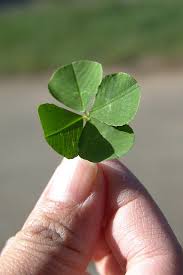
Fourth, of course you need to tell conference organisers about your research: its context, method, and findings. It will also help enormously if you can take a sentence or three to explain what you intend to include in the presentation itself. So, perhaps something like, ‘I will briefly outline the process of participatory data analysis we developed, supported by slides. I will then show a two-minute video which will illustrate both the process in action and some of the problems encountered. After that, again using slides, I will outline each of the problems and how we tackled them in practice.’ This will give conference organisers some confidence that you can actually put together and deliver an engaging presentation. four leaf clover

So, to summarise, to maximise your chances of success when submitting conference abstracts:

  1. Make your abstract fascinating, enticing, and different.
  2. Write your abstract well, using plain English wherever possible.
  3. Don’t write in the future tense if you can help it – and, if you must, specify clearly what you will do and when.
  4. Explain your research, and also give an explanation of what you intend to include in the presentation.

While that won’t guarantee success, it will massively increase your chances. Best of luck!

Viva Survivors

Last week I spoke to Dr Nathan Ryder, creator of the rather wonderful Viva Survivors blog. He interviews people with PhDs about their viva experiences and posts podcasts on the blog. Including mine! I wish his blog had been available in 2006, because I would have been hanging on its every word.516WAmwa+FL._BO2,204,203,200_PIsitb-sticker-v3-big,TopRight,0,-55_SX278_SY278_PIkin4,BottomRight,1,22_AA300_SH20_OU02_

Nathan has also written a well-reviewed book called Fail Your Viva: Twelve Steps To Failing Your PhD (And Fifty-Eight Tips For Passing). Again, if I was pre- rather than post-viva, I’d be all over this.

So if you have a viva looming, I recommend checking out Nathan’s work.

I’ve also heard good things on Twitter about Viva Cards, so check them out too.

The importance of self-care

2014-12-08_1418066953Very unusually for me, I don’t feel like working. I have a list of my current projects, all of which are interesting, and usually I’d look at the list and decide what to focus on next: either the most urgent, or the most appealing. But right now – and this hardly EVER happens – none of them are urgent. And, oddly, I’m finding it hard to motivate myself to work on any of the non-urgent ones either. Even though they do need doing, and will become urgent if I don’t do them at some point.

I love my work and am usually highly motivated. Also, I don’t work well under deadline pressure, so prefer to finish tasks with time to spare. I’m not ill, and I don’t have any difficult personal stuff going on. So I’ve been asking myself: why this unusual lack of interest in, or motivation to do, my work?

I think the answer is simply that I need a few days’ break. I’ve had such a busy year, without much downtime: a ten-day holiday in France in June, a handful of long weekends, and a week in Wales in October when I was finishing the second draft of my book. Talking of which, the book has taken up a huge amount of time this year, and I’ve also been working on several papers and a couple of book chapters, with one of each accepted for publication. I spend quite a bit of time, most weeks, on Board work for the UK’s Social Research Association, and editorial board work for the International Journal of Social Research Methodology also takes up time. Then of course there’s my paid work: I’ve had two big and demanding national research projects to work on with clients, and several smaller projects. As a result of all this, I rarely work fewer than six days a week, though I do try hard to have one full rest day each week.

I find it hard to take more time off, partly because I love my work, and partly because I find the gear changes difficult to manage. It’s not easy to wind down, and equally problematic to rev up again. Sometimes it feels simpler just to keep going. But that’s not sensible, is it?

If anyone else was telling me this story, I’d be saying: for goodness’ sake, you fool, take a break! For once I’m telling myself that – and I’m listening. My plan is to have complete rest and recreation for the rest of this week, when I’m at home with no big commitments. I hope then I’ll be ready to rev up the following week, and get some of the tasks on my list done before they become urgent.

There seems to be a lot of it about this year. Hugely productive researchers and writers like Pat Thomson and Raul Pacheco-Vega are advocating self-care in general and taking time off in particular. I know this can be particularly difficult for PhD students – several of the doctoral students I interviewed for my last book, Research and Evaluation for Busy Practitioners: A Time-Saving Guide, spoke about the difficulty of taking time off when your head is full of your thesis. Other forms of writing can also have this effect; it’s hard to pick up a piece of work if you put it down for too long, whereas writing ‘little and often’ can help you to maintain the essential flow of ideas. But even if you’re doing a PhD, or have publishers’ deadlines – try to have at least the occasional rest day here and there, and ideally a proper break. Really, this is I an ethical requirement: certainly for researchers, who won’t produce good quality research if they’re exhausted and stressed. And I believe it’s important for writers too. If you’re working seven days a week, try reducing it to six, and having a proper rest day on the seventh. I bet you’ll get as much work done and be less exhausted. But whatever you decide, I wish you a happy holiday, and I’ll be back in 2015.

First Peer Review – And Pizza

I’ve just done my first ever proper grown-up peer review of an article which had been submitted to a research methods journal. It was an interesting intellectual and emotional experience.

The article’s title was enticing and promised new insight into an aspect of research methods. I looked bad pizzaforward to reading it and learning about a point I hadn’t previously considered. And the content did deliver new insight – but it delivered it really, really badly. It was such a disappointment, like getting the pizza you ordered an hour late, cold, and with your favourite ingredient missing.

I felt such empathy for the author. He or she had obviously put in a fair amount of effort, and was going to be bitterly disappointed by my review. I could feel that pain. But it wasn’t a borderline decision; the article needed a lot more work. Key references had been left out – imagine an article on psychoanalysis that doesn’t cite Freud or Jung, and you’ll get the picture. Also, the argument made was woefully under-theorised, and with very little interpretive analytic work either.

I had prepared carefully, reading the journal’s guidelines for reviewers, the COPE guidelines for reviewers, and Pat Thomson’s posts on reviewing journal articles, while reflecting on my own experience of receiving reviews. So I wrote as constructively as I could, giving praise where I thought it was merited, specific references to help the author build the context, and suggesting some questions they might consider at the interpretive stage. I was quite relieved to find I was up to the job. But I still felt bad for the poor author.

I also felt bad for the entire research profession, because the argument being made was a really important one which needed to be heard. So much so that I thought I might have difficulty keeping it confidential. It was one of those points which, once stated, seemed blindingly obvious. And we all read so much. I was determined to maintain my professional standards and protect the author’s intellectual property – yet I could imagine, a few months on, absent-mindedly saying, ‘Oh yes, I read something somewhere, can’t quite remember where, but it made this really good point…’ I wonder how often that happens.

Then I had an idea. I hopped onto the web and did a quick search – and lo and behold, an article was published just a couple of months ago, making the same point. Whoopee! I could talk about it after all! But oh no… my poor, poor author…

Actually, it’s not a disaster, because there is more than enough room for two articles making this point in smiley pizzadifferent journals. So I added that reference, too, to my review, and ended with some words of encouragement. I truly think this is an important article in the making, and with a little more work, the author could deliver his or her argument in an article which is more like a warm, fragrant, appetising pizza, made from good ingredients in the right proportions.

#Vitaehangout

I took part in a live online “hangout” on 23 October, for Vitae, an international programme dedicated to the professional development of postgraduate and early career researchers. I was part of a panel of doctoral researchers and PhD graduates discussing things we wish we’d known when we started out. It was great fun, with questions pouring in about how to be original, when to start writing, how to manage relationships with supervisors, how much data to collect – all the kinds of preoccupations of early-stage doctoral students. The panel had loads of ideas for ways to address these topics, and the time seemed to go past in a flash. We weren’t able to deal with all the questions during the panel, so the nice people at Vitae put the rest into a document and we’ve made some more suggestions there.

Find out more on the Vitae website, or just watch the video below: