
Last week I was tagged in a tweet asking this very interesting question:
#AcademicTwitter, I’m looking to be educated: on the subject of #researchmethods, what non-white non-male authors are out there? Because DAMN, the reading list I’ve inherited is… problematic. #academic #pedagogy @DrHelenKara @SuzanneCulshaw @FitzwalterFran
— Dr Zann Albary (@ZannPhD) June 3, 2020
I thought of a couple of responses immediately, then another the next morning. I also decided to write this blog post because I knew there was more I could say.
Disclaimer: this isn’t a ‘best of’ or a full review, this is simply what is on my shelves in my personal research methods library. I have found these books from social media, peer reviews, bibliographies, recommendations. Between them they cover a wide range of methods and topics: qualitative, quantitative and multi-modal research; arts-based methods and technology; decolonizing methods and Indigenous research; various disciplinary topics; and a lot of ethics.
‘Why to’ books
These books make a case for doing research in certain ethical ways. Let’s start with a classic: Decolonizing Methodologies by Linda Tuhiwai Smith. I read this ground-breaking book during my Masters’ in Social Research Methods around the turn of the century, and bought the second edition when it came out in 2012. This little paperback is remarkably comprehensive and full of wisdom.
Building on the work of Smith: Decolonizing Educational Research: From Ownership To Answerability by Leigh Patel (2016). This is a thoughtful, passionate clarion call for education research to focus on learning.
Building on both of the above: Decolonizing Interpretive Research: A Subaltern Methodology for Social Change, edited by Antonia Darder (2019). Interpretive research prioritises philosophical and methodological ways of understanding society. While this book is quite conceptual, its use of multiple voices provides a depth of insight into the importance of the points it makes. Also, if you have read Smith and Patel before you get to this book, it will make more sense.
‘How to’ books
Heewon Chang’s Autoethnography As Method (2008) is a book I frequently recommend to students. It is readable, practical, and clear. Autoethnography is sometimes criticized as self-indulgent and navel-gazing, but if you do it Chang’s way, it won’t be. Also autoethnography has a key role to play in these pandemic times.
Pranee Liamputtong’s Performing Qualitative Cross-Cultural Research (2010) is another classic. It is great on cultural sensitivity and gives lots of really helpful examples. Every researcher should read this book unless they’re absolutely sure they are doing monocultural research – and even then they would probably learn something useful.
Caroline Lenette’s Arts-Based Methods in Refugee Research: Creating Sanctuary (2019) is more specialist, yet has a lot to offer to anyone interested in arts-based methods. She pays particular attention to the methods of digital storytelling, photography, community music, and participatory video.
Indigenous methodologies
Indigenous Methodologies: Characteristics, Conversations, and Contexts (2009) is by Margaret Kovach from Saskatchewan in Canada. This very readable book includes conversations with six Indigenous thinkers which contribute an interesting diversity of ideas and experiences.
Indigenous Research Methodologies (2019 – 2nd edition) by Bagele Chilisa from Botswana in Africa is another classic. It is also very readable and comprehensive.
The first disciplinary book I found on Indigenous methodologies is by Lori Lambert: Research for Indigenous Survival: Indigenous Research Methodologies in the Behavioral Sciences (2014). Lambert is from the US and, like Kovach, includes other voices in her work. However, the other voices in Lambert’s book are of people from Indigenous communities, in Canada, the US and Australia, who are subject to research. As is common with Indigenous research texts, Lambert’s book is very readable.
Maggie Walter from Tasmania is lead author of Indigenous Statistics: A Quantitative Research Methodology (2013) with Chris Andersen from Canada (who is a man, but I guess he can’t help that, and evidently he was happy for Walter to be first author so good for him). If you’re quant-averse, don’t worry; this is not about how to do sums, it’s about which sums are worth doing and why. And, again, it’s very readable.
Edited collections
These are both edited by men, but are on relevant topics and include chapters by women of colour. The first is White Logic, White Methods: Racism and Methodology (2008) edited by Tukufu Zuberi and Eduardo Bonilla-Silva. Two-fifths of chapters are written or co-written by women of colour.
The second is Research Justice: Methodologies for Social Change (2012) edited by Andrew Jolivétte. Only two chapters in this book are by men, the other 14 are by women (including Antonia Darder and Linda Smith). I reviewed this book for the LSE book review blog back in 2015.
Other relevant topics
While these books are not directly about research methods, they are on topics which are so relevant to researchers that I will include them here.
Algorithms of Oppression: How Search Engines Reinforce Racism (2018), by Safiya Noble, is a passionately and beautifully argued book about why algorithms are not neutral and the impact that has on society. Researchers use search engines all the time and we need to know about this stuff.
Race After Technology (2019) by Ruha Benjamin builds on and expands Noble’s work. She demonstrates that advances in technology are lauded as objective and progressive, but in fact they reproduce and reinforce existing inequalities. Crucially, she includes a chapter on practical ways to counter this dissonance.
Sway: Unravelling Unconscious Bias (2020) by Pragya Agarwal helps us to understand and challenge our own unconscious biases. Any researcher concerned about ethics would benefit from reading this book.
In fact, any researcher concerned about ethics would benefit from reading any of the books listed here. Although the word ‘ethics’ doesn’t appear in any of the titles, each of these books points the way towards a more ethical research practice.
This is certainly not a comprehensive list of methods and other research-relevant books (and chapters) by women of colour. If you have other suggestions to make, please add them in the comments.
This is a simulpost with the blog of the Social Research Association of the UK and Ireland.
This blog, and the monthly #CRMethodsChat on Twitter, is funded by my beloved patrons. It takes me at least one working day per month to post here each week and run the Twitterchat. At the time of writing I’m receiving funding from Patrons of $52 per month. If you think a day of my time is worth more than $52 – you can help! Ongoing support would be fantastic but you can also make a one-time donation through the PayPal button on this blog if that works better for you. Support from Patrons and donors also enables me to keep this blog ad-free. If you are not able to support me financially, please consider reviewing any of my books you have read – even a single-line review on Amazon or Goodreads is a huge help – or sharing a link to my work on social media. Thank you!
 Since lockdown began, researchers have been discussing how best to change our methods. Of the ‘big three’ – questionnaires, interviews, and focus groups – only questionnaires are still being used in much the same way. There are no face-to-face interviews or focus groups, though interviews can still be held by telephone and both can be done online. However, doing research online comes with new ethical problems. Some organisations are forbidding the use of Zoom because it has had serious security problems, others are promoting the use of
  It has always struck me as odd that people don’t recognise writing as a research method. I doubt there is a single piece of formal research in the Euro-Western world which doesn’t involve writing. Yes, we can make all our reports with video, but those videos need scripting and that requires words. As researchers, writing is one way in which we exercise our power. You may not think of yourself or your writing as powerful, yet writing is an act of power in the world. I was reminded recently by a colleague that my words on this blog are powerful. I’d forgotten. It’s easy to forget, but we need to remember.
 When someone mentions research methods, what do you think of? Questionnaires? Interviews? Focus groups? Ways of doing research online? Do you only think of data gathering, or do you think of methods of planning research, analysing data, presenting and disseminating findings?
 Last week, for reasons best known to one of my clients, I was reading a bunch of systematic reviews and meta-analyses. A systematic review is a way of assessing a whole lot of research at once. A researcher picks a topic, say the effectiveness of befriending services in reducing the isolation of housebound people, then searches all the databases they can for relevant research. That usually yields tens of thousands of results, which of course is far more than anyone can read, so the researcher has to devise inclusion and/or exclusion criteria. Some of these may be about the quality of the research. Does it have a good enough sample size? Is the methodology robust? And some may be about the topic. Would the researcher include research into befriending services for people who have learning disabilities but are not housebound? Would they include research into befriending services for people in prison?
 I have more exciting news! But first: why is this blog like a bus stop? Because you wait ages for posts with exciting news, then two come along in quick succession!
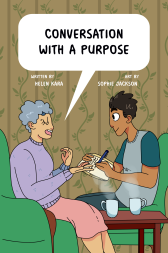 I have exciting news! This has been a long time in the planning and making, and has come to fruition in part thanks to the support of
  Last week I wrote a post about
  Because you do things in a sensible order, you have your research question, right? Good. It’s very important to have that first. The method (or methods) you choose should be the one (or ones) most likely to help you answer your question. You can’t figure out which methods are most likely to help if you don’t yet know what your question is. So if you’re actually not sure of your question, stop reading this RIGHT NOW and go settle your question, then come back and carry on reading.
 I
I  Helen Kara