Ten Top Tips for Successful Book Authoring

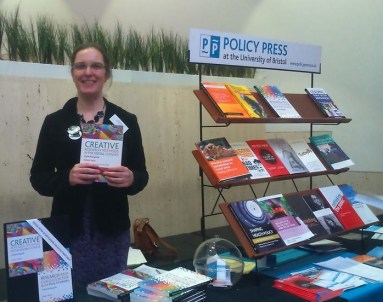
me at book launch croppedI feel qualified to write this post for a number of reasons. First, I am a successful author. Second, I have worked in publishing, as have several close relatives and friends. I’m assuming that you’re interested in writing for traditional publication; I intend to cover self-publishing in a different post. So here are my ten top tips for successful book authoring.

  1. Remember that publishers need you more than you need them. You can write and publish, online and in hard copy, without ever going anywhere near a publishing company. Conversely, publishers can’t function without authors.
  1. Find a book that needs to be written: ideally one you’ve looked for because you want to read or recommend it, and definitely one that doesn’t exist yet.
  1. Learn how the publishing business works. The more you understand about the process, the better you’ll be able to work with your publisher. This will also help to reduce the likelihood of potentially stressful surprises.
  1. Research different publishing companies and choose one that you think will suit you and your book. Don’t hesitate to ring one or more commissioning editors for your subject area to discuss your idea; their phone numbers should be on the publishers’ websites. It’s worth asking whether they already have something similar in the pipeline. If they do, finding out at an early stage will save you work; if they don’t, you can have more confidence in your idea. Also, a phone chat gives you a chance to suss them out and get a feel for whether you will be able to work together well.
  1. Negotiate a contract with deadlines you will be able to meet. You can ask for changes before you sign the contract; once it’s signed, there is no going back.
  1. If you’re in the UK, as soon as you have a draft contract, join the Society of Authors and ask them to vet the contract for you before you sign. (You can’t join the Society before you have a draft contract, unless you have already published a book or equivalent.) If you’re not in the UK, find out whether there’s a comparable organisation in your country – or, if you can afford it, get your draft contract checked by a suitably qualified and experienced lawyer.
  1. Calculate the number of words you need to write each week to meet your deadlines while leaving some time in hand for contingencies. Write that number of words each week.
  1. Be kind and courteous to the publisher’s staff, even at times when you may not feel particularly well-disposed towards them. Respond to their emails and phone messages in a timely fashion, and deal gracefully with feedback. Remember, they’re busy professionals too; just because publishers need authors doesn’t give you license to behave like a prima donna.
  1. Meet those deadlines.
  1. Be prepared to help publicise your book. The publisher’s marketing department should help, particularly around the time of publication, but they have new books to work on every month so they won’t be able to keep the focus on your book. But you can. Promotion doesn’t need to take up a huge amount of your time and effort, but it’s crazy not to do some basic tasks. Such as: add a link to the book to your email signature; get flyers from the publisher that you can hand out at conferences and other events; put the cover image on any slides or handouts you create. If you can use social media, so much the better, but anything you can do will help.

Of course there’s a lot more to becoming an author than that – but if you follow these top tips, the rest should fall into place. Good luck!
I Don’t Know What I’m Doing

head scratchingSome people call me an expert. I even call myself one on occasion, usually when I’m trying to win work or funding. But I don’t feel like an expert – or perhaps I don’t feel like I expected an expert to feel.

When I was younger, I thought of an expert as someone who knew pretty much everything about their subject. It’s true that I know a lot about research methods, probably more than most people on the planet, but I don’t know anywhere near everything. Research methods is such a huge and fast-moving field that nobody could know everything, but I don’t think I even know as close to everything as possible. In fact I think I’m a long way from there. Lots of people know things about research methods that I don’t know and, however much more I learn, that will always be the case.

But I do know how to be confident, even when I don’t feel confident. I don’t mean I’m falsely confident: if I don’t know the answer to a question, I’ll say so; if I don’t understand what someone is saying, I’ll ask for clarification. When I was younger, I thought doing that would make me look stupid. Now, quite literally, I know better.

I can even be confident about working on a project when I don’t know what I’m doing. That is a stretch for my confidence – sometimes it wobbles a bit – but I can do it. For example, I’m writing a book on research and ethics. The working title is Research Ethics in the Real World. I’ve been working on it since last summer. So far I have read half a dozen books and made notes from most of them, bought another 25 or so, interviewed eight people, and written 676 words. I’m at the exploratory stage and I really don’t know what I’m doing. I don’t have a structure for the book, or its voice, or a writing style. I don’t really know what I want to say, beyond something about how research ethics is linked with institutional, political, and global ethics; that it doesn’t exist in a bubble of its own.

But I have faith in the process. It’s what I tell doctoral students: keep on reading, thinking, and writing, and you’ll get there in the end. I’ve done this a few times now, though each time is different. And I do have a glimmer of a plan: when I finish making the notes from the books I’ve read, I’m going to plug those and my interview transcripts into NVivo, do some emergent coding, and see what falls out. I hope that will help, though of course it may confuse me further. But if I’m lucky, I’ll start to spot some connections, relationships, and patterns, which will help me find the way.

This is how creativity often works in practice. Bumbling around, doing what you enjoy, whether that’s picking out tunes on an instrument, messing around with paints, or stringing words together to make sentences. Lots of fiddling and noodling, also known as practice, while you work out the song you want to sing, the picture you want to paint, or the book you want to write. Not really knowing what you’re doing. Even when you’re an expert.

Collaborative Writing

collaborative writingYesterday I came to the end of my first ever writing partnership with a proper academic. We began collaborating in May 2012, and decided we would work together for a year with the aim of producing two journal articles in that time. We ended up writing together for almost four years and produced one working paper, one journal article, and a book chapter (finally finished yesterday, and due to be published by Policy Press in an edited collection later this year).

I learned a lot from this collaboration, not least that co-writing can take longer than you think, especially when you’re working on conceptually difficult topics. My co-writer and I worked really well together, and the publications we produced were definitely richer and meatier than either of us could have produced alone. I also received some very useful mentoring in the process, with invaluable tips on how to optimise journal articles for acceptance, and useful insights into the workings of academia. My collaborator was even generous enough to start by presenting me with several areas she was interested in exploring, and letting me choose the one I preferred for us to work on.

For the first year of our collaboration, we were both based in the UK; after that, my collaborator moved to Sweden. But that didn’t matter; we’d had a few face-to-face meetings and got to know each other in that first year, and email and Skype supported our collaboration thereafter.

We were fairly compatible as co-writers, with one major exception: we had very different attitudes to deadlines. I don’t work at all well under deadline pressure, so I tend to meet my commitments ahead of time. My collaborator worked best under deadline pressure – and, at times, did particularly good work some time after the deadline had gone whooshing past. I found this quite nerve-racking and frustrating, and I suspect she found my timeliness annoying. But we navigated through this difficulty quite effectively, as our outputs show.

I also learned, from this experience, that I really like writing collaboratively. So now I’m working on one journal article with one co-writer, another with another; co-editing a special issue of one journal, and writing an article for another special issue in which the article is sole-authored but there is also a collaborative, dialogic component. And I’m doing another book chapter for an edited collection, despite having sworn I never would.

This is too much! I can do it, and I will, but after these are done I’ll be scaling down the academic journal articles and book chapters. I’m going to aim for two a year from 2017 onwards. No more. I do love writing journal articles and book chapters, and I love collaborating. But I do all this in my own time, and I need to focus more on work that pays.

Analysing Data For Your PhD: New Book Launch!

ADFYPhD_darkbrown_neurons_LC_RGBToday sees the launch of the third in my Phd Knowledge series. The subject of data analysis is close to my heart. It is at the core of our work as researchers, yet it’s often poorly understood. Doctoral students can find themselves facing the analysis of a sizeable amount of data without really knowing what it is they’re supposed to do. My new e-book, Analysing Data For Your PhD: An Introduction, is designed to help in this situation – or, if you read it in time, to prevent you reaching such a stressful impasse. This book follows on from the previous books, Starting Your PhD: What You Need To Know and Gathering Data For Your PhD: An Introduction, but it works equally well as a stand-alone volume for anyone who only wants to delve into this part of the process. It is concise – around 10,000 words – and clearly written (says my editor – in fact, he said ‘As usual, this was a beautifully written little document to work on’). And, as with the others, it costs less than the price of a coffee: £1.99/$2.99 and equivalent prices in other jurisdictions.

But wait! There’s more! To celebrate the launch, and in recognition of the new academic semester starting soon in Australia and New Zealand, I have reduced the price of Starting Your PhD to £0.99/$1.49. This is a time-limited offer for one week only, so get downloading. And happy reading!


Ethics of Academic Publishing

publishers need youLast week I posted about ten ways to get hold of academic literature from outside the academy. I also questioned the ethics of some of the methods I suggested. This week I’m talking about that in more detail.

Publishing is, on the whole, a money-making enterprise. Most academic publishers, or their parent companies, are very wealthy organisations. Writers see very little of this wealth. For every JK Rowling, there are thousands of writers earning tiny amounts from their writing. The median income of writers dropped by over 50% between 2000 and 2013, and was reported in that year as £4,000. I aspire to reach those dizzy heights. Last year I grossed almost £1,000 from writing. I spent nearly that much, too, buying reference books and funding my new self-publishing business. I’m hoping 2016 may be the first year when I earn more from writing than I spend on my writing.

As a writer who needs to earn money, I felt uncomfortable, last week, about advising you to look online for cheap second-hand copies of books. However, as a frequently rather skint person, I know how useful cheap second-hand books can be. I buy new books when I can afford to, though I always check the book price comparison site bookbutler first (and before you tell me I should buy from bookshops, I do when I can, but the nearest one is 15 miles away and doesn’t stock any academic books). Bookbutler is available in other countries too, and seems to index just about everywhere except eBay which is also worth checking. Some bookselling sites are independent, such as Wordery or Alibris, so I try to use those rather than the mammoth monopolies. And if I buy a book second-hand, I aim to do something else for the author, such as write a review online, promote their work on social media, or download an affordable e-book they wrote.

I don’t feel so worried about ethics where journal articles are concerned, because academic publishers generally make a load of money out of university library journal subscriptions (have you seen how much they cost? It’s eye-watering!). I know that the academic publishing business is getting more competitive, like everything else, with the recession requiring all expenditure to be thoroughly justified. But even so, I’m on the editorial board of a journal (unpaid) and I write articles for journals (unpaid) so I figure the least the journal world can do is let me have some pdfs now and again.

But I am very worried about the move to open access. Yes, it’s great from the reader’s point of view. But what about the writers? There are now many journals in which I can’t afford to publish. This doesn’t only affect indie researchers; university publishing budgets are limited, so junior academics may struggle. And it applies to books as well as journals. Recently De Gruyter Open, a reputable academic publisher (not the desperate kind I’ve written about before), emailed to ask whether I’d like to publish a book with them at a cost of only 10,000 euros (approx £7,000 or $14,000). I don’t have that kind of money lying around – and if I did, I could think of lots of things I’d rather do with it than pay to publish a book which the publisher will then charge people to buy.

I don’t know how we got to this point because publishers need writers to survive. Not the other way round – especially not in these days of self-publishing entrepreneurship. Maybe it’s because some people think publishers are doing them a favour by publishing their work. If you’re one of them, undelude yourself immediately!

Another arena where I think (some) publishers are shafting authors is in royalties on e-books. This is an area where publishers could give authors a really good deal without damaging their own profit margins. Royalties on hard copy books are usually in the range of 10-15% – i.e. authors earn just 10-15% of the sale price of books, depending on whether they’re hardback or paperback, and on how many copies have sold (for example, some deals are e.g. 12.5% on the first 2,000 paperbacks, 15% thereafter). This is because publishers have to bear significant costs associated with hard copy books, such as printing, warehousing, shipping, and pulping. These costs don’t apply to e-books, which only require a day or two for a distribution professional to format and upload. Therefore publishers could easily give authors royalties of 50%. But on the whole, they don’t, unless you negotiate hard (negotiate, people, negotiate! Remember, publishers need you!).

I chose my own publisher for their ethical stance. Policy Press is a non-profit-making organisation with a commitment to social justice. They have treated me fairly and I would recommend them to anyone wanting to publish in the fields they cover. I also have a lot of time for the Committee on Publication Ethics (CoPE) which raises awareness of, and works to support, the ethical publication of academic journals. But all its work is directed to internal ethics: ethical peer review, challenging suppression of results, handling fraud, and so on. This is important and I’m glad they are doing it. But there is a real need for more awareness of, and some challenges to, the unethical aspects of academic publishing on the macro level.

Ten Ways To Get Hold Of Academic Literature

https://www.flickr.com/photos/jdickert/2570185865One of the big barriers to doing academic work when you’re not a salaried academic is lack of access to academic literature. Books are one problem, though you can often get hold of them through inter-library loans, national libraries, or (if they’re not too new) cheap second-hand copies online. But academic journals are the major difficulty.

People outside academia often don’t realise that even salaried academics won’t have access to everything. University libraries have budgets and have to decide which journals to subscribe to. Even professors sometimes need to use the techniques in this post. But those of us outside academia need to use them all the time. So, for those who don’t yet know, here are my top ten methods for getting hold of academic literature.

  1. Use openly accessible literature. Much of this can be found online. You may find relevant ‘grey’ (non-academic) literature through conventional search engines: anything from commercial research reports to zines. But for journal articles, I’d recommend starting with the Directory of Open Access Journals. This independent directory includes over 2 million articles in over 10,000 open access journals, more than half of which are searchable at article level, and more are being added all the time. The journals cover most topics and must be subject to peer review or editorial quality control.
  1. Look for conventionally published articles that are openly accessible. Publishers such as Sage, Taylor & Francis, Elsevier, Emerald, Wiley, and Springer are quietly making more and more content open access. Follow them on Twitter for the latest news. Sometimes a publisher will open its electronic doors completely for a limited period of time, which gives you a chance to get in and harvest pdfs to your heart’s content. More often they will offer a selection of openly accessible articles which you can find by digging around in their websites. And some have initiatives such as SpringerOpen which encompasses a range of fully open access journals in science, technology, and mathematics.
  1. When you search using Google Scholar, look beneath each search result for the small print that says ‘all X versions’ (X being a number). Click on that link and sometimes you will find that one or more of the versions includes a pdf you can download. This may be a pre-print or draft article, but it will be close enough to the final paper for you to assess whether you want to cite it.
  1. Academic social media sites, such as ResearchGate and Academia.edu, act as repositories for pre-prints and other openly accessible formats of articles which are uploaded by their authors. Anyone can sign up to these sites and they can be a useful way of keeping track, particularly of new literature by people whose work you respect.
  1. Google Books is a project for scanning and digitizing books. If a book is out of copyright, or the author has given consent, you can search and see full pages. Otherwise you can search and see small sections of text around the search string; sometimes this can be enough for your purposes.
  1. Amazon lets you ‘look inside’ some books, and again you can search and see parts of the text around the search string. Amazon is also handy for tracking down citation details as you can always look at the copyright page of any book with the ‘look inside’ feature.
  1. For much fuller access to academic literature, you could consider securing an affiliation with a university department. Universities can offer honorary titles such as Associate Fellow or Visiting Fellow. These don’t come with a salary attached, but they do come with benefits including access to electronic and hard copy literature, seminars, collaborations, and perhaps some mentoring. Also, it looks good on your CV. You might be asked to do some teaching or other academic work in return. If you know of a department where there are people in your field, you could ask whether they would take you on as an associate.
  1. Another option is to ask people you know in universities to get pdfs for you. If you’re going to do this, make sure first that the university concerned has access to the journal from which you want articles; you should be able to do this via the journal’s website, or the university library’s website, or both. It’s probably best not to ask people too often, though, as that can get annoying.
  1. Twitter is also a great place for sourcing articles. You can either put out a general tweet, perhaps with the ubiquitous ‘pls RT’ at the end, or you can use a hashtag such as #ICanHazPDF which will put your tweet in front of a wider audience. Do include the link for the article you want, and use a link shortener such as bitly to make more space in your tweet.
  1. If all else fails, email the corresponding author and ask for a copy of the article. Keep your email short, and polite, but try to say something about why you want the article and what you’ll be using it for. Authors are usually pleased if someone shows an interest in their work and will be happy to email an article to you.

However, there is a big question, for me, about the extent to which all this is ethical. And there are certainly some very unethical ways of accessing academic information, such as downloading pirated e-books – though I do realise that, in some countries, people have few or no alternatives. So next week I’ll say more about the ethics of academic publishing.

Review of the Year 2015

I was interested to check my blog stats and find ou2015t which were the three top posts of 2015. By far the most popular was my declaration that I will not work for nothing for wealthy institutions such as universities. That was published on 19 May, almost halfway through the year, and has had many more hits than any other post. Perhaps it will contribute to some universities becoming a little less reluctant to pay independent experts properly. Wouldn’t that be nice?

The second most popular post was published in June, and called for researchers and academic writers to make reading a priority. This was a useful post for me to revisit, as in amongst my autumnal travels I forgot about the commitment I’d made to read at least one book chapter a day, six days a week. I have been reading, but more sporadically and lumpily, so now I’ve remade that commitment.

I was surprised and delighted to find that the third most popular postwas the one from September when I announced my new venture into indie publishing, and launched my first self-published e-book, Starting Your PhD: What You Need To Know. The second in the PhD Knowledge series, Gathering Data For Your PhD: An Introduction, was published in November, and I’ve now written the third, Analysing Data For Your PhD: An Introduction. That is with my editor and due for publication in January. My brand-new publishing company, Know More Publishing, has already had three enquiries from other writers who want to publish with us, and that was something I did not expect at all.

There’s a fourth post, from the very start of the year, on how to write a killer conference abstract. That was the most popular post from last January but only received a tenth of the hits of the top post overall. However, this post probably outstrips all the others, because it was picked up and reposted on the LSE Impact Blog. Of course I can’t be sure, because I don’t have access to their stats, but through the year I have seen this post being retweeted more than any of my others, right up to and including last week. So I suspect this one may be the real big hitter.

Beyond the blog, 2015 has been a terrific year for me. Highlights included the publication of Creative Research Methods for the Social Sciences: A Practical Guide in April; the creative research methods conference at the British Library in May; working in Calgary, Canada, in October; and being made a Fellow of the Academy of Social Sciences in the same month. It’s also been a rather tiring year, so this blog and I are going to have a little rest, now, till the New Year.

I’m excited for 2016 as I have lots of plans. I’ll be publishing the next four e-books in the PhD Knowledge series, convening a session on ‘research for social justice: moving ethics forward’ at the Research Methods Festival in July, collaborating on special issues and e-books, teaching, speaking, and doing research. And I’m sure lots of other fun and interesting things will happen that I have no idea about as yet. I love my life!

Gathering Data For Your PhD – New Book Launch!

GDFYPhD_red_data_LC_multi_RGBYou may remember that just two months ago, on this very blog, I announced the start of my indie publishing career. I’m publishing a range of short e-books for doctoral students, and the first one was Starting Your PhD: What You Need To Know, launched on 8 September. I’m delighted to launch the second one today: Gathering Data For Your PhD: An Introduction.

Again, it’s around 11,000 words, and is suitable for all doctoral students, whether studying for a scholarly PhD or a professional doctorate. Here is the blurb:

You can’t do research without data. But what kind of data will help you answer your research question? Where can you find that data? And how much data do you need? If you’re doing doctoral research, particularly in the social sciences, arts, or humanities, this book will help you answer those questions. It offers an overview of traditional and innovative methods of gathering quantitative, qualitative, secondary and primary data. The book also outlines the pros and cons of devising your own method of gathering data, and lists a range of resources for further exploration of the methods that interest you most.

Just like the last book, it’s available for the price of a coffee: $2.99/£1.99/E2.99 or thereabouts – exact prices may vary slightly with different distributors. Talking of which, it’s available (or will be any minute) from all the major players: Kindle, iBooks, Kobo, Nook etc.

This seems a perfect time to launch my latest oeuvre, as it’s the first ever Academic Book Week here in the UK. There are loads of events and discussions happening all over the country. There’s very little, though, about indie publishing – perhaps because Academic Book Week mostly involves traditional publishers and booksellers. I want to emphasise here that I don’t see indie publishing as a rival to traditional publishing, though I guess there may be some booksellers who wish digital books had never been invented. I love p-books and I don’t want, or expect, them to disappear. But I think there is also room for e-books in academia, and it surprises me that so few academics and alt-acs are taking up this opportunity.

A Day In My Life

BSA logoThis post comes to you in rather a hurry as I have to leave for the airport in less than an hour. So I don’t have time to write much, but luckily for me, I already wrote a blog post this week for the nice people at the British Sociological Association postgraduate forum. I chat to them on Twitter, they’re all kinds of helpful and supportive, and they have a rather excellent blog. I was delighted to be the first in their new ‘day in the life’ series. So if you want to know about a representative kind of day from my working life (there’s no such thing as a typical one), click here. Meanwhile, today in my working life will mostly be spent on a plane, as I’m off to Calgary in Canada. I’ll be working there, too – tell you about it next week!

Are You An Ethical Writer?

word cloud of this blog, to date

Professional writers and speakers know that the way we think and feel influences the words we choose to write or speak. We may not understand so clearly that the words we choose to use can influence the thoughts and feelings of others.

A generation ago, women lobbied for changes to terminology which gave the impression that men were dominant – as indeed they were in Western society at that time. Up to 1978, for example, a woman could be fired from her job in the US for being pregnant, and up to 1982 UK pubs could refuse to serve women. But at the same time, women were beginning to take roles traditionally assigned to men, which led to some linguistic oddities. I remember feeling rather uncomfortable with being designated the ‘chairman’ of a committee, when ‘chairperson’ or simply ‘chair’ would have served as well. There were fierce arguments between those who believed that traditional language use supported the discriminatory status quo, and those who thought it made no difference.

Some people went further than I thought was sensible, replacing ‘history’ with ‘herstory’ (I can see the point of that in some circumstances, but the etymology of the word suggests that it’s much more about the ‘story’ than the ‘his’) or ‘woman’ with ‘womyn’ (I didn’t get that one at all). This kind of terminological tinkering led to the phrase ‘political correctness’ being used to discredit all attempts to replace sexist terms with existing, sensible, neutral terms. I still wince when I see reports of women ‘manning a stall’ – what’s wrong with ‘staffing’? But it’s now quite usual to speak of a ‘police officer’ rather than ‘policeman’ or ‘policewoman’, and a ‘flight attendant’ rather than an ‘air hostess’ or ‘steward’. These changes in terminology have moved in parallel with increasing opportunities and equality for women in the Western world over recent decades.

However, there is some new terminology that I think is unhelpful for some sections of society. I read an interesting article in the Guardian last week in which the non-fiction writer Steven Poole gave a very thoughtful analysis of the unintentional difficulties caused by the phrase ‘first world problems’. The article is worth reading if you have time. He shows how the reductive use of ‘first world’, with its implicit opposition to the ‘third world’ (which is itself an unfashionable term these days), enables people to condescend, patronise, humblebrag, sidestep compassion, and generally dehumanise pretty much everyone.

Also last week, on social media, I questioned someone’s use of the American phrase ‘wife beater’ to describe a sleeveless t-shirt. I’m not naming the person here because they didn’t welcome my questioning and I don’t want them to think I’m trying to start some kind of online war. The person I questioned is someone I follow because, in my view, they do valuable work online to highlight social inequality. Their casual use of the phrase ‘wife beater’, with its implication that domestic violence can be acceptable, seemed to sit oddly with their pro-equality stance. I am sure this was unintentional on their part; I can think of a number of other words and phrases that I’m sure they wouldn’t use at all because of the discriminatory implications.

Another one is the new-ish way of designating something as in some way poor by saying ‘it gets old really fast’. I am getting old, rather faster than I would like, and I am becoming increasingly aware of the discrimination and difficulties experienced by the older members of our society. I would prefer colloquial usage of the word ‘old’ to have positive connotations.

These examples have become stock phrases, akin to cliches. And cliches are evidence of lazy thinking. All this has implications for us as writers. Writing is a creative process, and that includes academic writing. Stories must be told, words and structures chosen, and these processes are permeated with creativity. Academics, altacs and researchers, earn our livings with our brains. I would argue that we have an ethical responsibility to avoid the lazy cliche and express our new thinking in fresh language. Also, we should try to remain aware of the potential effects of our creative choices on our readers. It is our responsibility to ensure, as far as possible, that we don’t use language in a way that could support discriminatory actions or practices.