Challenging The Dominance Of English

languagesIn a thought-provoking blog post, Naomi Barnes of Brisbane, Australia, recently asked what other white people were doing to break down the barriers built by whiteness. This is a very good question. One thing we can do is to challenge the dominance of English.

Language is not neutral in research or education. English is the dominant language of both, worldwide, as a direct result of colonialism. English is dominant even though it ranks only third in the world: more of the world’s people speak Mandarin Chinese, or Spanish. Studying for a PhD (or equivalent), or writing an academic journal article, is demanding enough when you can do it in your native language. Every year, around the world, millions of people have to study and write in English when that is not their native language, which makes already difficult work much more difficult. People like me, who are born into an English-speaking country, are unbelievably lucky and have a massive head-start. A lot of us, I think, don’t realise how lucky we are.

Professor Bagele Chilisa of Botswana, in her excellent book from 2012 on Indigenous Research Methodologies, calls this the ‘hierarchy of language’. (The English version of the search engine I use, duckduckgo, has never heard of her book, which rather proves her point.) The hierarchy of language comes with a range of ethical implications for native English speakers, and I will outline three of the main ones here.

First, we need to understand that there is not just one form of English, there are many: from Bangalore to Boston, from London to Lagos, from Sydney to Sao Paulo. This means we should not assume that someone’s ideas have less worth because their spoken English is heavily accented, or formulated differently from our own, or their written English is not entirely fluent.

‘Language-ism’ is embedded in structures such as academia and publishing. People who write non-standard English, regardless of the quality of the content, are less likely to have their work formally published in academic journals – or, at least, not the journals usually indexed by Google Scholar or the Directory of Open Access Journals. This is one of the ‘barriers built by whiteness’ referred to by Naomi Barnes. As a result, work in non-standard English is harder to find, so it is less likely to be used, shared, or cited. Yet some of these researchers are doing excellent work which is well worth exploring.

This is the second ethical point: we need to try harder to find, and use, work by non-native English speakers. Those of us who can read other languages have a head-start here. (Many non-English speaking countries teach languages, including English, to children throughout their schooling. In England in the 1970s, when I was at school, learning other languages was mostly optional – I spent just three years learning elementary French and have only needed to use it, since then, when actually in France. Even there many people speak better English than my French. This is another indication of the dominance of English.) But whether or not you can read other languages, you need to know where to look for research from beyond the countries where English is dominant. Here are some ‘starters for 10’ thanks to Andy Nobes of INASP on Twitter, in conversation with Raul Pacheco-Vega, Pat Thomson and Jo VanEvery:

African Journals Online

Bangladesh Journals Online

Central American Journals Online

Journals from Latin America, the Caribbean, Spain and Portugal

Latindex (Latin America, the Caribbean, Spain and Portugal – Spanish only)

Mongolia Journals Online

Nepal Journals Online

Philippine Journals Online

Scientific Electronic Library Online (Latin America, Spain, Portugal and South Africa)

Sri Lanka Journals Online

Many of these are supported by the research, knowledge and development charity INASP through its Journals Online project. Most have an English option on their website and some, if not all, articles available in English. Much of the content is openly accessible.

The third ethical point is to look at this the other way around. If we write in English, we should do all we can to get our work translated into other majority languages. There are 23 languages in the world that are each spoken as a first language by over 50 million people. The top 10 are: Chinese, Spanish, English, Arabic, Hindi, Bengali, Portuguese, Russian, Japanese and Lahnda (a Pakistani language). Translation brings its own ethical problems, as there is not always a straightforwardly equivalent word for an idea or a concept, so translating from one language to another can involve some creativity and interpretation. However, a careful translation between any two majority languages will make your work available to many more scholars. In particular, translations from English help to reduce its dominance.

So there are three ways for white people (and native English speakers of colour) to challenge the dominance of English and so help to break down some of the barriers built by whiteness. If you can think of other ways to do this, please add them in the comments.

Writer’s Block Debunked

writers blockI don’t believe in writer’s block. I think it’s an umbrella term for a whole bunch of problems, each of which has a solution. For sure, writing is difficult, and it is perfectly possible to get stuck. That happens to me all the time. But a complete block? I don’t think so. Seems to me ‘writer’s block’ is a lazy catch-all term which conveniently shifts responsibility from the writer to the ‘block’. That’s certainly not going to help.

Here are six of the things I think may be really going on.

Fear of failure. Writing for submission or publication can be terrifying. You’re working towards putting your work out in the world where it – and to some extent you – will be judged. What if people don’t like your writing? What if they don’t like YOU? This kind of fear can be paralysing.

Fear of success. Success equals change, and change is frightening, because it’s a leap into the unknown. This can be equally paralysing.

Boredom. This is a higher risk for long-term projects, or writing that has been imposed on you – say, by your manager, or a departmental imperative – that you don’t want to do.

Perfectionism. Novice writers sometimes think that writing is (or should be, or is for some people) as easy as reading. It isn’t. To write, you have to be willing to write badly first, and then make it good at the editing stage, sometimes through many revisions.

Running out of steam with a particular avenue or genre. Minette Walters is a successful author of psychological thrillers who published 12 books between 1992 and 2007, then didn’t publish another book for 10 years. She had become bored with writing psychological thrillers, but her publisher wanted her to carry on, presumably because they sold well. Now she has found a new publisher and is bringing out a historical novel. This can apply for non-fiction and scholarly writers, too, particularly if you’ve been writing in a specific area for some time and long to change tack.

Self-sabotage. If you say, think, believe that you want to write, but you’re not writing, then you are in some way sabotaging your own desires. This is a common human trait and probably links back to fear of failure, or perhaps fear of success.

Here are five potential solutions.

Freewrite. I love the technique of freewriting, and so do the doctoral students I teach it to. Here’s what you do. Set yourself a prompt, which must be in the first person and active voice, such as:

What I want to say is…

In this chapter, I want to argue…

I am writing this [thesis/dissertation/article/report/etc] because…

Then write for five minutes without stopping or correcting your work. This is only for your eyes so it doesn’t matter how scrawly or mis-spelled it may be. If you hesitate during the five minutes, write the prompt again, more than once if you need to, until it leads you somewhere else. Then see what you’ve got. You may well have a new insight or a phrase or sentence that you can use in your project. More importantly, though, you’ll have a load of words on a page, which – in five minutes flat – gives the lie to ‘writer’s block’.

Set small targets. Some people prefer word targets; others prefer time targets. Either is fine. Choose a target that feels easily achievable: perhaps somewhere between 100-500 words, or 10-30 minutes. Then set a frequency: once a day is good to begin with, or twice if you can manage that. And stick to it.

Switch projects. Working on more than one project is great because if you get bored, or stuck, you can move to another. I didn’t have a single idea for a blog post this morning, so I worked on a short story for a while till I came up with the idea of writing about writer’s block.

Keep a daily journal. Writing about your life, or some aspect of your life, for your eyes only, is a great way to convince your subconscious that you can write. This can be structured, or unstructured, as you prefer. For example, you might want to keep a journal of your dreams, or a ‘resilience journal’ where you write down three things you are grateful for and three things you did well each day, or a ‘reflective journal’ where you record what you have learned that day. Or you might just want to write whatever you feel like writing.

Go for counselling. If fear of failure, or fear of success, are really getting in the way – and, for some people, they can – then find a counsellor or therapist who can help you work on this.

If you have other solutions to share, please add them in the comment box.

Book Proposal for a Second Edition

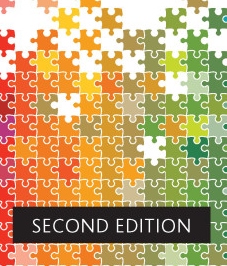
kara-2nd-edWell, whaddaya know? You wait ages for someone to show you a book proposal, then two come along together. Three, in fact, as there are two book proposals for you to download from this post.

A couple of weeks ago I wrote a post on this blog which included a link to download the book proposal for my second research methods book, Creative Research Methods in the Social Sciences: A Practical Guide. Since then, the second edition of my first research methods book has been published.

I’m fond of this book. It took me five years to come up with the idea of writing a research methods book for busy people who are trying to fit research in around their jobs, families, hobbies, and generally their whole lives. Then it took me another 18 months to write. The first edition had good reviews and one of the great satisfactions about producing the second edition, for me, is that I know it’s an even better book.

So here’s the proposal for the first edition of Research and Evaluation for Busy Students and Practitioners: A Time-Saving Guide which I wrote back in 2011. You may find it interesting to compare with the proposal for my second research methods book which I posted a couple of weeks ago. One difference is that in the first book proposal I had much more idea about the content of each chapter than I did in the second. Counter-intuitive, right? It’s because they are very different books, drawn from different information sources, for different audiences (though I know some people have used and valued both).

Every book is a slog to write, there is no way around that. Luckily for me, it’s a slog I mostly enjoy. Also, each book seems to be a different kind of slog (at least, so far). The first book involved writing down everything I knew, looking to see where the gaps were, and figuring out how to fill them. The second book involved investigating a load of stuff I wanted to know about, then working out how to make it into a book. The third book, on research ethics, which I’m writing now, is involving more hard thinking than both the other two put together.

Producing a second edition is a slog, too, but it’s a much shorter slog. More enjoyable for me, too, as the part of book writing I like best is the part after the first draft has been churned out, where I have my raw material to mould and shape it into the best book I can produce. I did have to write one new chapter from scratch for the second draft, plus a few new sections, but even so, most of the work was the moulding-and-shaping kind.

Even writing the proposal for the second edition was less work than writing the proposal for the first edition. That was mainly because I could copy-and-paste some of the information across from the first to the second – though not all. I had to come up with a credible rationale for publishing a second edition: why it was needed, what new value it would offer. Here’s the proposal for the second edition, so you can compare them for yourself.

If you have one or other edition of the book, you may like to compare the relevant proposal with the finished product. You’ll see that there are changes between one and the other, which demonstrates that the proposal is not inflexible.

When my research ethics book is published, which should be some time next year, I’ll post the proposal for that one too.

Second Edition: Official Publication Day

Cover of Research and evaluation for busy students and practitionersWhen a book is first published, it’s a strange and slightly confusing time. Exhilaration, panic, longing and impostor syndrome all collide in a big smash of emotions. There’s often a formal launch – sometimes more than one – and an anxious wait for feedback from readers and the first review.

Publication day of a second edition feels very different. I know it’s a good book, otherwise it wouldn’t have got to the second edition stage. Most of the reviews were good last time, and I’m confident that it’s a better book this time around, so with any luck they’ll mostly be good again. There is no formal launch, just a day of whooping online and then back to business.

While the impostor syndrome isn’t striking this time, I do feel a bit fraudulent, as I’ve actually had my copies for three weeks, and I know the pre-orders went out around the same time as I’ve been getting emails from readers since a week before Easter. But today is official publication day, so today is the day the blog post happens.

I say ‘the blog post’ but actually there are four, including this one. On Petra Boynton’s blog you’ll find the story of my career as an independent researcher and writer. Over on the Research Whisperer blog I talk about the process of writing the second edition. There wasn’t much information online when I started work on mine, so I hope that post will be helpful to others in the same position. And on my publisher Policy Press’s blog I add my two penn’orth to the debate about whether academia is (or should be) ‘fast’ or ‘slow’. I’ll keep this post short, in the hope that you’ll have time to read at least one of the others.

I’m also holding a Twitter competition for a signed copy of my second edition. Tweet your motivation or inspiration for doing research, using the hashtag #researchinspo, before 10 am GMT on 27 April. Then I’ll put all the names in the hat and pull out a winner, to whom I will send a signed copy, wherever they are in the world. Good luck!

There’s no formal launch this time round, but I’ve got the Prosecco chilling for a little celebration after work with a couple of good friends. Until then, I’ll be cracking on with the next book, because that’s what writers do.

Want to see my book proposal?

Creative research methods in the social sciences [FC]Writing academic books can seem like a mysterious ‘dark art’ to those who haven’t done it, but there is lots of help available. I’ve written before about how to succeed in writing academic books, but I didn’t say anything in that post about the book proposal. Yet it’s a key part of the process.

If you are a novelist, you have to write your whole book before you talk to an agent or a publisher. If you are an academic writer, you can forget about agents (there aren’t any, at least not in the UK, and only about two in the US) but the good news is that you don’t have to write the book before you can get a publishing contract. You do, though, have to write a proposal.

A publisher worth their salt should have a book proposal form, guidelines, or similar on their website for you to download. The guidelines from my publisher, Policy Press, are here. The publisher is also likely to want a sample chapter, particularly if you have no track record as a book author.

From time to time, aspiring academic writers ask whether they can see one of my book proposals. Of course, I say, give me your email address and I’ll send it over. This happened again last week and it occurred to me that I could write a post here, and include an embedded pdf, to make an actual book proposal available to anyone who would find it useful.

I need to say a few things about the proposal first. It is the version that made it through the Policy Press acquisitions process and led to a publishing contract. There was an earlier version which was sent out with a draft chapter for peer review. This is normal with academic book proposals, and also hugely helpful. I got four sets of comments on this proposal, and was able to make it significantly stronger as a result.

In this proposal, the outlines of what will go in each chapter are quite brief. That was OK for this book; headings gave the reviewers and the publisher enough information to go on. Other books would need more details. For example, the proposal for the research ethics book I’m currently writing has a full paragraph for each chapter. (I’m not ready to share that proposal yet, as it’s currently out for peer review; watch this space!)

Finally, the publisher’s acceptance of the book proposal doesn’t mean you have to write the book in exactly the way you said you would. Publishers understand that writing is a creative practice and books change and grow in their creation. Of course it has to be in line with what you’ve proposed. It would be unusual to make significant changes to the overall structure, for example – but what you put in a chapter might change as you read and think and write about your subject.

The proposal I would like to share with you is for my second research methods book, Creative Research Methods in the Social Sciences: A Practical Guide. If you have access to a copy, you can compare it with the proposal and see how the book developed from my original plans. And here is the proposal itself. I hope you find it useful.

Writing The First 10,000 Words

writing deskYesterday I hit 10,000 words of the first draft of my research ethics book. That’s a huge milestone which has taken me two years to reach (though most of that was preparation – I started the actual writing earlier this year). I still have around 65,000 words to write, but having the first 10k safely on my computer and backed up is an enormous relief.

The photo shows one side of my desk, this morning. The other side looks much the same, piled high with books, some of them open and face-down to keep a place. Although I have spent two years thinking about this book, talking about it, interviewing people around the world, and reading reading reading, I am still reading – and re-reading – more than I write. So far I’ve mostly been reading books, but yesterday I started delving into journal articles, and of course there are gazillions of those to explore.

As a result, it’s taking me a full day to write 1,000 words. It feels frustrating to be building my argument so slowly, but I know it’s inevitable at this stage. I read, and think, and read, and think, and sometimes the reading and the thoughts coalesce into a sentence, and I write it down. Then I read some more, and think some more, and so on.

When I teach writing to doctoral students, they often express frustration at the slow pace of their writing. I tell them it’s common, even for experienced writers, and they look at me with sceptical faces, as if they think I’m trying to soothe their feelings rather than telling them the truth. But it is true. I’ve written a masters’ dissertation, a PhD thesis, 2.5 books, and several journal articles, and this is how it is, especially at the start of a long and difficult piece of work. I’m sure the pace of my writing will speed up later, especially when I get to the easier chapters, but for now all I can do is plod on.

Another myth is that writers start writing at the beginning and carry on until they get to the end. Unusually for me, I did draft the first chapter first, and then drafted most of the second. But I have also written 491 words of chapter 3, 60 words of chapter 6, 18 words of chapter 10 and 36 words of chapter 14. This is because, as I have been reading, I’ve come across sections that have been relevant to those chapters, and at this stage it’s easier to create a new document and write a sentence or a paragraph in there than to add to my already copious notes.

I’m doing the early chapters first, this time, because they’re the hardest. The first part of the book has five chapters of context-setting: research ethics, political ethics, institutional ethics, professional ethics, societal ethics, individual ethics, the connections between them, and case studies. The second part has nine chapters about research ethics in practice at each stage of the research process and will, I think, be much easier to write. I often counsel students to start with an easy part, whatever they most feel like writing, and have usually done so myself. This time, though, the later chapters will need to draw on the earlier chapters, so I have to write the harder part first. (Though I do start with the easiest part within each chapter.)

Luckily for me, I’m home-based for the whole of April. I have some client work to do, but I should be able to spend quite a lot of time working on the book. My aim is to get the difficult chapters drafted by the end of the month. I’ll let you know how I get on.

New Directions in Qualitative Research Ethics

TSRMcover 1..2I have co-edited a special issue of the International Journal of Social Research Methodology with my friend and colleague Dr Lucy Pickering from the University of Glasgow. It is online today – International Women’s Day, how timely! – and it’s called New Directions in Qualitative Research Ethics.

I am the ethics lead for the UK and Ireland Social Research Association, and Lucy is the ethics lead for the Association of Social Anthropologists of the UK and Commonwealth. Lucy and I both help our respective associations’ members with real-life ethical dilemmas (and trilemmas, and quadrilemmas). We have both found that the emphasis of the ethical review process on data gathering and participant well-being leaves researchers ill-equipped to cope with ethical difficulties at other stages of the research process. Overall, the ethics literature is similarly skewed, with most articles and chapters focusing on data gathering and participant well-being. Our aim was to produce a special issue that would help to shift this balance. We wrote one of the articles, on the ethics of presentation and representation, and of course the editorial. Other articles cover the teaching of research ethics, the ethics of recruitment and sampling, working ethically with participants who have profound intellectual disabilities, what to do when ethics committees’ stipulations prove irrelevant in the field, and some of the ethical issues raised by cross-cultural research. There is also a useful review essay of three recent books on research and social justice.

We are proud that our authors are truly international, hailing from New Zealand, Australia, Finland, America and Thailand as well as the UK. The journal is paywalled, but there are 50 free downloads of every article, so get in quick if you don’t have access.


Open Access Research Methods Journals

oaThis post was inspired by a recent post on the Global Social Change Research Project site, which lists a lot of free resources for social research and evaluation. Having taken the Open Access Pledge, and given my specialism, I was particularly interested in OA journals on research and evaluation methods. So I have compiled all those I could find, through gsocialchange and elsewhere, that focus primarily on methods, are peer reviewed, and publish in English. (Some also publish in other languages, but I only speak and read English – a limitation – so, sadly, I am unable to include non-English journals.) Almost all are exclusively digital.

I was interested to find that many of these journals have quick publication timescales, sometimes only a few weeks from submission to publication. I was also very relieved to find that few ask for financial contributions from authors. When OA came in, I was broadly in favour – I do believe that research funded by public money should be publicly available – but I was worried that article processing charges (APCs) levied on authors would exclude many scholarly writers from publishing their work. I’m delighted to discover that this is not the case (at least, not in my field) and I’m grateful to all the universities and others that sponsor these journals. Also, where APCs are levied by these journals, they are only charged on acceptance for publication, not on submission, and waivers are sometimes available in exceptional circumstances.

As far as I can tell, only one of these journals, the African Evaluation Journal, is a member of the Committee on Publication Ethics. Some other journals have their own ethical statements, or follow a specified code of ethics from an institution or association. But most make no mention of ethics, which in the current climate seems a little lax at best.

So here they are, in alphabetical order, with brief details.

African Evaluation Journal

Funded and published by the African Evaluation Association (AfrEA); no APCs.

Publishes high quality peer-reviewed articles of merit on any subject related to evaluation, and provides targeted information of professional interest to members of AfrEA and its national associations and evaluators across the globe. Aims:

  • To build a high quality, useful body of evaluation knowledge for development.
  • To develop a culture of peer-reviewed publication in African evaluation.
  • To stimulate Africa-oriented knowledge networks and collaborative efforts.
  • To strengthen the African voice in evaluation.

Art/Research International

Sponsored by the University of Alberta. No APCs.

A transdisciplinary journal dedicated to exploring and advancing art as research, and/or within the research process, across disciplines and internationally. It offers a space for art/research practitioners: to draw on working examples to discuss challenges, best practices, ethical quandaries, and new directions  for the practice of bringing art and research together; to explore the methodological ambitions and theoretical or philosophical underpinnings and issues of art/research practices; and to provide insights and critiques of art/research projects of other art/research practitioners.

Critical Approaches to Discourse Analysis across Disciplines

Published by CADAAD, which seems to be run voluntarily by academics from various universities. No APCs.

Publishes articles which investigate, from a ‘critical’ perspective, contemporary discourse and genres in social, political, public and professional communication.  Especially interested in articles which highlight, develop and apply new theoretical and methodological frameworks for critical discourse research or which assess established methods and assumptions.

Electronic Journal of Business Research Methods

Published by Academic Publishing Limited. APC of £250 (inc. VAT) on acceptance for publication – no submission fee.

Publishes articles and provides perspectives on topics relevant to research in the field of business and management. Aims to contribute to the development of theory and practice.

Forum: Qualitative Social Research

Supported by the Institute for Qualitative Research and the Center for Digital Systems, Freie Universität Berlin. No APCs.

Interested in empirical studies conducted using qualitative methods, and in contributions that deal with the theory, methodology and application of qualitative research. Innovative ways of thinking, writing, researching and presenting are especially welcome. They favour contributions with an inter-disciplinary and/or multinational perspective which was already manifest at the conceptualization stage, for example through co-authorship.

International Journal of Qualitative Methods

Published by Sage on behalf of the International Institute of Qualitative Methodology

APCs of $1,000-$1,750 on acceptance for publication – this funds the journal. Part payment and waivers possible in exceptional circumstances.

Publishes articles that report methodological advances, innovations, and insights in qualitative or mixed-methods studies. Also publishes funded full studies using qualitative or mixed-methods.

Journal of Methods and Measurement in the Social Sciences

Funded by the University of Arizona Library – no APCs.

An online scholarly publication focusing on methodology and research design, measurement, and data analysis – providing a new venue for unique and interesting contributions in these study areas which frequently overlap.

Journal of Modern Applied Statistical Methods

Published in partnership by JMASM Inc and Wayne State University Library System. No APCs.

Designed to provide an outlet for the scholarly works of applied nonparametric or parametric statisticians, data analysts, researchers, classical or modern psychometricians, and quantitative or qualitative methodologists/evaluators.

Journal of MultiDisciplinary Evaluation

Published by Western Michigan University. No APCs.

Publishes work that contributes to the development of evaluation theory, methods, and practice.

Journal of Research Practice

Published by AU Press, Athabasca University. Funded by sponsorship. No APCs.

Aims to develop understanding of research as a type of practice, and to assist both research practitioners and research theorists to share their experiences with and ideas about research, so as to extend and enhance that practice in multiple domains.

methods, data, analyses

Published by Leibniz Institute for the Social Sciences. No APCs.

Publishes research on all questions important to quantitative methods, with a special emphasis on survey methodology. In spite of this focus they welcome contributions on other methodological aspects.

Practical Assessment, Research and Evaluation

Funded by sponsorship. No APCs. Despite being a professional researcher and skilled internet sleuth, I was unable to find out who publishes this journal.

Publishes scholarly syntheses of research and ideas about methodological issues and practices, designed to help members of the community keep up-to-date with effective methods, trends, and research developments from a variety of settings.

Qualitative Sociology Review

Published by Lodz University, Poland. No APCs.

Qualitative Sociology Review publishes empirical, theoretical and methodological articles applicable to all fields and specializations within sociology.

Social Research Practice

Funded and published by the UK and Ireland Social Research Association; no APCs.

They welcome articles from anyone working in social research or social policy, whether as a producer or a user of research. Aims: to encourage and promote high standards of social research for public benefit, and to encourage methodological development.

Survey Methods: Insights from the Field

Published jointly by the Swiss Centre of Expertise in the Social Sciences and Leibniz Institute for the Social Sciences. No APCs.

Aim: to promote professional exchange on practical survey research issues and discussion on new and promising paths in survey research. Focus is on practical aspects of the daily work of surveying, including questionnaire design, sampling, interviewer training, fieldwork administration, data preparation, documentation and dissemination.

Survey Practice

Published by the American Association for Public Opinion Research. No APCs.

 Aim: to emphasize useful and practical information designed to enhance survey quality by providing a forum to share advances in practical survey methods, current information on conditions affecting survey research, and interesting features about surveys and people who work in survey research.

Survey Research Methods

Published by the European Survey Research Association with the Communication, Information, Media Centre of the University of Konstanz.No APCs.

Topics of particular interest include survey design, sample design, question and questionnaire design, data collection, nonresponse, data capture, data processing, coding and editing, measurement errors, imputation, weighting and survey data analysis methods.

Turkish Online Journal of Qualitative Inquiry

Published by DergiPark. No APCs.

Publishes high quality and original research conducted with qualitative, mixed or action research methodology in educational sciences. Manuscripts required in both English and Turkish.

The Qualitative Report

Published by Nova Southeastern University. No APCs.

Methods may be qualitative, comparative, mixed, collaborative, action-oriented, appreciative, and/or critical in nature. Articles may be qualitative research studies, commentaries about the conduct of qualitative research, prescriptive pieces on carrying out qualitative research, “back stage” essays in which authors give a perspective on how they created and crafted a particular project, presentations on technological innovations relevant to qualitative researchers and their inquiries, and any other issues which would be important for practitioners, teachers, and learners of qualitative research. Scientific, artistic, critical and clinical approaches are all welcome.

And that’s the lot! If anyone knows of another OA methods journal I’ve missed, please leave a comment, with a link to the journal, and I’ll update the post.


How ethical is it to write a book?

indigenous-research-meth-cover_Three bloggers and tweeters had an online conversation in December and this post is a response to that discussion, which  began when Naomi Barnes, aka @DrNomyn, posted her thoughts on qualitative research. She wrote of the politics and power of research and knowledge, and her realisation that there are ethical implications to every decision she makes as a researcher. Naomi describes that as ‘a huge and sobering responsibility’.

Naomi tweeted the link to her blog post, which was picked up by Ian Guest, aka @IanInSheffield. He responded, first on Twitter and then on his blog. Ian’s concern is with southern-theory-cover_the ethics of representation, and in particular what and who is missing from accounts of research and communication. This leads to his interest in where knowledge shared online may go, and what impact it may have, beyond that which is visible in tweets and blog posts.

Then Deborah Netolicky, aka @debsnet, joined in. She problematises the ethics of writing: how to represent the messiness of research (and life) within the inevitable neatness of writing, and how much – or how little – of the author’s self is, and/or should explicitly be, expressed in their academic writing.

research-as-ceremony-cover_Each of these points links to my current writing project: the book on research ethics which I have spent the last two years talking about and researching, and which, this year, I will actually write. Like Naomi, I’m aware that there are ethical implications to every decision I make as I work on this book. What I choose to read; what I choose to take from that reading; who I speak to; what I decide is significant from those conversations; how I select and place each word in the text; how I acknowledge my reading and conversations within that process; what I leave out, and why – Naomi is right, it is a ‘huge and sobering responsibility’.

decolonising-meth-cover_One of my proposal reviewers said, ” There is a considerable international literature on research ethics with which the author may not (yet) be familiar: Mertens and Ginsberg; Hammersley and Trianou; Tolich and Sieber; Posel and Ross; Iphofen; Israel; vd Hoonaard; Denzin, Lincoln and Smith; and even Stark; Schrag…” This was not a lack of familiarity – most of these are on my bookshelves or in my electronic folders – simply a lack of reference. But I am interested in the reviewer’s view of ‘international’ and – like Ian – in what, and who, is missing from that view.

Most of the work cited by this reviewer is written from Euro-Western locations. The chilisa-mertens-cram-cover_exceptions are Posel and Ross (South Africa) and Sieber and Tolich (New Zealand). Yet I would argue that these authors, too, turn a predominantly Euro-Western gaze on the topic of research ethics. For example, neither text addresses the impact of colonization on research worldwide, nor mentions the work to decolonize research methods or the Indigenous research being done in their country of origin. I am currently reading a different body of work which highlights this as a huge lacuna at best, and imperial epistemological violence at worst. Books on Indigenous research and decolonizing methods are opening my eyes to the value, power, and ethics of non-Euro-Western research practices.

decolonising-solidarity-coverSo of course I will include this body of work in my forthcoming book. To do that was an easy ethical decision: as soon as I knew the work existed, it was obvious that I should read and incorporate it into my own work. The hard part is how to do that. I guess I’ll figure it out as I write, but one thing’s for sure: it won’t be a tokenistic chapter or mentions in passing with a few footnotes.

Like Deb, I also need to figure out where and how to put myself into this writing. I am white, British, a descendant of some of the most predatory imperialists the world has yet seen. I benefit daily, hugely, from the legacy of colonization. I live in a country made rich on the profits of oppression, invasion, exploitation and slavery. I only speak English, because I only need to speak English, because my ancestors invaded so much of the land on this planet that now English is the most commonly spoken language worldwide. One thing I’m learning, in reading about Indigenous research, is that in many cultures worldwide, people value their ancestors as highly as their living relatives. For me, the dead are dead; if I was ever to have a relationship with my own ancestors, I would probably need to start by shouting at them for several years.

Sometimes I wonder whether I have any right to even write about this body of work. But then I think that the risk of perpetrating epistemic imperialism by leaving it out is worse than the risk of perpetrating epistemic violence through inept inclusion. Sometimes I wonder whether it’s even ethical to write books at all. I have discovered, since I began to write professionally, that being an author is a way of claiming authority. Is that ethical? I guess it depends on how you do it. My aim is not only to write about ethics but also to do so ethically. As Deb says, there will be ‘moments of awkwardness, uncertainty, openness, weakness, resistance, emotion’, and I want to reveal as many of these as I can. That, too, seems like an ethical approach. Yet I wonder how ethically I can write, given that I write with enormous privilege: access to structures such as universities and publishers, and social capital that is denied to most Indigenous researchers. I’m not arrogant enough to think I can write a book which will change that situation. But at least, perhaps, I can move the goalposts by acknowledging and including work on Indigenous research and decolonizing methods alongside Euro-Western methods and ethics. Also, I want to acknowledge the Euro-Western location of Euro-Western research methods and ethics, rather than maintaining the common assumption that these are the only methods and ethics on the planet.

fork-in-the-roadIt’s a tough and daunting task. I’m not even sure whether I’m going in the right direction – or whether there is a “right direction” at all. But I aim to consider all the ethical implications of each decision I have to make and, at each fork in the road, to choose the most ethical path. I think that’s the best I can do.

New Year’s Resolution: Open Access Only

open-doorHappy New Year, all my lovely readers! I hope you’ve had a wonderful break and that any resolutions you may have made are the life-enhancing rather than the punitive kind.

My resolution for 2017 is that from now on, I will only write academic articles in my own time for open-access journals. If someone wants to pay me to write an academic article, then I’ll be open to submitting that article to a journal of their choice. (It has happened once in my life, so far.) But otherwise I’m going OA.

I can’t afford to do that with books, as I’m finding that academic self-publishing doesn’t pay, while academic traditional publishing does, a bit. (My trad pub royalties for the year 2015-16 finally broke four figures, which felt GREAT.  The actual figure was £1,627.20 which is a month’s money for me. Though it did take five-and-a-half years of dedicated writing and promo to reach this point… at that rate I should be able to give up the day job in 2071. When I’ll be 106 years old. Oh well!)

Articles for academic journals are much easier and quicker to write than books. They’re also good for testing and refining small ideas. I enjoy writing them, so I’m not going to stop. But I am planning to reduce the number I write to two a year, and publish those in OA journals or not at all.

This is primarily an ethical decision. Early in the days of OA publishing, although I liked the prospect from a reader’s viewpoint, I worried that many writers would be excluded because of the costs. I think that is still the case in some quarters, but I have found that reputable OA journals are often willing to waive their fees for independent researchers, and some don’t charge fees at all. Also, I would like my work to be more widely accessible, including to people who are temporarily or permanently outside the academy, or in parts of the world where it’s particularly difficult for people to access paywalled academic journals.

There are many more open access journals around now than there were five years ago. When I was working on the first edition of Research and Evaluation for Busy Practitioners, in 2012, the Directory of Open Access Journals (DOAJ) listed 22 journals covering social work. Now it lists 125. There are similar levels of increase in other subject areas, and there are now 9,000 journals on the site as a whole. Yet the DOAJ only lists journals that are peer-reviewed or otherwise editorially controlled; they don’t list predatory journals. They promote best practice in OA publishing and have high ethical standards.

I feel ashamed to say that I have never published an article in an OA journal. To begin with I was advised on where to publish by academic mentors, then I wanted to publish in the journals I liked to read. Now I want to read more OA journals as well as publishing in them. I’m not going to rule out citing work from paywalled journals – yet – but I want to focus on finding and using more OA journals, rather than going straight to the usual suspects all the time.

I do have a couple of articles in the pipeline with paywalled journals, so it’ll be a while before I get to assess the impact of my New Year’s resolution for 2017. Nevertheless, I’m sure it’ll be an interesting adventure!