Back On The Indie Researcher Rollercoaster

rollercoasterI’ve written before about the indie researcher rollercoaster. I’ve been riding it again recently. The last few months have been quite tough. I’ve had one contract rolling along, and some bits and bobs of teaching work. I’ve also had:

  • The promise of ten days’ sub-contracted work in the second half of 2015, which turned into two days’ work at the very end of December, for which I still haven’t been paid.
  • An associate role with a national organisation, since last summer, that seemed likely to yield a fair bit of work but hasn’t yielded any yet (though I do have one whole day booked in for them in May).
  • The promise of almost full-time contract work from January to March of this year, which didn’t materialise at all due to staff sickness.

So overall I’ve been keeping my head above water, but only just. I have consistently been able to pay myself £1,000 per month, and had calculated that I would be able to carry on doing so while continuing to break even up to and including June. However, the rolling-along contract is about to end. I have some more bits and bobs of teaching work booked in over the next three months, but after the end of June I was going to fall off the edge of the work cliff into the cold deep workless sea.

On top of this, there were a number of unavoidable expenses looming: from essential repairs to my elderly and infirm car, to all my underwear developing holes at once. I was resigning myself to digging into my savings for the first time in many years, reasoning that if I’d saved for a rainy day, it was now, metaphorically speaking at least, about to throw it down.

Then last week there was one of those reversals for which the indie lifestyle is famous. A colleague and I went for an interview at a Russell Group university that wanted to commission some research – and we got the gig! Sensible budget (not so sensible timescale, but you can’t have everything) and the people were lovely.

So now I don’t need to dig into my savings, instead I can pay myself a little extra to cover the unavoidable expenses. Plus I don’t have to start worrying about work again until the summer. This is a huge relief – I have, quite literally, been sleeping easier.

Plus I landed another teaching client, and the more of those I can reel in the better. I’m working to build up my teaching because, although the work lasts for days rather than months, it’s more regular than research. If I can reach the point where I have a few days of teaching work in each month of the academic year, I’ll be able to stop chasing commissioned research altogether. Though the Teaching Excellence Framework is looming here in the UK, and I don’t know whether my input will help universities to manipulate the metrics successfully enough to make it worthwhile for them to use me. So while I can take a break from the rollercoaster for the next little while, I’m sure I’ll be riding again soon.


Society For Indie Researchers?

SRA logo 300dpi.jpgI was invited into an interesting conversation on Twitter the other day, between @DrNomyn, @deborahbrian, @lianamsilva, @readywriting, @darthur62 and @donnarosemary. At one point @deborahbrian said, ‘What we need, too, are professional organisations for independent scholars – do these exist?’ That was when @DrNomyn invited me in, asking, ‘How hard would it be to start one?’

I replied on Twitter but, as this is something to which I have given some thought, I had rather more to say than would fit into 140 characters (or 80, more like, what with all those names already in the tweet). I have long wanted a society for independent researchers. (Despite my scholarly credentials, I identify as an indie researcher rather than an indie scholar. I think this is because I’ve never been, or aspired to be, a salaried academic. Nevertheless, there is clearly significant overlap, and I think such a society might well have room for both.) And I have considered starting one, because, as @DrNomyn implied, it wouldn’t be that difficult.

The hard part would be keeping it going.

I think there are two main reasons that would be hard. First, there aren’t actually that many indie researchers/scholars who would be interested in such a society, and most of us are insanely busy, so getting people involved in anything beyond initial sign-up would be difficult. (I know this because I’m on the Board of the UK and Ireland Social Research Association (SRA), which makes considerable efforts to involve and support indie researchers, most of which are poorly attended/used despite what people say they want in the biennial members’ survey). Second, and partly as a result, such a society wouldn’t generate enough income to pay people to run it, so it would all be done by volunteers, and as I believe I may have mentioned on this blog once or twice, the last thing indie researchers need is more unpaid work.

A third, subsidiary problem, is that there is a high turnover of indie researchers and scholars. People like me, who are resolutely indie and have been for, in my case, 17 years now, are rare. Quite a high proportion of indie researchers or scholars are people who have been made redundant, or whose contract has finished, and who haven’t yet secured other work, so they set up as indie while also looking for jobs in the hope of earning some money to tide them over. Some of them may stick with indie work, either through choice or necessity, but many will go back into employment sooner or later. Others like the look of the indie lifestyle, so set up as indie with every intention of making a go of it, then find they can’t make enough money, or they don’t like working for themselves, or they hit some other problem. (I felt for @darthur62 who said he couldn’t maintain indie work because his networks fell apart; that’s what happened to me after the change of government here in 2010, and I’ve been very lucky to be able to rebuild my business). And some are successful indies who are seduced away from their indie work by an organisation with an offer that is (or appears) too good to refuse.

I make no criticism of anyone in these positions. Any of them could be, or could have been, me. Frankly, if any organisation offered to pay me a decent salary just to write stuff, I’d be there like a shot. But the churn in the indie population is another factor that I think would make it hard to maintain a society for independent researchers and/or scholars.

So my advice, as given on Twitter, is: find a society near you that caters for indie scholars or researchers, join it, and get involved. I’d recommend the SRA for anyone in or near the UK/Ireland. They offer events, training, support with research ethics, good deals on insurance, a magazine and newsletter, a directory of members’ services, and we’re currently trialling access to academic literature for members, with other benefits in the pipeline. There is an equivalent-ish organisation in Australia called the Market and Social Research Society, though some tweeps expressed disquiet at the thought of being lumped in with the market researchers. There will also be discipline-specific societies, as @deborahbrian pointed out, for e.g. educational researchers, sociologists, anthropologists, etc. Each society should be able to give you information about how many indies they have in their membership, and what they do to support independent scholars or researchers, before you join.

I was looking forward to meeting other independent Fellows of the Academy of Social Sciences. Turns out I’m the first. There are one or two who are indie now, after decades as professors, but that’s not the same. I would love it if there was a society for indie researchers and scholars, and am rather hoping someone will disagree with me enough to start one. I’d certainly join.

Bitty Writing Hell

book finished photo.jpgUs writers do the whole ‘grass is greener’ thing just like everybody else. When I was writing my last book, I was longing to get to the journal articles and other projects that were piling up on my to-do list. Now I’m drowning in shorter projects and it’s driving me crazy. Look! Pictorial evidence! I can’t wait to be working on one big long book again, when I will undoubtedly become sane and well organised (cough).
Here’s my current shorter project to-do list:

  1. Research Ethics for your PhD – 1,000 words written, approx 9,000 to go
  2. Finishing Your PhD – not started
  3. Another short e-book, a co-authored Top Secret Project – out with beta readers
  4. Co-authored journal article #1, my co-author is currently responding to reviewers’ comments so with luck we’re nearly there
  5. Co-authored journal article #2, first draft done, at the bat-it-back-and-forth stage
  6. Journal article on third sector infrastructure and liminality – second draft done, with my former mentor from TSRC for feedback
  7. Book chapter on transformative research frameworks in practice for an edited collection for Sage – planned but not started
  8. Journal article on transformative research frameworks for a special issue of Qualitative Research – planned but not started

And I’m co-editing a special issue of the International Journal of Social Research Methodology, on research ethics, which is also involving quite a lot of bitty work.

I have quite a bit of writing to do in my day job right now, too, from proposals for new projects to reports for projects that are almost complete. And I’m making preparatory notes for my next full-length book. Plus, of course, there’s blogging. Hence the slight hiatus. I can’t even bring myself to tweet much at the moment, and I love Twitter.

In Belbin’s typology I am a strong ‘completer-finisher’ so this kind of workload drives me crazy. It’s one reason I can’t stand gardening: nothing is ever done. (I love gardens, though; I just prefer to believe they happen by natural magic.) My workload right now is very much like gardening. Plant a seed here, prune a branch there, trim a hedge, dig a hole… aarrgghh!!! My idea of a nightmare!

I know from experience that the only way out is through, and I just have to keep nibbling away at all the different jobs a bit at a time and they’ll eventually get done. But I have learned from experience that I am never, ever, again, going to take on so many short pieces of work at one time. I take comfort in the fact that the deadlines are all in the next five months, so by the autumn I will be free(er).

And the good news is, by then I should be ready to start writing the next full-length book. Though there is also talk of a second edition of my first research methods book, so I may still have more than one writing project on the go. In fact that’s almost inevitable. But if I just had two or three, rather than ten or a dozen, I think my life would feel a whole lot easier. In fact, I can’t wait.

New Book Launch: Writing Your PhD

WYPhD_blue_keyboard_LC_RGB.jpgToday I’m launching the fourth in the PhD Knowledge series. For new readers, this is a series of short e-books designed to help doctoral students with different aspects of the process. Although they’re called ‘PhD Knowledge’, they’re written with all doctoral students in mind, whether they’re studying for a scholarly PhD or a professional doctorate. And they’re also very affordable at £2.49/US$3.99/equivalents in other currencies.

The fourth book is called Writing Your PhD: An Introduction. It is full of tips and advice to help doctoral students get going, and keep going, with their writing. Writing is such an integral part of the doctoral process that it is impossible to ignore or avoid – and trying to do either of those things can lead to stress at best, failure at worst. But the good news is thSYPhD_green_SQmarks_noblend_LC2_RGBat academic writing can be taught and can be learned. In fact, I’m asked to teach writing skills in universities far more than I’m asked to teach anything else. And I know my courses help students because they tell me so on their feedback forms and, later, on Twitter.
I hope you, or someone you know, will find this book useful. Though if you (or they) haven’t started on a PhD yet, you might be interested to know that the first book in the PhD Knowledge series, Starting Your PhD: What You Need To Know, is now FREE to download from all platforms. So what are you waiting for?

Ten Top Tips for Successful Book Authoring

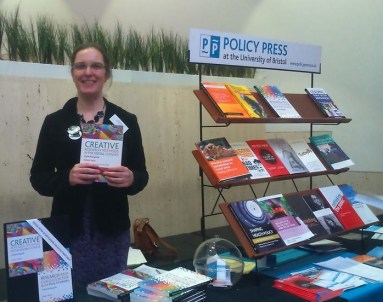
me at book launch croppedI feel qualified to write this post for a number of reasons. First, I am a successful author. Second, I have worked in publishing, as have several close relatives and friends. I’m assuming that you’re interested in writing for traditional publication; I intend to cover self-publishing in a different post. So here are my ten top tips for successful book authoring.
  1. Remember that publishers need you more than you need them. You can write and publish, online and in hard copy, without ever going anywhere near a publishing company. Conversely, publishers can’t function without authors.
  1. Find a book that needs to be written: ideally one you’ve looked for because you want to read or recommend it, and definitely one that doesn’t exist yet.
  1. Learn how the publishing business works. The more you understand about the process, the better you’ll be able to work with your publisher. This will also help to reduce the likelihood of potentially stressful surprises.
  1. Research different publishing companies and choose one that you think will suit you and your book. Don’t hesitate to ring one or more commissioning editors for your subject area to discuss your idea; their phone numbers should be on the publishers’ websites. It’s worth asking whether they already have something similar in the pipeline. If they do, finding out at an early stage will save you work; if they don’t, you can have more confidence in your idea. Also, a phone chat gives you a chance to suss them out and get a feel for whether you will be able to work together well.
  1. Negotiate a contract with deadlines you will be able to meet. You can ask for changes before you sign the contract; once it’s signed, there is no going back.
  1. If you’re in the UK, as soon as you have a draft contract, join the Society of Authors and ask them to vet the contract for you before you sign. (You can’t join the Society before you have a draft contract, unless you have already published a book or equivalent.) If you’re not in the UK, find out whether there’s a comparable organisation in your country – or, if you can afford it, get your draft contract checked by a suitably qualified and experienced lawyer.
  1. Calculate the number of words you need to write each week to meet your deadlines while leaving some time in hand for contingencies. Write that number of words each week.
  1. Be kind and courteous to the publisher’s staff, even at times when you may not feel particularly well-disposed towards them. Respond to their emails and phone messages in a timely fashion, and deal gracefully with feedback. Remember, they’re busy professionals too; just because publishers need authors doesn’t give you license to behave like a prima donna.
  1. Meet those deadlines.
  1. Be prepared to help publicise your book. The publisher’s marketing department should help, particularly around the time of publication, but they have new books to work on every month so they won’t be able to keep the focus on your book. But you can. Promotion doesn’t need to take up a huge amount of your time and effort, but it’s crazy not to do some basic tasks. Such as: add a link to the book to your email signature; get flyers from the publisher that you can hand out at conferences and other events; put the cover image on any slides or handouts you create. If you can use social media, so much the better, but anything you can do will help.

Of course there’s a lot more to becoming an author than that – but if you follow these top tips, the rest should fall into place. Good luck!

I Don’t Know What I’m Doing

head scratchingSome people call me an expert. I even call myself one on occasion, usually when I’m trying to win work or funding. But I don’t feel like an expert – or perhaps I don’t feel like I expected an expert to feel.

When I was younger, I thought of an expert as someone who knew pretty much everything about their subject. It’s true that I know a lot about research methods, probably more than most people on the planet, but I don’t know anywhere near everything. Research methods is such a huge and fast-moving field that nobody could know everything, but I don’t think I even know as close to everything as possible. In fact I think I’m a long way from there. Lots of people know things about research methods that I don’t know and, however much more I learn, that will always be the case.

But I do know how to be confident, even when I don’t feel confident. I don’t mean I’m falsely confident: if I don’t know the answer to a question, I’ll say so; if I don’t understand what someone is saying, I’ll ask for clarification. When I was younger, I thought doing that would make me look stupid. Now, quite literally, I know better.

I can even be confident about working on a project when I don’t know what I’m doing. That is a stretch for my confidence – sometimes it wobbles a bit – but I can do it. For example, I’m writing a book on research and ethics. The working title is Research Ethics in the Real World. I’ve been working on it since last summer. So far I have read half a dozen books and made notes from most of them, bought another 25 or so, interviewed eight people, and written 676 words. I’m at the exploratory stage and I really don’t know what I’m doing. I don’t have a structure for the book, or its voice, or a writing style. I don’t really know what I want to say, beyond something about how research ethics is linked with institutional, political, and global ethics; that it doesn’t exist in a bubble of its own.

But I have faith in the process. It’s what I tell doctoral students: keep on reading, thinking, and writing, and you’ll get there in the end. I’ve done this a few times now, though each time is different. And I do have a glimmer of a plan: when I finish making the notes from the books I’ve read, I’m going to plug those and my interview transcripts into NVivo, do some emergent coding, and see what falls out. I hope that will help, though of course it may confuse me further. But if I’m lucky, I’ll start to spot some connections, relationships, and patterns, which will help me find the way.

This is how creativity often works in practice. Bumbling around, doing what you enjoy, whether that’s picking out tunes on an instrument, messing around with paints, or stringing words together to make sentences. Lots of fiddling and noodling, also known as practice, while you work out the song you want to sing, the picture you want to paint, or the book you want to write. Not really knowing what you’re doing. Even when you’re an expert.

Collaborative Writing

collaborative writingYesterday I came to the end of my first ever writing partnership with a proper academic. We began collaborating in May 2012, and decided we would work together for a year with the aim of producing two journal articles in that time. We ended up writing together for almost four years and produced one working paper, one journal article, and a book chapter (finally finished yesterday, and due to be published by Policy Press in an edited collection later this year).

I learned a lot from this collaboration, not least that co-writing can take longer than you think, especially when you’re working on conceptually difficult topics. My co-writer and I worked really well together, and the publications we produced were definitely richer and meatier than either of us could have produced alone. I also received some very useful mentoring in the process, with invaluable tips on how to optimise journal articles for acceptance, and useful insights into the workings of academia. My collaborator was even generous enough to start by presenting me with several areas she was interested in exploring, and letting me choose the one I preferred for us to work on.

For the first year of our collaboration, we were both based in the UK; after that, my collaborator moved to Sweden. But that didn’t matter; we’d had a few face-to-face meetings and got to know each other in that first year, and email and Skype supported our collaboration thereafter.

We were fairly compatible as co-writers, with one major exception: we had very different attitudes to deadlines. I don’t work at all well under deadline pressure, so I tend to meet my commitments ahead of time. My collaborator worked best under deadline pressure – and, at times, did particularly good work some time after the deadline had gone whooshing past. I found this quite nerve-racking and frustrating, and I suspect she found my timeliness annoying. But we navigated through this difficulty quite effectively, as our outputs show.

I also learned, from this experience, that I really like writing collaboratively. So now I’m working on one journal article with one co-writer, another with another; co-editing a special issue of one journal, and writing an article for another special issue in which the article is sole-authored but there is also a collaborative, dialogic component. And I’m doing another book chapter for an edited collection, despite having sworn I never would.

This is too much! I can do it, and I will, but after these are done I’ll be scaling down the academic journal articles and book chapters. I’m going to aim for two a year from 2017 onwards. No more. I do love writing journal articles and book chapters, and I love collaborating. But I do all this in my own time, and I need to focus more on work that pays.

Costing A Research Project


currency-signs-33431_960_720Following on from my last post about funding, I thought it might be useful to explain a few things about how I cost a research project. There are two parts to this process: setting a day rate, and working out how long the project will take.

My day rate is flexible, depending on the nature of the commissioning or funding body and the size and nature of the project. For example, I will charge less for a small project for a local charity than for a large project for a Government department. I will charge less per day for a long project that offers months of financial security, or for a project where the application is not onerous. And I will always negotiate on rates – at least, up to a point.

When it comes to working out how long the project will take, I break it down into individual elements. Let’s say a national client tells me they want a three-month project to include a focused literature review, 20 interviews with key people, presentation of draft findings at a meeting in London, and a written report with an executive summary (and let’s say I agree this is a suitable approach to the work – which is not always the case). We will also need a project initiation meeting, and I’d need to build in time for correspondence and administration: my rule of thumb here is half a day per month.

The first thing I need to do is a quick check of the literature, as a ‘focused literature review’ takes different lengths of time depending on whether the key search terms yield three items or 300,000. If it’s the former, I start thinking more laterally about potential search terms. If there are lots of hits, I start thinking about how to narrow down the search: I usually start by restricting the date range on Google Scholar and then take it from there. I am always mindful that a client’s budget is limited, and that they are unlikely to want to fund six months of my time to review the literature in detail. In fact, I’m lucky if I get six days. So I need to come up with a search strategy that will work for quite a limited review – and it does no harm to point out to the client that I can only read, on average, 10 documents a day. (Of course the exact number depends on the length of each document, but I work on the basis of a 15-page average, i.e. 150 pages/day or 20 pages per hour (7.5 hours per working day) or one page every three minutes.)

Then I need to think about the interviews. If they’re with professionals, I can probably do them by phone or Skype; if with service users, they would need to be face-to-face. And if those service users are scattered around the country, there are huge implications for travel time and cost. Plus I need to factor in time for setting up the interviews, and rearranging the inevitable ones where I call or turn up and the person I’m due to interview isn’t there. I also need to have a first go at drafting the interview questions, to get a sense of how long the interviews themselves might be. That is impossible to predict entirely, as some people are much more talkative than others, but I have another rule of thumb: for a shorter set of questions (say, nine or fewer) I’ll schedule an interview every 45 minutes, for a longer set I’ll allow an hour per interview. (Unless I’m interviewing school teachers, who are ninja level question answerers, in which case I’ll allow 30 minutes however many questions I have.) Occasionally people are willing to talk for longer than 45-60 minutes but if I’ve got someone really chatty, I’ll start drawing their attention to that within the first 15-20 minutes of the interview to help us both to manage the time.

It’s also important to think about recording and, if necessary, transcription time – which is usually calculated at four hours for each hour of talk. Indie researchers often outsource transcription, to make it cheaper for clients, though you need to be sure the service you use will yield good quality transcripts.

Then I have to work out how long it will take me to code and analyse data (I reckon to code 10 interview transcripts per day, but then I’ve been doing it for a long time), draft reports, and prepare for meetings. So, assuming the interviews can be done by telephone, and the project will take three months, my time allocation for this fictional project might look something like:

  • Project initiation meeting in London (including preparation and travel) – one day
  • Focused literature review – six days
  • 20 telephone interviews (including set-up time etc) – four days
  • Data coding – two days
  • Data analysis – one day
  • Drafting report – two days
  • Preparing for presentation meeting – 0.5 day
  • Presentation meeting in London – one day
  • Finishing report and executive summary – one day
  • Correspondence and administration (0.5 day/month) – 1.5 days

That gives a total of 20 days. I multiply that by the day rate I’ve decided to offer this client, which produces a rate I can quote for the job.

Funding for Indie Researchers

coins on handOne of the great frustrations of being an indie researcher is inability to access funding. Maybe this is easier in other parts of the world but there are few options here in the UK. The UK’s Research Councils, which hold most of the country’s research funding, do not regard indie researchers as eligible to apply for that funding. For example, as a social science researcher, I would look to the Economic and Social Research Council (ESRC). They have a budget of almost £200m to fund research, but indie researchers are not even eligible to apply for any of this public money. (ESRC also says it ‘has no budget’ with which to pay indie researchers for work they ask us to do directly, e.g. independent assessment of its end-of-project reports – but that’s another story.) Indie researchers can form part of a team to apply for research funding from ESRC, but that team must be led by someone employed in a university or research institute.

I would like to see this change. I believe independent social scientists have a lot to offer to research, because we have perspectives that are not directly affected by institutional pressures, constraints, and power games. Therefore, I think excluding us from national funding is a waste of a valuable national resource. I’m not asking for funding to be ring-fenced for indie researchers, or for any special treatment. I’d just like to be allowed to apply for funding, as I could if I was a researcher from a university or a research institute.

If the ESRC isn’t sure about how to distribute funding effectively to single operatives, they could always ask the Arts Council who have a great deal of experience in doing just that. However, much though I’d like to change ESRC policy, I realise I’m unlikely to be able to achieve that with this blog post – or with anything else, for that matter. So I’m glad to say there are a few other funders who are offering small pots of money which are accessible to indie researchers. Here are the ones I’ve found out about.

The British Academy offers Small Research Grants of between £500 and £10,000, which may be spread over two years. These grants are for primary funding in the humanities and social sciences. The lead scholar must be based in the UK, but beyond that, people from other countries may be involved in the project. They look for a clearly defined piece of work with an identifiable outcome.

The Wellcome Trust offers Small Grants of up to £5,000 for small-scale projects in the humanities and social sciences. You can apply for up to £10,000 if you intend to hold an international meeting or attract international speakers. Applicants must be based in, or travelling to, the UK or Ireland or a ‘low-to-middle-income country’ (long list from Afghanistan to Zimbabwe).

The Wellcome Trust also offers Seed Awards of £25,000 to £50,000, usually over a 6-12 month period. These are intended to help researchers develop a novel idea that will enrich our understanding of human or animal health. They encourage the development of new approaches and collaborations. They are also piloting Themed Seed Awards of £75,000 to £100,000.

The Independent Social Research Foundation offers independent scholar fellowships for European researchers (scroll down). They are intended to buy out someone’s time for up to a year, with a maximum award of £25,000, to enable them to work on a research project or an article or book.

That’s all I’ve been able to find so far. On the one hand, these are paltry amounts of money compared to the £193million of ESRC funding that indie researchers can’t access directly. But on the other hand, I could do a great deal with a small five-figure sum. This is partly where I think the larger funders are missing a trick: indie researchers don’t have big overheads so we’re very cost-effective.

Do you know of other funding for which indie researchers can apply? I haven’t looked beyond funding available to UK-based researchers. Shall we try to develop an open access spreadsheet of global opportunities? If you like this idea, and you know of suitable funding, please leave details in the comments.

Analysing Data For Your PhD: New Book Launch!

ADFYPhD_darkbrown_neurons_LC_RGBToday sees the launch of the third in my Phd Knowledge series. The subject of data analysis is close to my heart. It is at the core of our work as researchers, yet it’s often poorly understood. Doctoral students can find themselves facing the analysis of a sizeable amount of data without really knowing what it is they’re supposed to do. My new e-book, Analysing Data For Your PhD: An Introduction, is designed to help in this situation – or, if you read it in time, to prevent you reaching such a stressful impasse. This book follows on from the previous books, Starting Your PhD: What You Need To Know and Gathering Data For Your PhD: An Introduction, but it works equally well as a stand-alone volume for anyone who only wants to delve into this part of the process. It is concise – around 10,000 words – and clearly written (says my editor – in fact, he said ‘As usual, this was a beautifully written little document to work on’). And, as with the others, it costs less than the price of a coffee: £1.99/$2.99 and equivalent prices in other jurisdictions.

But wait! There’s more! To celebrate the launch, and in recognition of the new academic semester starting soon in Australia and New Zealand, I have reduced the price of Starting Your PhD to £0.99/$1.49. This is a time-limited offer for one week only, so get downloading. And happy reading!