
 People have begun referring to me as an ‘expert’. I feel quite uncomfortable with this for two reasons. First, I’m English, and being called an expert is complimentary, so I am culturally programmed to look at the floor, shuffle my feet, and make harrumphing noises until someone changes the subject. Second, the subject I am allegedly an expert in is research methods. This subject is colossal and I am continually aware of how small an area my expertise covers. I see questions on ResearchGate that I don’t even understand. If I’m an expert in anything, it’s something like, ‘Research methods for the social sciences, might be some use for arts and humanities too, and maybe a few people at the outer reaches of other disciplines, not all research methods though, bit rusty on the serious quant stuff, not much idea about big data, is STEAM a thing?’
I am always learning, regularly dismayed by how little I have learned in the context of how much there is to learn, and sometimes close to despair when I notice how fast the field is expanding. But I hadn’t given much thought to the question of how I learn until last week, when I was invited to participate in a methods diary circle that NCRM are running over the next couple of years to investigate how researchers learn about methods in practice. They’re using delightfully creative methods of gathering data, and welcoming images, notes, voice recordings etc as well as text – anything that can be collated and shared via WordPress.
So I started to think about how I learn, and what I might have to contribute to their research. And it swiftly dawned on me that I constantly learn about research methods as I work, building on my existing knowledge and adding to it all the time. I learn from Twitter, Instagram, Facebook, LinkedIn; from email, Skype and hard self conversations; from reading online, on-screen, e-readers and books; from making and doing; and occasionally from more formal learning opportunities such as conferences and courses. I learn as I write, create, speak, and teach. I even learn from my own work. Sometimes I read an article, or a section of a book, that I wrote some time ago, and I learn. Maybe I re-learn something I’d forgotten, or I learn something I couldn’t know when I wrote it in the same way I can know it today with a different context of more understanding and experience.
Let’s take yesterday: not your ‘yesterday’ as you read, but mine as I write. I checked my emails first thing as usual, and there was a new blog post from Pat Thomson on insider and outsider research identity. I was interested to see that she argued, as I did in my first research methods book, that this is a spectrum rather than a dichotomy. However, I’m not at all sure I’ve learned enough about this to explain or write about it clearly or teach it well, so I was pleased to see Pat has written a paper on it with Helen Gunter, and I bookmarked the paper for future reading.
Then I logged on to Twitter to let others know about Pat’s post and paper, and picked up a link from the #acwri hashtag to another post on the Savage Minds blog. I was interested in this because it’s about impostor syndrome, something I experience regularly and have written about myself. It led me to another post by Galen Strawson which offers some very interesting ideas about the relationship between narrative and identity. Broadly, the ‘narrativists’ (humanities people, person-centred psychology types, etc) think that narration is part of the self, while the opposing view is that people are ‘anti-narrative’, partly because we can’t remember our lives in a narrative-friendly coherent and linear way, and partly because life in general isn’t shaped like a story but is chaotic and shambolic. Strawson’s conclusion is that some people are inclined to narrative but most are not, though narrative can be useful in some circumstances even for those who are not natural narrativists. I am certainly a narrativist and have not given enough thought to those who are not. Yet this has implications for interviewing. Are other narrativists more likely to agree to take part in research interviews? How might this skew our data? Should we amend the method to make it more non-narrative friendly? Is that even possible? Does enhanced interviewing help?
This was timely as I was about to embark on a new set of interviews for a commissioned research project. My mind was buzzing with these questions and ideas as I drove off to do my first interview in the series. At the planning meeting, staff of the service had asked whether I could email a photo of myself so they could print it out and give it to participants whose homes I would be visiting. Yes, I said, of course I can, what a great idea. (I am now incredulous that I didn’t think of this for myself long ago.) Today’s participant is undergoing medical treatment with various side-effects including confusion and memory problems. When I arrived at his home, he showed me the printed-out photo of myself and told me how useful it had been for him. So I learned, in a different way, from a different angle, that this really is a good idea, and resolved to embed it in my research practice from now on.
Then I came back to my office to do some work on the slides for a keynote speech on creative research methods that I’ll be giving in Calgary next month. I am not a very visual person and have struggled with PowerPoint, but recently I had an excellent tutorial from a young friend which has increased my confidence. She showed me how to remove the backgrounds of images so that they stand out by themselves without being framed. I hadn’t tried that yet, so I had a go, and learned that although it’s fiddly, I can do it. Hurrah!
Then I did some background reading for my next full-length book which will be on research ethics. I have never been able to separate ethics from method; for me, ethics is not about filling in a form and ticking boxes, it’s about treating people with respect and care throughout the process, and using research for social justice. I read the first edition of Decolonizing Methodologies by Linda Tuhiwai Smith in 2000, and am enjoying the second edition, with its new foreword and two new chapters. On page 203, I find: ‘…if they are to work, to be effective, political projects must also touch on, appeal to, make space for, and release forces that are creative and imaginative.’ This resonates with me. I have long argued that all research is a political act – even choosing not to do research is a political decision – and I’ve written a whole book arguing for creativity in research, which also demonstrated the importance of imagination. But Smith’s statement is strong and differently angled. Perhaps I didn’t go far enough. What would be the implications for research methods, if we didn’t only make space for, but actually privileged, the creative and the imaginative? How could we release the forces that Smith refers to? What would happen if we not only valued creativity within research, but also used research to help fulfil our creative and imaginative potential?
I’m glad it’s lunchtime, so I can spend time thinking this over while I make and eat some food…
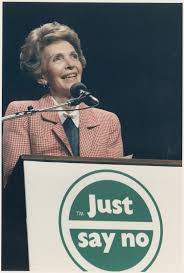
Do you remember the diary circle I mentioned? I have said ‘no’ to participating (although if you’d like to say ‘yes’, I bet they’d love to have you). I would like to help with the research but I simply can’t commit to recording everything I learn for two whole years. The morning described above is fairly typical. Of course there are days where I don’t learn anything – but they really are quite rare. Independent workers either quickly learn to make fairly accurate estimates of how long work will take them, or go out of business. I estimated that it would take me an average 15-30 minutes per day to record my learning, which would equate to around a working month over the two years. That’s unpaid work I can’t afford to take on. I already knew that recruitment and retention of participants is a problem in longitudinal research, where there is almost inevitably more to be gained by researchers than participants. It is interesting to have the opportunity to think this through as a potential participant. As a result, I’m learning about it from a different angle, which is useful as I’m preparing to work on a longitudinal project myself. As I may have mentioned, the learning never stops!

 You’ve probably worked out by now that I love to write. I still remember the joy of winning a class story competition when I was 7 or 8 years old. I filled most of an exercise book with the story of four children who had adventures in a flying car. It was an incredibly derivative
  I think these are interesting, useful platforms for creative people. I don’t think they’ll work for me. For a start, I don’t have millions of fans. Some projects get funded even though their generators don’t have millions of fans, because they have an idea that captures enough people’s imaginations. I don’t think my current project, a multi-disciplinary research ethics book, is going to capture many people’s imaginations. My ideas aren’t earth-shaking, though they may cause a small bounce in a few odd corners of academia. But they matter to me. And that’s why I am my own patron.
 A few months ago I wrote a post called
  I was surprised, and pleased, by the positive reaction to


 Now, a #blimage challenge for


