
Creative Research Methods

Creative research methods in the social sciences [FC]I have always been interested in creative research methods: not at the expense of traditional methods, but to augment them. I have used a variety of creative methods, when appropriate, such as storytelling and photo-elicitation for gathering data, fictionalisation and photo-essays for writing research, and drama for presenting findings. I have also combined methods where necessary, used technology in research, and worked within a participatory framework where possible.

A couple of years ago, for reasons I can’t now remember, I went looking for a book on creative research methods. I searched all the usual online booksellers but couldn’t find anything that fitted the bill. So I decided to write one.

In the process of writing this book, I read hundreds of journal articles, book chapters, sometimes whole books. I didn’t read everything there is to read – that wouldn’t be possible – but I learned a lot. And it slowly dawned on me that the field of creative research methods could be conceptualised as having four broad categories:

  1. Arts-based research – e.g. visual arts, performance arts, textile arts
  2. Research using technology – e.g. social media, apps, computer/video games
  3. Mixed methods research – traditionally qual+quant, but also quant+quant and qual+qual
  4. Transformative research frameworks – e.g. participatory research, feminist research, decolonising methodologies, activist research

Clearly I am not suggesting that these categories are mutually exclusive. In fact I did find some examples of research employing tools from all four categories. But they do provide a useful way of thinking about the subject for now (I say ‘for now’ as the field is developing fast, so may need a new conceptualisation in time).

I found many fabulous, inspiring, examples of research across all of these categories and from all over the world. There are over 100 boxed examples in my book, with others scattered throughout the text, and I still didn’t have room to include everything I would have liked to cover. I also realised that ‘creative methods’ doesn’t always mean ‘innovative methods’ (though it often does). It may mean being creative with traditional methods, such as by combining those methods in an unusual way or taking a new look at an existing method. For example, in recent years researchers using focus groups realised that they could get more out of the data by analysing the interactions between people in each group, as well as the content of the text yielded by the transcripts.

I’m delighted to say that even though the book isn’t out yet, it has received a good reception from academics around the world. It has been described, among other things, as an ‘inspiration’, a ‘treasure trove’, and ‘ground-breaking’. And most wonderful of all, especially as my first degree was in psychology, my creative research heroes Kenneth Gergen and Mary Gergen have very kindly written a foreword.

So publication day is 10 April in the UK, May 15 in the US. Here’s a very short book trailer I made for you.

If you would like a copy, you can buy direct from the publisher, Policy Press, at a 35% discount, by signing up to their monthly e-newsletter. This applies wherever you are in the world, and the discount is on all their books, not just mine. They publish some excellent work so I’d recommend checking this out.

If you want to know more about creative research methods, I hosted a twitterchat on 26 March, on the #ecrchat hashtag, and the storify is here.

The book will be formally launched at a one-day conference at the British Library Conference Centre on 8 May. The conference has four workshop streams and I’ll bet you can guess what they’re on… yep: arts-based research, research using technology, mixed methods research, and transformative research frameworks. There seems to be a real appetite for this topic, as we had an unprecedented number of abstracts – four for each presentation – so we have a terrific selection of workshops. Over half of the places are already booked. So if you’d like to come to the conference, please don’t leave it till the last minute, as it is likely to sell out. I hope to see you there!
Teaching Writing to Doctoral Students

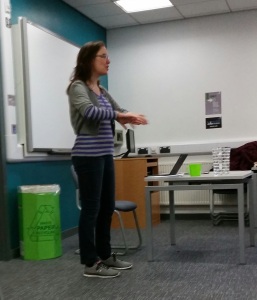
just me teachingI spent last weekend teaching writing to doctoral students at Staffordshire University, and enjoyed it enormously. It was an experiential course that I had devised with input from Dr Katy Vigurs, who hosted the course. We included creative exercises on drafting and redrafting, getting unstuck, the relationship between writing and thinking, and how to find your voice. There was also a short talk from me and several discussion/Q&A sessions. In between these were a dozen half-hour ‘shut up and write’ sessions for students to work on their own writing.

This course demonstrated to the students, very thoroughly, that they can achieve a meaningful amount of writing in just half an hour. And we taught them how to do that, through discussion, example, practice, and review. They had seen the course programme beforehand and planned what they would work on. The half-hour discipline was difficult for them at first; they found it hard to ‘get in’ and ‘get out’, but by the Sunday they were switching between ‘work’ and ‘break’ modes like doctoral ninjas. Several students commented on their evaluation forms that they had achieved more than they had planned.

Before the course, I asked students to complete a form telling me which aspects of academic writing they were good at, and which they wanted to work on. I also asked for a 500-word sample of academic writing from each student. This was partly so I could give individual feedback, and partly so I could get a sense of the individual and overall standard. Generally, the standard was good, particularly as I was seeing excerpts from work in draft. But the students evidently thought they were not good at writing.

This made for a very satisfying moment for me. It went like this:

Me: “I’d like to know who, in this room, thinks they struggle with academic writing because they’re not very good at it. Put your hands up please.”

[Most hands went up, most faces looked miserable]

Me: “I’ve seen examples of your writing, so I can tell you, with some authority, that you’re wrong. You are good at it. The reason you struggle with academic writing is because it’s hard.”

Then I stood in front of the class for a quiet moment, enjoying the war of expressions on people’s faces, as the message began to sink in. It was such a delight to see incredulous smiles break through.

It was also a delight, as always when teaching, to witness students having ‘light bulb’ moments. One woman said to me, with an expression of pure joy, ‘I’ve got it! I just have to write! That’s all I have to do! And if I keep writing, I’ll get my thesis done!’ It’s the kind of statement that can seem obvious after the fact, but it was a huge learning point for her, and I was thrilled to see her happiness.

Of course the true test will come when the students are back in their everyday lives. I think and hope we did enough to embed the practice and motivate the students, and the evaluation forms certainly suggest that we did. But I’ve been involved in training and teaching for far too long to take that for granted. We encouraged the students to form peer networks for support, and suggested that they might set up their own ‘shut up and write’ sessions, whether virtually or in real life. Early signs are that mutual support is growing within the group, and that can only help.

Talking of the virtual dimension, some students from Staffordshire University who couldn’t make the whole weekend, and some from other universities, joined in with our ‘shut up and write’ sessions via the #StaffsAcWri hashtag on Twitter. There are regular ‘shut up and write’ sessions on Twitter (check the #stuw hashtag) which you could join if this interests you – or you could even start your own. It’s amazing how much you can get done in half an hour: one student wrote over 800 words in just one of the half-hours, and most produced several thousand words in the course of the weekend.

My favourite comment from the evaluation forms was: ‘I never drifted off! I have only 2 relevant doodles and have produced work I will be proud to share with my supervisors!’ Further to last week’s post, this is why I think writing can be taught. Not everything about writing, and not to everyone – but those who are engaging with the process, and willing to learn, can certainly be taught the skills and the craft of writing.

On Teaching Writing

quill pen writing womanI love to teach writing. I have taught writing for research in various contexts: to voluntary sector practitioners, statutory sector managers, and postgraduate students. Next weekend, for the first time, I will be running a writing course for doctoral students with Katy Vigurs at Staffordshire University. I can’t tell you how much I’m looking forward to this – I’ve had so much fun already, just doing the preparation.

There is a school of thought that considers writing can’t be taught. I’m afraid I think that’s utter rubbish. For sure, there’s an element of ‘you can lead a horse to water, but you can’t make it drink’, as the saying goes. Ultimately, however much teaching someone has, there comes a point where they have to get on with the writing for themselves – and there are people who continually struggle at that point. Writing is particularly hard, I think, for people who don’t like writing but have to do it anyway. I’m lucky that I like writing, and I’m confident I can pass on some ways to make it less onerous and more fun – or at least more productive.

Writing isn’t easy to teach, and it’s difficult to learn, but there are lots of tricks of the trade which the more experienced writer can pass on. Some people can learn from written advice, whether on blogs like that of the estimable Pat Thomson, or in books by people like Pat or Rowena Murray. But for many, there is no substitute for time in a classroom with a group of other learners and a skilful tutor or two.

I learned a lot, years ago, from attending courses myself. I went on three Arvon courses, and a doctoral writing workshop at the University of the West of England (UWE). Two of the Arvon courses focused on novel writing and were useful for my fiction work. The other Arvon course, and the workshop at UWE, both focused on the permeability of the boundary between fiction and non-fiction, and the way some writing techniques can be used for both.

I attended these two courses during my doctoral studies and they were inspirational. I’d already been grappling with ideas around truth versus authenticity, the function of creativity in research, and the role of storytelling in human communication. I had read Sol Stein’s book Solutions for Writers: Practical Craft Techniques for Fiction and Non-Fiction which also suggests that fiction writing techniques can benefit non-fiction writing, and vice versa. This concept has been a huge influence on my work ever since. I have written about it in academic journals and books, and now I’m going to teach it, properly, for the first time.

Among the learning outcomes I’ve set for my students are: writing non-fiction is a creative process, writing is hard even when you’re skilled and experienced, and thinking and writing are inextricably linked. I have also promised them that they will come away from the weekend with between 1,000 and 5,000 new words of their thesis, depending on how far advanced they are in the process. The group includes students at every stage, from those who have only recently begun to those in their final months. I would expect students to write more slowly at first, more quickly in the later stages.

They will be doing creative writing exercises. Not just for fun, though I hope there will be some of that too. The exercises are designed to teach students about overcoming resistance to writing, the purpose of rewriting, how writing helps thinking, and voice. There will also be a number of ‘shut up and write’ sessions where we will all write together, as well as plenty of time for questions and discussion, not to mention cake. And in the evenings we will, as writers often do, patronise a nearby hostelry.

It may be a working one – but I am so looking forward to the weekend!

Putting Research Ethics Into Practice

ethicsDoing research ethically is not about finding a set of rules to follow or ticking boxes on a form. It’s about learning to think and act in an ethical way. How ethical an action is, or is not, usually depends on its context. Therefore, everything must be thought through as far as possible, because even standard ‘ethical’ actions may not always be right. For example, many researchers regard anonymity as a basic right for participants. However, if your participants have lived under a repressive regime where their voices were silenced, they may feel very upset at the thought of being anonymised, and want any information they provide to be attributed to them using their real names. In such a context, claiming that they must be anonymised because of research ethics would in fact be unethical, because it would cause unnecessary stress to your participants.

In my role as ethics lead for the UK’s Social Research Association, I’ve been helping a group of people from the Academy of Social Sciences who have been developing some common ethical principles for social science. This has involved a long and multi-faceted consultation process, during which a number of people spoke in favour of ‘virtue ethics’, or the idea that a good person will be an ethical person.

I fundamentally disagree with this position. As demonstrated in my last post, we are all subject to cultural conditioning which is bound to influence us as researchers. We are also all vulnerable to cognitive biases such as confirmation bias (giving more weight to views or phenomena that support what we already believe) and hindsight bias (seeing events as having been predictable when they happened). Given this, it doesn’t matter how virtuous we are, we’re not going to be as ethical as we could be if we put some simple steps in place.

The first step is to acknowledge, and try to identify, your own cultural conditioning, and to learn about the cognitive biases that may affect you. Although we’re notoriously bad at identifying our own cognitive biases, we are better at spotting other people’s, so if you’re working with others it can be helpful to look out for each other’s biases.

Then articulate the value base for your research. If you’re working alone, you need to devise this for yourself; if in a team, produce it collectively. And don’t just write a list of words; think through the meanings of the values you choose. For example, if you want your research to be ‘honest’, what does that mean in practice? We all tell lies all the time, even to ourselves, and research is no different. For example, researchers think it’s perfectly OK to lie in the interests of maintaining participant confidentiality. So if you want your research to be honest, you need to consider how honest you think it can actually be.

Try to identify your own assumptions. While it’s important to try not to make assumptions about other people, research is usually based on some assumptions, and it helps to act ethically if you know what these are. For example, are you assuming that your research is not intrusive? Or that it will be as high a priority for others as it is for you? Are you assuming that your sample is representative? Or that your data is accurate? Why are you making each assumption? What are the implications of your assumptions for your research?

Grounded theorists Strauss and Corbin suggested watching out for absolutes as a useful way to guard against biases and unhelpful assumptions. So if you find yourself, or a participant, using words like ‘never’ or ‘always’, or phrases like ‘couldn’t possibly’ or ‘everyone knows’, take time to work out what is behind the statement. You may well discover an obstructive bias or assumption, and then you can begin to search for a way to counteract that bias or assumption.

As social scientists, we try to include a wide range of people as research participants, but we can forget to take the same approach to literature. So another step is, when you’re reading, try to find relevant work by people with different backgrounds and perspectives from yours. This could include people from different nationalities, disciplines, genders, professions, and so on. Then, when you’re writing, try to draw on the work of a wide range of people too – though only if that work is relevant and worth citing, otherwise you are being tokenistic which is not ethical.

It is of course impossible to write a full set of ethical guidelines in a blog post. However, following these suggestions will lead you to a wider, more fully ethical approach to your research. If you want to delve further into the whys and wherefores of ethical research, there is plenty of material online. Here are some useful links:

Economic and Social Research Council (ESRC) Framework for Research Ethics – the ESRC is one of the UK’s biggest research funders, and this Framework was updated in January 2015.

The Research Ethics Guidebook – actually a website with a wealth of information, linked to the ESRC principles.

Association of Internet Researchers Ethics Guide – a wiki containing useful pointers for doing ethical research online.

Interpretation and Bias in Research

As researchers, a key part of our work is translation and interpretation. We translate data into findings, and add interpretation to make our work more understandable for its readers and users. Translation and interpretation are very vulnerable to bias, particularly bias caused by prevailing cultural norms.

I come from the indigenous white culture which is dominant in England, where I was bbiasorn and where I have always lived. I grew up in a highly racist culture. For example, I can remember, as a child, people using the phrase ‘nigger brown’ to describe a colour, or saying someone was ‘Jewy’ to mean he or she was careful with their money. These were matter-of-fact phrases used descriptively among white people in the entirely white town where I lived, rather than phrases used as direct abuse to people of other ethnicities. Yet it was nonetheless abusive terminology, and must inevitably have influenced my mindset. On the other hand, my parents bought me a black doll, wouldn’t buy me a golliwog (or buy Robertson’s jam), gave me books to read that were by and about black people, and banned Enid Blyton – and explained why they made these choices. That, too, no doubt influenced the way I think.

My culture is still racist, though I believe to a lesser extent than it was 40 years ago. This is a good thing but not an excuse for complacency. We have a very long way to go before racism is eradicated – if it ever is, given the human tendency to compare ourselves against others and decide who is in ‘our group’ and who is ‘the other’. As a researcher, I need to be aware of my biases, and to do all I can to guard against them. If you think you don’t have any yourself, or you’re unsure, I recommend you check out Project Implicit, a fascinating piece of international research into people’s unconscious thoughts and feelings which has been running since 1998. You can check out your own levels of bias around topics such as race, gender, and sexual orientation. The results are very likely to surprise you.

Talking of which, while I come from the side of the oppressor where race is concerned, I am on the other side as a disabled bisexual woman. You might think that would mean I don’t have to worry about bias in those areas. I wouldn’t agree. Oppression can be internalised – though it isn’t always, but if it is, it’s unconscious, so I wouldn’t know about my own internalised oppression. Which means I still need to consider the biases I may hold in these areas, and in the areas of age, body weight, nationality, and other human attributes we use to distinguish between ourselves and others.

In practice, this means I have to be very, very careful when I’m translating data into findings and interpreting those findings for my audiences. Essentially, the key is to never assume anything. In particular, don’t assume that because someone is X they will be/think/feel Y. Recognise the key principle of intersectionality: that nobody is ever ‘only’ male, black, fat, German, young, whatever. Everyone has a race AND a gender AND a sexual orientation and so on and so on. The intersection of these attributes within the individual is called intersectionality.

Never assume’ is easy to say, but very, very hard to do. I try, and fail; try again, and fail again. Trying is important, and so is noticing when you fail. I’ve noticed some of the micro-aggressions I have committed against others. No doubt I’ve missed some too. Here’s a recent one I didn’t miss. I met a younger woman, a friend of a friend, who wanted to talk to me about her PhD. We were in a cafe, having a great chat, and she made reference to her partner. In reply, I stupidly, thoughtlessly, used the pronoun ‘he’. I saw her stiffen and pause. I was horrified at myself, immediately apologised, did what I could by way of repair. But I couldn’t unsay my word, couldn’t unassume my assumption. At least I did us both the favour of not promptly coming out as bisexual to try to make myself seem somehow more acceptable. I would have tried that at one time.

Here’s another. Recently I was coming out of Sainsbury’s at New Cross Gate in London, on my way to stay with a friend, pushing a small trolley holding two bags of groceries and my rucksack containing my laptop and valuables. As I reached the entrance doors, a group of half a dozen young men burst through them, bouncing on the balls of their feet, poking and high-fiving each other, exchanging loud exclamations. They startled me and, in reaction, I grabbed my rucksack from the trolley and clutched it to my chest. As the group divided to pass me by, I realised they were exclaiming joyfully not aggressively, and one of them met my gaze. A young black man with hurt written on his face as vividly as a name in lights. My fear, the assumption that he saw I’d made, had hurt him. He was no threat. He would have helped me if I’d needed it. I expect he saw me as racist. And indeed perhaps I was – though I think I was afraid because they were male rather than because they were black.

I have been physically and sexually assaulted by men – only white men – in private and public spaces. I will not let this define me. I will not let it define men for me. Yet I think sometimes, in some ways, it does, without my permission, against my will.

I must bring all this knowledge into my research, and I must carry on noticing, reflecting, learning. As I work, I must stay aware of the possibility, even in the most careful interpretation, of mis-interpretation. It would be so easy to add a little emphasis, or take a little away; to misuse my power to include or omit.

That’s some of what I think I ought to do as a researcher. Next week I’ll talk about how I go about trying to do these things as I conduct and write research.

Who Might Your Next Co-Writer Be?

Have you ever done any collaborative writing? If so, you might recognise one or more of these co-writers. writing groupAnd if not, this will help to prepare you for the collaborators you may meet.

The One Who Works From Home: ‘I know I said I’d do it today, but Annie is off school sick so she needs my attention quite a bit. Our electrician’s here doing something important, apparently, but he keeps asking me to make decisions about plug sockets and things. I must make a dent in the laundry mountain, Annie got through two sets of bedding last night, then I’ll try to get to our draft if she and the electrician will leave me alone for a minute.’

The Global Networker: ‘The problem is, I’m doing a keynote in Helsinki next week, then after that I’m chairing in Jo’burg, then there’s the convocation in Boston. Straight from there to Rio, where I’m chairing again, then another keynote in Sydney. Not sure after that, can’t think that far ahead, but I suspect it’s more of the same. So it may be a while before I’m able to look at our paper, but I’ll do what I can.’

The Amazingly Unrealistic: ‘I know I took on more teaching this year but I didn’t realise that would mean lots of preparation and marking, I can’t believe how long it takes, and all the meetings! I simply don’t have time for anything else. So I won’t have time for our paper till the holidays, but I’m sure I’ll be able to get it done while I’m with the family at Center Parcs or else while we’re in Austria ski-ing.’

The Poorly Poppet: ‘It’s this back spasm, it’s agony, I can’t get up off the floor so it’s really hard to use the computer. I’m writing this on my phone, though I shouldn’t really be using that with my eyes the way they are, they hurt like hell, I’m sure I’ve got a migraine starting, or maybe it’s a brain tumour. I simply can’t work at the moment but I’ll be back to our paper as soon as I’m on the mend, I promise.’

The International Fieldworker: ‘I’ve come into the city and I’m in this hotel where I can buy wi-fi for an hour, honestly the price is exorbitant, must get through all my emails if I can. Then I’m off back to the village, won’t be on line again for a fortnight, sorry, I really am committed to this paper but there’s no electricity in the village let alone an internet connection so I’m going to be late with my draft.’

The Very Important Person: ‘I got a bit tied up in Brussels with Kofi, then Angela wanted a hand with her new strategy, and now I’ve had a summons from the White House which is such a drag but I’ll try to get something done on the plane.’

So what about you, Helen, you might well ask? Are you Dr Perfect, then?

But of course! And I doubt that endears me to my collaborators, either. Here’s how I think they would describe me:

The Insufferably Irritating: ‘Well of course I met my deadline.’ *folds arms, taps foot, looks smug*

Writer’s Paralysis

All sorts of things can cause paralysis in a writer – failure, success, a blank page – but at the root of each, I think, is fear. Writing is scary, partly because it has an alchemical relationship with thinking which is poorly understood. Through writing, you can learn things you didn’t know before, and that includes things about yourself.fear of writing Those things can be uncomfortable, upsetting, daunting. No wonder so many people are scared of writing to the point of paralysis.

This even happens to experienced writers. It happens to me. It’s been present over the last couple of weeks, since my previous blog post was picked up by the LSE Impact Blog and was widely circulated on Twitter. How can I follow that, I thought? What should I write next? I’ve been completely unable to decide: I started one post, then another, but nothing seemed right.

I remembered a young man I encountered a while ago who was determined that every year of his life should be better than the last: more fun, higher achieving, superior in every way to the previous year. So far, he’d managed it, and he was convinced he could continue in that vein for the whole of his life. Only if you die young, I thought to myself, but I didn’t say so; it would have been a shame to shatter his illusions. But I don’t believe it’s possible. If he lives long enough, a year will come when he gets his heart broken, or someone very important to him dies, or he is diagnosed with a crippling illness – or just has a mediocre year. That’s life. Ups and downs. fear of writing overcome

And that’s the writer’s life, too. Thinking about that young man, I understood that in a way I was trying to emulate him, and it wasn’t possible. Then I realised afresh what in fact I’ve known for many years: the only cure for writer’s paralysis is to write. Don’t give in to the fear. Put some words on the page. It doesn’t matter how good or bad they are – that never matters – the point is to have some words to work with. Forget the failure and the success: cover that blank page, and the fear goes away. Never completely, at least not in my experience, but the more you write, the more you can keep it at bay.

How To Write A Killer Conference Abstract

The LSE blogs recently published an ‘essential ‘how-to’ guide to writing good abstracts’conference presentation. While this post makes some excellent points, its title and first sentence don’t differentiate between article and conference abstracts. The standfirst talks about article abstracts, but then the first sentence is, ‘Abstracts tend to be rather casually written, perhaps at the beginning of writing when authors don’t yet really know what they want to say, or perhaps as a rushed afterthought just before submission to a journal or a conference.’ This, coming so soon after the title, gives the impression that the post is about both article and conference abstracts.
I think there are some fundamental differences between the two. For example:

Article abstracts are presented to journal editors along with the article concerned. Conference abstracts are presented alone to conference organisers. This means that journal editors or peer reviewers can say e.g. ‘great article but the abstract needs work’, while a poor abstract submitted to a conference organiser is very unlikely to be accepted.

Articles are typically 4,000-8,000 words long. Conference presentation slots usually allow 20 minutes so, given that – for good listening comprehension – presenters should speak at around 125 words per minute, a conference presentation should be around 2,500 words long.

Articles are written to be read from the page, while conference presentations are presented in person. Written grammar is different from spoken grammar, and there is nothing so tedious for a conference audience than the old-skool approach of reading your written presentation from the page. Fewer people do this now – but still, too many. It’s unethical to bore people! You need to engage your audience, and conference organisers will like to know how you intend to hold their interest.

The competition for getting a conference abstract accepted is rarely as fierce as the competition for getting an article accepted. Some conferences don’t even receive as many abstracts as they have presentation slots. But even then, they’re more likely to re-arrange their programme than to accept a poor quality abstract. And you can’t take it for granted that your abstract won’t face much competition. I’ve recently read over 90 abstracts submitted for the Creative Research Methods conference in May – for 24 presentation slots. As a result, I have four useful tips to share with you about how to write a killer conference abstract.

First, your conference abstract is a sales tool: you are selling your ideas, first to the conference organisers, and then to the conference delegates. You need to make your abstract as fascinating and enticing as possible. And that means making it different. So take a little time to think through some key questions:

  • What kinds of presentations is this conference most likely to attract? How can you make yours different?
  • What are the fashionable areas in your field right now? Are you working in one of these areas? If so, how can you make your presentation different from others doing the same? If not, how can you make your presentation appealing?

There may be clues in the call for papers, so study this carefully. For example, we knew that the Creative Research Methods conference, like all general methods conferences, was likely to receive a majority of abstracts covering data collection methods. So we stated up front, in the call for papers, that we knew this was likely, and encouraged potential presenters to offer creative methods of planning research, reviewing literature, analysing data, writing research, and so on. Even so, around three-quarters of the abstracts we received focused on data collection. This meant that each of those abstracts was less likely to be accepted than an abstract focusing on a different aspect of the research process, because we wanted to offer delegates a good balance of presentations.

Currently fashionable areas in the field of research methods include research using social media and autoethnography/embodiment. We received quite a few abstracts addressing these, but again, in the interests of balance, were only likely to accept one (at most) in each area. Remember that conference organisers are trying to create as interesting and stimulating an event as they can, and variety is crucial.

Second, write your abstract well. Unless your abstract is for a highly academic and theoretical conference, wear your learning lightly. Engaging concepts in plain English, with a sprinkling of references for context, is much more appealing to conference organisers wading through sheaves of abstracts than complicated sentences with lots of long words, definitions of terms, and several dozen references. Conference organisers are not looking for evidence that you can do really clever writing (save that for your article abstracts), they are looking for evidence that you can give an entertaining presentation.

Third, conference abstracts written in the future tense are off-putting for conference organisers, because they don’t make it clear that the potential presenter knows what they’ll be talking about. I was surprised by how many potential presenters did this. If your presentation will include information about work you’ll be doing in between the call for papers and the conference itself (which is entirely reasonable as this can be a period of six months or more), then make that clear. So, for example, don’t say, ‘This presentation will cover the problems I encounter when I analyse data with homeless young people, and how I solve those problems’, say, ‘I will be analysing data with homeless young people over the next three months, and in the following three months I will prepare a presentation about the problems we encountered while doing this and how we tackled those problems’.

Fourth, of course you need to tell conference organisers about your research: its context, method, and findings. It will also help enormously if you can take a sentence or three to explain what you intend to include in the presentation itself. So, perhaps something like, ‘I will briefly outline the process of participatory data analysis we developed, supported by slides. I will then show a two-minute video which will illustrate both the process in action and some of the problems encountered. After that, again using slides, I will outline each of the problems and how we tackled them in practice.’ This will give conference organisers some confidence that you can actually put together and deliver an engaging presentation. four leaf clover

So, to summarise, to maximise your chances of success when submitting conference abstracts:

  1. Make your abstract fascinating, enticing, and different.
  2. Write your abstract well, using plain English wherever possible.
  3. Don’t write in the future tense if you can help it – and, if you must, specify clearly what you will do and when.
  4. Explain your research, and also give an explanation of what you intend to include in the presentation.

While that won’t guarantee success, it will massively increase your chances. Best of luck!

Peak Research Experience

Sometimes my career as an independent researcher delivers ‘ beyond my wildest dreams’ experiences. Last Tuesday was one of those times.

I spent much of last year working as independent research adviser to a national Commission on the Future of Third Sector Infrastructure, set up and resourced by NAVCA.  For those outside this field, the ‘third sector’ includes charities and social enterprises, community groups, co-operatives, community interest companies, and so on – everything that isn’t the ‘private sector’ (profit-making companies for personal gain) or the ‘public sector’ (tax-funded public services).  The ‘infrastructure’ of this sector is made up of the organisations and functions that support charities, community groups, and other organisations in setting up, managing, and when necessary winding down their businesses. This is particularly important for charities which, in the UK, must all – by law – be run by groups of unpaid volunteers. As there are over 160,000 officially registered charities in England and Wales, and over half of those have an annual income of £10,000 or less, most are not in a position to pay for the support they need. It is also essential for community groups, most of which have no funding at all.

If you’ve lost interest by now, you’re not unusual. Although third sector organisations fulfil a lot of our society’s needs, they, and particularly their infrastructure, are often all but invisible to the naked eye. Of course people will see charity shops, will know about the big hitters – Macmillan Cancer Support, Oxfam, Red Cross, etc, as well as their local ‘friends of the park’ or ‘lads and dads footie’ on a Saturday morning. But all the work that goes on behind the scenes, much of it by organisations such as Councils for Voluntary Service, Volunteer Centres, and Rural Community Councils, is rarely talked about, thought about, or understood, even by people working in the sector.

This has interested me for a long time, so I was delighted to be asked to work with the Commission. And it was a privilege to be present at their discussions. They are a group of intelligent, knowledgeable, independent thinkers. And last Tuesday, the Commission’s report – based on the research I led, and which I was heavily involved in writing – was launched at a House of Commons reception hosted by Nick Hurd MP.

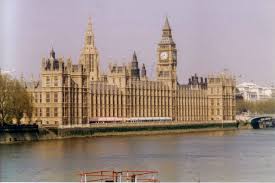
imagesThe reception was in the Terrace Pavilion, the strip of white you can see in the photo which is actually a marquee right by the river. As the visitors’ entrance is on the other side of the House of Commons by Parliament Square, we had to walk through lots of halls and corridors: first a huge mediaeval hall, then big Gothic passages with ornate tiled floors and doors ten feet high, then smaller corridors with green carpets and dark wood-panelled walls. When we arrived, we found that afternoon tea had been set out as a buffet: crustless finger sandwiches, scones with jam and cream, and a selection of gorgeous cakes. The Pavilion soon filled up with people happily munching and chatting. When everyone was there and had had time to eat and drink, there were five short speeches: from Sara Llewellin, Chair of the Commission (who is also chief executive of the Barrow Cadbury Trust); Nick Hurd, who was formerly the Minister for Civil Society; Rob Wilson MP who is currently the Minister for Civil Society; Lisa Nandy MP, Shadow Minister for Civil Society; and Caroline Schwaller, Chair of NAVCA. It was so encouraging to hear all three MPs praise the work of the Commission and endorse the recommendations of the report. And it didn’t seem like just a pat on the head; they all spoke knowledgeably and intelligently about the issues raised. This was truly heartening, because it means there is a good chance the work we’ve done will make a real difference to charities and communities in the difficult years ahead.

And my research and writing was praised to the skies! By two of the speakers, and several Commission members who sought me out to congratulate me on my work. David Brindle, public services editor of the Guardian newspaper, made my day – perhaps my year, possibly even my decade – by telling me what a good job of writing he thought I’d done. That meant so much coming from him, a very experienced and highly talented journalist, and no mincer or waster of words.

I didn’t expect any of that when I took the job, or ever. I couldn’t stop grinning after the event. I went to sleep grinning, woke up at 3 am grinning, and had to replay the whole thing in my head before I could get back to sleep again. And that made me grin even more! It was a once-in-a-lifetime experience, and one I’ll never forget.

Viva Survivors

Last week I spoke to Dr Nathan Ryder, creator of the rather wonderful Viva Survivors blog. He interviews people with PhDs about their viva experiences and posts podcasts on the blog. Including mine! I wish his blog had been available in 2006, because I would have been hanging on its every word.516WAmwa+FL._BO2,204,203,200_PIsitb-sticker-v3-big,TopRight,0,-55_SX278_SY278_PIkin4,BottomRight,1,22_AA300_SH20_OU02_

Nathan has also written a well-reviewed book called Fail Your Viva: Twelve Steps To Failing Your PhD (And Fifty-Eight Tips For Passing). Again, if I was pre- rather than post-viva, I’d be all over this.

So if you have a viva looming, I recommend checking out Nathan’s work.

I’ve also heard good things on Twitter about Viva Cards, so check them out too.