
 When someone mentions research methods, what do you think of? Questionnaires? Interviews? Focus groups? Ways of doing research online? Do you only think of data gathering, or do you think of methods of planning research, analysing data, presenting and disseminating findings?
Research methods is a huge and growing field with many books and innumerable journal articles offering useful information. But nobody talks about methods for managing your own research. Perhaps you’re doing postgraduate research in academia or workplace research such as an evaluation. Even if you’re a fully funded full-time doctoral student, research is not all you do. Research has to fit in with the rest of your life and all its domestic work, family needs, other paid or voluntary work, hobbies, exercise, and so on.
Nobody talks about the methods for doing this kind of personal research management. Or, at least, not many people. I said quite a lot about it in my book Research and Evaluation for Busy Students and Practitioners. Petra Boynton also addresses it in her book The Research Companion. But I haven’t seen it mentioned anywhere else (if you have, please let us know in the comments). So here are ten top tips:
- Plan everything. Lots of books will tell you how to plan your research project. What they don’t say is that you also need to plan for the changes to your life and work which will result from you taking on the research. How will your research affect your other commitments? What do you need to do to minimise the impact of your research on your other commitments and vice versa? Build in contingency time for unforeseen events.
- Manage your time carefully. Use your plan to help you. Break down the main tasks into monthly, weekly and daily to-do lists. Review these regularly.
- Learn to work productively in short bursts. It may seem counter-intuitive, but most people get more done this way than by setting aside whole days to work on a project.
- Use time when your mind is under-occupied, e.g. when you’re waiting in a queue or doing repetitive household tasks, to think about and solve problems related to your research.
- Seek support from your family. Make sure they know about your research and understand its importance to you.
- Seek support from colleagues, managers, tutors etc, whether your work is paid or unpaid. Make sure they know about your research and understand its importance in your life.
- Don’t cut corners in ways that could damage your health. Eat sensibly, take exercise, get enough sleep and rest.
- Take breaks. At least three short breaks in each day, one day off in each week, and four weeks off in each year.
- Don’t beat yourself up if things go wrong. Be kind to yourself and learn what you can from the experience. Then re-group, re-plan, and set off again.
- Reward yourself appropriately for milestones reached and successes achieved.
In my view, these are as much research methods as questionnaires and interviews. Learning to use them involves acquiring tacit knowledge. I’ve been on a mission to convert tacit knowledge to explicit knowledge ever since I started writing for professionals. This blog post is part of that process. If you have other tips, please add them in the comments.
This blog is funded by my beloved patrons. It takes me around one working day per month to post here each week. At the time of writing I’m receiving funding of $12 per month. If you think 4-5 of my blog posts is worth more than $12 – you can help! Ongoing support would be fantastic but you can also support for a single month if that works better for you. Support from Patrons also enables me to keep this blog ad-free. If you are not able to support me financially, please consider reviewing any of my books you have read – even a single-line review on Amazon or Goodreads is a huge help – or sharing a link to my work on social media. Thank you!
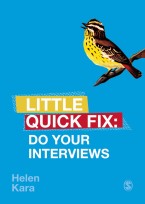 On 20 December last I received hard copies of my first two books in the

 And I have four copies to give away! Two of Write A Questionnaire and two of Do Your Interviews, which I will gladly post anywhere in the world. This competition is only open to followers of this blog (if you want to enter and you don’t already follow the blog, you can find the ‘follow’ button at the top right). Leave a comment with your name, telling me which book you’d like and why. You can only enter once, for one title, not both. This time next week I will put the names into two hats, one for each title, and announce the winners in the comments on this post. Can’t say fairer than that!
 Happy New Year, lovely blog readers! I hope 2019 is full of happiness for each and every one of you.
 Have you noticed how people seem to be getting offended about the strangest things? For example, there has been controversy this month over two songs that are regularly played in English-speaking countries at this time of year. The first is Baby It’s Cold Outside, a duet between two people (usually a man and a woman, though the lyrics are not gender-specific). It was written by Frank Loesser in 1944 to sing with his wife as a party trick. One character is persuading a slightly reluctant other to stay in the warm rather than go out into the winter weather. It’s flirtatious and funny, especially in
  The 11th annual
  A recent discussion on Facebook reminded me that I’ve written about
  Every so often I post about how much money I make. As I’m just finishing my 2017-18 accounts, it seems a good time to update this.
 I’m so excited to be a guest contributor to Helen’s blog. I’ve learned a lot by reading her posts and love that she is helping folks be more creative in their research methods. I thought this would be a perfect place for me to talk about how to engage your audience beyond the use of your slides, so you can maximize your


 Hi! I’m Dr. Echo Rivera, founder and owner of
 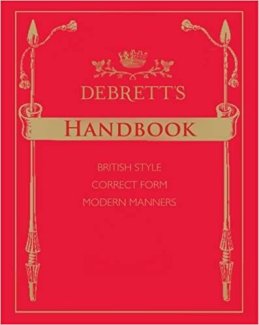 When I first learned about the world of work, around 35 years ago, professional etiquette was part of the curriculum. For example, if you directed a letter to a specific person, such as ‘Dear Professor Malik’, you ended the body of the letter with ‘yours sincerely’. If you used a generic direction – in those days almost always ‘Dear Sir(s)’ – you ended with ‘yours faithfully’. You could use an underlined subject line after the direction to indicate the topic, as we do now with emails. If you needed to write to a bishop, or an equerry, or the Queen, you could look in Debrett’s for the proper way to address them. There was a rule for everything.
![Research ethics in the real world [FC]](https://helenkara.com/wp-content/uploads/2018/08/research-ethics-in-the-real-world-fc.jpg?w=279&h=419) My book launch was yesterday afternoon, and it was a peak experience –
My book launch was yesterday afternoon, and it was a peak experience –  Helen Kara