Travelling For Work – The Reality

travelI travel quite a lot these days. It’s rare for a fortnight to go past without me having to pack my case at least once for a domestic or international trip. This week I’ve been in Strasbourg for meetings about the EU research ethics project I’m working on. How lovely, people say; lucky you. And indeed I am lucky, though not in the way you might think.

There is a whole lot of detail to attend to before leaving home. Arranging travel and accommodation can take so much time. I’d never been to Strasbourg before; I didn’t really know where it was, except that it’s in France, but France is a big country. I learned that it does have an airport, but the airport is a long way from the city, and there are no direct flights from any of my local airports. So on Monday I made an epic train journey via London St Pancras and then Eurostar to Paris, then on to Strasbourg from there.

Paris, you say, surely that’s glamorous? It is, though the ten-minute walk between Gare du Nord and Gare de l’Est takes you through a very unglamorous part of the city. I had 68 minutes in Paris which wasn’t long enough to go anywhere or do or see anything I might have liked to go to, do or see. If I’d had a couple of hours and no luggage, I might have gone somewhere on the metro, but instead I had a bottle of cold citronnade in the station and did some people-watching which was fun.

I’m pretty good at packing these days. I travel light and it doesn’t take me long to get my things together. I have a little stash of Euros – but there’s always something – and this time I forgot to pack an adaptor. Luckily I had time to buy one at St Pancras, which I can add to my large and growing collection of international adaptors. (My favourite is a lightweight one my Dad bought for me when I made a big trip in 2016 which covers every country in the world. If I could only remember to pack it when I need to, I’d be golden. My last few overseas trips have been to Dublin and Belfast which is probably why I’m out of practice here.)

Then there are all the logistics. Where are the meetings? Where is the station? How far is it from one to the other? Should I find accommodation close to the station or close to the meetings? Which maps do I need to print out? (Yes, dear reader, I like maps on paper. They’re big enough to read, they don’t rotate of their own volition, and the batteries don’t run out.) What will the weather be like? What shall I wear?

I try really hard to get all the travel details right but I do slip up. For example, when I flew to Belfast earlier this month, I flew with Flybe but I booked through a third party and Flybe wasn’t mentioned till halfway down their email. When I was packing, I got mixed up and thought I’d booked with Aer Lingus, so I took my slightly larger case (which I didn’t even need to do as it wasn’t full) and ended up having to pay £35 at the airport to put it in the hold because it wouldn’t quite fit in their specified dimensions measurement box. Book it in online for the return trip, said the check-in clerk, it’ll be cheaper. So I did. Saved me a whole £6. A man next to me in the queue told me he works for Flybe and said all the budget airlines are taking tips from RyanAir about how to rip off passengers.

Then when I went online to book my train ticket for last Monday’s journey to St Pancras, I saw that first-class tickets were the same price as second-class for the train I needed to travel on. Happy days! I took a screenshot to show my client that I wasn’t wasting their money – and then when I picked up my ticket from the machine at the station, it was second-class. I fumed all the way home, planning my email of complaint to the train company, pulled up the screenshot full of righteous anger – and saw that I’d booked a second-class ticket after all. Probably force of habit.

I don’t get paid for travelling time, so I’ve become very skilled at working on trains and planes. Yet the night before I travel, I always sleep badly. I can understand myself worrying about oversleeping when I have to get up very early. I find it much less understandable when I don’t even have to leave the house till midday, like when I went to work in Belfast earlier this month. The night before I had the most ridiculous string of anxiety dreams – cancelled plane, incomprehensible message from airline, driver refusing to take me to the airport – I woke up feeling as though I hadn’t slept at all.

So there are many frustrations. But there are also joys. I arrived in Strasbourg at 5.40 pm on Monday, checked into my hotel, and went out for a walk around the beautiful mediaeval centre. There were some entertaining sights, an ‘artisanal creperie’ provided a tasty dinner, and I found a little supermarket for some treats to take home. That was a bit like having one evening of holiday, but the rest of the stay was full-on work from breakfast to bedtime. It’s often the way with these trips because the cost and effort of bringing people together means everyone feels we need to make the most of the time we have.

People often think this kind of travelling is glamorous and fun. Occasionally it is, but mostly it’s hard work and tiring. I’m glad I can do it, though; I learn a lot and that’s always a plus for me, even if I’m learning about European train timetables or hotels in Cardiff.

This blog, and the monthly #CRMethodsChat on Twitter, is funded by my beloved patrons. It takes me at least one working day per month to post here each week and run the Twitterchat. At the time of writing I’m receiving funding from Patrons of $25 per month. If you think a day of my time is worth more than $25 – you can help! Ongoing support would be fantastic but you can also make a one-time donation through the PayPal button on this blog if that works better for you. Support from Patrons and donors also enables me to keep this blog ad-free. If you are not able to support me financially, please consider reviewing any of my books you have read – even a single-line review on Amazon or Goodreads is a huge help – or sharing a link to my work on social media. Thank you!

The Ethics of Working with Literature

literatureAn earlier version of this article was originally published in ‘Research Matters’, the quarterly newsletter for members of the UK and Ireland Social Research Association (SRA). The SRA now has a blog with topical peer-reviewed articles by and for researchers. They are also interested in contributions from readers so, if you fancy writing a guest post, you could give them a try. They even have a ‘secret researcher’ option for posting anonymously if you have something really controversial to say.

Researchers often use existing literature to set their research in context. ‘Literature’ is the academic term, referring to peer-reviewed scholarly work such as journal articles. Practice-based researchers may also contextualise their research, though more often with policy and project documents, in part because they are openly available. However, these distinctions are not so hard-and-fast these days. Academics increasingly recognise the value of ‘grey literature’, as they call relevant information that has not been through the peer review process. Practice-based researchers can read more and more academic literature, with the growth of open access, and through schemes such as the SRA’s member benefit of access to around 6,000 social science journals through EBSCO. Also, the definition of ‘literature’ has grown to include written phenomena and artefacts such as ephemera (leaflets, zines, etc), creative writing (novels, poems, and so on), and online writings such as blog posts and tweets.

When I ask people about the ethical issues of working with literature, they tend to look blank. So here are some pointers. First, define what you are using as literature, or background documents, and explain why you have chosen those types of material. This is important now that there is such a range of available literature: as with all decisions about research, you should be making well-informed choices for good reasons. Then make sure you know how well you can search that body of literature. For example, if you are searching online – as many people do these days – you need to understand the scope and limitations of the electronic tools you use. Google Scholar is many people’s go-to website for academic literature, but it doesn’t index everything, and its search function is far from neutral. The Directory of Open Access Journals indexes work from developing countries that does not find its way into Google Scholar. Even more work from developing countries can be found through the Journals Online project run by international research development charity INASP, which currently covers work from Africa, Latin America, the Philippines, Vietnam, Bangladesh, Mongolia, Nepal and Sri Lanka. Even if your work focuses on a single country or locality, you may find relevant literature from far afield. You are not obliged to search everything; you simply need a clear rationale for your search.

You should record your search strategy – where you searched, terms you used to search on, dates of searches – so your readers can assess the effectiveness of your approach. Sadly, these days you will also need to check whether material you plan to cite is bona fide, as directories and repositories may still index and hold literature that has been retracted, or is a spoof that may not be instantly recognisable as such. This means researchers need to be on their guard, and make use of services such as Retraction Watch where possible.

Many search strategies will yield far more literature than any researcher, or team, can read. There are ethical dimensions to choosing what to focus on. Bias can creep in here: it is important to read literature representing a good spread of views and opinions, not only those you agree with. Then, when you have chosen what to read, it is ethically necessary to read that work carefully. Take the time to understand the arguments being presented and what they are based on. If you skim-read or cherry-pick, you risk misunderstanding the author’s argument, because you won’t understand their reasoning. Also, superficial reading doesn’t enable you to assess the quality of someone else’s work, so you won’t know how much weight to give it within your own research.

Then of course you need to cite others’ work correctly and not plagiarise or self-plagiarise. Having said that, self-plagiarism isn’t so much of a problem if you plan to self-publish, whether as an online pdf, e-book, or zine. However, if you plan to publish formally, self-plagiarism is unethical as publishers expect to publish original material.

Taking this kind of an ethical approach to working with literature shows respect to authors of the work on which our own work is based. Also, this approach helps to avoid the replication of errors, which in turn helps to raise standards in research.

This blog, and the monthly #CRMethodsChat on Twitter, is funded by my beloved patrons. It takes me at least one working day per month to post here each week and run the Twitterchat. At the time of writing I’m receiving funding from Patrons of $25 per month. If you think a day of my time is worth more than $25 – you can help! Ongoing support would be fantastic but you can also make a one-time donation through the PayPal button on this blog if that works better for you. Support from Patrons and donors also enables me to keep this blog ad-free. If you are not able to support me financially, please consider reviewing any of my books you have read – even a single-line review on Amazon or Goodreads is a huge help – or sharing a link to my work on social media. Thank you!

The Mothership Project

mship-cover-2I don’t say much on this blog about my client work because most of it is confidential. But I’m delighted to have permission from one of my lovely clients to tell you about a project I’ve been helping them with over the last couple of years.

The Mothership Project is based in the Republic of Ireland and is a network of parenting artists run by four awesome artist mothers: Leah Hilliard, Michelle Browne, Seoidín O’Sullivan and Tara Kennedy. It was founded in 2013 as a result of Seoidín O’Sullivan’s frustration at struggling to retain her arts practice after becoming a mother. She fired off an email to a few friends who shared her concerns and set up a working group of volunteers. They organised workshops and discussions, show-and-tell events and reading groups, focusing on issues facing parenting artists such as visibility, time, money and precarity. Despite the name it is not gender-specific or even parent-specific but welcomes all artists who are primary carers of children.

In 2017 the Mothership Project made a successful application to the Irish Arts Council for funding to build on this work with a research project to find out what would help parents most, a pilot programme of artists’ residencies tailored for parent artists, and a publication of their findings.

The first I heard of any of this was a message from Leah Hilliard which came via this website in December 2017, asking if I could help advise them about the research. We spoke on Skype and I agreed to help. The Mothership team had drafted a questionnaire and wanted some feedback. We spoke again in January and, as luck would have it, I was doing some speaking and teaching in Dublin in March so I was able to meet three of the team in person – Leah, Michelle, and Tara, plus Tara’s six-week-old daughter Kim!

They piloted the questionnaire before it was finalised, put onto SurveyMonkey, and circulated the link as widely as they could. The questionnaire was quite detailed, asking questions about respondents’ art practice, their parenting experience, workspaces, childcare, financial situation, experience of artists’ residencies, and a final ‘is there anything else you would like to tell us?’ question. By the end of July 2018 there were 145 responses. I analysed those in August, using descriptive statistics for numeric answers and basic qualitative analytic techniques for text answers. This involved separating out the answers to each question and grouping similar ones together into categories, then writing about the categories and the number of responses in each category. Some of the responses to the final question were really positive about the questionnaire itself and the work of the Mothership Project.

My lovely clients were pleased with the analysis I sent them. They held their pilot residencies in the autumn for 15 parent-artists, and conducted an exit questionnaire which I was also able to help them analyse. The responses were overwhelmingly positive. Then they set to work to prepare their publication. They brought me over to Ireland to spend a day with them working on this. I learned that artists take a very different approach from writers to making a book. When I want to create a book, I sit down at my computer and write words onto a screen. When these women want to create a book, they start by figuring out how many pages it will be. Then they put a page of A4 for each page of the book up on a studio wall, and write and draw on Post-Its and on the pages of A4 while talking together to work out how to make the book they want.

pic for blog

The team were keen that the publication should be accessible, visually engaging and would act as an advocacy tool in the future. They wanted to have a two-page centre spread setting out the findings and recommendations which would be easy for the reader to find and reproduce. This focus on making the research visible and visual, and easy to use by other people, was paramount in the planning stage.

And a very fine book it is too, fulfilling all those aims. It was launched on 16 May in Dublin – I was working in Dublin again at the time, but unfortunately couldn’t make it to the launch as I was in an all-day workshop with another client at Dublin City University. So frustrating!

As an independent researcher, I don’t often hear about what happens as a result of research I’ve worked on, so I was delighted when Michelle got back in touch last week to update me. The research was covered in the Irish Times and is being taken seriously by policy-makers in Ireland, which is great news. Only last Friday she presented the methodology and findings at a conference called Measuring Equality in the Arts Sector at University College Cork. This was run by an organisation of the same name, known as MEAS, which was set up last year, with support from the Irish Research Council to monitor and report on representational inequalities in the arts in Ireland. It’s great to know that this kind of work is going on, and that my experience and skills have been able to make a tiny contribution.

Creative people frequently amaze me by what they achieve in the world, and the Mothership Project team are a great example. It was a real pleasure to work with them.

This blog, and the monthly #CRMethodsChat on Twitter, are funded by my beloved patrons. It takes me at least one working day per month to post here each week and run the Twitterchat. At the time of writing I’m receiving funding from Patrons of $25 per month. If you think a day of my time is worth more than $25 – you can help! Ongoing support would be fantastic but you can also make a one-time donation through the PayPal button on this blog if that works better for you. Support from Patrons and donors also enables me to keep this blog ad-free. If you are not able to support me financially, please consider reviewing any of my books you have read – even a single-line review on Amazon or Goodreads is a huge help – or sharing a link to my work on social media. Thank you!

Research Ethics Podcast

osu-logoHello lovely blog readers, I’m back from my summer break (short holiday, long stretch in writing cave) and will be blogging regularly again through till mid-December. Though this week’s blog post is in fact a podcast! The estimable Katie Linder interviewed me for her Research in Action podcast at Oregon State University in the US.

Here’s the link to RIA # 169: Dr. Helen Kara on Research Ethics. Which also tells you that if you like podcasts and you’re interested in research, there are another 168 episodes for you to check out with some stellar speakers. I’m proud to be in their company.

If you listen, please let me know what you think. I don’t have much experience of doing podcasts so I’d welcome constructive feedback.

This blog – and my podcast work – is funded by my beloved patrons. It takes me around one working day per month to post here each week. At the time of writing I’m receiving funding of $23 per month. If you think a day of my time is worth more than $23 – you can help! Ongoing support would be fantastic but you can also make a one-time donation through the PayPal button on this blog if that works better for you. Support from Patrons and donors also enables me to keep this blog ad-free. If you are not able to support me financially, please consider reviewing any of my books you have read – even a single-line review on Amazon or Goodreads is a huge help – or sharing a link to my work on social media. Thank you!

More Little Quick Fixes for Research

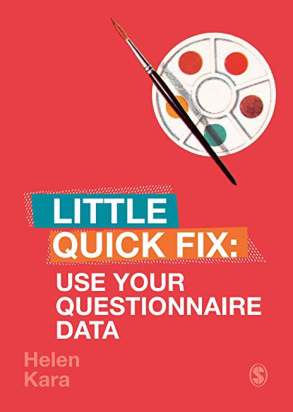
Little Quick Fix logoRegular readers may remember that I’ve been writing short research methods books for SAGE’s Little Quick Fix series. The first two, Write A Questionnaire and Do Your Interviews, came out in January. I’m delighted to announce that their sequels, Use Your Questionnaire Data and Use Your Interview Data, will be out any day now. Like their prequels they have gorgeous colourful covers – look!

UYQD coverUYID cover

You may be thinking, Helen, how can you write so many books? For a start, these ones are short –  only 7,000 words each, though that brings its own challenges. Also, I love writing, and am happy to do lots of it, as evidenced by this blog among other things.

The sad thing is that nobody much is likely to be interested at this time of year. It’s the summer holidays in the northern hemisphere and the winter holidays in the southern hemisphere. Talking of holidays, this blog is going to take a break until September. I’m not – I have more books to write!

This blog is funded by my beloved patrons. It takes me around one working day per month to post here each week. At the time of writing I’m receiving funding of $34 per month. If you think a day of my time is worth more than $34 – you can help! Ongoing support would be fantastic but you can also make a one-time donation through the PayPal button on this blog if that works better for you. Support from Patrons and donors also enables me to keep this blog ad-free. If you are not able to support me financially, please consider reviewing any of my books you have read – even a single-line review on Amazon or Goodreads is a huge help – or sharing a link to my work on social media. Thank you!

Knowing When To Stop

stopSometimes it’s hard to know when to stop. That could be when you’re still having fun and you don’t want to stop even though it’s after midnight and you’ve got to be in work at 9. In my early 20s I could get away with that. In my mid-50s? No chance. The dark sides of not knowing when to stop are dependency and addiction. Then there are the mental ‘ought’s and ‘should’s. I ought to finish reading this book, that I’m not enjoying at all, because the author took so much trouble in its writing. I should keep working on this collaborative piece even though my collaborator hasn’t answered my emails in months.

There’s an art to knowing when to stop. My mother, who is prone to outbreaks of wisdom, explained to me the point of stopping while you’re still having fun. Because what’s the alternative? Keep going till you’re not having fun any more? If you do that, you’re unlikely to want to do whatever-it-was again. Whereas if you stop while you’re still having fun, you keep the magic.

The ‘ought’s and ‘should’s can bog off. There are so many books (and journal articles, and – ahem – blog posts, and so on) that if you’re not enjoying one, why take the time to read it to the end? You won’t have time in your whole life to read all the books (journal articles, blog posts etc) that you do enjoy. So blow it out. Read the last page/paragraph if you need to satisfy your curiosity, then toss it and find something that suits you better.

And as for collaborations that have gone belly-up… that can be hard, when you’ve put in a lot of work and you’re not far from the finish line. But recognising when you need to quit is an important survival skill because it protects you from throwing good time after bad.

There’s another way this can work, too, which is not so much knowing when to stop as recognising that you have stopped. This has happened to me with my New Year’s resolution (I know! July! Not bad, eh?). My resolution was to review a book a week; i.e. an academic book, and to publicise this and encourage others to join in. I said from the start that it didn’t actually have to be a book a week, and I followed my own guidance; I reviewed 14 books between 1 January and 7 June, 12 on Wordery/Amazon and two for the LSE blogs. I haven’t reviewed an academic book in the last couple of months, though I’ve read quite a few. I will continue to review academic and other books but I’m not going to plug it as a ‘thing’ any more.

This is partly because hardly anyone joined in. A few people said it was a great idea, and one or two did write reviews, but it was evidently an idea whose time has not come, or has passed, or will never exist. Conversely, the monthly creative methods chat that I started in June has taken off rather well. And of course the point of all these things is not only to be the thing in itself, but also to raise my profile. Sounds cynical, in a way – yet I’m running a business and I have books and skills to sell. That doesn’t mean I’m trying to sell them to everyone all the time; that would clearly be unrealistic. I aim to create initiatives which will be of value to people in themselves, because I think that’s the best way to do marketing. Not to shout GIVE ME WORK AND BUY MY BOOKS AND BE MY PATRON but to generate resources and opportunities for people, which may lead to some of those people choosing to put some work or money my way. Or not – there’s no obligation and I like it that way. But the return on investment for these initiatives is low. For example, there have been over 5,000 downloads of Starting Your PhD: What You Need To Know and around 25 reviews worldwide, or one review for every 200 downloads. So evidently it’s sensible to invest time in the initiatives that increase my visibility rather than those that don’t, no matter how close they may be to my heart.

So bye bye, review a book a week. It was nice knowing you. And hello, #CRMethodsChat. You’re ace, and you happen on the second Tuesday of every month. Long may that continue.

This blog is funded by my beloved patrons. It takes me around one working day per month to post here each week. At the time of writing I’m receiving funding of $34 per month. If you think a day of my time is worth more than $34 – you can help! Ongoing support would be fantastic but you can also make a one-time donation through the PayPal button on this blog if that works better for you. Support from Patrons and donors also enables me to keep this blog ad-free. If you are not able to support me financially, please consider reviewing any of my books you have read – even a single-line review on Amazon or Goodreads is a huge help – or sharing a link to my work on social media. Thank you!


I’m A Lime Green Pencil

lime green pencilI was lucky enough to spend two days last week helping with the Inside Out Autism conference at the University of Kent. This was a new university for me, on a verdant campus with trees and rabbits on a hillside overlooking Canterbury. The weather was beautiful, not that I saw much of it, as the main conference venues were two theatre spaces with no windows. No air-conditioning, either, so the conference was hot stuff in more ways than one.

The first day of the conference focused on autism and participatory research, the second on autism and gender. Around 50 people attended each day; some came for one day or the other, many for both. Most of those present were autistic, and the conference was wonderfully inclusive. Conference bags held fidget spinners, ear plugs, and stickers in green and red to indicate ‘I’m happy to chat but I might struggle to initiate conversation’ or ‘I probably don’t want to talk to anyone right now’, as well as more usual items such as notebooks, pens, Post-Its and copies of the conference programme. There were two seminar rooms upstairs for people who wanted time out, one designated as a quiet space and the other as a chat room. Hand dryers were turned off in the toilets and paper towels provided. People could, and did, dip in and out of sessions as they wished or needed to. There was a single stream of activity throughout, rather than multiple parallel strands, and most presentations were recorded which meant people could catch up later with anything they’d missed.

The quality of the presentations was excellent. None was longer than half an hour, and many were ten-minute ‘thunder and lightning’ sessions – either a thunderous provocation or a lightning report of relevant research. Presenters came from all levels of academia and beyond, including independent researchers and colleagues.  I won’t give a blow-by-blow account of each presentation, because that would be boring, and anyway you can read the Wakelet – several of us were tweeting – and check out the presentations for yourself online. But, truly, all of them were interesting and engaging, and I find that is rare at academic conferences.

One session I enjoyed, that wasn’t recorded, was in fact one I facilitated. There was an exhibition of around a dozen thought-provoking posters and time dedicated for everyone to look at them. After that I asked people to write down any themes they perceived, or other responses they might have, from the exhibition as a whole on Post-It notes and stick them on a wall. Then at lunchtime I took all the Post-It notes and grouped them into categories on five pieces of flip chart paper. From memory, I think the categories were:

  • autistic identity and experience
  • difficulties and challenges
  • questions remaining
  • autistic community, and
  • positive aspects of autism.

Each piece of flip chart paper was placed across a couple of chairs with a marker pen, and there was plenty of space between them to move around for an open space session of go-as-you-please discussion. There was a helper at each place to encourage people to write down their key thoughts. People were tentative at first, clustering in the doorway or sitting on one of the few seats around the edge. Someone said, ‘We’re not going to do some kind of group thing, are we?’ I reminded them that they could dip in and dip out, and slowly people began to engage with the flip charts, each other, and the whole experience. There were some really rich discussions and the helpers did a great job of encouraging people to record the important points made. At the end we had a feedback session which stimulated some more very useful discussion – and lo and behold, those of us who had chosen to be part of that stage of the process were indeed doing a group thing! I would estimate around 25 people stayed and made themselves comfortable in the space in a variety of ways: sitting or lying on the floor, sitting on chairs or standing or leaning on furniture, facing towards the centre or away.

These discussions, and indeed discussions throughout the conference, held a great deal of nuance. People who used categories such as ‘autistic’ and ‘neurotypical’ took care to acknowledge that this did not imply homogeneity within those categories. In the day on gender, while there was rather more ‘male and female’ type language than I would have ideally liked, there were also several mentions of trans and non-binary people. People talked about class, and race, and intersectionality, as well as autism and gender.

The conference wasn’t perfect. One session should have had a trigger warning, and didn’t; several people pointed this out to the lead organiser who made a thorough apology at the start of the next session. One speaker had a slide which upset some audience members, who raised their concerns in a question. The speaker gave their reasons, apologised for the upset, and asked what they should do differently another time; another audience member made a suggestion, which was accepted. And here’s one of the things I love about autistic people: they move on. They don’t seem to mess about with egos and judgement like some other kinds of people. I find it relaxing to hang out with autistic people because I know that if they have a problem with me, they’re likely to tell me, and help me figure out a solution if I can’t come up with one by myself. And then we all move on.

There was also an unexpected personal outcome. When I first introduced myself at the conference, I said “I think I’m neurotypical, although one of my autistic friends tells me that I’m neither neurotypical nor autistic, so probably I’m in a category that doesn’t yet have a label.” By the end of the first day some of my new autistic friends were questioning this assessment. One person, who I will call Chris, told me that someone else at the conference, who I will call Hardeep, has a form of synaesthesia that enables them to distinguish between neurotypical and autistic people. Apparently, for Hardeep, neurotypical people have a kind of spiky outline, perhaps with diffuse colours, whereas autistic people have definite shapes and colours. I was interested to find out how Hardeep would perceive me, so the next day Chris introduced me to them to find out. “You’re a lime green pencil,” Hardeep said, with no hesitation or uncertainty. “Yep, you’re definitely autistic.” Chris told me there was no doubt in either of their minds.

That was a bit of a shock and it took me a while to process. I’ve been content for a while now to think of myself as neurodiverse, and I wouldn’t have a problem with being autistic. But it seems that to be autistic you need a thing called a ‘diagnosis’. Right now I can’t see what purpose one of those would serve in my life. Also, given that I’ve just spent a lot of time hearing about how difficult it is for women and girls to get such a diagnosis, it doesn’t seem worth the bother to try to obtain one for myself. (Though if I find my disinclination is contributing to the misdiagnosis of other women and girls, that could change my mind.)

One of the presenters said they preferred the term ‘discovery’ to ‘diagnosis’, a viewpoint which seemed to resonate with many people present. So I’ll go with that for now. I’ve discovered I’m a lime green pencil, which makes as much sense to me as any other label I’ve ever been given. More importantly, I’ve discovered that I am welcome in a community of people I respect, and that is worth more to me than any diagnosis.

This blog is funded by my beloved patrons. It takes me around one working day per month to post here each week. At the time of writing I’m receiving funding of $34 per month. If you think a day of my time is worth more than $34 – you can help! Ongoing support would be fantastic but you can also make a one-time donation through the PayPal button on this blog if that works better for you. Support from Patrons and donors also enables me to keep this blog ad-free. If you are not able to support me financially, please consider reviewing any of my books you have read – even a single-line review on Amazon or Goodreads is a huge help – or sharing a link to my work on social media. Thank you!

Why I Adore Email

email inbox not zeroThe number of emails these days is problematic for many people, particularly professionals. Efforts are being made to reduce the volume of email – and this is a good thing, in principle. Yet some of the methods people are choosing don’t seem to me to be solving the problem.

My perception of this is particularly acute because I’m an indie. If you work for an organisation that decides everyone will use Trello for project management, or your department decides to use a WhatsApp group for internal admin, then fair enough. You know what you have to do and everyone you work with is doing the same thing. But recently five separate clients have asked me to use Slack, Trello, Basecamp, SharePoint, and a WhatsApp group, for project management or discussions or both. Also, I have missed work offered to me via Facebook Messenger, and I rather think a prospective client has fallen out with me as a result which is a very unfortunate outcome from my point of view. I’m not signed up to Messenger (never did think it was a good idea to give FB my phone number) so I don’t always get messages people send me on there. Other clients have approached me via DMs on Twitter, which are slightly more reliable but again I don’t always get the notifications so I don’t always pick up the messages. I suspect it’s only a matter of time before the same thing happens on Instagram.

There are several issues here. Let’s start with social media. Not everyone is on Facebook or WhatsApp. Even if someone appears on a platform you use, they may not use it in the same way as you. If you send someone a private message for the first time, and you don’t hear back as quickly as you expect, let them know in a public space that a message is waiting for their attention. And generally I would advise not using these systems for professional messages. These messages are not searchable, and they cannot be backed up except through a saved screenshot which is also not searchable. They are certainly not confidential; I know email, too, can be hacked, but if you use appropriate security it’s more secure than web-based messages. Also, I doubt that agreements made via social media – especially in private messages – are legally binding; or at least, to my knowledge, that hasn’t been tested.

Then there are the web-based programs and apps such as Trello, Slack, Basecamp and Sharepoint. Several of these are designed on the basis that one person = one login = one location. And the login is usually your email address. These systems are designed for organisations, not for indies. Recently I had a Basecamp account with one organisation and then needed to use my email for a different account with a different organisation – but the web-based system couldn’t provide that option. I spent best part of a day working with the second organisation’s IT department to find a way to resolve this problem. And of course, for me, that time is unpaid, which makes it even more galling.

All these systems are intended to reduce the volume of work in general and emails in particular. In my experience they don’t; they increase the volume of work and of emails. Learning a new system takes time and it’s not always easy. I now get email notifications from several of these systems, sometimes in multiples per day, clogging up my inbox. I can turn off notifications but then I have to remember to log in everywhere regularly or I miss important work messages. Logging in to several systems several times a week = more work.

However, it is true that the volume of email has become a problem. These days I get around 50-250 emails per day; I know some people get many more. A lot of these are junk or spam and swiftly deleted, but the rest take time to answer. There are various methods we can use to help manage emails, such as:

  1. Inbox zero. This is not about having no emails in your inbox, it’s about managing your emails so effectively that they don’t take up space in your head. Implementing some or all of the suggestions below can help you to achieve this.
  2. Those e-newsletters that induce only guilt because you never actually read them? Unsubscribe. The annoying spam that keeps on coming? Unsubscribe. Now that the EU has instituted GDPR, unsubscribing actually means something.
  3. Check email at specific times, say once in the morning and once in the afternoon. The rest of the time, turn off email notifications so you can concentrate on work.
  4. When you read an email, if possible deal with it straight away. If that’s not possible, tag it and make a note on your to-do list or equivalent to make sure it doesn’t get forgotten.
  5. Use folders to sort emails into ‘Read’, ‘Answer’, ‘Keep’ or suchlike categories. You can also use folders for emails related to specific projects.
  6. Delete everything you don’t need (though be sure it definitely is surplus to requirements).
  7. Don’t reply to any email unless a reply is truly necessary. If you’re cc’ed so you know what’s going on, do you really need to add to the discussion?

As this last point suggests, it helps to take care when you’re writing emails, too. Don’t write an email unless it’s really necessary, and when you do write, try to be as succinct as possible. I see, and I appreciate, a tendency to leave out the courtesies, such as ‘I hope you’re well’ (which is horribly insensitive if the person you’re emailing has a chronic health condition, as a lot of us do) and ‘best wishes/kind regards’. Email, used properly, is more like a conversation, with direct exchanges.

It seems to me that email has huge advantages over other systems. For example:

  1. You can work offline (as I often do – I’m writing this post on a train) including during power cuts, at least for as long as your battery lasts.
  2. Email is searchable. I recently had an email from someone I couldn’t remember but who evidently knew me quite well. I found the last email she’d sent me – 10 years ago! – which reminded me that we had worked together on a project, and meant I could send her a suitable response.
  3. You can tag emails with different colours for different actions.
  4. Emails can be filed by topic or project.
  5. Email is easy to back up and preserve.
  6. Agreements made by email have legal standing as contracts.

So, for all its downsides, I would like to stick to using email. But am I a dinosaur? Or am I missing something crucial? And what do you think about professional communication in 2019? Let me know in the comments.

This blog is funded by my beloved patrons. It takes me around one working day per month to post here each week. At the time of writing I’m receiving funding of $34 per month. If you think a day of my time is worth more than $34 – you can help! Ongoing support would be fantastic but you can also make a one-time donation through the PayPal button on this blog if that works better for you. Support from Patrons and donors also enables me to keep this blog ad-free. If you are not able to support me financially, please consider reviewing any of my books you have read – even a single-line review on Amazon or Goodreads is a huge help – or sharing a link to my work on social media. Thank you!


Ten Ways To Unstick Your Writing

stuckRegular readers know I have little time for the concept of writer’s block, where people allegedly find themselves unable to write for days, weeks, months, even years. However, I do understand that writers sometimes get stuck. This is a temporary affliction, but an annoying one, which can cost us valuable minutes or hours. So I thought it might be helpful to share ten strategies I have adopted and/or developed over the years to keep my writing flowing.

  1. Freewriting

This is a great technique that I always teach on doctoral writing courses. It has been around for a long time; for example, it was advocated by the American writer Dorothea Brande in the 1930s. There are several different approaches to freewriting. The method I find most useful is to formulate a prompt in the first person, e.g. ‘I want to say…’ Then set a timer for five minutes, begin with the prompt and write without stopping. Don’t edit or revise. If you falter in your writing, write the prompt again – several times, if necessary – till your flow returns. At the end of five minutes you will probably find that you can write whatever you were stuck on, and you may also find that there is a useful nugget or two within the words you produced while freewriting. Even if you only have half an hour to write, it can be helpful to spend the first five minutes freewriting.

  1. Think-walk

Go for a walk, for at least 20 minutes if you can – longer if you prefer. Don’t listen to a podcast on this walk, use the time to think about your writing and your work. This think-walk can help you problem-solve.

  1. Do something repetitive

If the weather isn’t conducive to walking, or you need to stay home for a delivery or in your office for some other reason, find something repetitive to do. This could be tidying or cleaning or filing. Again, use the time to think about your writing and your work, to help you problem-solve.

  1. Use placeholders

My early drafts are full of phrases like WRITE MORE HERE and EXPLAIN THIS, usually in capitals and highlighted so I can find them easily. These placeholders show where I’ve got stuck – and they help me get unstuck, because they mean I can move on, knowing I’ll come back later and fix whatever needs fixing. I don’t know how it happens but when I do come back, I can almost always write whatever I was stuck on before.

  1. Start somewhere else

Sometimes people think that because reading is often linear, writing must be the same. Far from it. You can start writing anywhere you like. In fact, the easiest way to write is to write the easy parts first, the parts you feel like writing. And again, I don’t know how this happens, but once you’ve written those parts, the harder parts become easier. Novice writers usually don’t know this and may not believe it but honestly, I promise, try it and you’ll see.

  1. Permission to write rubbish

Perfectionism is a major cause of writers getting stuck. The highly successful novelist Elmore Leonard said, ‘The first draft is always shit.’ (Don’t @ me, I’m quoting!) Nobody writes well when they start work on a piece, but you need the rubbish as raw material to craft into good writing as you edit and polish later on. So give yourself permission to write rubbish – and then get on with it!

  1. Read

Reading in and around your topic is a great way to get unstuck. Other people’s work will help you generate ideas of your own. You may only need to read for a short time, or you may find you want to switch back and forth between reading and writing for a while.

  1. Change your writing method

If you usually write longhand, try writing on screen, or vice versa. If you always write longhand, try using a different pen or a different type or colour of paper. If you always write on screen, change the font size or colour and/or the background colour.

  1. Change your location

Generally for writers it is helpful to have a ‘writing place’ – or perhaps two or three – a particular space at home, a favoured café, a library desk. Some people can write pretty much anywhere, but most people have a location they prefer. If you’re stuck, though, it can be helpful to go somewhere else. You may not have to go far. If you like to work at home, you may be able to try a different room or an outdoor space. If you prefer café writing, try a different café. Or you may want a bigger change, in which case find somewhere you’ve never been before: perhaps a pub, or a community centre, or a park bench.

  1. Get creative

Try writing what you want to say as a poem, or a short story, or a scene from a play or a film. You don’t have to spend hours on this – you could set a time limit if you like. And it doesn’t have to be ‘good’ (whatever that is!). Nobody else ever needs to see what you write creatively, so allow yourself to be playful and see what happens.

I hope that if you are – or become – stuck with your writing, one or more of these strategies will be helpful for you. If you have any other strategies to share, please put them in the comments.

This blog is funded by my beloved patrons. It takes me around one working day per month to post here each week. At the time of writing I’m receiving funding of $34 per month. If you think a day of my time is worth more than $34 – you can help! Ongoing support would be fantastic but you can also make a one-time donation through the PayPal button on this blog if that works better for you. Support from Patrons and donors also enables me to keep this blog ad-free. If you are not able to support me financially, please consider reviewing any of my books you have read – even a single-line review on Amazon or Goodreads is a huge help – or sharing a link to my work on social media. Thank you!

How To Host A Successful Chat On Twitter

twitterThis week’s blog post isn’t here, it’s over on the Research Whisperer blog – the link will take you there. I explain how to host a successful chat on Twitter. This post contains a couple of supplementary points.

First, I’m grateful to Tom Worthington who commented over at the Research Whisperer to ask why you might want to hold a Twitter chat – I should have thought to include that! He suggested two possible reasons:

  • To collect data for research
  • To promote the results of research already conducted

I added some others:

  • To raise your profile
  • To find international collaborators
  • To raise awareness of an issue
  • To increase the number of your Twitter followers
  • To find out about the latest thinking on a topic
  • To support activism

Kay Guccione tweeted to suggest this further point:

  • To shape work planning/prioritisation eg Tweet chats around popular post-PhD career aspirations

No doubt there are others too; if you have any to add, please contribute them in the comments there or here. And of course a Twitter chat may serve more than one issue.

Second, something else I found out this very day is that it’s really important to use initial capitals in Twitter hashtags because it makes them more accessible for people with visual impairments. So we need to take the time to write #CRMethods and #CRMethodsChat rather than #crmethods and #crmethodschat. I will be reminding people of this in every chat I host from now on.

This blog is funded by my beloved patrons. It takes me around one working day per month to post here each week. At the time of writing I’m receiving funding of $34 per month. If you think a day of my time is worth more than $34 – you can help! Ongoing support would be fantastic but you can also make a one-time donation through the PayPal button on this blog if that works better for you. Support from Patrons and donors also enables me to keep this blog ad-free. If you are not able to support me financially, please consider reviewing any of my books you have read – even a single-line review on Amazon or Goodreads is a huge help – or sharing a link to my work on social media. Thank you!