
 This is a post with a difference: it’s written by Tee Ola, Managing Editor of Stylish Academic, a fashion and lifestyle website for academics and other professionals. Tee completed her PhD in Digital Media and the culture of democracy in 2015. And although she works full-time in digital marketing in higherEd, she is never faraway from the lecture theatre.
My own post for this week, The Unstylish Academic Speaks, is on the Stylish Academic blog.
Do you see yourself as a brand or just an academic/scholar busy with research, writing, publishing and teaching?
Your personal brand is the sum total of you and how you’d like to present yourself to the world – or at least certain target audiences (colleagues, students, employers, funders, etc.)
It is not vain or narcissistic to be intentional about your personal brand.
To be intentional about your personal brand as an academic is to carefully curate the aspects of your complex life that fit in with the professional goals you’ve set for yourself.
“I want to be a leading thinker in… <insert niche field> ”
What steps can you begin to take in this direction?
You are neither lying, nor pretending when you cater to your personal brand. You are simply putting your best foot forward (like we all should).
Branding and marketing yourself are not dirty phrases. And simply sitting back to allow your work to do the talking will not cut through the clutter of the information age we live in.
You can decide to stand yourself out, and by extension, your work, through your personal brand.
Here are 2 reasons why I think it’s important to pay attention to your personal brand as an academic:
- Because your personal brand is happening with or without your deliberate input…
- Because it is vital for career progression
Your personal brand is happening with or without your input
Your personal brand already exists.
You are already being perceived in a particular manner – online and (or) offline; so why not get in there and control the narrative since it’s happening anyway?
In this highly digitised world, you have tools at your disposal to do this.
Gone are the days when opportunities for academics to provide public commentary on topical events in the news were limited to newspaper pages, radio and TV.
Today, you can tweet directly at a journalist, set up your own blog, podcast, or YouTube channel … and so many other opportunities for public engagement.
A few of my favourite academics (in my area of digital media and communication) that do this so well are Jeff Jarvis, Zeynep Tufecki, and Evgeny Morozov.
The first time I attended a conference in London where Morozov was a speaker, and I got the chance to speak with him in person – I was star-struck. I was a 1st year PhD student, so that’s excusable.
However, my point is, my respect for him and his work had grown over time from following and listening to him on Twitter.
His views influenced my thinking as I wrote my thesis.
Morozov’s commentary on topical events as they happened helped shape and make me rethink my arguments as I wrote about the democratic potential of the Internet.
His personal brand as a thinker who runs counter to certain dominant ideas that the Internet is a panacea to the woes of the world was established and clear, so I understood it and engaged.
(The Net Delusion – how not to liberate the world by Evgeny Morozov).
Is it clear what you stand for as an academic/scholar?
I like to tell people that my Twitter followers wrote my thesis with me.
Part of my personal branding road map was being vocal about my research work online, and inviting commentary from others.
This was effective in that people understood what my research was about (I also blogged about it), so I got mentioned on Twitter threads (conversations), which often ended up as great illustrations in my thesis or talking points at conferences.
Your personal brand is vital for career progression
Selling ourselves as academics may run counter to certain long held ideals about the rarefied world of academia – mostly unwritten or unspoken – but adhered to all the same.
As an aside, another of those ideals I challenge through my platform, Stylish Academic, is that academics are not meant to be stylish or pay any attention whatsoever to physical appearance and so on.
In fact, the shabbier you look, the more likely you are to be perceived as working hard in your field – and vice versa. It’s as if this “is our way of telling the world we’re too focused on matters of the mind to care about what we put on our bodies.”
There are many more ideas like these, firmly rooted in age-old academic culture.
Hence, on personal branding, unlike our counterparts in the corporate world, we may tend to keep our head down, eyes peeled to the screen, and fingers glued to the keyboard – let the lines fall where they may.
It’s a new season. And like this Times Higher Ed article says in the title, being brilliant doesn’t cut it anymore.
I love how the author, John Tregoning puts it, “we have two things to sell, our ideas and ourselves…the main product we sell is ourselves. This product is defined by our CV: where we have worked, on what and with whom. But these strands need to be pulled together into a single memorable “personal brand”… This brand comes into play when meeting potential collaborators, conference organisers and funders.”
I find this so persuasive.
Handling your personal brand is vital for career progression – in and outside academia.
There is so much more I have to say about personal branding as an academic.
If you’d like to engage with me on the subject of intentional branding for academics and/or practical steps to follow, or you have any questions at all, please feel free to contact me here.
Thank you for reading.
And for readers who would like to know more, Tee Ola has kindly provided some useful online resources:
Navigating your digital profile – YouTube
Use brand thinking to build a stronger you – Vitae
A Twitter thread on social media tips for Early Career Researchers – Prof Nathan C Hall
 I am currently waiting for peer reviews of two books I’ve worked on: one sole-authored, one co-authored. We don’t talk much about the experience of waiting for reviews, and it’s not something that appears to have been researched. Yet it’s something everyone doing academic work has to go through and it may be bad for our mental health.
 Today is the
 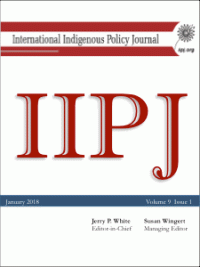 This journal is based in Canada and outlines its goals as follows:
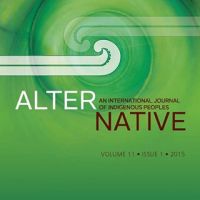 Based in New Zealand, AlterNative publishes scholarly research on Indigenous worldviews and experiences of decolonization from Indigenous perspectives from around the world. Founded in 2005, it has been published by SAGE since 2017, and is available on subscription. Authors can make their article open access through the
  The academics I have met who write books seem to assume one of two things. The first assumption is that publishers are doing authors a favour by publishing their books. The second is that the royalties offered are a set figure. Both of these assumptions are wrong.
 Last week I was privy to an interesting discussion in a Facebook group. The discussion was on quite a contentious topic, and one person (P1) left a comment saying they hoped those involved would acknowledge that we all have blind spots. A second person (P2) responded saying they wanted to call out the term ‘blind spots’ because it is ableist and comes with negative connotations in implying that people with visual impairment lack wisdom. P1 then disclosed that they themselves had a significant visual impairment, yet had no problem with the use of the term ‘blind spots’, and regarded it as a metaphor from driving rather than a discriminatory term. P1 asked P2 what language P2 would prefer to use, and P2 said ‘ignorance’.
 This is the third of three posts inspired by an exchange on Twitter with
  Like
Like  Last week I wrote a post about
  Because you do things in a sensible order, you have your research question, right? Good. It’s very important to have that first. The method (or methods) you choose should be the one (or ones) most likely to help you answer your question. You can’t figure out which methods are most likely to help if you don’t yet know what your question is. So if you’re actually not sure of your question, stop reading this RIGHT NOW and go settle your question, then come back and carry on reading.
 Helen Kara