
 I was invited into an interesting conversation on Twitter the other day, between @DrNomyn, @deborahbrian, @lianamsilva, @readywriting, @darthur62 and @donnarosemary. At one point @deborahbrian said, ‘What we need, too, are professional organisations for independent scholars – do these exist?’ That was when @DrNomyn invited me in, asking, ‘How hard would it be to start one?’
I replied on Twitter but, as this is something to which I have given some thought, I had rather more to say than would fit into 140 characters (or 80, more like, what with all those names already in the tweet). I have long wanted a society for independent researchers. (Despite my scholarly credentials, I identify as an indie researcher rather than an indie scholar. I think this is because I’ve never been, or aspired to be, a salaried academic. Nevertheless, there is clearly significant overlap, and I think such a society might well have room for both.) And I have considered starting one, because, as @DrNomyn implied, it wouldn’t be that difficult.
The hard part would be keeping it going.
I think there are two main reasons that would be hard. First, there aren’t actually that many indie researchers/scholars who would be interested in such a society, and most of us are insanely busy, so getting people involved in anything beyond initial sign-up would be difficult. (I know this because I’m on the Board of the UK and Ireland Social Research Association (SRA), which makes considerable efforts to involve and support indie researchers, most of which are poorly attended/used despite what people say they want in the biennial members’ survey). Second, and partly as a result, such a society wouldn’t generate enough income to pay people to run it, so it would all be done by volunteers, and as I believe I may have mentioned on this blog once or twice, the last thing indie researchers need is more unpaid work.
A third, subsidiary problem, is that there is a high turnover of indie researchers and scholars. People like me, who are resolutely indie and have been for, in my case, 17 years now, are rare. Quite a high proportion of indie researchers or scholars are people who have been made redundant, or whose contract has finished, and who haven’t yet secured other work, so they set up as indie while also looking for jobs in the hope of earning some money to tide them over. Some of them may stick with indie work, either through choice or necessity, but many will go back into employment sooner or later. Others like the look of the indie lifestyle, so set up as indie with every intention of making a go of it, then find they can’t make enough money, or they don’t like working for themselves, or they hit some other problem. (I felt for @darthur62 who said he couldn’t maintain indie work because his networks fell apart; that’s what happened to me after the change of government here in 2010, and I’ve been very lucky to be able to rebuild my business). And some are successful indies who are seduced away from their indie work by an organisation with an offer that is (or appears) too good to refuse.
I make no criticism of anyone in these positions. Any of them could be, or could have been, me. Frankly, if any organisation offered to pay me a decent salary just to write stuff, I’d be there like a shot. But the churn in the indie population is another factor that I think would make it hard to maintain a society for independent researchers and/or scholars.
So my advice, as given on Twitter, is: find a society near you that caters for indie scholars or researchers, join it, and get involved. I’d recommend the SRA for anyone in or near the UK/Ireland. They offer events, training, support with research ethics, good deals on insurance, a magazine and newsletter, a directory of members’ services, and we’re currently trialling access to academic literature for members, with other benefits in the pipeline. There is an equivalent-ish organisation in Australia called the Market and Social Research Society, though some tweeps expressed disquiet at the thought of being lumped in with the market researchers. There will also be discipline-specific societies, as @deborahbrian pointed out, for e.g. educational researchers, sociologists, anthropologists, etc. Each society should be able to give you information about how many indies they have in their membership, and what they do to support independent scholars or researchers, before you join.
I was looking forward to meeting other independent Fellows of the Academy of Social Sciences. Turns out I’m the first. There are one or two who are indie now, after decades as professors, but that’s not the same. I would love it if there was a society for indie researchers and scholars, and am rather hoping someone will disagree with me enough to start one. I’d certainly join.
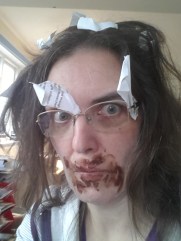 Us writers do the whole ‘grass is greener’ thing just like everybody else. When I was writing my last book, I was longing to get to the journal articles and other projects that were piling up on my to-do list. Now I’m drowning in shorter projects and it’s driving me crazy. Look! Pictorial evidence! I can’t wait to be working on one big long book again, when I will undoubtedly become sane and well organised (cough).
 Today I’m launching the fourth in
  at academic writing can be taught and can be learned. In fact, I’m asked to teach writing skills in universities far more than I’m asked to teach anything else. And I know my courses help students because they tell me so on their feedback forms and, later, on Twitter.
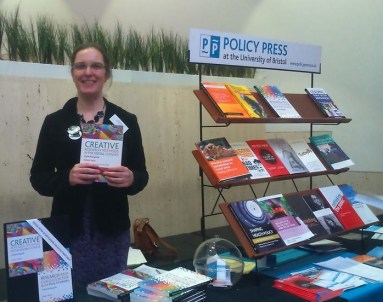 I feel qualified to write this post for a number of reasons. First, I am a successful author. Second, I have worked in publishing, as have several close relatives and friends. I’m assuming that you’re interested in writing for traditional publication; I intend to cover self-publishing in a different post. So here are my ten top tips for successful book authoring.
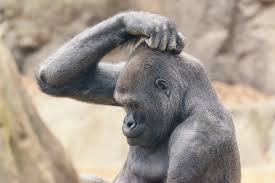 Some people call me an expert. I even call myself one on occasion, usually when I’m trying to win work or funding. But I don’t feel like an expert – or perhaps I don’t feel like I expected an expert to feel.
 Yesterday I came to the end of my first ever writing partnership with
  Following on from
  One of the great frustrations of being an indie researcher is inability to access funding. Maybe this is easier in other parts of the world but there are few options here in the UK. The UK’s
 Last week I posted about
  Helen Kara