
 Last week I presented at a seminar at the University of Nottingham hosted by BAICE, aka the British Association for International and Comparative Education. Like the UK and Ireland Social Research Association (SRA), on whose Board I sit, BAICE is a learned society and an organisational member of the UK’s Academy of Social Sciences (AcSS). I was presenting, in my SRA role, on behalf of the AcSS. This always makes me slightly uncomfortable as I’m not a Fellow of the AcSS and don’t really feel qualified to speak for the Academy. Luckily another of my SRA colleagues, who is a Fellow, was at the seminar and was able to help me out.
The seminar was on ‘cross-cultural research ethics in international and comparative education’. Presenting for the AcSS on this topic was an interesting exercise, as the Academy is not a very cross-cultural organisation: the Fellows are 93% professors, 69% male, and my contacts with them suggest that the white middle classes are in a massive majority. My presentation focused on the five generic ethical principles the AcSS has developed for its member societies to use. I’ve been working on a redraft of the SRA’s ethical guidelines based around these principles, and had already registered that they are focused around concepts which are not culturally neutral, such as democracy and inclusivity. There are cultures that despise democracy, seeing it as a discredited belief system, and others that either do not practise inclusivity or practise a very different version from that which the UK educational and social research culture espouses.
Perhaps because BAICE is focused on international matters, ‘culture’ was in danger of being conflated with ‘nationality’, so I argued that it is a much wider issue. The previous day I had been in a workshop for a piece of evaluation research that had included service users, volunteers, staff, partners, and evaluators. That’s five different cultures, right there. Then of course those professionally defined cultures intersect with people’s race, gender, religion, sexual orientation, etc, to create a whole world of cultural complexity.
The other presentations covered a wide range of related questions. How should we manage cultural conflicts within and beyond academic departments? How ethical is it to use RCTs in educational or social research when you know that members of control groups will be disadvantaged? How can we be inclusive as researchers in situations where including marginalised people, or those living in difficult circumstances, may put them at risk? How can we support researchers and teachers who are operating in a global environment, whether physical or virtual, to work in ethical ways?
Then we were asked to discuss whether we thought it would be possible to formulate generic ethical principles for cross-cultural research. We didn’t reach firm conclusions, but we did agree that if such principles were to be devised, the fundamental value should be respect, and the key process would be dialogue. Any generic principles would need to be broad, neither prescriptive nor vacuous, and should be tested in a variety of locations. Generic principles will always be open to interpretation, and may in some contexts conflict with each other, so they would need to be constantly negotiated. But generic principles could be useful in overturning the current myth of cultural neutrality in some academic mechanisms such as anonymous peer review.
We also agreed that ethical research is not, and should not be, only or predominantly about data collection; it is relevant to all stages of the research process. And we agreed that it is not only students, researchers, and teachers who need educating in ethics, but also funders and members of ethical review committees.
As researchers and educators, we have an ethical duty to keep educating ourselves, because ethical approaches to research change as the world changes. It is essential to take a reflexive approach to this, including locating ourselves culturally. It helps to realise that the same ethical issues arise in lots of different types of work in different disciplines and locations, so if you look beyond your professional and geographic boundaries, you can often learn from others rather than re-inventing the ethical wheel.
We concluded that, from an ethical perspective, the quality of human interactions should be fundamental to the quality of research and teaching. This is especially the case in cross-cultural work, where people may be operating with very different assumptions. However, this is not considered relevant by the current arbitrators of quality in research or teaching. Our view, though, is that it would be more ethical all round to shift the focus away from regulations and bureaucracy and towards human well-being.
While I am, generally speaking, irrepressibly optimistic, I do wonder whether that will happen in my lifetime.
 In the last few weeks I have been asked to deliver seminars at the universities of York and Leicester. I had the time and would have enjoyed the experiences. Also, in both cases, the people inviting me were my friends. So why did I say ‘no’?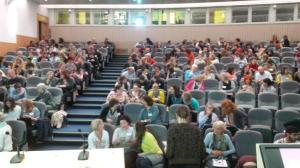
 I guess by now pretty much everyone knows that it’s not a great idea to spend the majority of your time sitting down. But when you’re a researcher and a writer, that’s exactly what you do, at your desk, often all day every day. Now and again you get to go out and sit down in your car, or on a train, till you get to a meeting where you sit down and talk to people. Not a great improvement, as I’m sure you’ll agree.
![Creative research methods in the social sciences [FC]](https://helenkara.com/wp-content/uploads/2015/05/creative-research-methods-in-the-social-sciences-fc.jpg?w=108&h=150)
 I began work as an indie researcher in 1999. Over the next seven years I completed dozens of research contracts, an MSc, and a PhD. I also built up a good professional network, mostly in the English Midlands where I live. The people in my network ran local government departments and charities. They liked me and I liked them: we would meet for coffee, or lunch, and talk shop. After I was awarded my PhD in 2006, I rarely had to apply for work; mostly I was simply offered small contracts that I could complete alone, or slightly larger ones where I might sub-contract some of the work to a colleague. And on the rare occasions when I did write a tender for a local organisation, sometimes I was the only applicant, or the commissioner would have two or three to choose from.
 When I’m teaching research methods to postgraduate students, I encourage them to be comfortable with uncertainty. After all, research is a quest to discover the unknown, so if you’re already certain about everything you’re probably not doing it right. But if you want to be an indie researcher, you need to be comfortable with a higher level of uncertainty than most.

 One sole authored book chapter submitted, reviews received and dealt with
 As for the top secret project: it’s something I’m really excited about, and it won’t be top secret for ever. As soon as I’m ready to go public, you, my dear blog readers, will be the first to know.
 When you’ve published an academic journal article or two, you start getting emails which, at first sight, seem very flattering. They praise your previous work, or your expertise, or both, then invite you to write an article for their journal, or to edit a special issue, or produce an e-book. But when you look more closely, these emails start to look a bit odd. Some ask me to write for journals in medicine, life sciences, or STEM disciplines, all areas in which I have little knowledge and no expertise. Others want me to take on onerous editing responsibilities, sourcing articles from prestigious scholars in return for one whole free electronic journal issue or e-book. And some are verging on the surreal. Here is an example I did not make up:
![Creative research methods in the social sciences [FC]](https://helenkara.com/wp-content/uploads/2015/03/creative-research-methods-in-the-social-sciences-fc.jpg?w=215&h=300)
 Helen Kara