
Like so many of the terms used in research, ‘evidence’ has no single agreed meaning. Nor does there seem to be much consensus about what constitutes good or reliable evidence. The differing approaches of other professions may confuse the picture. For example, evidence that would convince a judge to hand down a life sentence would be dismissed by many researchers as anecdote.
 Given that evidence is such a slippery, contentious topic, how can researchers begin to address its ethical aspects? A working definition might help: evidence is ‘information or data that people select to help them answer questions’ (Knight 2004:1). Using that definition, we can look at the ethical aspects of our relationship with evidence: how we choose, use, and apply the evidence we gather and construct.
Evidence is often talked and written about as though it is something neutral that simply exists, like a brick or a table, to be used by researchers at will. Knight’s definition is helpful because it highlights the fact that researchers select the evidence they use. Evidence, in the form of facts or artefacts, is neither ethical nor unethical. But in the process of selection, there is always room for bias, and that is where ethical considerations come into play.
To choose evidence ethically, I would argue that first you need to recognise the role of choice in the process, and the associated potential for bias. Then you need to consider some key questions, such as:
- What is the question you want to answer?
- What are your existing thoughts and feelings about that topic?
- How might they affect your choices about evidence?
- What can you do to make those choices open and defensible?
The aim is to be able to demonstrate that you have chosen the information or data you intend to define as ‘evidence’ in as ethical a way as possible.
Once you have chosen your evidence, you need to use it ethically within the research process. This means subjecting all your evidence to rigorous analysis, interpreting your findings accurately, and reporting in ways that will communicate effectively with your audiences. These are some of the key responsibilities of ethical researchers.
Research is a process that converts evidence into research evidence. It starts with the information or data that researchers choose to use as evidence, which may be anything from statistics to artworks. Then, through the process of (one would hope) diligent research, that evidence becomes research evidence. Whether and how research evidence is applied in the wider world is the third ethical aspect.
Sadly, there is a great deal of evidence that evidence is not applied well, or not applied at all. Most professional researchers have tales to tell of evidence being buried by research funders or commissioners. This seems particularly likely where findings conflict with political or money-making ambitions. In some sectors, such as third sector evaluation, this is widespread (Fiennes 2014). How can anyone make an evidence-based decision if the evidence collected by researchers has not been converted into evidence they can use?
The use of research evidence is often beyond the control of researchers. One practical action a researcher can take is to suggest a dissemination plan at the outset. This can be regarded as ethical, because such a plan should increase the likelihood of research evidence being used. But it could also be regarded as manipulative: using the initial excitement around a new project to persuade people to sign up to a plan they might later regret.
It seems that ethics and evidence are uneasy bedfellows. Again, Knight tries to help us here, by suggesting that research evidence should be used by people with expertise. This raises a further, pertinent question: what is the ethics of expertise? I will address that next week.
A version of this article was originally published in ‘Research Matters’, the quarterly newsletter for members of the UK and Ireland Social Research Association.
 I
I  It’s not often I get to share an output from the commissioned research I do. Sometimes clients don’t want to share publicly for reasons of confidentiality, and sometimes there are other reasons they don’t publish. As a commissioned researcher, I can’t publish the work someone else has paid for without their agreement. But I’m glad to say that
  I recently wrote on this topic citing
 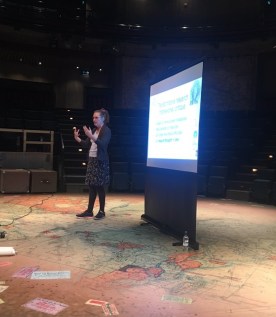 Last Thursday, Friday and Saturday I was privileged to facilitate the inaugural Creative Research Methods summer school run by
 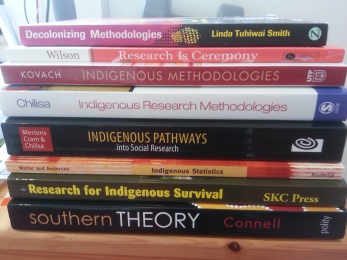 Last week I wrote about
  One of the things I love about being an independent researcher is the sheer variety of projects I work on and tasks I might do in a day. Yesterday, I was only in the office for the afternoon, yet I worked on at least seven different things. Here’s what I did.
 Research misconduct is on the rise, certainly within hard science subjects, quite possibly elsewhere. Researchers around the world are inventing data, falsifying findings, and plagiarising the work of others. Part of this is due to the pressure on some researchers to publish their findings in academic journals. There is also career-related pressure on researchers to conduct accurate polls, produce statistically significant results, and get answers to questions, among other things. Some clients, managers, funders and publishers have a low tolerance for findings that chime with common sense or the familiar conclusion of ‘more research is needed’. They may expect researchers to produce interesting or novel findings that will direct action or support change.
 I have always loved being independent. My parents like to tell the story of the time when, soon after I learned to walk, they took me for a picnic in a local park. My father put me down on the grass, and I got to my feet and toddled away. My mother looked anxious, and my father said, reassuringly, ‘She won’t go far.’ But his confidence was misplaced, because I headed determinedly off into the wide green yonder, and he had to do a quick sprint to bring me back before I came to grief.
 Following my post last month about
  Helen Kara