
 I love to teach writing. I have taught writing for research in various contexts: to voluntary sector practitioners, statutory sector managers, and postgraduate students. Next weekend, for the first time, I will be running a writing course for doctoral students with Katy Vigurs at Staffordshire University. I can’t tell you how much I’m looking forward to this – I’ve had so much fun already, just doing the preparation.
There is a school of thought that considers writing can’t be taught. I’m afraid I think that’s utter rubbish. For sure, there’s an element of ‘you can lead a horse to water, but you can’t make it drink’, as the saying goes. Ultimately, however much teaching someone has, there comes a point where they have to get on with the writing for themselves – and there are people who continually struggle at that point. Writing is particularly hard, I think, for people who don’t like writing but have to do it anyway. I’m lucky that I like writing, and I’m confident I can pass on some ways to make it less onerous and more fun – or at least more productive.
Writing isn’t easy to teach, and it’s difficult to learn, but there are lots of tricks of the trade which the more experienced writer can pass on. Some people can learn from written advice, whether on blogs like that of the estimable Pat Thomson, or in books by people like Pat or Rowena Murray. But for many, there is no substitute for time in a classroom with a group of other learners and a skilful tutor or two.
I learned a lot, years ago, from attending courses myself. I went on three Arvon courses, and a doctoral writing workshop at the University of the West of England (UWE). Two of the Arvon courses focused on novel writing and were useful for my fiction work. The other Arvon course, and the workshop at UWE, both focused on the permeability of the boundary between fiction and non-fiction, and the way some writing techniques can be used for both.
I attended these two courses during my doctoral studies and they were inspirational. I’d already been grappling with ideas around truth versus authenticity, the function of creativity in research, and the role of storytelling in human communication. I had read Sol Stein’s book Solutions for Writers: Practical Craft Techniques for Fiction and Non-Fiction which also suggests that fiction writing techniques can benefit non-fiction writing, and vice versa. This concept has been a huge influence on my work ever since. I have written about it in academic journals and books, and now I’m going to teach it, properly, for the first time.
Among the learning outcomes I’ve set for my students are: writing non-fiction is a creative process, writing is hard even when you’re skilled and experienced, and thinking and writing are inextricably linked. I have also promised them that they will come away from the weekend with between 1,000 and 5,000 new words of their thesis, depending on how far advanced they are in the process. The group includes students at every stage, from those who have only recently begun to those in their final months. I would expect students to write more slowly at first, more quickly in the later stages.
They will be doing creative writing exercises. Not just for fun, though I hope there will be some of that too. The exercises are designed to teach students about overcoming resistance to writing, the purpose of rewriting, how writing helps thinking, and voice. There will also be a number of ‘shut up and write’ sessions where we will all write together, as well as plenty of time for questions and discussion, not to mention cake. And in the evenings we will, as writers often do, patronise a nearby hostelry.
It may be a working one – but I am so looking forward to the weekend!
 Doing research ethically is not about finding a set of rules to follow or ticking boxes on a form. It’s about learning to think and act in an ethical way. How ethical an action is, or is not, usually depends on its context. Therefore, everything must be thought through as far as possible, because even standard ‘ethical’ actions may not always be right. For example, many researchers regard anonymity as a basic right for participants. However, if your participants have lived under a repressive regime where their voices were silenced, they may feel very upset at the thought of being anonymised, and want any information they provide to be attributed to them using their real names. In such a context, claiming that they must be anonymised because of research ethics would in fact be unethical, because it would cause unnecessary stress to your participants.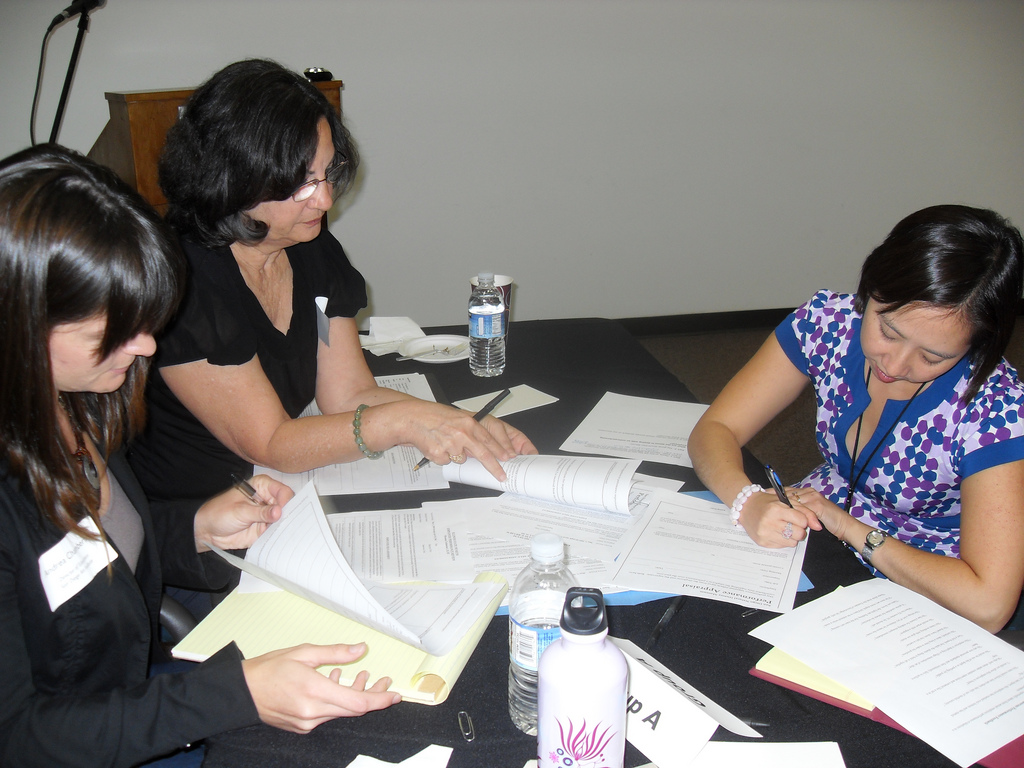
 Those things can be uncomfortable, upsetting, daunting. No wonder so many people are scared of writing to the point of paralysis.

 Very unusually for me, I don’t feel like working. I have a list of my current projects, all of which are interesting, and usually I’d look at the list and decide what to focus on next: either the most urgent, or the most appealing. But right now – and this hardly EVER happens – none of them are urgent. And, oddly, I’m finding it hard to motivate myself to work on any of the non-urgent ones either. Even though they do need doing, and will become urgent if I don’t do them at some point.
 forward to reading it and learning about a point I hadn’t previously considered. And the content did deliver new insight – but it delivered it really, really badly. It was such a disappointment, like getting the pizza you ordered an hour late, cold, and with your favourite ingredient missing.
 different journals. So I added that reference, too, to my review, and ended with some words of encouragement. I truly think this is an important article in the making, and with a little more work, the author could deliver his or her argument in an article which is more like a warm, fragrant, appetising pizza, made from good ingredients in the right proportions.
 of reading.
 Helen Kara