
 I went to a meeting recently with some clients, lovely people doing really worthwhile work, and boy did they love a cliché. They were forever touching base, working across the piece, and moving the dial. There were any number of deep dives and light touches, and they were either sold on something or not feeling it. Learning had to be captured (poor thing) and change had to be embedded (though they never said into what).
By the end I was ready to prepare a bingo card for the next meeting. More seriously, though, I was getting a sense that these clichés had a couple of effects. One was positive and one was sinister. On the positive side, the common use of language was serving to create and build group identity. On the sinister side, clichés were so prevalent that they seemed to be reducing the space available for creative thought and discussion.
A cliché is initially a creative, original, sometimes even funny way of saying (or writing) something. It is so effective that it gets repeated a lot, and that is what turns it into a cliché. It stops being creative and original and starts being habitual, almost reflex, and can be stultifying in its effect on speech and prose.
Using clichés is lazy writing. Avoiding clichés requires more effort, more thought and care. Whatever you’re writing – job application, journal article, funding bid, doctoral thesis – aim for the specific. The initial impact of a cliché is lost through overuse, so it can seem quite vague, while particular details often seem interesting and fresh.
Take this short paragraph from a draft research proposal:
We will leave no stone unturned to ensure we get as many questionnaire responses as possible. Then it will be just a matter of time before we analyse the data and write the report. At the end of the day the research report will be fit for purpose.
Compare it with this version:
We will make every effort to maximise questionnaire responses. Our strategies will include: circulating the link by email and by social media; monitoring respondents’ locations regularly and targeting any identified geographical gaps; and offering a prize draw as an incentive. The questionnaire will be live online for one month, and it will take us another two weeks to analyse the data and write the draft report. We will write in plain English and the draft will be submitted for feedback which we will use to produce the final version.
The first version is stuffed with clichés and assertions and tells the reader nothing of substance. The second gives specific details, explaining how the researchers propose to achieve their aims.
It is really sensible to avoid clichés in your writing. Whatever you’re writing. What would you write in a condolence card? “I’m sorry for your loss”? “You are in my thoughts/prayers”? Don’t do that. Take a little time to think about the person who has died. Is there a memory you treasure that you could share in a few words? Perhaps an impact the person had on you that you could describe briefly and which will form part of their legacy? Whoever you are sending the card to will have dozens of others bearing standard clichés. Make the effort to send them something personal, real, authentic. It doesn’t have to be long, or take long, and it will mean a great deal more than platitudes.
One place you can get away with clichés is in titles, as with the title of this piece (which I could equally have called Colour Me Clichéd, or The Cliché At The End Of The Universe, or… you get the idea). But that’s about the only place you can use them in academic writing. So don’t!
This blog is funded by my beloved patrons. It takes me around one working day per month to post here each week. At the time of writing I’m receiving funding of $35 per month. If you think a day of my time is worth more than $35 – you can help! Ongoing support would be fantastic but you can also make a one-time donation through the PayPal button on this blog if that works better for you. Support from Patrons and donors also enables me to keep this blog ad-free. If you are not able to support me financially, please consider reviewing any of my books you have read – even a single-line review on Amazon or Goodreads is a huge help – or sharing a link to my work on social media. Thank you!
 A lot is said and written about achieving a good work-life balance, as though work is only one thing (and life another). Work is in fact several things and achieving a good balance between them is also important. In fact, a good work-work balance is an essential prerequisite for a good work-life balance.
 In August 2012 I was eagerly awaiting publication of my first research methods book,
  Last week
  I read novels for pleasure, and I often re-read novels for pleasure too. I’ve read all Terry Pratchett’s books, and if I’m a bit down or feeling overwhelmed, a re-read of one of those will always cheer me up. I sometimes revert to the comfort of children’s books when I’m poorly: Susan Cooper’s The Dark Is Rising series is a great favourite. Then there are books I re-read because they’re simply too good to read only once, such as Keri Hulme’s The Bone People which I re-read every few years.
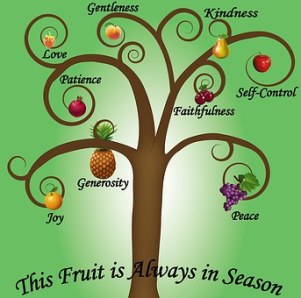 A few things have got me thinking recently about what seems to be a lack of kindness in UK universities. And that’s an odd sentence in itself, because a university can’t be kind or cruel; only people can do that. Universities don’t really exist except through the magic of consensus: enough people agree that a collection of buildings and activities can be called ‘a university’, and that that phenomenon may be accorded human attributes. Seems strange to me, but that’s how we humans roll, so I’m going with it for now.
 In Meredith Belbin’s terms I am a
  I began work as an independent researcher 20 years ago. The first project I took on was an evaluation of a county-wide substance misuse training strategy, in my home county of Staffordshire, for the Drug Action Team. Drug Action Teams were partnerships at local authority level set up by the Labour government to bring agencies together to address substance misuse of all kinds: illegal drugs of course, but also alcohol, pharmaceutical drugs, and other substances such as solvents. The Drug Action Team worked with staff from nightclubs and prisons, schools and hospitals, magistrates’ courts and housing providers – the remit was broad and training was a central part of that work. My previous experience, of working for four years as a training administrator in blue-chip City of London companies in the late 1980s, was very helpful.
 Systems of research ethics regulation differ around the world. Some countries have no research ethics regulation system at all. Others may have a system but, if they do, it is only available in their home language so people like me who only speak and read English are unable to study that system (
 So many of my friends and colleagues mention negative mind chatter. Only the other day I had a woman tell me she doesn’t feel like a good enough mother (she is), and a man tell me he doesn’t know how he got to where he is in life (because he’s clever, kind, and hardworking). I could quote numerous other examples, and I think writers are particularly prone to this.
