
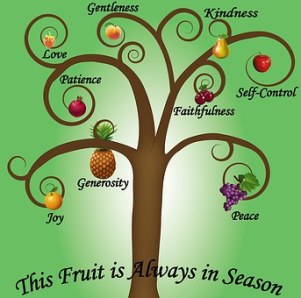
 A few things have got me thinking recently about what seems to be a lack of kindness in UK universities. And that’s an odd sentence in itself, because a university can’t be kind or cruel; only people can do that. Universities don’t really exist except through the magic of consensus: enough people agree that a collection of buildings and activities can be called ‘a university’, and that that phenomenon may be accorded human attributes. Seems strange to me, but that’s how we humans roll, so I’m going with it for now.
So here’s what happened. On 9 March I gave a keynote at the Enquire conference at the University of Nottingham. The conference theme was ‘uncertainty’ so I thought it might be a good idea to give my keynote while standing on my wobble board, to embody the uncertainty we would be discussing. I ran this idea past the organisers who responded, ‘We have discussed your idea and think it sounds fantastic.’ Then in their next email they said, ‘With regard to your presentation, if you decide that you want to use the wobble board, I have been advised to inform you that you will have to accept liability, and that the university is not responsible for health and safety implications arising from the choice of presentation style.’ These people were some of the kindest and most thoughtful conference organisers I have ever encountered, which helps to explain their next sentence: ‘Apologies if that comes across as overly defensive on our part, but it is something I have been informed that I need to make you aware of.’
Then on 19 March I taught creative research methods at Coventry University. The organiser there had given me directions to a car parking space and told me I needed to ask at reception for a parking permit. The reception staff member was kind and helpful, and this is what he gave me:

These types of institutional microaggressions say to me, ‘We don’t have to care about you because we are big and powerful.’ I’ve been imagining another way this could be. For example, I think the Nottingham conference organisers would have been happier to email me saying, ‘We’ve been advised to check whether you have experience of using a wobble board and whether there are any safety precautions you need to take that we might be able to help with.’ (I do, and there are: it’s not safe for use on a smooth floor, but the room we were in was carpeted, otherwise I would have brought a square of carpet to set the board upon.) And perhaps the Coventry parking permit designers might have said, ‘Please let us know if you experience any problems while you are parked on our premises and we will do all we can to help you.’
I’m not picking on Nottingham and Coventry here, because these phenomena are common among UK universities. And worse; much worse. Academics with disabilities have a difficult time at many universities. For example, Kay Inckle has been fighting for her rights at the University of Liverpool for a long time. In a media report from mid-August 2018, the university spokeswoman said, ‘We are eager to work with the trade unions and have agreed to meet with them to discuss this further as soon as possible.’ Yet another media report from late February 2019, over six months later, suggests nothing has changed. Vik Turbine, from the University of Glasgow, has blogged about how she is leaving academia after ten years in her dream job because of her institution’s inability to accommodate her chronic and progressive illness.
The UK has good quality legislation on disability discrimination which these universities are failing to use. That is close to maximum unkindness. And they get away with it because they are big and powerful, and because the people they are being unkind to rapidly become exhausted because they needed more help in the first place, not more barriers to overcome. People are having to fight when they should not need to fight. As the legislation makes clear, they should be supported in doing their jobs.
I have a couple of chronic and progressive illnesses myself. I think about how my own institution, i.e. my family and friends, have responded. They readily make accommodations for me, often putting themselves out in the process. Those who love scented candles don’t burn one when I visit because they know it will make me wheeze. Social evenings are arranged earlier than anyone else would like so I can enjoy a few hours of company before my inevitable early night. If I’m having a bad day and we’re going somewhere on foot, people will amble to stay with me even if they would rather stomp along. My friends and family go out of their way to ensure I have food and drink that my body can tolerate. I think I worry about and resent needing all this far more than it bothers any of them.
On the whole – of course there are exceptions – people seem able to be kind in most circumstances. Even extreme circumstances. Daoud Nabi, who originated from Afghanistan, greeted a white man at the door of the Al Noor mosque in Christchurch, New Zealand, with the words ‘Hello, brother,’ even though that man was holding a gun. Shortly afterwards Daoud Nabi got in the shooter’s way to protect another man and in the process lost his life. That is maximum kindness. Then New Zealand’s prime minister, Jacinda Ardern, has demonstrated enormous kindness in response to this atrocity. She immediately described it as a terrorist attack (when conventionally ‘terrorist’ has been reserved for violence perpetrated by people of colour on white victims), dressed in mourning black with a headscarf to show respect, asserted that ‘they are us’, hugged victims, and began her next statement in New Zealand’s parliament with the Islamic greeting ‘Salaam Alaikum’ which means ‘peace be upon you’. Furthermore, she didn’t just empathise, she initiated far-reaching changes to New Zealand’s gun laws. Jacinda Ardern also recognised that the impact of this incident was not limited to New Zealand. When Donald Trump asked her how the US could help, she replied, ‘Sympathy and love for all Muslim communities.’
Imagine if vice-chancellors and their equivalents demonstrated this type of kindness in their leadership of universities. Imagine if universities really valued all of their staff, students, and visitors. It would be great if we could harness the magic of consensus here, too; then we’d have a University of Kindness. But a University of Kindness would require flexibility and responsiveness, and large institutions are notoriously bad at those. They’re much better at bureaucracy and processing people. This is one of the main reasons I prefer life as an independent researcher. I have more time and space to offer kindness to others (not that I’m infallible in that department, but I do my best). And others are so kind to me. In these last few days alone I’ve experienced a great deal of kindness from people on Twitter and from my Patrons.
I think this is important too, particularly in these days of political upheaval when the media would have us believe that the whole world is hurting and fighting and angry and sad. We need to recognise and acknowledge the kindness that exists.
It is kind of you to read my blog. Thank you.
This blog is funded by my beloved patrons who are super-kind. It takes me around one working day per month to post here each week. At the time of writing I’m receiving funding of $32 per month. If you think 4-5 of my blog posts is worth more than $32 – you can help! Ongoing support would be fantastic but you can also make a one-time donation through the PayPal button on this blog if that works better for you. Support from Patrons also enables me to keep this blog ad-free. If you are not able to support me financially, please consider reviewing any of my books you have read – even a single-line review on Amazon or Goodreads is a huge help – or sharing a link to my work on social media. Thank you!
 In Meredith Belbin’s terms I am a
  I began work as an independent researcher 20 years ago. The first project I took on was an evaluation of a county-wide substance misuse training strategy, in my home county of Staffordshire, for the Drug Action Team. Drug Action Teams were partnerships at local authority level set up by the Labour government to bring agencies together to address substance misuse of all kinds: illegal drugs of course, but also alcohol, pharmaceutical drugs, and other substances such as solvents. The Drug Action Team worked with staff from nightclubs and prisons, schools and hospitals, magistrates’ courts and housing providers – the remit was broad and training was a central part of that work. My previous experience, of working for four years as a training administrator in blue-chip City of London companies in the late 1980s, was very helpful.
 Systems of research ethics regulation differ around the world. Some countries have no research ethics regulation system at all. Others may have a system but, if they do, it is only available in their home language so people like me who only speak and read English are unable to study that system (
 So many of my friends and colleagues mention negative mind chatter. Only the other day I had a woman tell me she doesn’t feel like a good enough mother (she is), and a man tell me he doesn’t know how he got to where he is in life (because he’s clever, kind, and hardworking). I could quote numerous other examples, and I think writers are particularly prone to this.
 I have some more examples of creative doctoral work for you, and this time they’re all from the UK. (If you haven’t seen my previous posts on this topic, which include examples from other parts of the globe, they’re
  Sometimes academics ask me to come and speak to their students. The conversation often goes like this.
 Do you know the independent researchers in your discipline or field? Have you got a clear strategy for when, how, and why you would involve independent researchers in your work? No? Then you’re missing a trick.
 When someone mentions research methods, what do you think of? Questionnaires? Interviews? Focus groups? Ways of doing research online? Do you only think of data gathering, or do you think of methods of planning research, analysing data, presenting and disseminating findings?
 On 20 December last I received hard copies of my first two books in the

 And I have four copies to give away! Two of Write A Questionnaire and two of Do Your Interviews, which I will gladly post anywhere in the world. This competition is only open to followers of this blog (if you want to enter and you don’t already follow the blog, you can find the ‘follow’ button at the top right). Leave a comment with your name, telling me which book you’d like and why. You can only enter once, for one title, not both. This time next week I will put the names into two hats, one for each title, and announce the winners in the comments on this post. Can’t say fairer than that!
 Helen Kara