
Having got my creative research methods book safely launched, and cleared away most of the smaller writing projects that piled up while I was writing that, I’m slowly starting to get into gear for my next book. I’ve written several books now, including two on research methods, and the process for each book is different. For my first research methods book, essentially I wrote down what I knew about research methods and doing research, worked out where the gaps were in my knowledge, learned what I needed to know to fill those gaps, and wrote that down too. The second one was more of a stretch (at one point I found myself whingeing on Facebook about ‘that difficult second research methods book’) but primarily involved collation, as there was a huge amount of relevant work in journal articles and a few pertinent books. It did involve some hard thinking – in fact, they both did but, like childbirth, the pain is soon forgotten.
Unlike childbirth, I expect the labour for my third research methods book to be more painful than for either of its older siblings. This is because my third book will be on ethics. Writing down what I know about ethics wouldn’t take long, and collating other people’s work on ethics would be fairly pointless. For this next book, I need to read, and think, and take it slow, and learn, and think some more, and come up with some new and different ideas and approaches. My embryonic ideas are that I want to show how research ethics is linked with wider-world ethics, at individual, institutional/organisational, and national/political levels. Also, I’d like to unpack the impact of wider-world ethics on ethical thinking, acting, and decision-making in research. This may be ridiculously ambitious, but it feels compelling; it’s something I want to understand, and would like to communicate in a useful way.

My ethics bookshelf
So far, I’ve collected a load of books and some journal articles. I’ve read about a third of one book and about a quarter of another. I haven’t written a word yet, and have barely thunk a thought. I haven’t blogged the process of writing a book before, so this is new, too. It’s quite difficult to write about a process from such an early stage that I don’t really know what I think yet. Also, publishers tend to advise authors to keep ideas close to their chests, in case someone else steals the idea and writes the book faster and better than the author can. So blogging the process feels a bit weird – but I figure this is hardly a commercial bestseller in progress, and it’ll be more useful all round if I share my ideas rather than keeping them to myself.
I’ve started interviewing some experienced researchers, in academia and in practice, to find out how they get on with trying to do ethical research. I want to learn some stuff about how this works, both in terms of research ethics governance and ethical review, and in people’s actual practice. I am regularly frustrated by the over-emphasis on ethics at the data-gathering stage, and the narrow focus on the welfare of participants, at the expense of ethical considerations at other stages of the research process and the welfare of people other than participants. In my view, there are ethical considerations to take into account at all stages of the research process, and everyone touched by a research project deserves to be thought about and cared for. That includes researchers themselves: research can be a stressful and difficult undertaking, and we do nobody any favours if we don’t look after our own welfare as well as that of others.
Remember when I said writing down what I know about ethics wouldn’t take long? That’s pretty much it. Well, OK, maybe there’s a little more. I could probably pontificate about deontologicalism versus consequentialism for a sentence or two, but I’m not that keen to lose readers. This reminds me of another aim for my book: that it should be readable. I talked to my partner about this recently, and he suggested I have an early chapter called ‘The Academic Verbiage’ (actually he used a rather less polite word than ‘verbiage’), so I could put all the complicated words in one place. Then, he said, I’d be able to write the rest of the book in ordinary language. I’m not sure I’ll go quite that far, but I do intend to try to make it clear and understandable. At least, I hope I can…
 Working in collaboration with others can be a wonderful experience. Writing a journal article with a colleague, or working in a research team with people from other organisations, can be life-enhancing. Ideas build on ideas; tasks are allocated according to people’s strengths and abilities; the results are loads better than anything you could achieve alone.
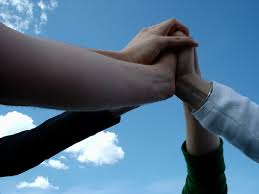 Make time to celebrate a collaboration that goes well, or even well enough. If you can meet up with your collaborators, so much the better: go for a drink or a meal together and congratulate each other in person. If not, celebrate online, in a private meeting or via email or social media. Or simply send a card to say ‘thank you’ or ‘well done’.

 I picked up
  I loved my writing retreat over the last two weeks, but it’s left me feeling a bit unbalanced. No, not like that! Let me explain. All writing and no reading has left me feeling as if I need to follow up my writing retreat with a reading retreat. I love reading as much as I love writing. I’ve been reading intensively about creative research methods for the last couple of years, and now there’s lots of other research-related reading I want to do. But why can it be so hard to find the time?
 We all have to read. Including me. Here’s my current TBR pile – and it’s going to grow bigger, as I’ve just finished an online shopping spree to help me catch up on some topics of interest. I’ve made a commitment to reading at least one chapter a day, six days a week. And I’m not the only person who has been thinking along these lines; yesterday @tseenster of the Research Whisperer
  On Monday of last week, Pat Thomson published
  I am on a solo writing retreat, on the south coast of England. The photograph shows my workspace for this week and next. I’m in an unfashionable area so it’s comparatively cheap. I looked at Cornwall, initially, and found a sea view meant that even a studio flat would cost over £1,000 for a fortnight at this time of year. Here I’ve been able to rent a whole house for much less, and that means I can have friends to visit at the weekend which will be fun.
 I love to write with a sea view. Some people find it distracting, but I find it relaxes me and all the space of sky and depth of sea somehow offers more room for creativity. Though today, with gales and huge waves striking the shingle shelf opposite so hard that the spray hits the second-floor window in front of me and I can feel tremors through the house where I’m sitting, it is a tad distracting at times. But I’ve ticked off the first of the items to tick off, this morning, so I’m allowing myself a little sea-gazing now and then.
 Last week I presented at a seminar at the
  In the last few weeks I have been asked to deliver seminars at the universities of York and Leicester. I had the time and would have enjoyed the experiences. Also, in both cases, the people inviting me were my friends. So why did I say ‘no’?
 Helen Kara